
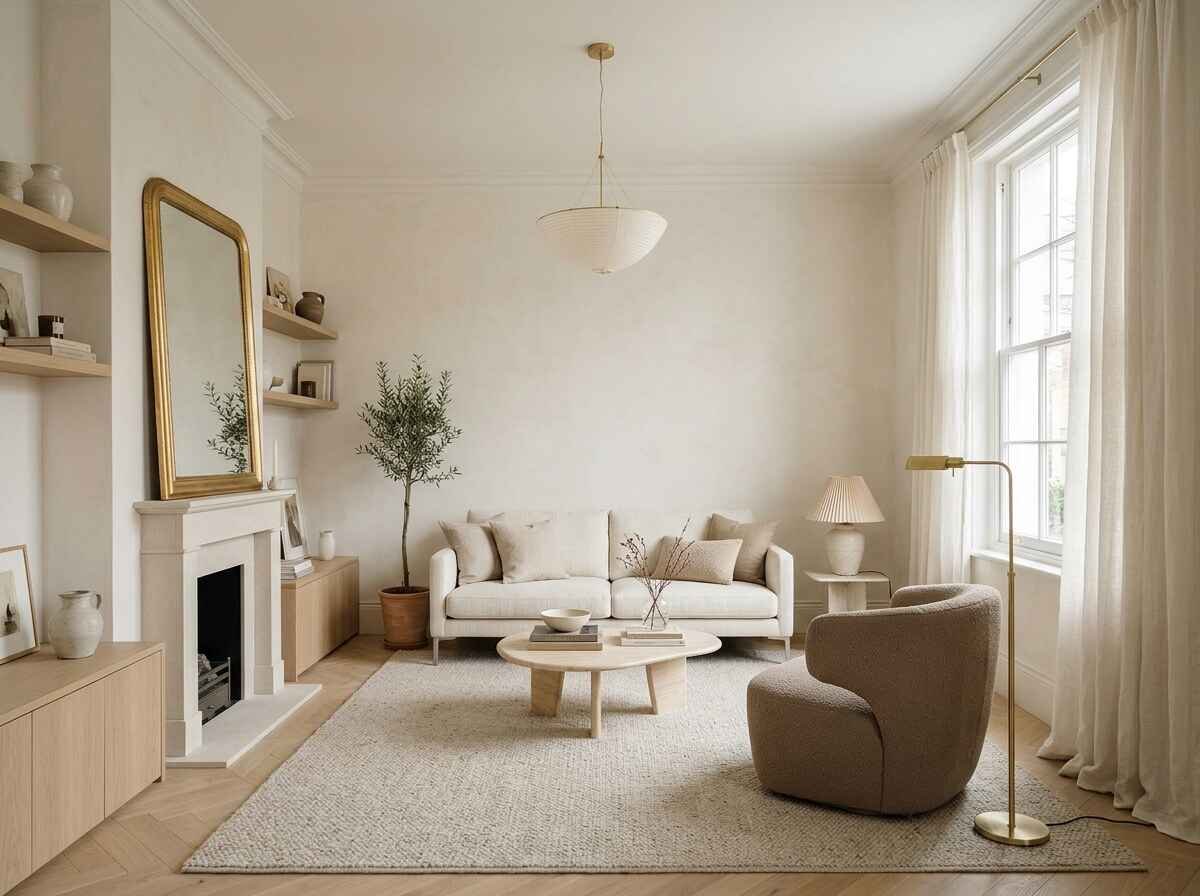
Designing a small living room often presents a delicate balancing act. You want to create an inviting, comfortable space for relaxing and entertaining, yet limited square footage can easily make the room feel cramped or cluttered if furniture scale and placement are off.
Fortunately, achieving a spacious atmosphere in a compact footprint does not require expanding your floor plan. Through thoughtful furniture selection, strategic color choices, layered lighting, and clever storage solutions, you can dramatically improve how your living area functions and feels.
Whether you are furnishing a city apartment, a cozy townhouse, or a compact seating area, these 11 practical small living room ideas will help you create a bright, elegant interior that maximizes every inch.
1. Choose Furniture That Fits the Room
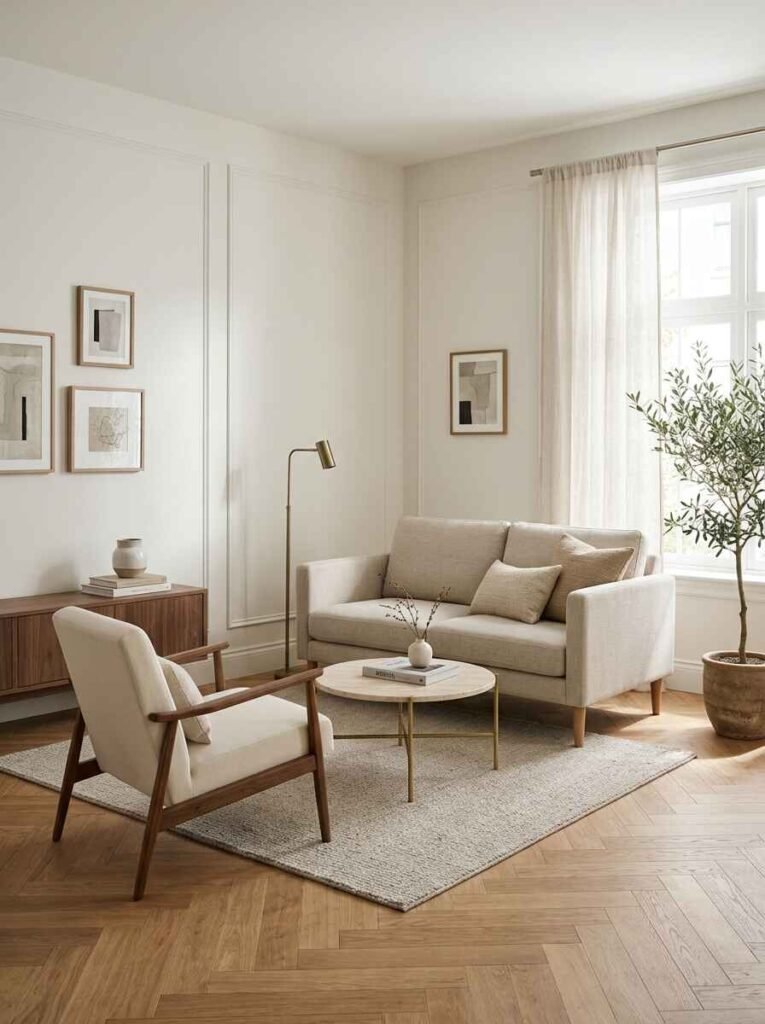
In a compact space, scale is everything. Homeowners often assume that placing very few large, oversized furniture pieces is better than having multiple smaller items, but bulky sofas with wide roll arms can quickly overwhelm a room’s proportions.
Instead, choose a tailored two-seater sofa or a slim-profile loveseat featuring narrow track arms and exposed wooden legs. Furniture raised on legs allows light and sightlines to pass beneath, creating an airy visual effect. Pair your primary sofa with slim accent chairs that offer comfortable seating without heavy visual mass.
Plan comfortable walking routes between seating, coffee tables, and doorways. Allow enough clearance for people to move naturally, adjusting the spacing to suit your room’s dimensions and furniture layout.
For more inspiration on choosing sofas, accent chairs, and statement pieces, explore our guide to luxury living room furniture ideas.
2. Use a Light, Warm Neutral Color Palette
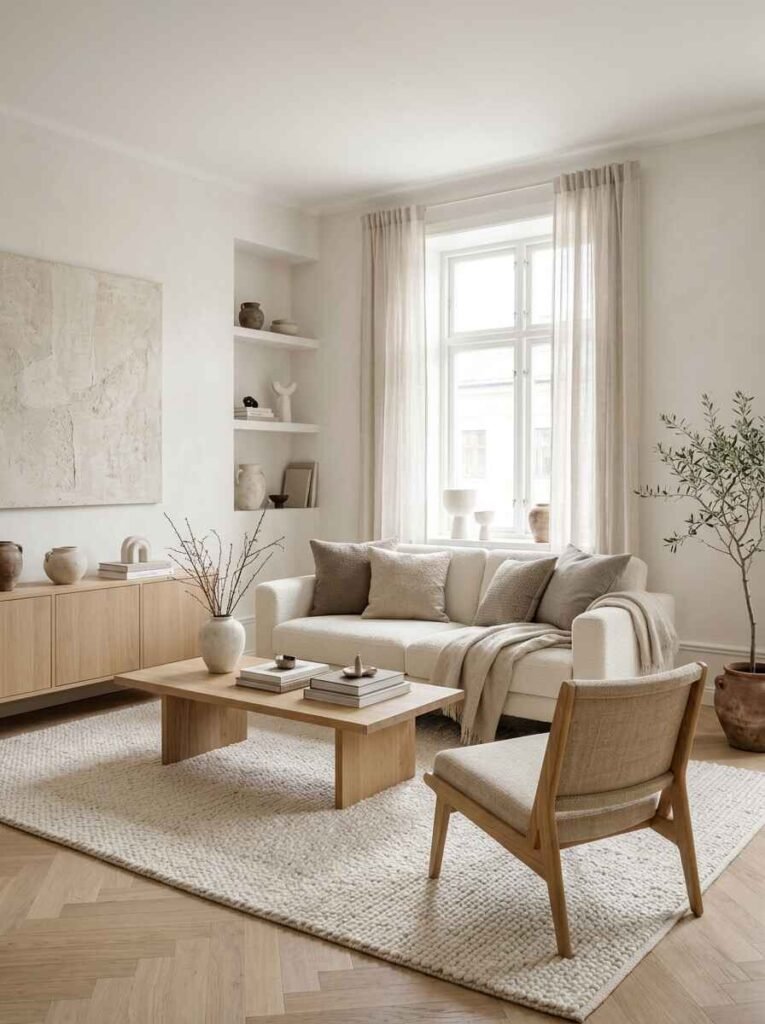
Color significantly influences how we perceive spatial boundaries. Light, warm neutral tones—such as ivory, warm white, beige, soft greige, and pale taupe—reflect daylight effectively and blur the visual contrast between walls, trim, and ceiling.
Using a continuous neutral shade across walls, window drapes, and primary upholstery creates seamless visual continuity. This monochromatic approach prevents the room from feeling visually broken up into small, boxy segments.
To keep a neutral room from feeling sterile or flat, layer rich, tactile materials. Combine natural oak finishes with bouclé fabrics, linen throw pillows, woven cane details, and textured wool rugs. Darker colors can still be introduced, but keep them as restrained accents in picture frames, lamp bases, or side table hardware.
3. Arrange Furniture to Improve Flow
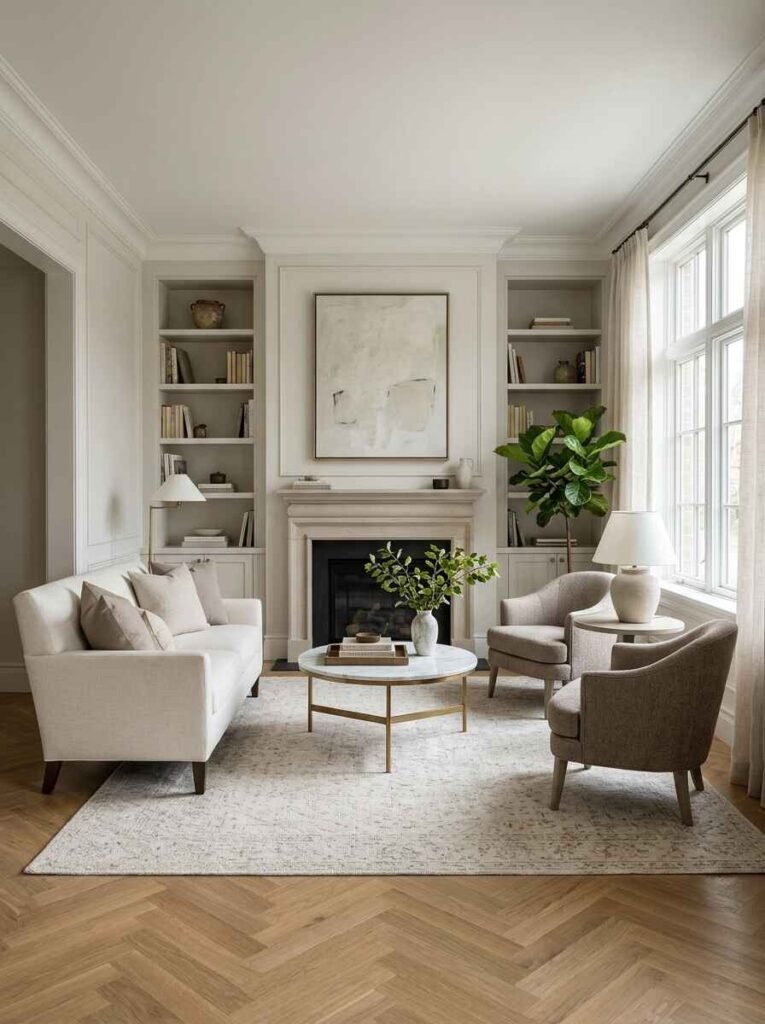
Establishing a logical circulation path is critical when arranging a small living room. If guests have to navigate around awkward table corners or squeeze past the sofa to reach a balcony or doorway, the layout will constantly feel restricted.
Position your main seating around a natural architectural anchor, such as a fireplace, window bay, or media console. Arranging a compact sofa opposite two small tub armchairs creates an intimate conversation circle while keeping doorways completely clear.
While “floating” furniture away from walls is a popular design rule, pulling seating into the center of a very narrow room can actually waste valuable floor space. Place the sofa against or near a main wall if it creates a wider, more comfortable walking route through the room.
For more guidance on creating a balanced seating arrangement, explore our luxury living room ideas for layouts and design details that bring the space together.
4. Use Mirrors to Reflect Light
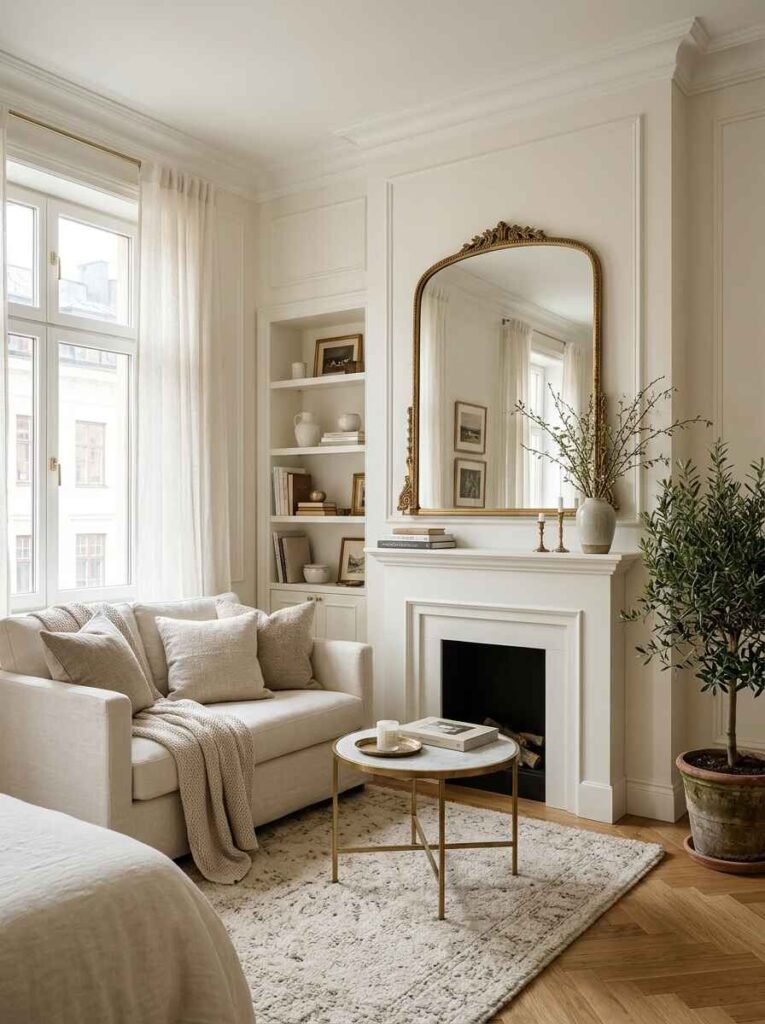
Mirrors are among the most effective decorative accents for enhancing light and visual depth in compact interiors. By reflecting natural daylight from windows and artificial light from lamps, a strategically placed mirror instantly brightens dark corners.
Mounting a large arched wall mirror above a fireplace mantel or console table creates an attractive centerpiece while doubling the room’s perceived depth. Alternatively, hanging a mirror directly across from a primary window reflects outdoor views, making the living area feel more open and connected to the outdoors.
Choose mirror frames that align naturally with your overall decor style. An antique gold leaf frame introduces classic elegance to transitional spaces, while a thin metal or frameless design keeps modern rooms feeling clean and streamlined.
5. Layer Lighting at Different Heights
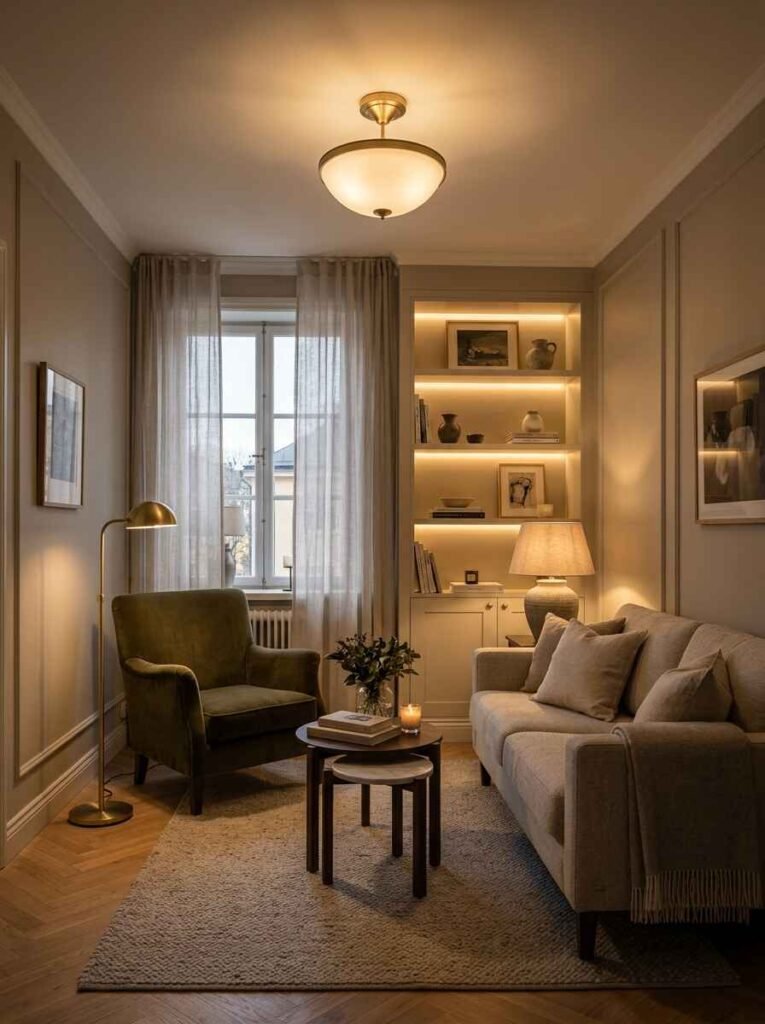
Relying on a single overhead lighting fixture casts harsh downward shadows and leaves room corners dark, which can make a small space feel even smaller. Layering lighting at varying heights creates warmth, eliminates shadows, and adds rich dimension.
Incorporate three distinct levels of illumination:
- Ambient Lighting: A warm semi-flush mount ceiling light or statement chandelier provides gentle, overall room illumination.
- Task Lighting: A slim brass floor lamp positioned next to an armchair provides focused light for reading without taking up tabletop space.
- Accent Lighting: Ceramic table lamps on side tables and soft LED strip lighting built into display shelving draw attention to decorative details.
Opt for warm-toned LED bulbs (around 2700K) to ensure your living room feels cozy and welcoming during evening hours.
For more ways to combine ambient, task, and accent lighting, see our guide to luxury living room lighting ideas.
6. Add Storage Without Creating Clutter
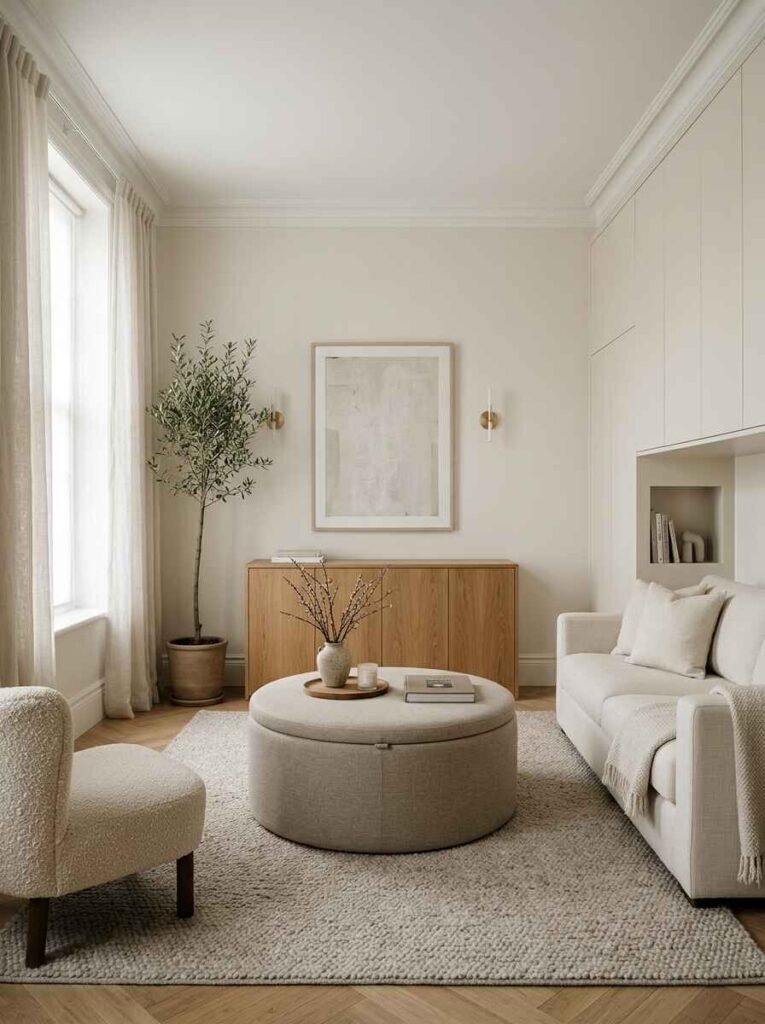
Visual clutter is the fastest way to make a compact room feel chaotic and cramped. Incorporating multi-functional furniture with hidden storage allows you to keep daily essentials nearby while maintaining a serene appearance.
Choose a large upholstered round storage ottoman to serve as a footrest and coffee table while neatly stowing throw blankets, games, or extra pillows inside. A low wood credenza with closed cabinet doors keeps media equipment and paperwork out of sight.
To maximize efficiency, utilize full-height vertical storage. Floor-to-ceiling built-in cabinetry provides substantial storage while blending flush against the wall, keeping floor surfaces open and uncluttered.
7. Select a Coffee Table That Preserves Space
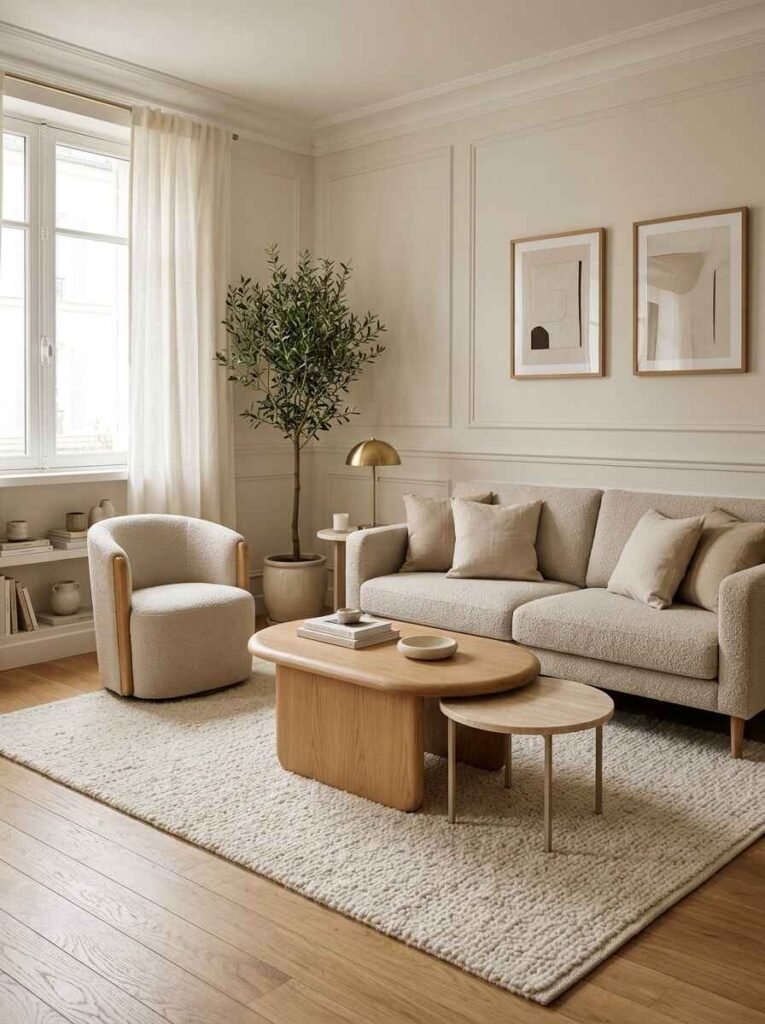
Coffee tables are central to living room function, but rectangular tables with sharp, rigid corners can restrict movement in tight seating layouts.
Selecting an oval or round coffee table eliminates sharp edges, allowing family members to navigate around seating areas safely and comfortably. Nesting tables are another brilliant choice for small living room designs: you can keep them stacked neatly for everyday use and separate them when hosting guests.
Visually lightweight materials—such as light oak timber, clear glass tops, or slim metal legs—prevent the center of your seating arrangement from looking dense or heavy. Ensure your coffee table height sits within 1 to 2 inches of your sofa cushion height for optimal comfort.
8. Use Curtains to Enhance Height and Light
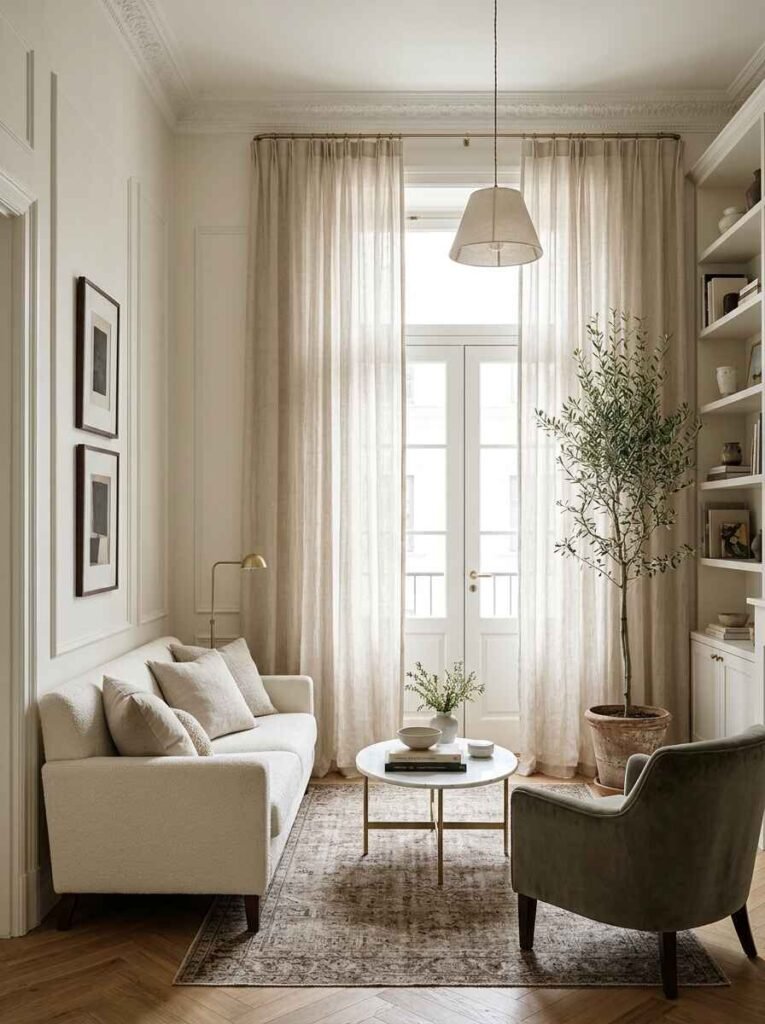
Window treatments significantly influence how vertical proportions are perceived in a room. Hanging curtain rods directly above window frames cuts off vertical sightlines and can make standard ceilings feel lower than they actually are.
Mount your curtain hardware high and wide—ideally a few inches below the ceiling molding or crown casing. Allow sheer or semi-sheer linen drapes to extend all the way down to touch the floor. This simple adjustment draws the eye upward, giving the illusion of significantly taller ceilings and larger windows.
Select curtain fabrics in soft off-white, cream, or sand shades that closely match your wall color. Light-filtering linen drapes allow natural daylight to flood the room while providing privacy. Avoid heavy, dark velvet drapery that absorbs light and visual volume in compact spaces.
9. Create a Focal Point With Thoughtful Wall Decor
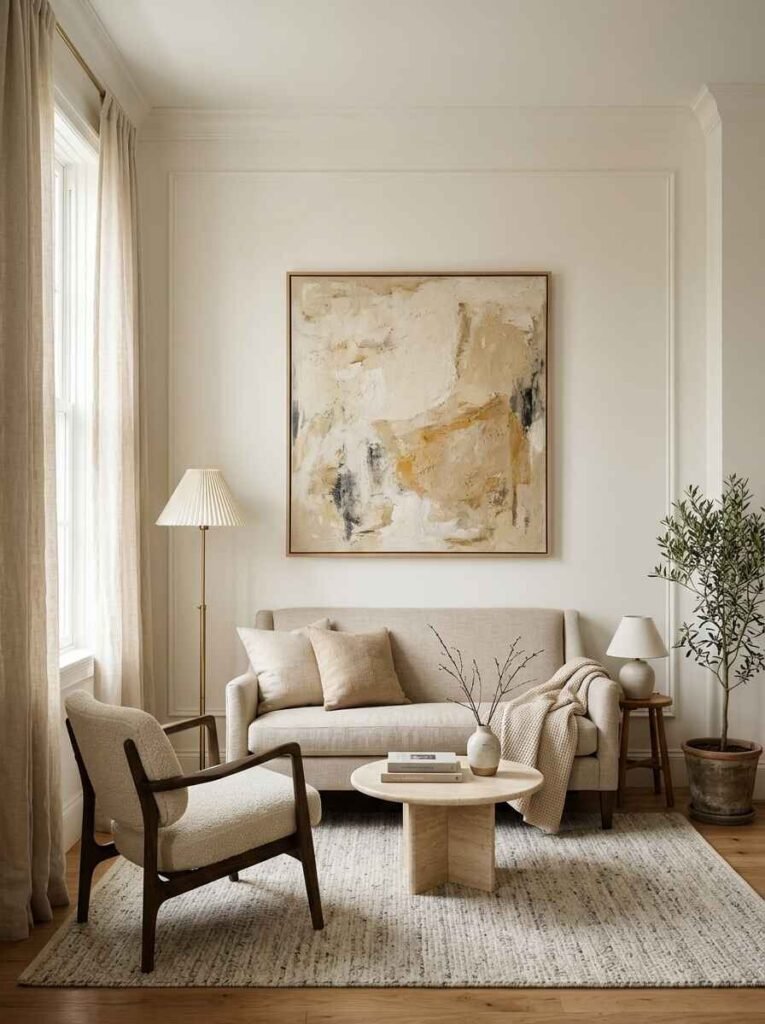
When space is limited, every decorative accent must be chosen with intention. Covering every open wall with small picture frames or chaotic decor creates visual noise that closes in the room.
Instead, hang a single, large-scale abstract artwork above the sofa or mantel. A prominent piece of wall art establishes a clear focal point, grounding the room’s arrangement and lending an elevated, gallery-like feel.
If you prefer a gallery wall, group framed prints tightly with matching mats and uniform frames. Align the color palette of your artwork with your upholstery, area rug, and wood finishes to maintain a harmonious look.
To coordinate your artwork with the rest of the room, explore our luxury living room color ideas for refined palettes and elegant color combinations.
10. Use Rugs to Define the Living Area
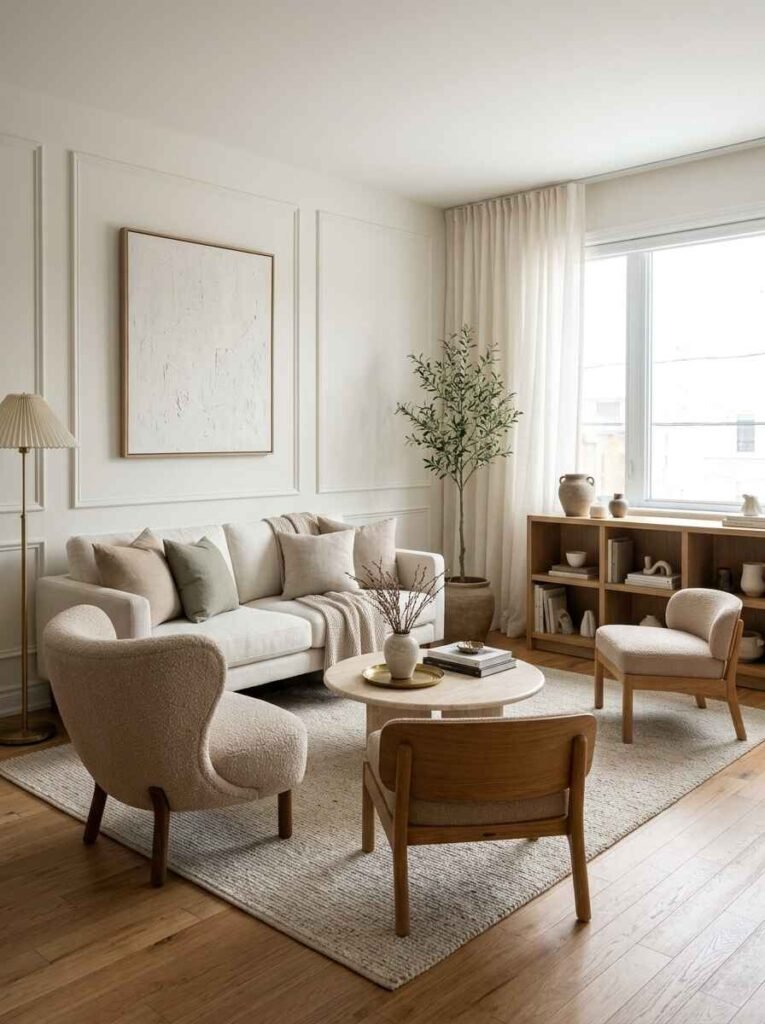
An area rug anchors a living room layout, visually unifying individual furniture pieces into a cohesive conversation zone.
A common design mistake in small rooms is choosing a rug that is too small. A tiny rug floating under the coffee table makes the entire layout feel fragmented and small. Instead, select an area rug large enough so that at least the front legs of your sofa and accent chairs rest firmly on top.
Opt for flat-weave or low-pile rugs featuring subtle geometric patterns, tonal heathering, or simple bouclé textures. Flat-weave and low-profile rugs can suit compact living rooms because they reduce bulk beneath furniture and are less likely to interfere with doors. Choose a rug material and construction that match your cleaning needs, and secure its edges to reduce tripping risks.
11. Introduce Vertical Elements and Natural Texture
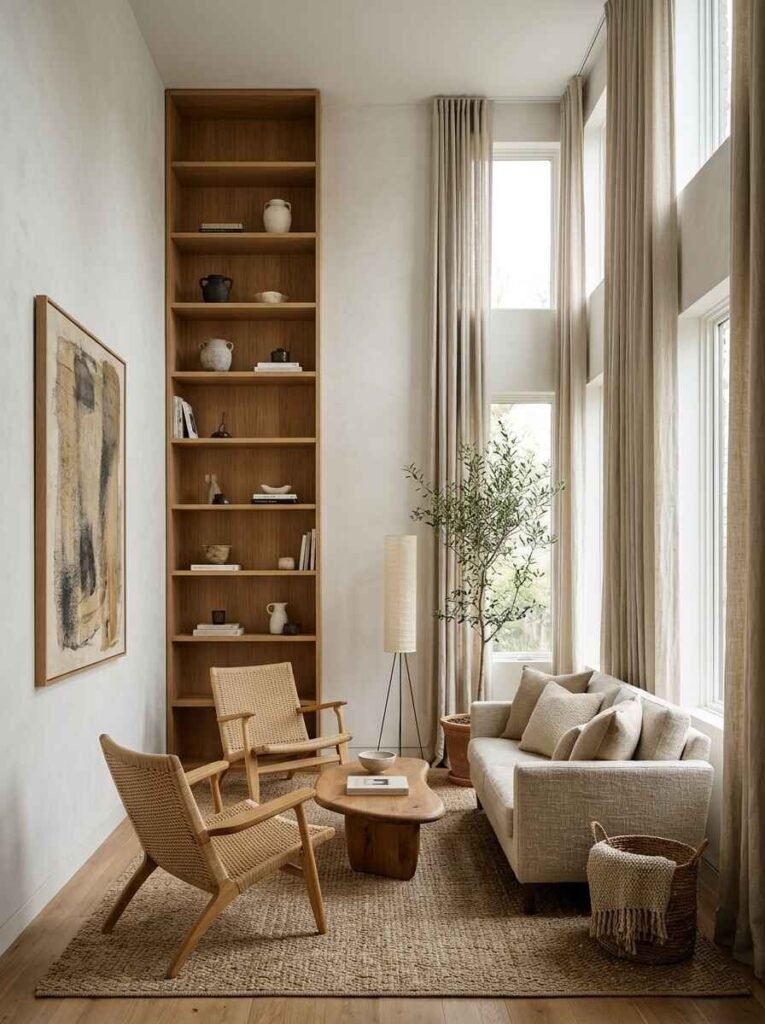
Drawing the eye vertically makes effective use of unexploited wall space, maximizing height in narrow living areas.
Install tall, slender bookcases or built-in shelving columns that reach toward the ceiling. Styled with a curated mix of books, ceramic vases, and small artwork, vertical shelves add personality without cluttering floor space. Incorporating tall, slender house plants like an olive tree or fiddle-leaf fig brings living greenery into vertical corners.
Balance vertical elements by introducing rich natural materials throughout the room. Natural oak, woven cane chairs, jute rugs, and linen fabrics bring tactile warmth, ensuring your compact living room feels cozy, grounded, and timeless.
How to Make These Small Living Room Ideas Work Together
Achieving an elegant small living room is not about implementing every single design trick at once. Rather, it comes down to selecting a few cohesive strategies that directly address your room’s specific layout challenges.
Start by evaluating your floor plan:
- Measure First: Accurately measure your wall lengths, window placements, and doorways before choosing furniture.
- Prioritize Circulation: Arrange your primary sofa and coffee table to preserve a clear, open walking path through the room.
- Unify the Palette: Stick to a light neutral base color for walls and large furniture, adding warmth through wood tones and rich textiles.
- Layer Lighting & Mirror Reflections: Place lamps at varying heights and hang a mirror across from a window to maximize natural daylight.
Small Living Room Design Mistakes to Avoid
- Choosing Bulky, Oversized Furniture: Buying furniture without verifying scale leads to cramped walkways and blocked doorways.
- Selecting a Too-Small Area Rug: A floating accent rug divides the room visually rather than unifying the seating group.
- Blocking Natural Daylight: Placing tall bookcases or heavy drapery directly in front of window glass cuts off natural light.
- Overloading Surfaces with Decor: Displaying dozens of small knick-knacks on coffee tables and shelves creates visual clutter.
- Relying Solely on Overhead Lighting: A single ceiling light casts unflattering shadows; always layer floor and table lamps.
FAQs
What colors make a small living room feel bigger?
Light, warm neutral shades—such as ivory, cream, soft greige, and pale taupe—reflect daylight and make walls recede visually, creating a bright, spacious feel.
How should furniture be arranged in a small living room?
Prioritize a clear walking route from room entrances to seating. Anchor furniture around a focal point, such as a window, fireplace, or art wall, and leave enough space around the coffee table for comfortable movement.
Which sofa is best for a small living room?
A compact two-seater sofa or loveseat featuring clean track arms, tailored upholstery, and exposed legs is ideal. Exposed furniture legs allow light to pass beneath, preserving visual openness.
How can I decorate a small living room without clutter?
Focus on quality over quantity. Choose multi-functional storage furniture, keep coffee table accents minimal, and hang a single prominent art piece instead of numerous small frames.
Can a small living room look luxurious?
Absolutely. A small living room can feel sophisticated through well-proportioned furniture, quality textiles such as linen and bouclé, layered warm lighting, natural wood details, and an uncluttered layout.
Conclusion
Creating an elegant, spacious feel in a small living room is entirely achievable when you prioritize proper scale, clear circulation, and layered lighting. By choosing well-proportioned furniture, incorporating multifunctional storage, and maintaining a cohesive neutral palette, you can transform a compact space into an inviting sanctuary.
Focus on making deliberate choices that suit your daily lifestyle. A thoughtfully designed living area should feel comfortable, highly functional, and effortless to live in every single day.