
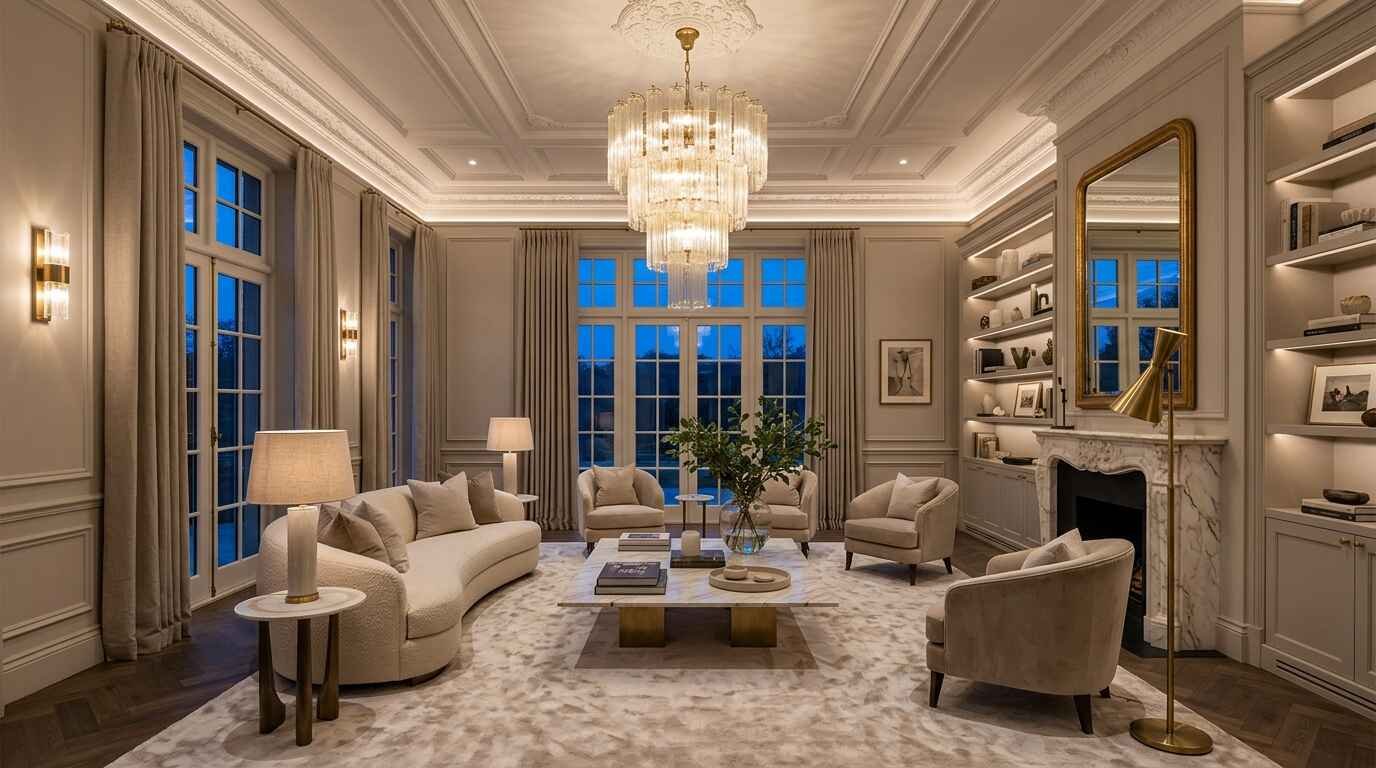
Lighting shapes how a living room is experienced and utilized throughout the day. In high-end interior design, lighting supports both the architecture and everyday function of the room. Beyond providing visibility, a thoughtful lighting layout highlights architectural features, defines seating zones within open floor plans, and complements changing natural light throughout the day.
Achieving a balanced result requires pairing artificial light with architectural layout, furniture placement, and natural daylight. Combining central statement fixtures with discreet accent lights and warm table lamps creates a flexible environment suitable for daytime entertaining, evening relaxation, and focused reading. The following 13 luxury living room lighting ideas offer practical ways to layer light across varied architectural settings.
13 Luxury Living Room Lighting Ideas
1. Layer Ambient, Task, and Accent Lighting
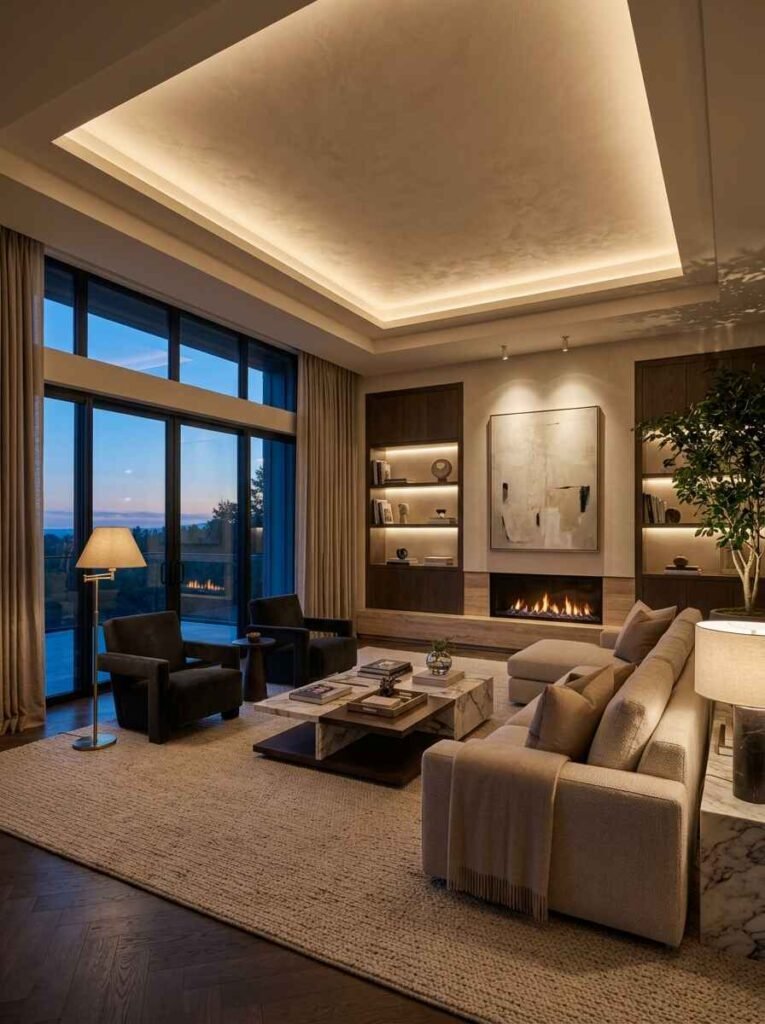
A single light source rarely accommodates the varied ways a living room is used. Effective lighting schemes combine three core illumination types: ambient (general background light), task (focused light for reading or specific activities), and accent (highlighting architectural details or decor).
Ambient sources, such as indirect ceiling coves or recessed downlights, establish overall visibility. Task illumination, provided by adjustable floor lamps or side-table fixtures, directs light precisely where needed without over-illuminating the entire room. Accent lighting, including concealed shelf strips and picture lights, adds visual depth by drawing attention to textures and focal points. Balancing these three layers prevents high-contrast shadows while ensuring the room remains functional at all hours.
2. Install a Statement Chandelier
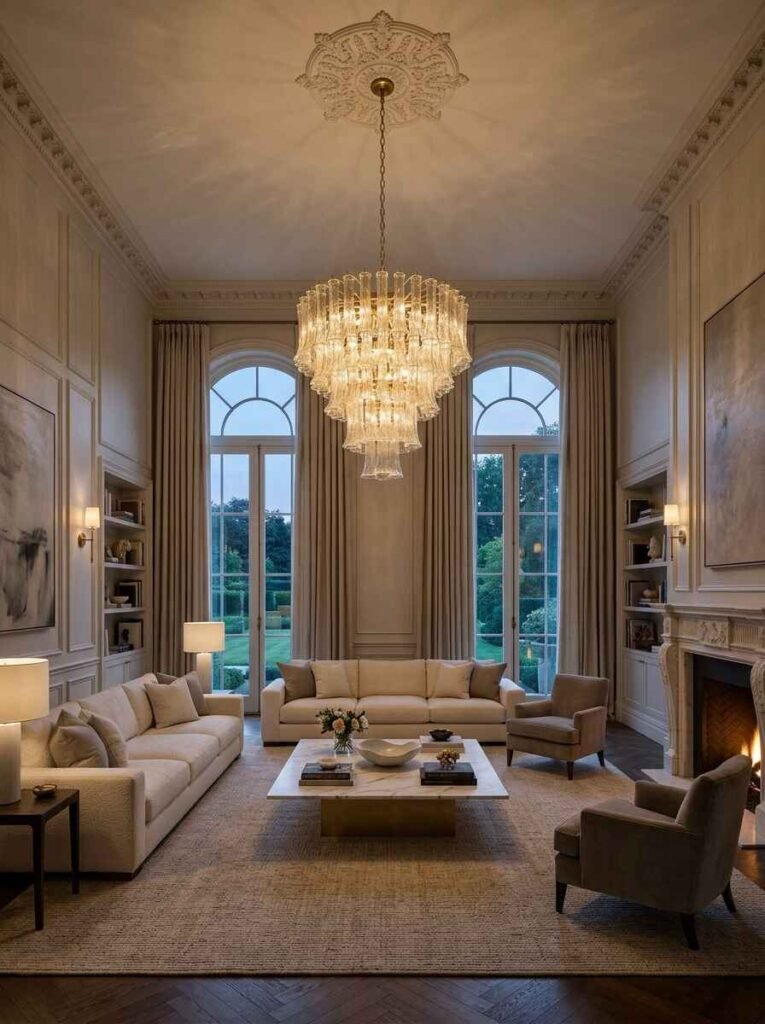
A statement chandelier acts as a primary visual anchor in formal seating areas. When selecting a fixture, scale and ceiling height are critical considerations. An undersized fixture can look lost in an expansive space, while an overly large piece may feel visually heavy above low seating.
A commonly used rule of thumb is to add the room’s width and length in feet to estimate a starting fixture diameter in inches. For example, a 15-by-20-foot room would suggest a fixture around 35 inches in diameter, although ceiling height, furniture scale, and the fixture’s visual weight should also be considered.
Ceiling clearance is equally important; placing the bottom of a fixture roughly 7 to 8 feet above the floor typically keeps sightlines clear in standard spaces. Equipping chandeliers with dimming controls allows them to transition smoothly from daytime illumination to a softer evening accent.
3. Use Sculptural Pendant Lighting
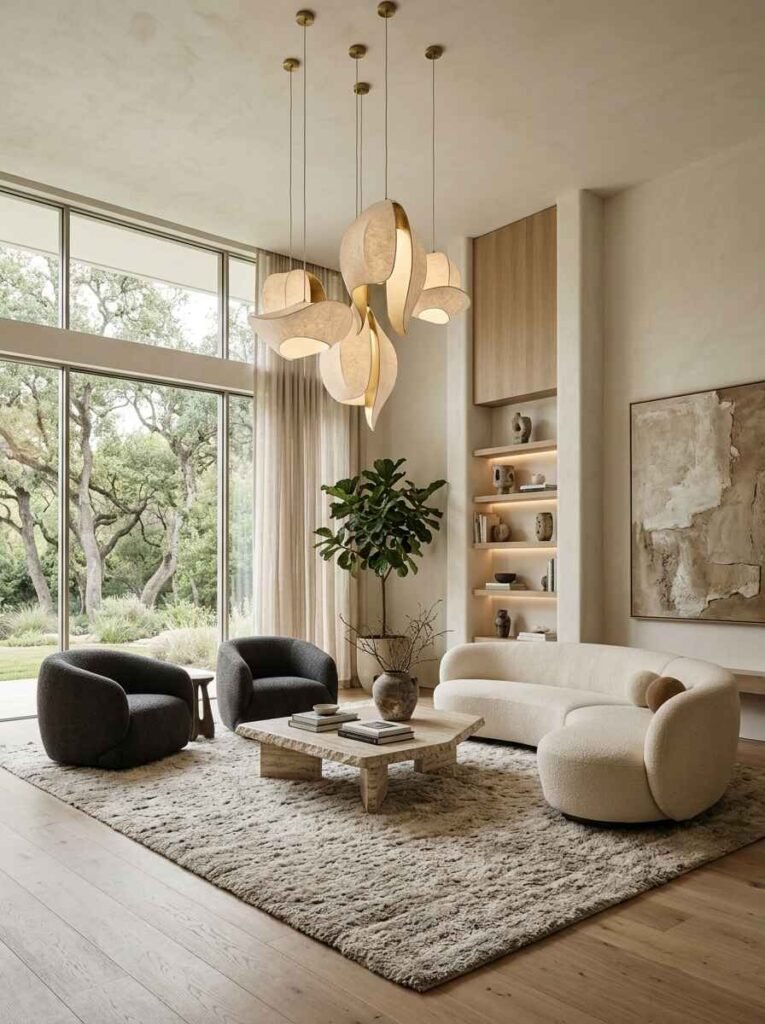
Unlike classic multi-arm chandeliers that distribute light broadly, sculptural pendants often direct light downward or diffuse a gentle glow through materials like alabaster, frosted glass, or brushed brass.
Pendants can work exceptionally well suspended over low-profile seating groups or coffee tables. Grouping multiple pendants at staggered drop heights creates a custom installation that helps fill vertical volume in double-height rooms. To maintain visual balance, ensure the scale and density of the shade materials harmonize with surrounding furniture.
4. Add Elegant Wall Sconces
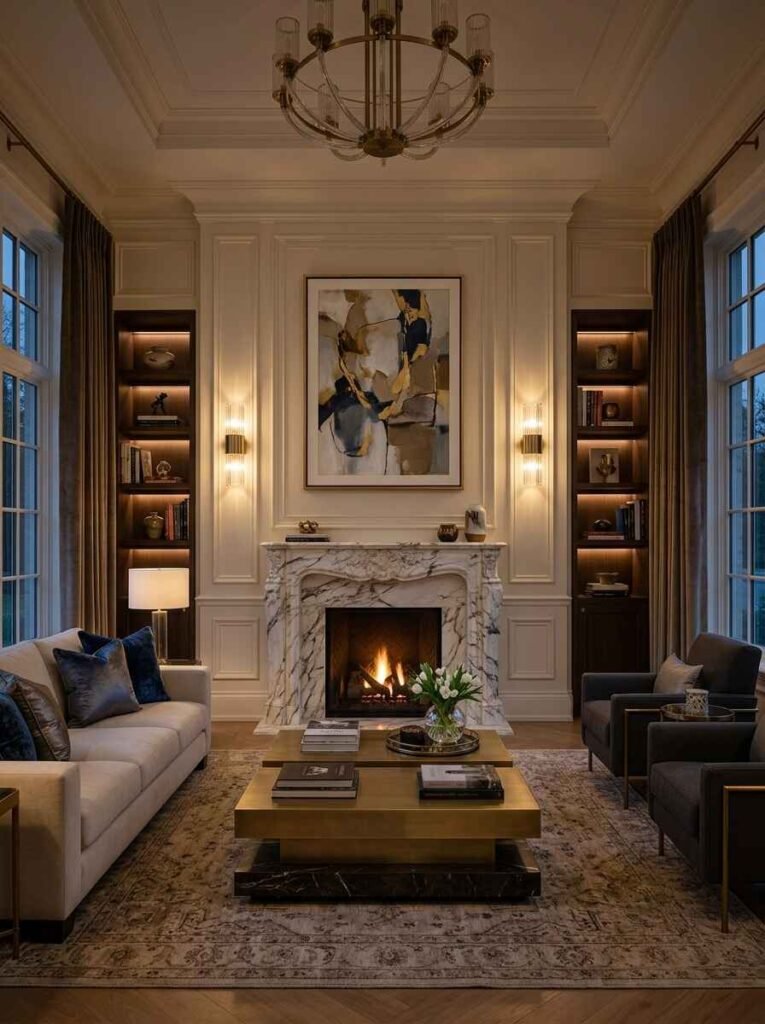
Wall sconces provide secondary ambient light at eye level, helping to soften directional shadows created by overhead fixtures. Mounted in pairs, they effectively frame focal points such as stone fireplaces, large-scale artwork, or symmetrical built-in bookcases.
Position wall sconces at a height that keeps the light comfortable at eye level while reducing direct glare from visible bulbs. The appropriate height depends on ceiling height, fixture design, and the people using the room. Coordinating metal finishes between sconces and nearby door hardware or architectural accents creates subtle continuity across the interior.
5. Place Floor Lamps Beside Seating
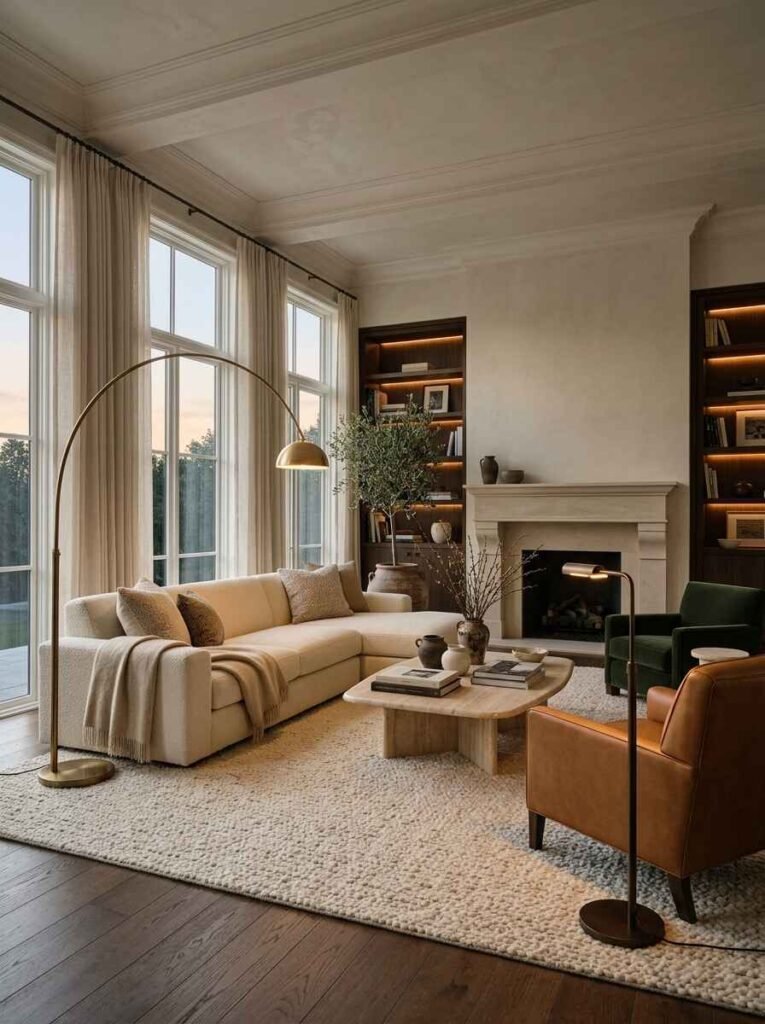
Floor lamps offer flexible task illumination without requiring permanent wall or ceiling electrical cutouts. Placed alongside sofas or deep armchairs, they deliver localized light that enhances comfort in conversation and reading areas.
Arc floor lamps feature long, curved arms that position light directly over the center of a seating arrangement without obstructing walkways. When selecting linear post floor lamps, choose shades that conceal the bulb from seated angles to prevent uncomfortable glare. A helpful benchmark is choosing a lamp height where the bottom edge of the shade sits near eye level when seated. For practical advice on organizing furniture around lighting zones, explore our guide on Luxury Living Room Layout.
6. Use Table Lamps to Add Warmth
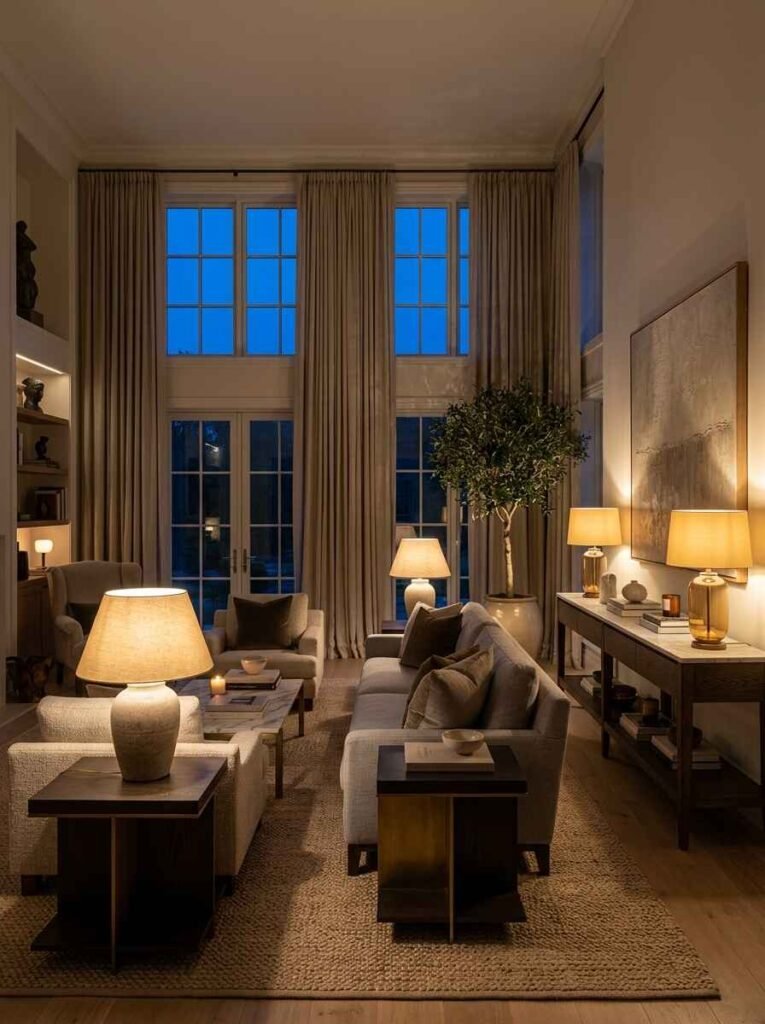
Table lamps introduce mid-level illumination that grounds a broader lighting scheme. Styled on side tables, console tables, or low credenzas, they bring localized warmth to perimeter areas that overhead fixtures often bypass.
For console tables positioned behind a sofa, shallow oval shades or slender bases fit neatly within narrow profiles. As a starting proportion, aim for a combined table-and-lamp height of roughly 58 to 64 inches from the floor, which helps keep the shade from exposing direct bulb light to seated guests.
7. Highlight Artwork With Accent Lighting
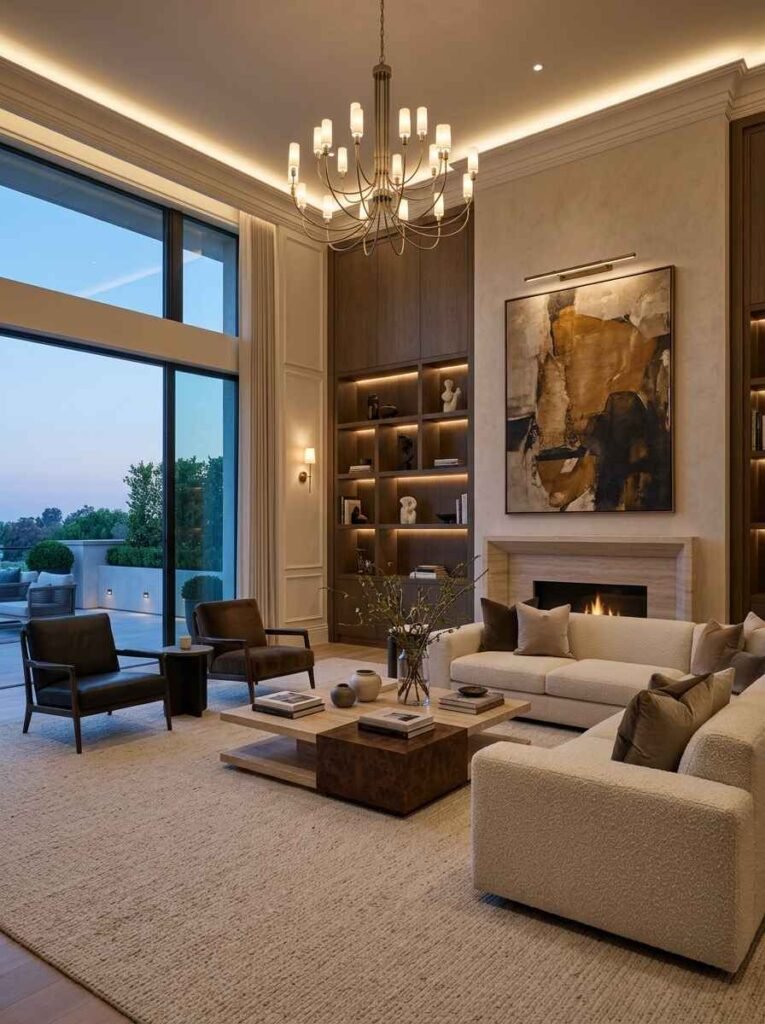
Dedicated accent lighting draws immediate focus to fine art, sculptures, or textured feature walls. Adjustable ceiling-mounted directional spots or recessed wall-washers illuminate artwork while keeping wall surfaces uncluttered.
To illuminate canvas or framed pieces with minimal surface glare, position ceiling spotlights at approximately a 30-degree angle relative to the wall. This placement minimizes direct reflections while preventing the frame from casting heavy downward shadows. Selecting fixtures with a high Color Rendering Index (CRI 90 or above) helps ensure colors appear vivid and accurate.
8. Use Recessed Lighting for Architectural Areas
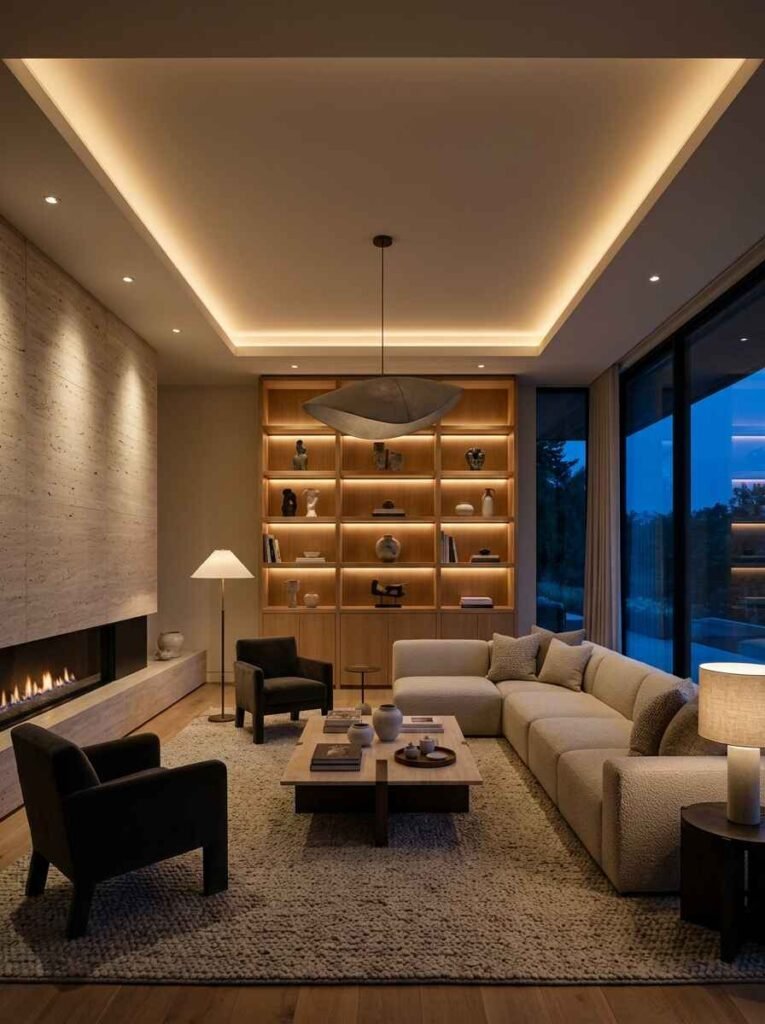
Recessed downlights provide unobtrusive background light when used with restraint. Rather than arranging fixtures in a rigid grid across the entire ceiling plane, direct downlights purposefully toward functional surfaces, walkways, and architectural features.
Washing wall surfaces with light expands visual boundaries, making compact or narrow layouts feel more open. Utilizing small-aperture fixtures (2 to 3 inches) with deep-regressed bevels reduces direct bulb visibility and glare on nearby glass or media screens. Wiring recessed fixtures on independent control channels allows central downlights to be turned off while keeping perimeter accents active.
9. Illuminate a Fireplace or Mantel
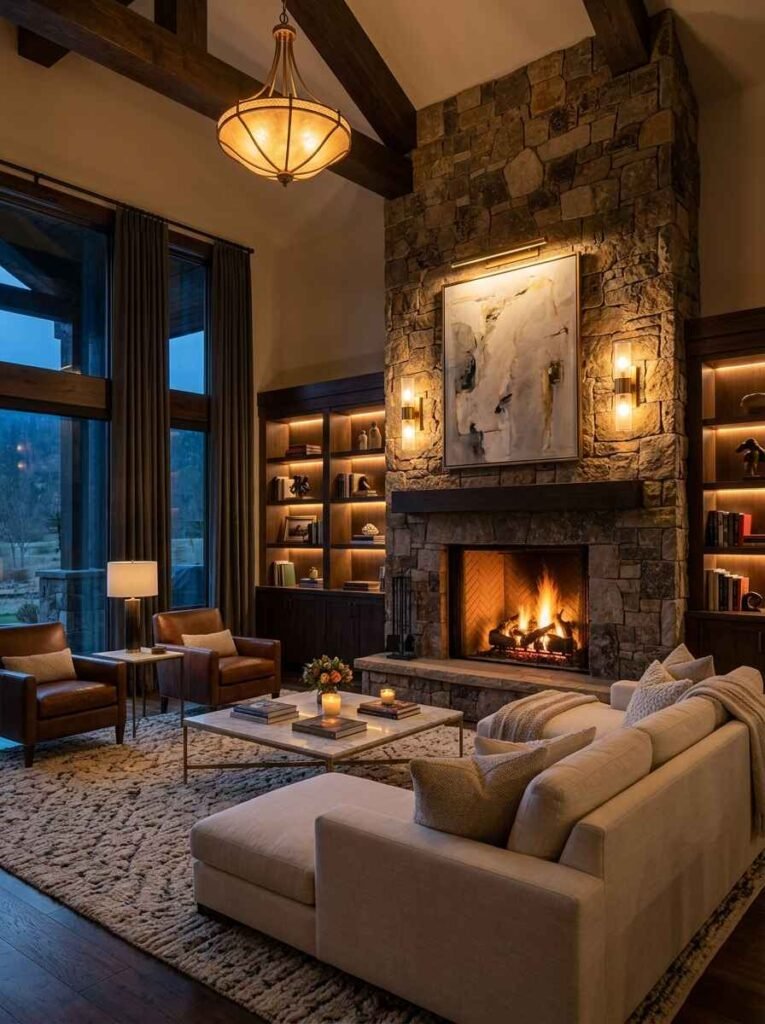
The fireplace often serves as the primary visual centerpiece in living areas. Highlighting the texture of the hearth and mantel draws the eye inward, reinforcing the room’s structural anchor during evening hours.
Directing surface-mounted downlights down textured stone or tile surrounds emphasizes material depth and subtle shadow work. When artwork hangs above the mantel, mounting a slim picture light or directional ceiling spot balances the light emitted by the hearth below. Ensure fixture placements avoid creating harsh specular reflections on polished marble or high-gloss surrounds.
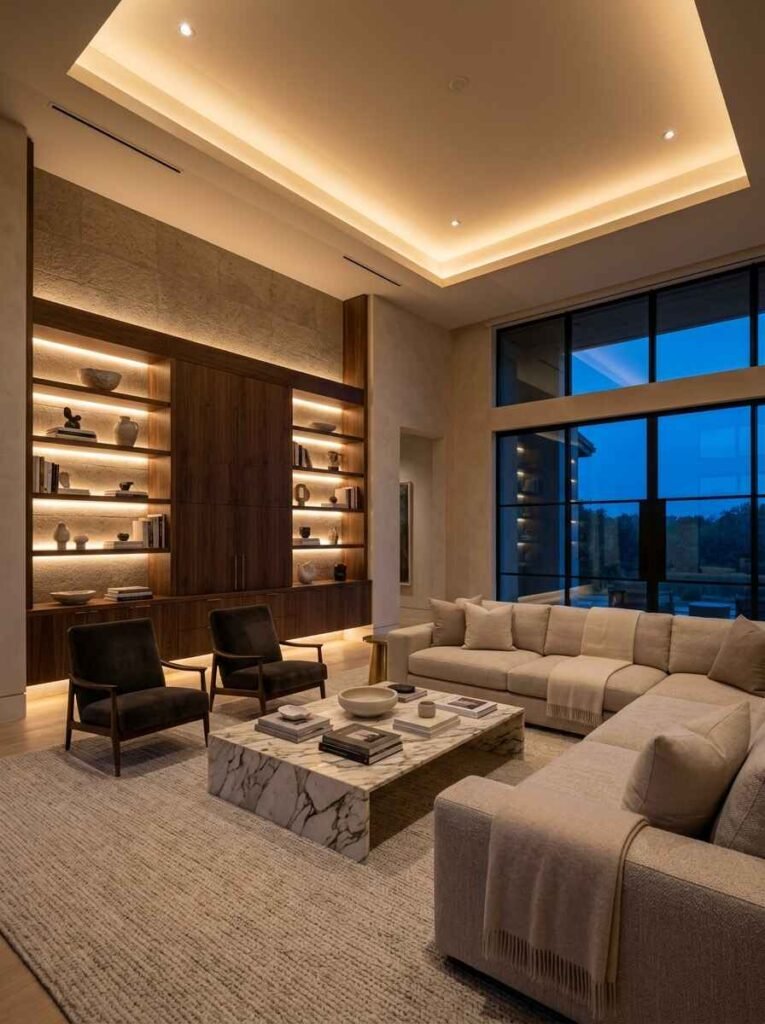
Concealed LED strip lighting introduces an indirect, floating glow beneath cabinetry, inside display shelves, or within architectural ceiling coves. Indirect illumination softens hard architectural edges and lends a lighter visual feel to heavy custom millwork.
When specifying linear LED strips, place them inside aluminum extrusions with frosted diffusers to prevent harsh individual diode reflections on polished surfaces. Selecting continuous warm LED strips (such as 2700K) complements natural wood grains and warm paint tones. For palette suggestions that react thoughtfully to indirect lighting, review our guide on Luxury Living Room Color Ideas.
11. Use Picture Lights for Wall Art
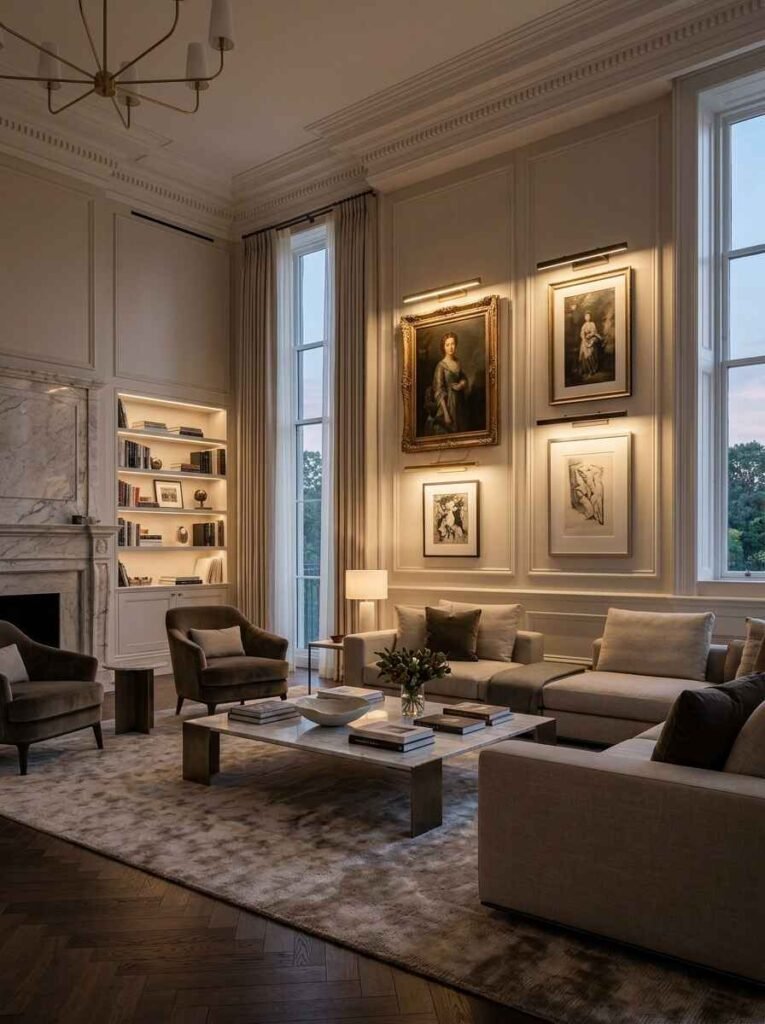
While ceiling spotlights offer broad wall coverage, frame-mounted picture lights deliver focused, classic illumination directly to single works of art. These slender horizontal fixtures mount directly to the top of the artwork frame or the wall surface immediately above it.
Choose picture lights with fixture heads scaled to approximately one-half to two-thirds the width of the frame. Modern LED options are particularly suitable because they emit negligible forward heat compared to traditional halogen bulbs, helping protect canvas and paper works over extended use.
12. Create a Warm Reading Corner With Focused Lighting
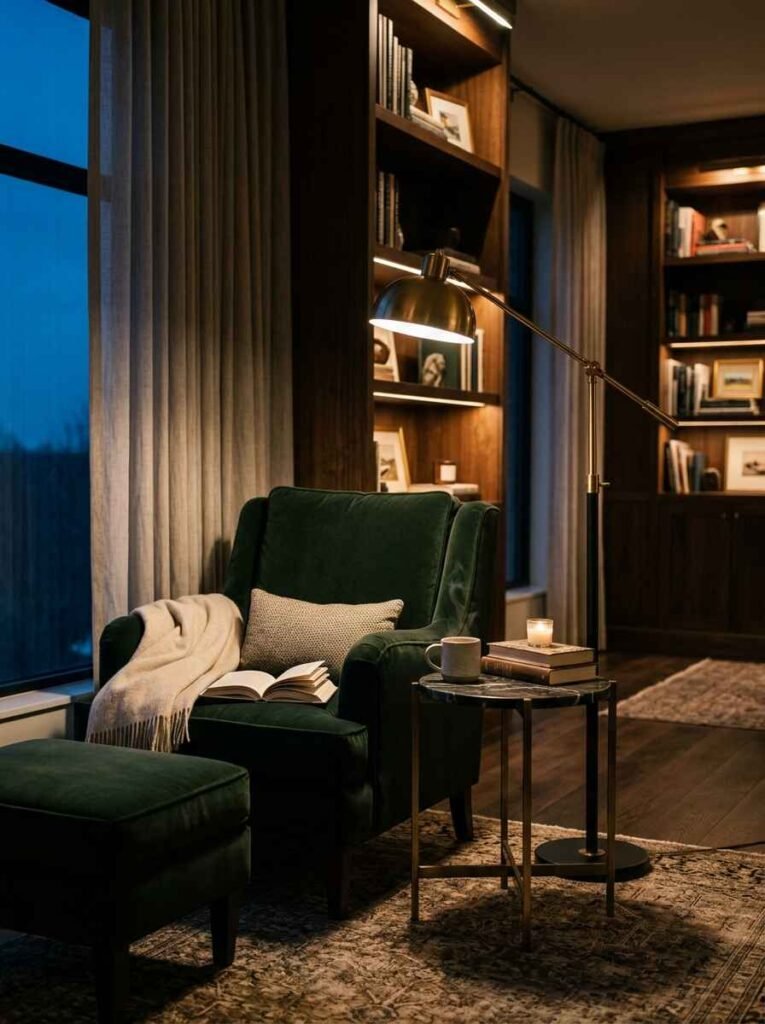
A dedicated reading nook requires purposeful directional light that minimizes eye strain without over-illuminating adjacent seating areas. Combining an adjustable floor lamp with a deep armchair and side table creates an inviting micro-zone within a larger living layout.
Select reading lamps with articulating joints, swing arms, or adjustable heads to position light precisely over reading material. Placing the fixture slightly behind and to one side of the chair keeps the light source outside direct sightlines.
For guidance on selecting comfortable seating options, read our overview on Luxury Living Room Furniture Ideas.
13. Use Dimmers to Control the Atmosphere
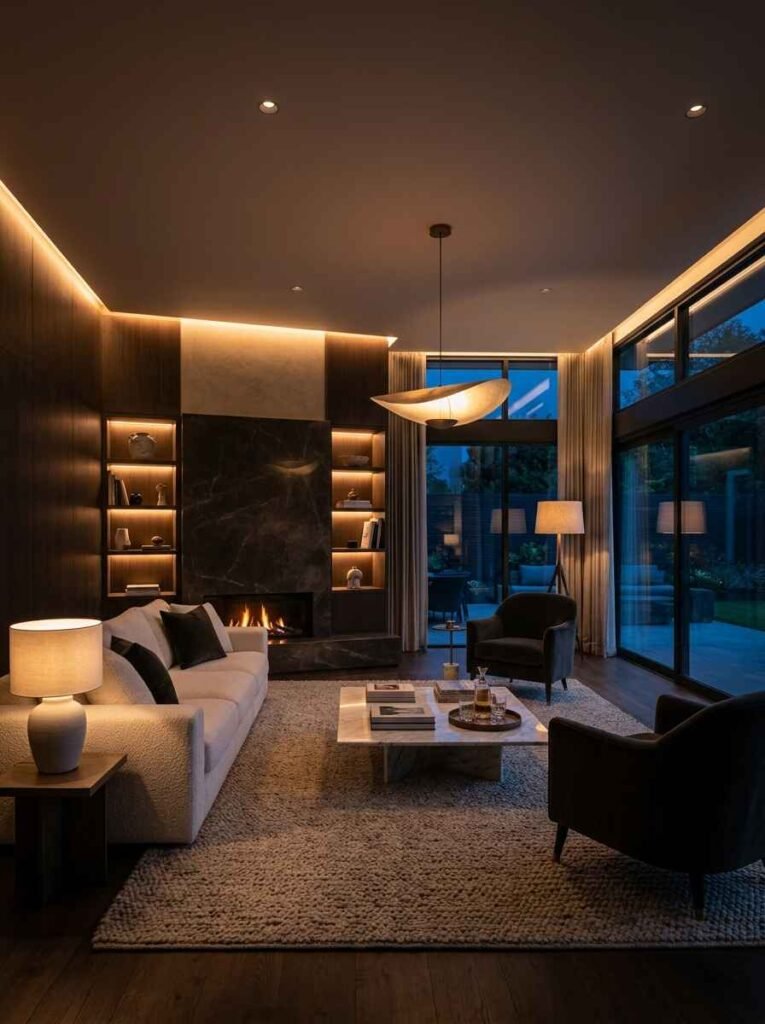
Installing dimming controls across lighting circuits allows seamless adjustments as natural daylight shifts. Fixed-output illumination limits flexibility, leaving a room either overly bright during twilight hours or under-lit at night.
Dividing fixtures into separate dimmable zones—such as chandeliers, perimeter downlights, wall sconces, and millwork LEDs—allows light levels to be tailored for reading, media viewing, or entertaining guests. Ensure dimmable LED drivers are fully compatible with selected wall dimmers to prevent buzzing or flickering at lower outputs.
How to Choose Luxury Living Room Lighting
Integrated LED fixtures can reduce the need for frequent lamp replacement in elevated locations, but consider the accessibility, driver, warranty, and service requirements before choosing them.
Consider Room Size and Ceiling Height
Ceiling height determines whether flush-mount, semi-flush, or suspended fixtures are most appropriate. Standard 8-foot ceilings generally suit shallow fixtures, flush sconces, and indirect cove lighting that preserve headroom. Higher or vaulted ceilings easily accommodate multi-tiered chandeliers, suspended sculptural pendants, and drop-down mounts that fill vertical volume.
Consider How the Room Is Used
Analyze primary living room activities throughout the day:
- Formal Entertaining: Prioritize decorative ambient fixtures, low-level table lamps, and accent lighting on artwork or architectural focal points.
- Family Relaxation: Emphasize indirect ceiling coves, soft floor lamps, and localized reading fixtures.
- Media Viewing: Ensure ambient downlights can be switched off or dimmed independently to prevent reflections on screens.
Select an Appropriate Color Temperature
Color temperature, measured in Kelvin (K), dictates the warm or cool appearance of light:
- 2700K (Warm White): A common choice for residential interiors that provides a warm, relaxing atmosphere flattery to wood tones and warm textiles.
- 3000K (Soft White): A slightly cleaner, neutral white that works well in modern interiors featuring cool stone, concrete, or crisp neutral surfaces.
- 3500K–4000K (Cool White/Neutral): Typically reserved for utility areas or offices; generally feels overly clinical in a residential living room setting.
Maintaining consistent color temperatures across fixtures within the same visual zone creates a seamless lighting transition.
Coordinate Metal Finishes
Coordinate metal finishes—such as aged brass, bronze, brushed nickel, or matte black—with existing room accents and hardware. While finishes do not need to match identically across every fixture, limiting prominent metallic tones to two complementary options prevents visual distraction.
Consider Long-Term Maintenance
Evaluate access requirements for bulb replacements and routine cleaning. High-hanging chandeliers in double-height spaces may require specialized ladder access or motorized lift systems. Selecting long-lifespan integrated LED fixtures minimizes the need for frequent maintenance in elevated locations.
Plan Flexible Control Systems
Smart dimming systems and multi-scene controllers allow custom lighting combinations to be saved for specific times of day. Setting scenes for daytime, early evening, and night allows the atmosphere of the room to shift with a single touch.
Luxury Living Room Lighting Mistakes to Avoid
Avoiding common specification and placement oversights helps ensure your lighting design performs reliably over time:
- Relying Solely on Overhead Illumination: A single overhead light source casts heavy downward shadows and leaves corners dim. Consider supplementing ceiling light with wall, floor, or table-level fixtures where additional illumination is needed.
- Selecting Undersized Fixtures: Undersized light sources often appear visually lost in generous living spaces. Scale fixtures appropriately to match surrounding furniture groupings.
- Overusing Recessed Downlights: Grid patterns of downlights can create an uninviting, uniform environment. Position recessed lights selectively toward walls, artwork, and functional surfaces.
- Mixing Incompatible Color Temperatures: Combining 2700K and 4000K sources in the same space creates uneven visual color patches. Keep color temperatures reasonably consistent within the same visual zone unless a deliberate contrast is part of the lighting design.
- Omitting Dimmer Switches: Fixtures and controls that are not designed for dimming limit your ability to adjust light levels for different activities and evening settings.
- Prioritizing Form Over Output: Highly decorative fixtures with low lumen output should be supplemented with functional secondary lighting to ensure adequate visibility.
- Allowing Screen and Artwork Glare: Exposed bulbs positioned opposite glass-framed art or media screens cause distracting reflections. Angle directionals thoughtfully to clear sightlines.
- Overpowering Architectural Features: Intricate, heavy fixtures can compete with detailed plasterwork or timber beams. Select designs that complement existing architecture.
For additional insight into combining furniture layouts, color schemes, and structural details into a cohesive space, explore our guide on Luxury Living Room Ideas.
Frequently Asked Questions
What lighting strategy makes a living room feel most welcoming?
Layering soft ambient light (such as indirect ceiling coves) with warm perimeter accents and low-level table lamps creates a cozy atmosphere while eliminating harsh downward shadows.
What is the difference between CRI 80 and CRI 90+ in living room lighting?
Color Rendering Index (CRI) measures how accurately a light source reveals true color compared to natural sunlight. Standard 80 CRI fixtures are fine for general lighting, but CRI 90 or higher is preferred for displaying artwork, natural stone, and rich wood tones without color distortion.
How do I prevent glare when installing living room lighting?
Prevent glare by choosing fixtures with recessed light sources or frosted diffusers, angling spotlights at 30 degrees toward walls rather than direct sightlines, and placing lamps so the shade conceals the bulb at eye level when seated.
Can you mix modern and traditional lighting fixtures in the same room?
Yes, mixing fixture styles can add architectural character. To maintain harmony, keep the color temperature (Kelvin) consistent across all fixtures and limit metallic finishes to two complementary tones throughout the space.
Why are my LED lights flickering when dimmed?
Flickering typically occurs when LED fixtures are paired with incompatible legacy dimmers or non-dimmable LED drivers. Check that the LED fixture or driver and the dimmer are specifically compatible. Using a compatible LED-rated dimmer can help reduce problems such as flickering, buzzing, or an inconsistent dimming range.
How do I calculate the total light needed for a living room?
The amount of light a living room needs depends on its size, ceiling height, surface finishes, activities, and the distribution of the fixtures. Rather than relying on a single lumen target, consider ambient lighting for general visibility and add brighter task or accent lighting where specific activities or architectural features require it.
Conclusion
Designing a refined living room relies on balancing functional illumination with architectural character. By layering ambient ceiling coves, directional task lamps, and discreet accent lights, a living room can adapt effortlessly to any time of day.
Selecting appropriate fixture scales, coordinating color temperatures, and using compatible dimming controls can help the space remain comfortable, flexible, and inviting. Applying these practical luxury living room lighting ideas will help establish a well-lit home tailored to your daily lifestyle.
1 thought on “13 Luxury Living Room Lighting Ideas for an Elegant Home”
Comments are closed.