
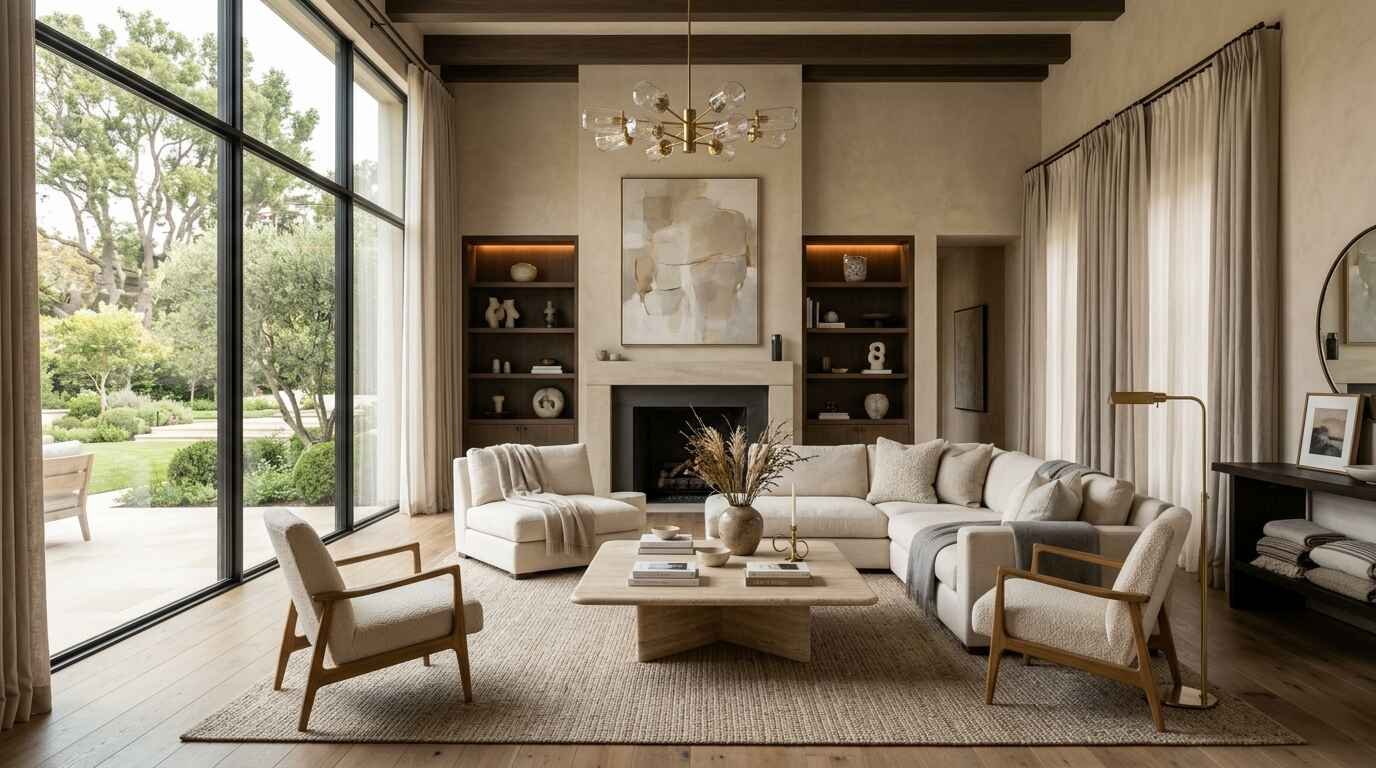
A luxury living room is defined not by lavish spending or fleeting trends, but by refined proportions, considered materials, and a sense of effortless composure. True interior luxury feels grounded, inviting, and inherently intentional. Every object serves a purpose—whether to elevate tactile comfort, anchor a visual focal point, or contribute to an overall atmosphere of quiet sophistication.
Designing an elegant living space requires balancing structural elements with subtle decorative layers. By pairing rich natural textures, bespoke architectural detailing, and layered ambient lighting, you can create a home that feels both elevated and deeply comfortable.
Here are 23 luxury living room ideas to inspire your next interior transformation.
23 Luxury Living Room Ideas
1. Opt for a Low-Profile Modular Sofa
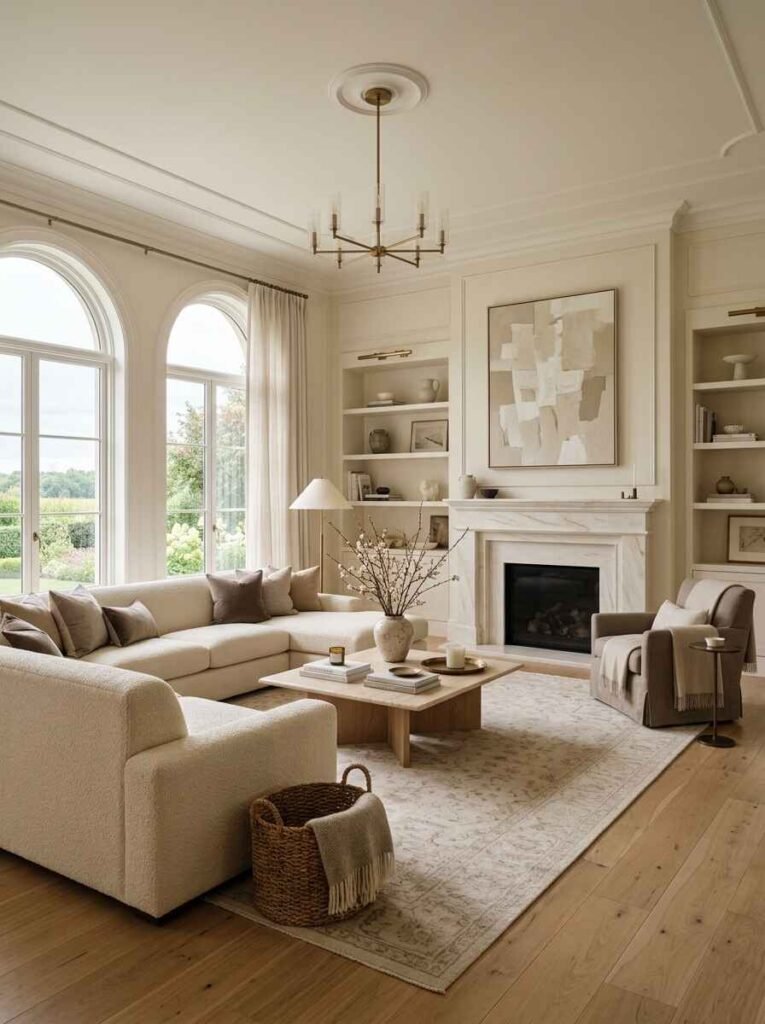
Low-slung modular seating maintains open sightlines while emphasizing vertical architectural volume. Generous, ground-hugging frames offer a relaxed yet structured silhouette, carving out an inviting lounge zone. Upholstery choices like textured linen, matte velvet, or plush bouclé preserve sleek lines without sacrificing tactile warmth. Flexible configurations make it easy to adapt the layout to your room’s exact dimensions, fostering effortless conversation.
2. Pair Rich Wood Paneling With Soft Neutrals
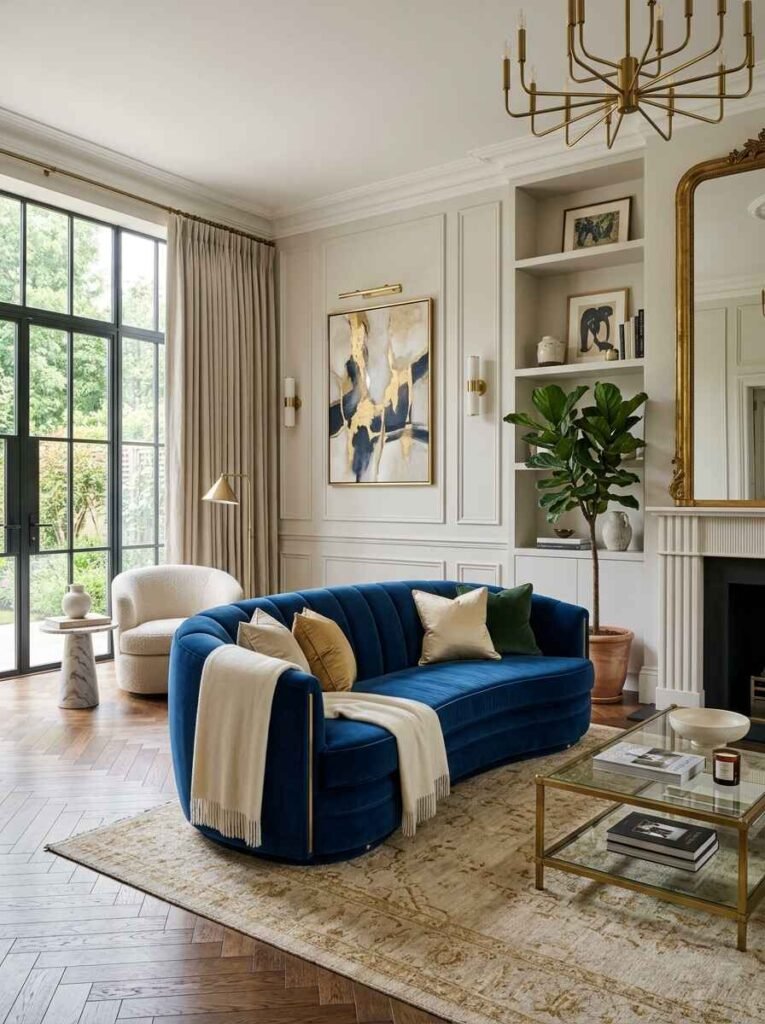
Architectural timber paneling brings immediate depth, character, and timeless heritage into contemporary interiors. Deep walnut, warm oak, or stained ash walls create a handsome, grounded backdrop. To ensure the space remains light and airy, balance structured woodwork with soft alabaster sofas, oat-toned drapery, and cream wool rugs for a balanced, multi-dimensional aesthetic.
3. Incorporate Oversized Modern Abstract Art
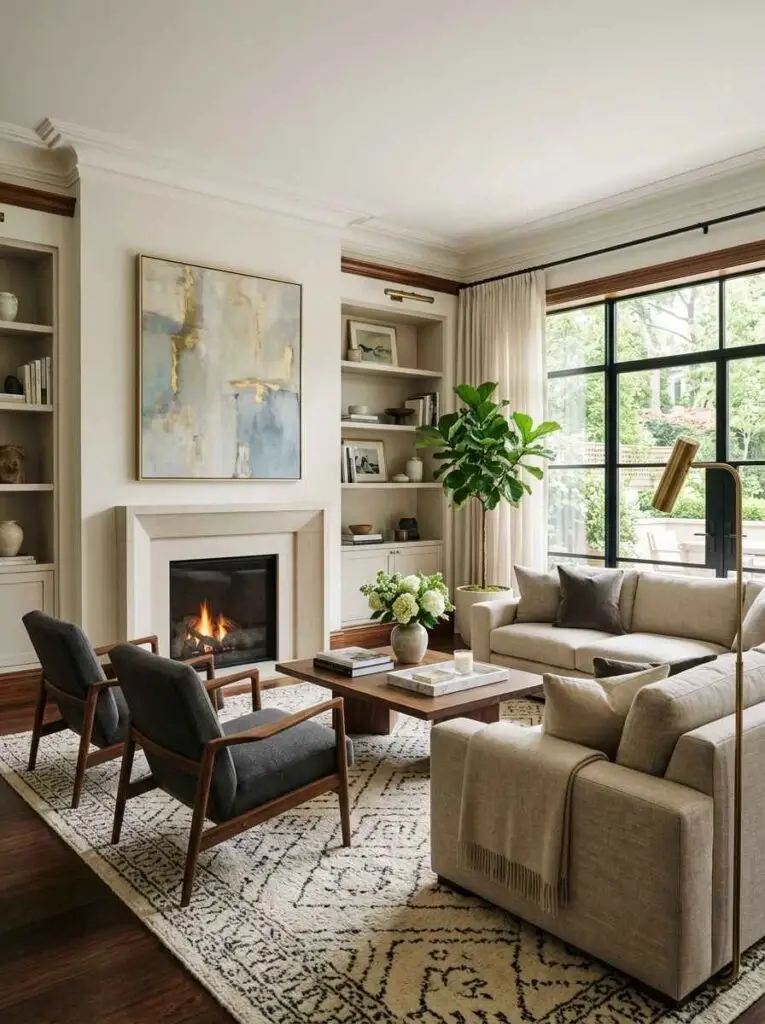
Proportions play a pivotal role in high-end design. Rather than cluttering your main wall with a collection of smaller frames, anchor the space using one or two large-scale abstract canvases. Singular, expansive artwork draws the eye immediately, establishing a bold focal point while echoing subtle accent shades like muted ochre, charcoal, or deep indigo found across the room.
4. Add Sculptural Accent Chairs
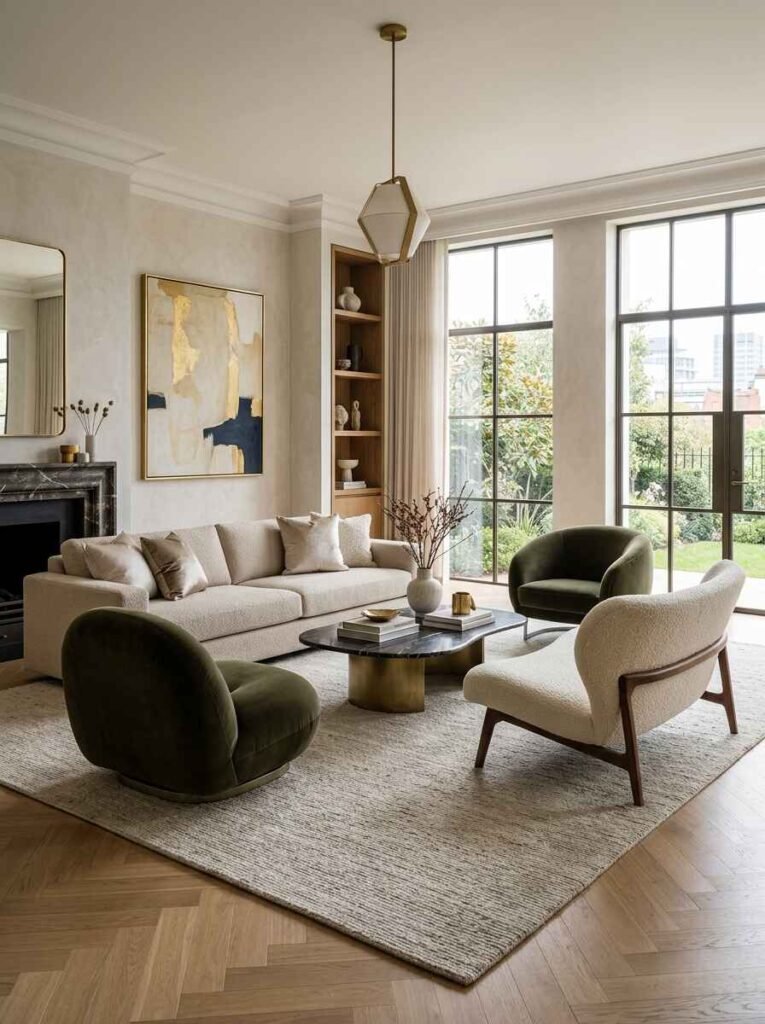
Sculptural seating introduces artistic expression directly into your floor plan. Swivel armchairs with flowing curved silhouettes, tub seating wrapped in moss-green velvet, or mid-century timber designs function as living artwork. Position a pair opposite the main sofa to balance proportions and encourage face-to-face interaction while breaking away from rigid, boxy arrangements.
5. Install Full-Height Custom Drapery
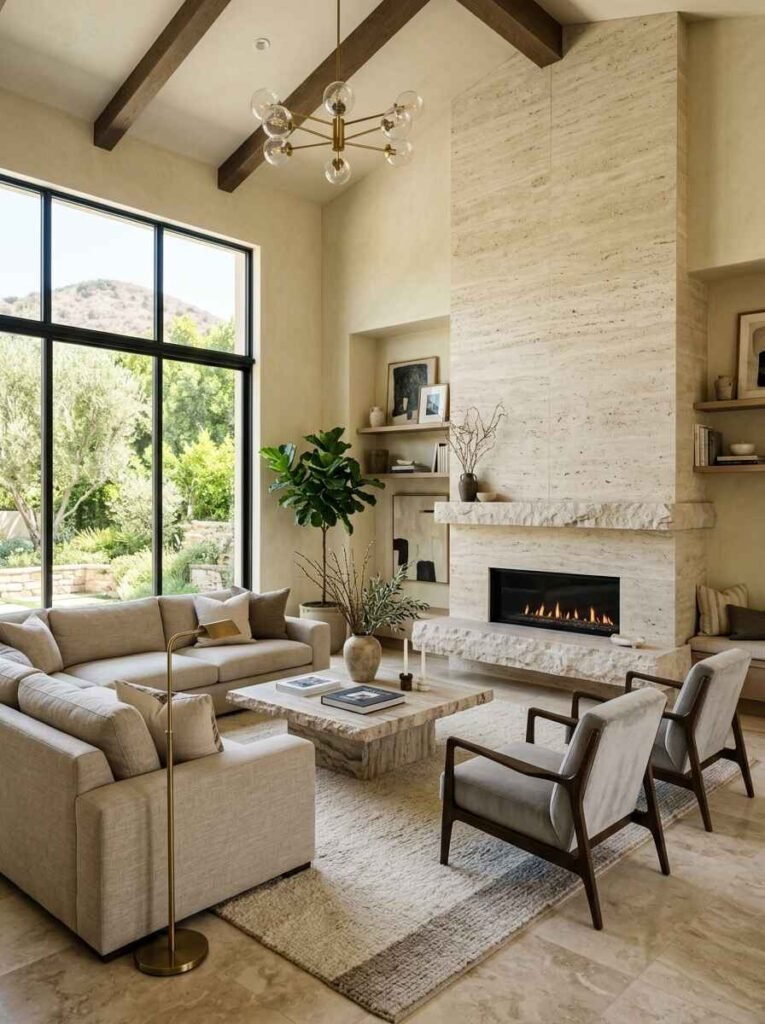
Floor-to-ceiling drapery running continuously from the crown molding down to the floor instantly elevates the perceived ceiling height. Heavy linen, weight-lined silk, or rich velvet drapes frame windows with architectural gravity. Utilizing hidden ceiling tracks allows fabric to fall in uniform ripples that gently kiss the floor for a tailored, high-end finish.
6. Choose a Statement Coffee Table
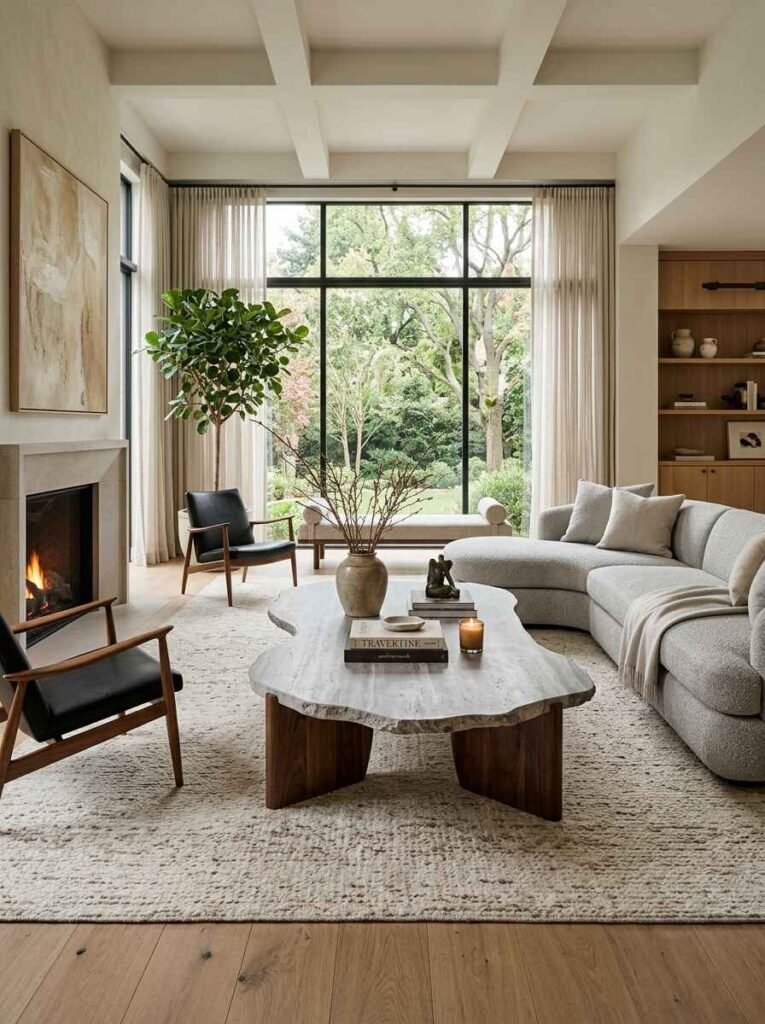
As the central anchor of your primary seating arrangement, a statement coffee table anchors surrounding furniture. Select pieces featuring distinctive natural materials—such as honed Calacatta marble, raw travertine, or live-edge solid timber slabs. Organic silhouettes, thick plinth bases, or mixed-material construction (like stone tops resting on sculpted bronze legs) elevate this functional piece into a striking centerpiece.
7. Ground the Room With a Luxury Area Rug
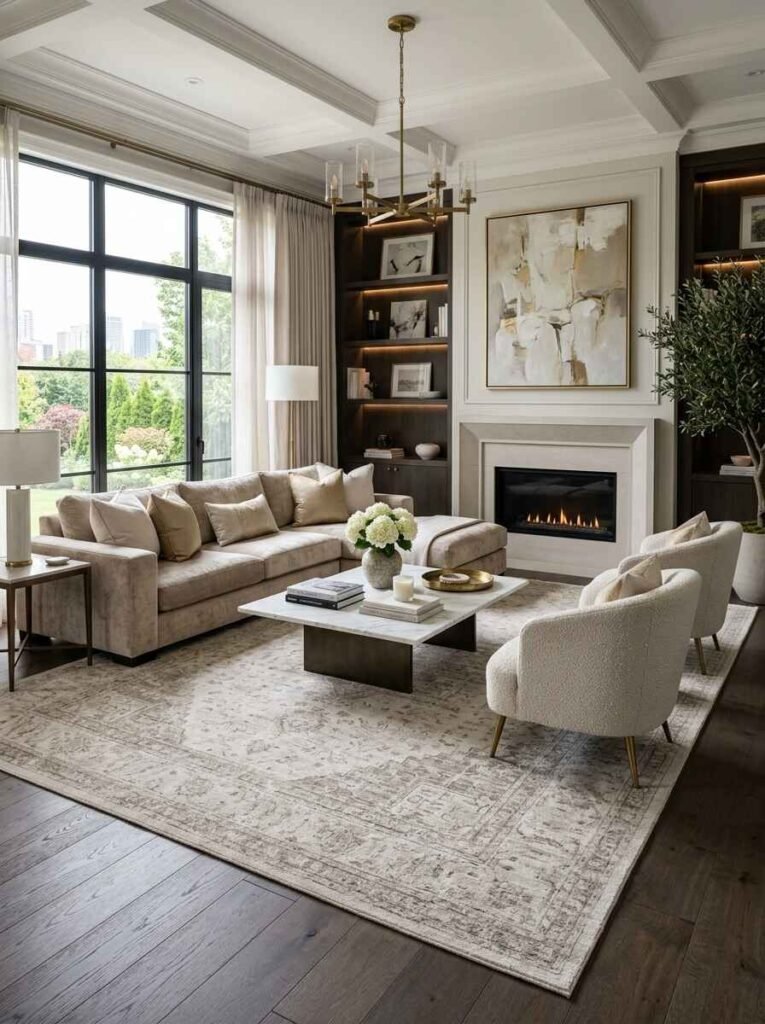
An area rug establishes clear boundaries for the main lounge space. Opt for large-scale floor coverings crafted from hand-spun wool, silk-blend piles, or subtle vintage-patterned weaves. Sizing the rug generously ensures all major furniture pieces—or at least their front legs—rest comfortably on its surface, tying the overall layout together.
Read this: 11 Luxury Living Room Rug Ideas for an Elegant Home
8. Introduce Controlled Contrast
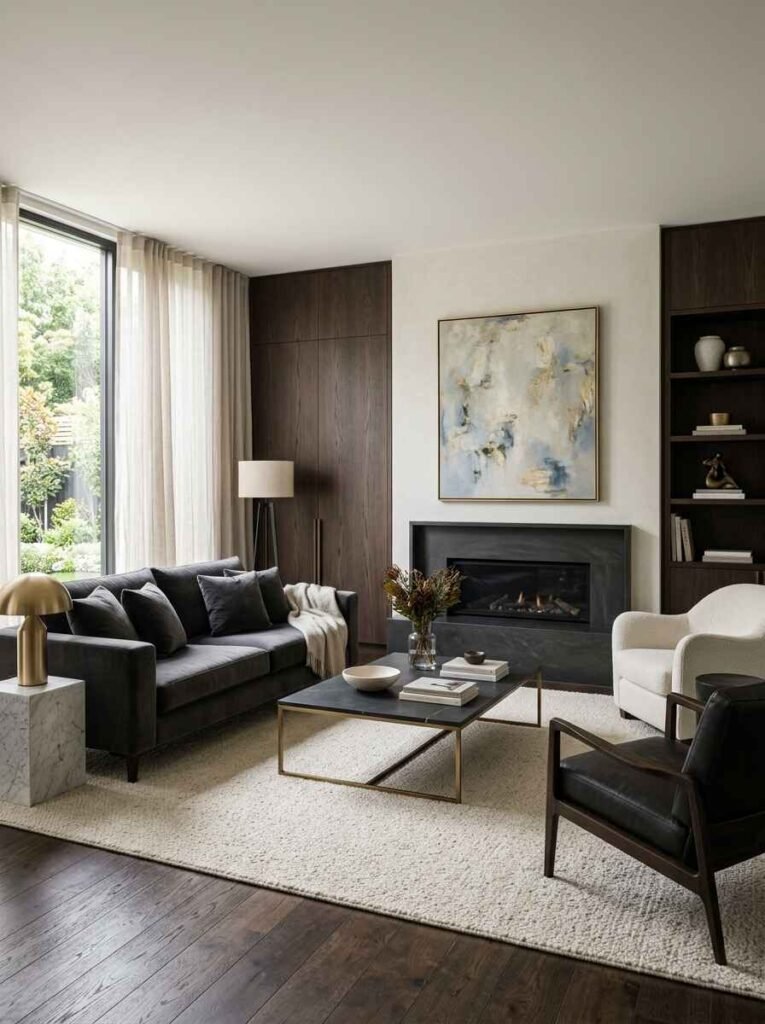
Subtle contrast prevents neutral interiors from feeling flat or understated. Pair light, warm-toned walls and upholstery with darker, grounding accents—such as a charcoal velvet sofa, a dark marble hearth, or patinated bronze hardware. Directing high-contrast details intentionally guides the eye smoothly through the room, creating architectural depth without disrupting visual harmony.
9. Add Aged Brass and Refined Metal Accents
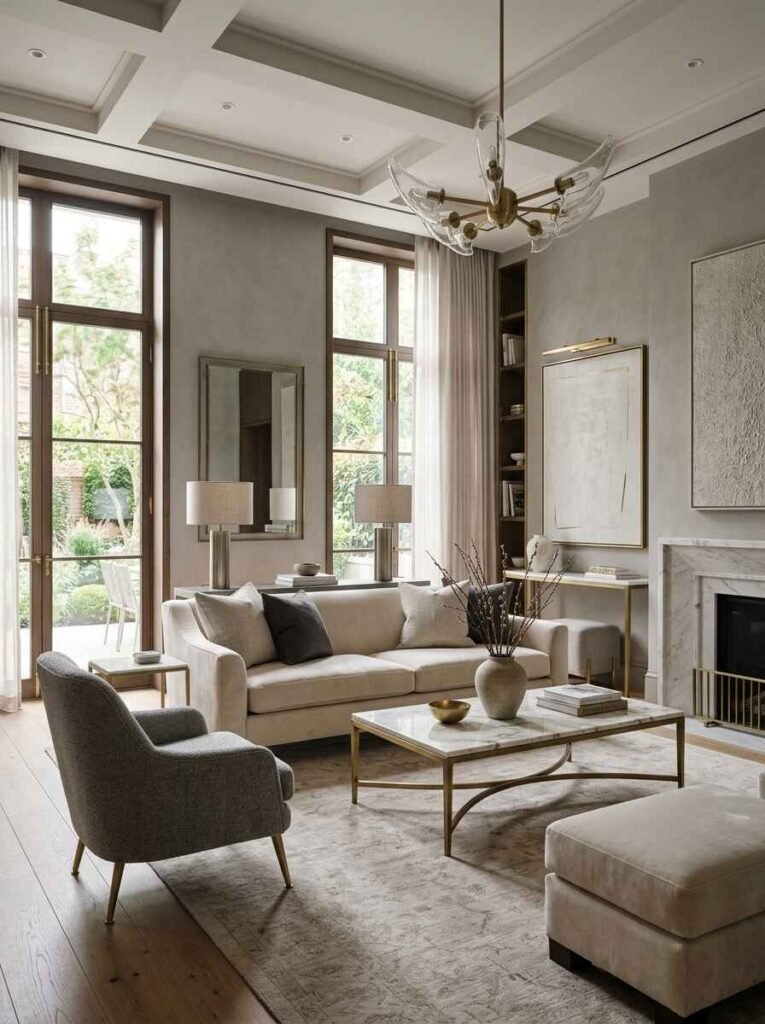
Unlacquered brass, brushed bronze, and blackened steel bring enduring charm to hardware and fixtures. Integrate these finishes through cabinet hardware, light fixtures, coffee table frames, picture lights, and fireplace screens. Combining warm, patinated metals with cool stone surfaces builds an authentic, curated aesthetic that evolves gracefully over time.
10. Add Custom-Looking Built-In Storage
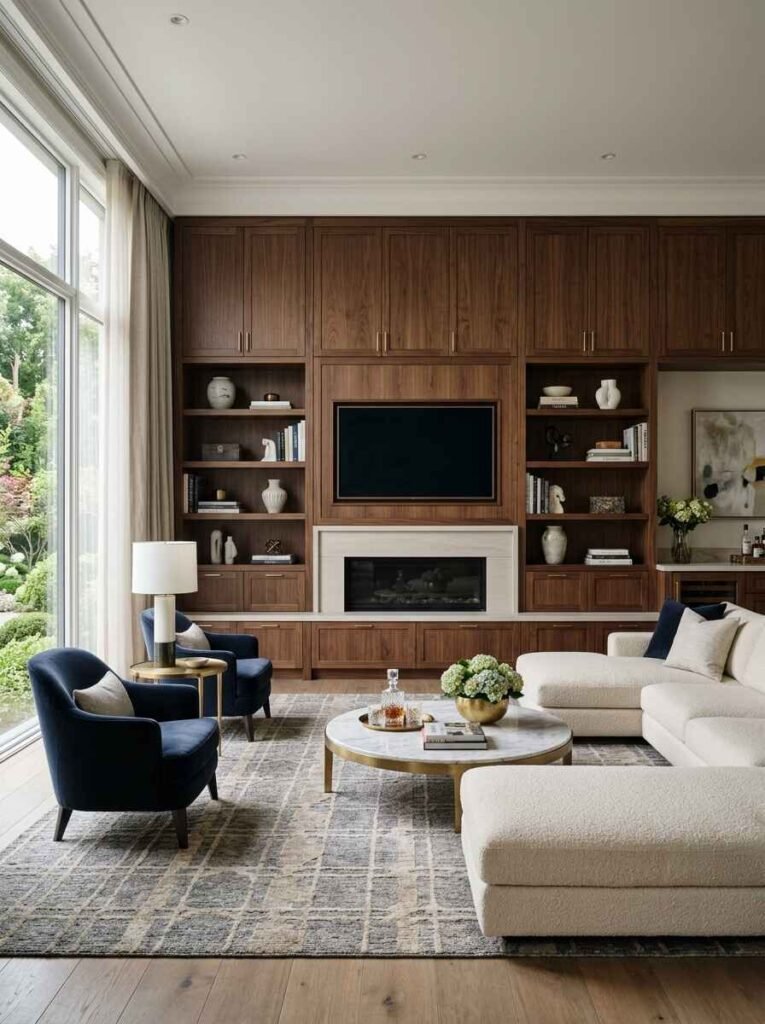
Custom millwork turns plain drywall into a bespoke design statement. Floor-to-ceiling shelving, recessed media consoles, and display niches conceal everyday items while beautifully showcasing curated ceramics, art objects, and books. Integrated LED strip lighting within open shelves gently illuminates displayed items, drawing out the beauty of warm walnut or painted oak.
11. Create Zones in an Open-Concept Living Room
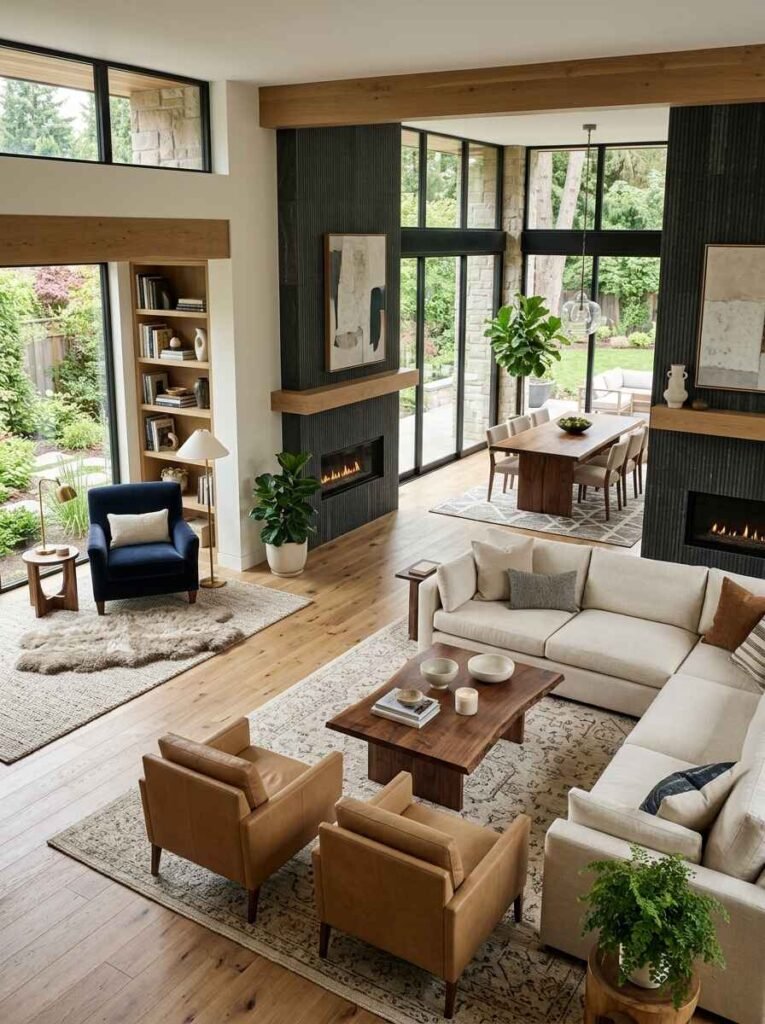
Expansive open-plan layouts require thoughtful division to feel cozy and intimate. Partition functional spaces—such as a primary seating area, a reading nook, or an adjoining dining space—using floating furniture arrangements, distinct area rugs, directional ceiling beams, or low-backed benches. Strategic zoning maintains continuous sightlines while assigning a clear purpose to every corner.
12. Design Around a Fireplace Focal Point
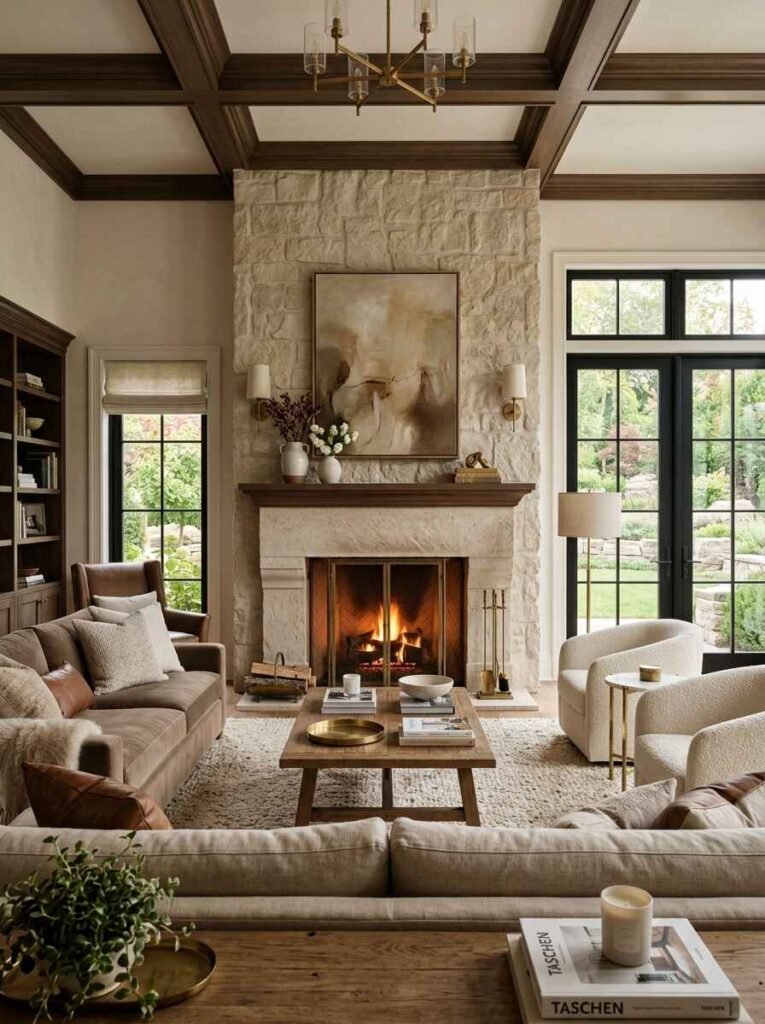
A well-crafted fireplace naturally serves as the visual anchor of a living space. Clad the chimney breast in hand-cut limestone, stacked stone, floor-to-ceiling marble slabs, or dark troweled plaster. Arranging seating symmetrically around the hearth creates a warm, welcoming layout designed for relaxation and gathering.
Read this: 11 Luxury Living Room Fireplace Ideas for an Elegant Home
13. Mix Curved and Linear Furniture Forms
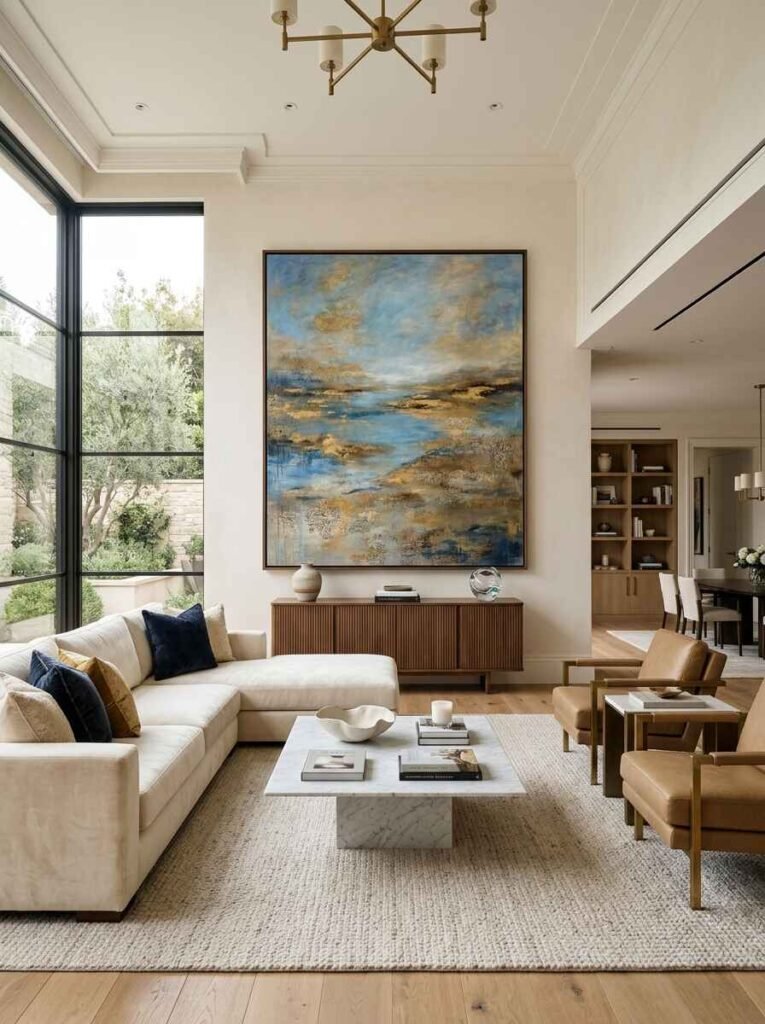
Combining geometric angles with soft, organic contours adds subtle rhythm to your arrangement. Pair crisp, square-armed sofas or structured tables with rounded kidney-shaped ottomans, arched wall mirrors, circular side tables, or curved swivel chairs. Softening structural lines breaks up rigidity, giving the interior a relaxed yet polished feel.
14. Embrace a Monochromatic Warm Palette
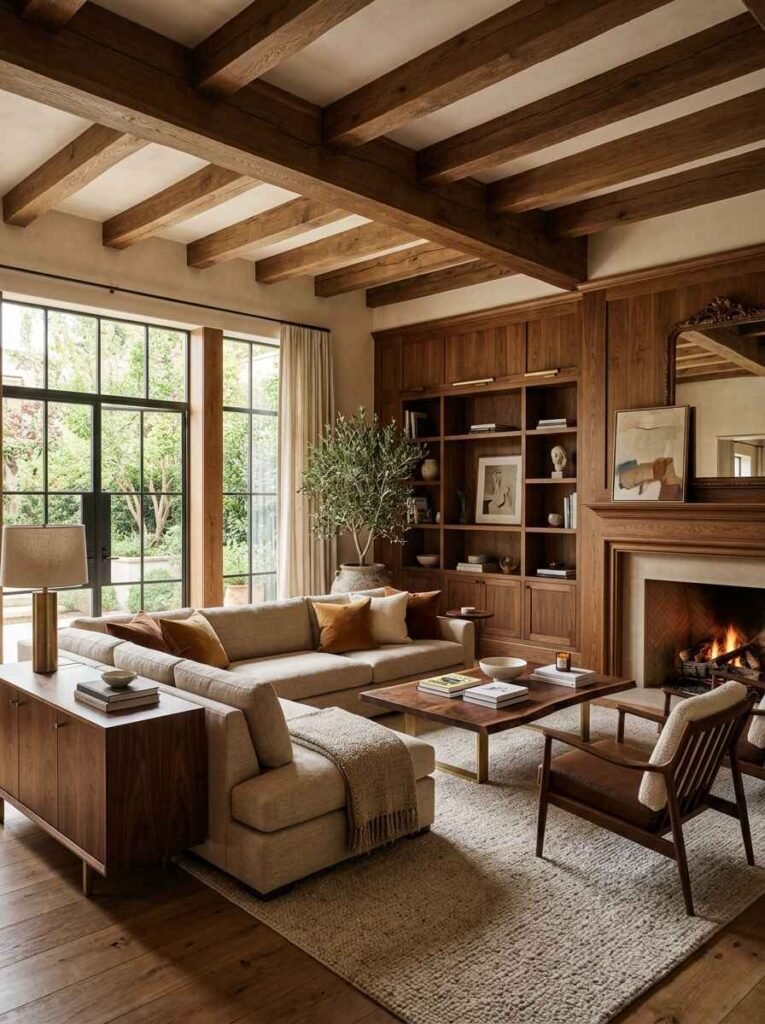
A monochrome color scheme built around warm shades—such as alabaster, taupe, camel, and soft stone—yields a calm, expansive environment. Layer varied tones and textures across walls, rugs, upholstery, and drapes to build depth without relying on bold color contrasts. The result is a cohesive backdrop that feels spacious, inviting, and effortlessly chic.
15. Refined Minimalist Living Room
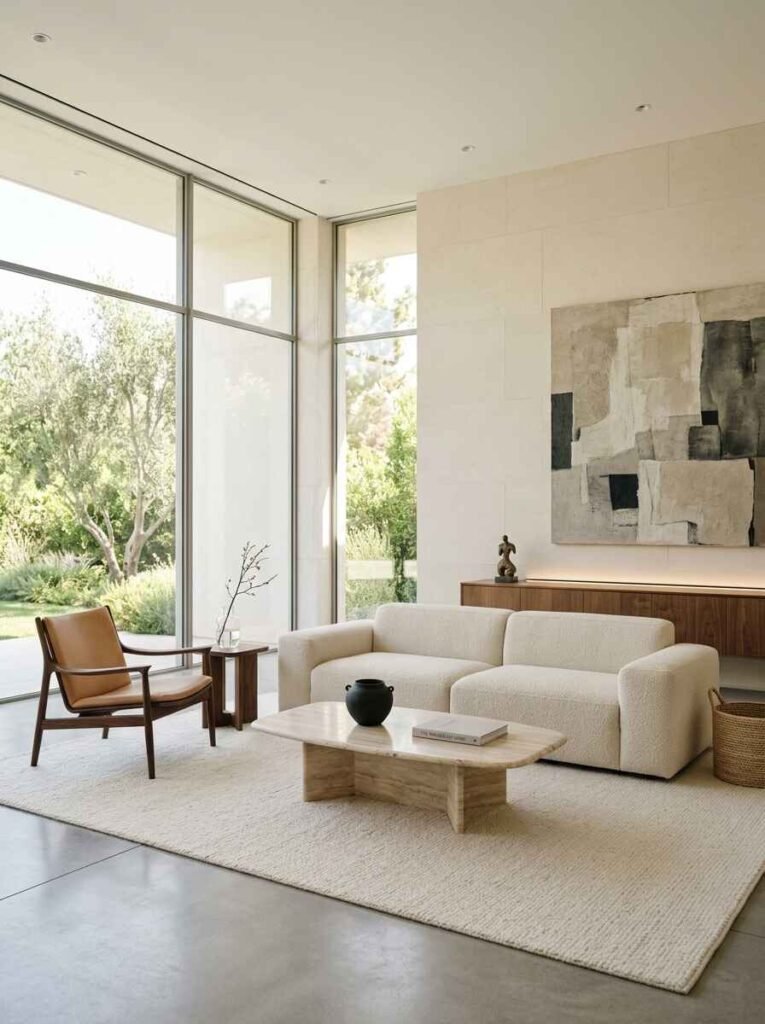
Minimalism achieves high-end appeal through flawless craftsmanship and thoughtful curation. Focus on a few exceptional items: a low-slung tailored sectional, a single mid-century leather armchair, honed travertine surfaces, and wide-plank hardwood floors. By trimming away unnecessary clutter, each element shines through its quality, tactile material, and clean silhouette.
16. Layer Sophisticated Textiles
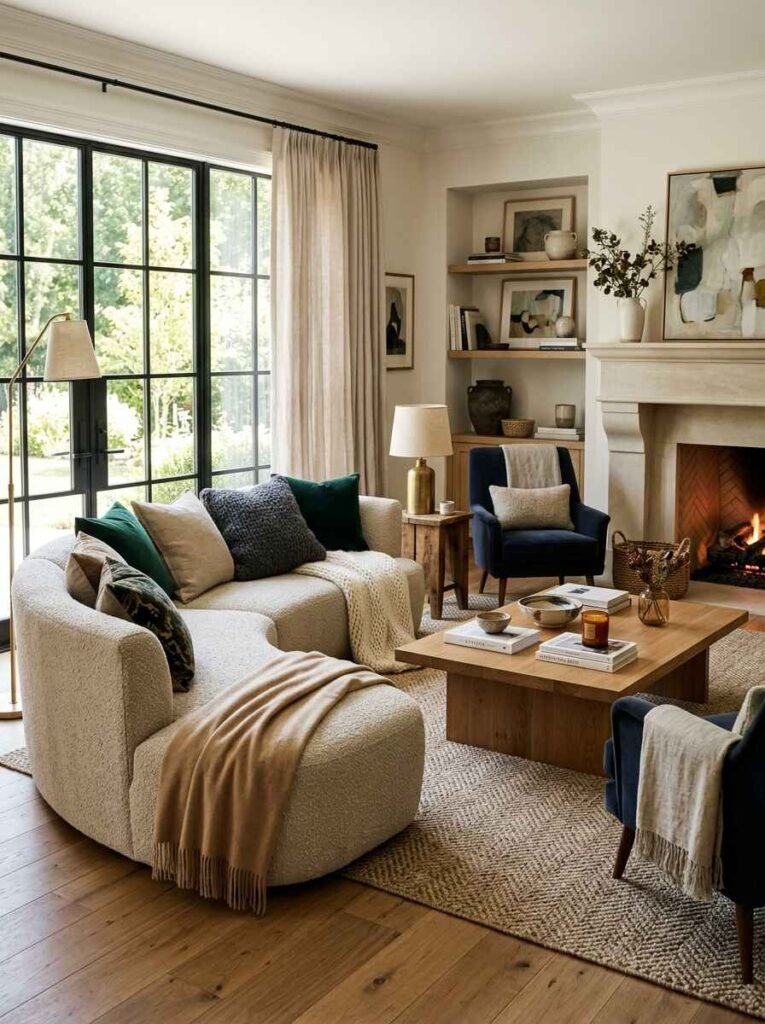
Rich texture creates a sense of comfort that color alone cannot achieve. Combine tactile materials across the space by pairing slubbed linen drapes, soft bouclé seating, crisp cotton accents, cashmere throws, and ribbed wool rugs. Blending matte, woven, and subtle sheen finishes brings physical warmth and visual richness to quiet rooms.
Also Read this: 14 Luxury Living Room Color Ideas for an Elegant Home
17. Layer Warm Architectural Lighting
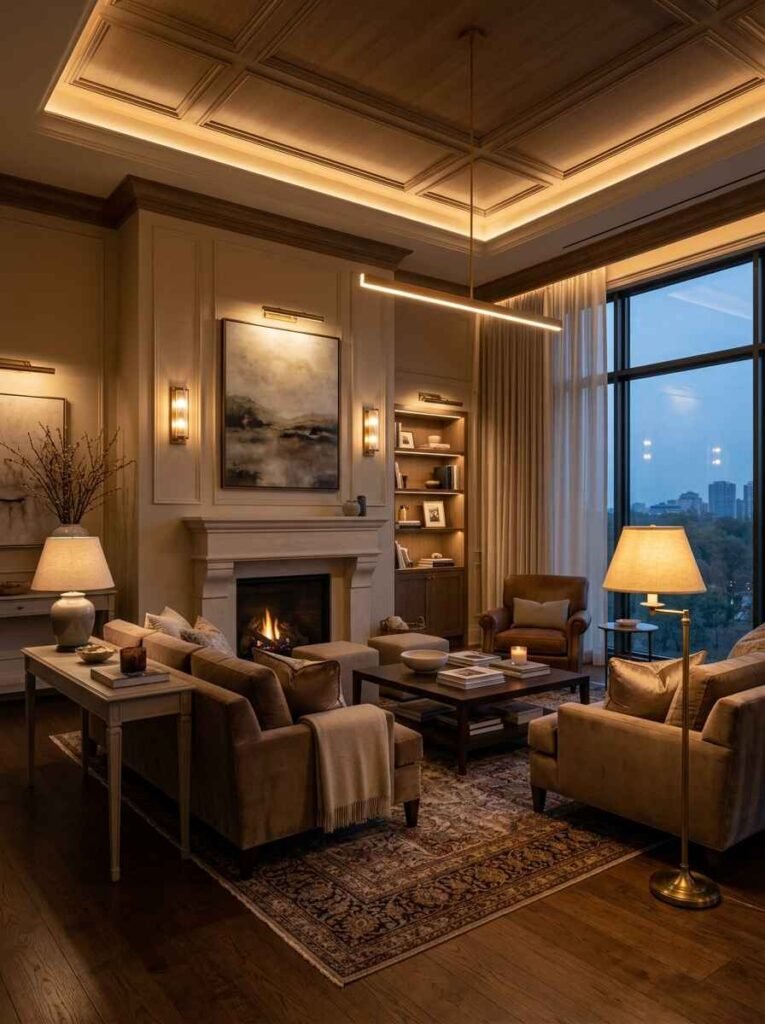
Effective lighting design relies on multiple independent illumination sources rather than relying solely on central ceiling fixtures. Combine ambient cove lighting along ceiling perimeters with warm wall sconces, picture lights above artwork, and adjustable task lamps near seating areas. Use warm bulbs (2700K–3000K) and place fixtures on dimmers to tailor the mood throughout the day.
18. Use Large Windows to Enhance the Space
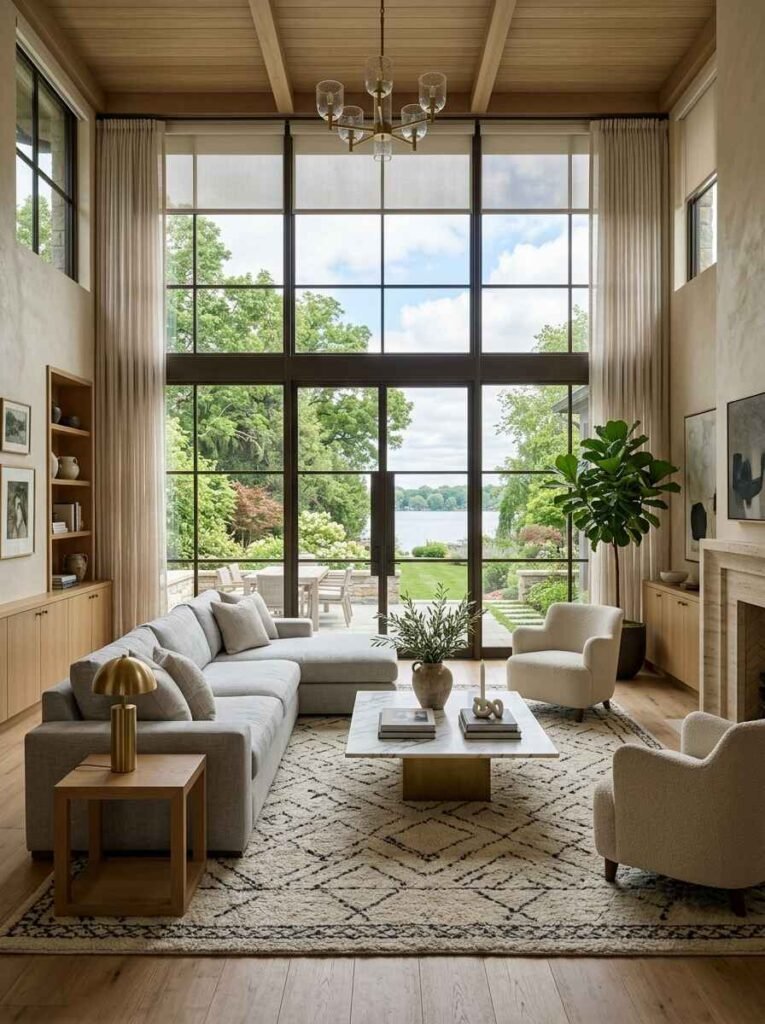
Maximize natural light by framing expansive, full-height windows with minimal, slim-line steel or dark timber frames. Position primary seating toward natural light or outdoor views to bridge indoor living spaces with nature. Sheer linen treatments diffuse direct sunlight while preserving privacy and architectural transparency.
19. Use Sculptural Lighting as Decor
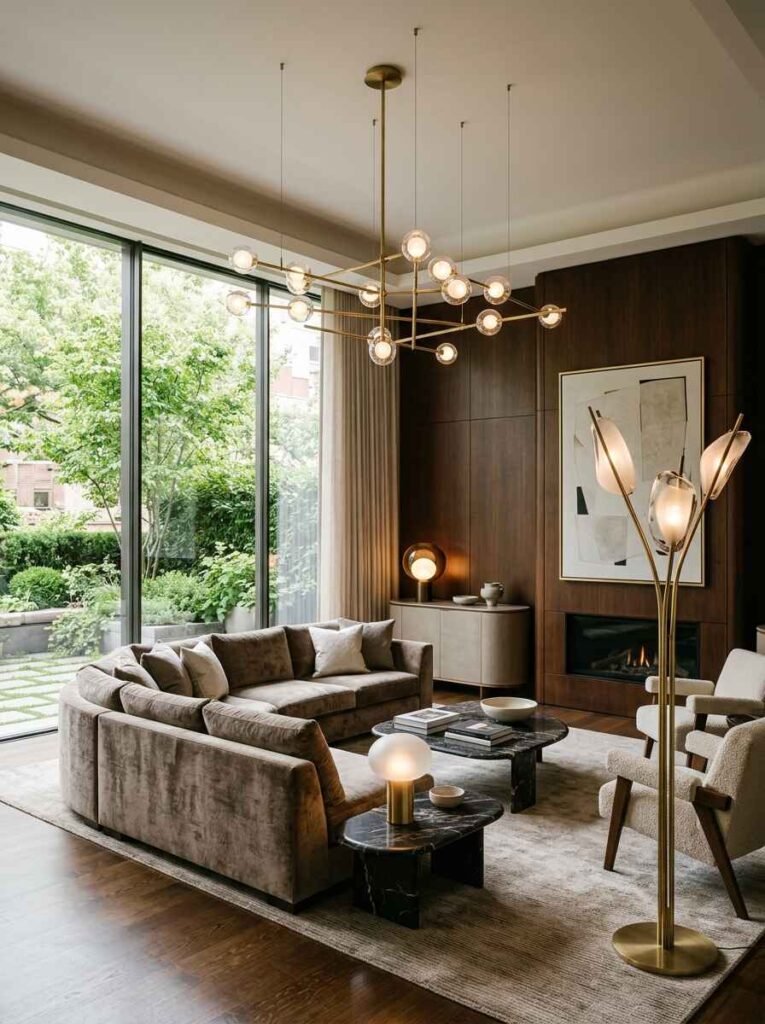
Statement light fixtures double as eye-catching overhead artwork. Choose branch chandeliers with frosted glass globes, geometric mobile pendants, or patinated brass fixtures that command attention whether illuminated or off. A striking chandelier suspended above a central coffee table grounds high ceilings and unifies surrounding furniture.
20. Highlight Architectural Ceiling Details
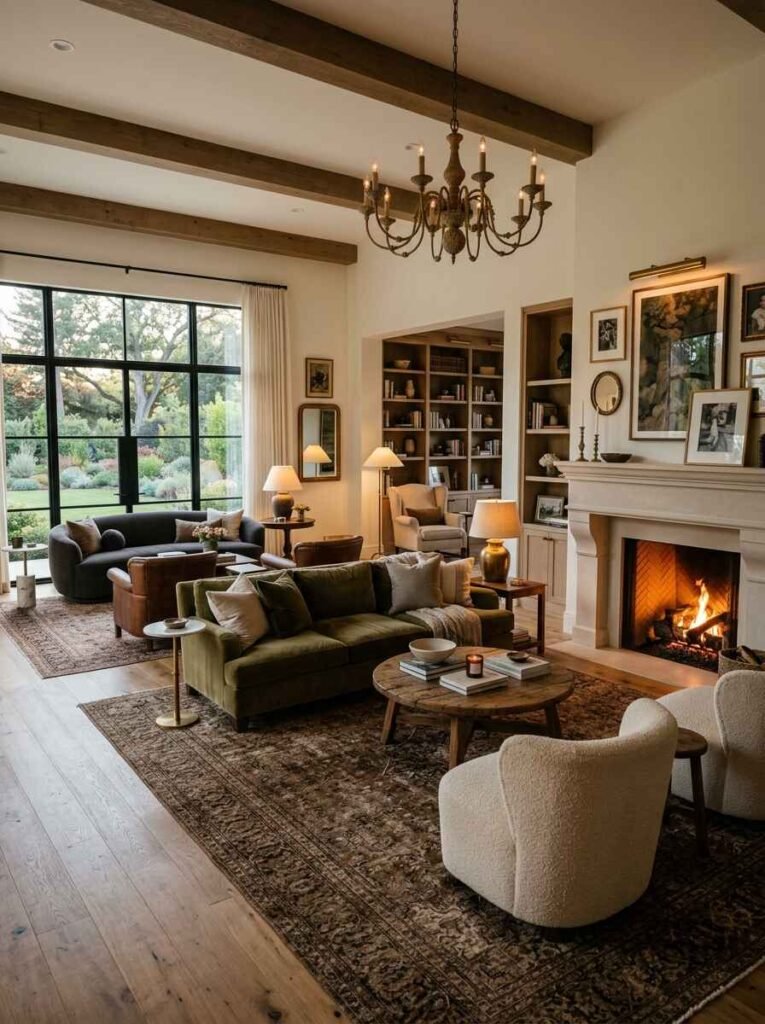
The ceiling—often referred to as the fifth wall—deserves equal attention when crafting distinguished interiors. Enhance ceiling volume using coffered beams, warm wood panel inserts, hand-applied Venetian plaster, or refined crown molding. Painting the ceiling in a soft shade just slightly lighter or darker than the main walls draws the eye upward and accentuates height.
21. Showcase Gallery-Style Fine Art Displays
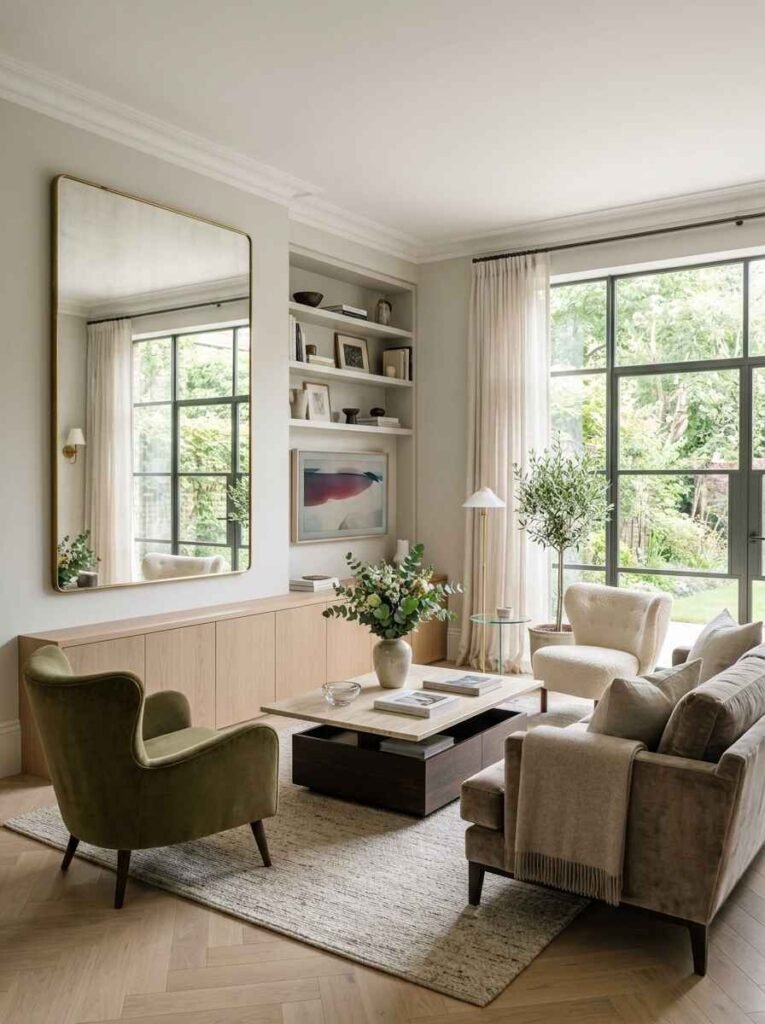
Curate fine art with gallery-like precision. Display original paintings, limited-edition photography, or plaster reliefs on wide ledges, within integrated plaster niches, or mounted cleanly above low credenzas. Pairing artwork with slimline picture lights highlights canvas textures, bringing an art-gallery feel into your home.
22. Use Symmetry for a More Refined Look
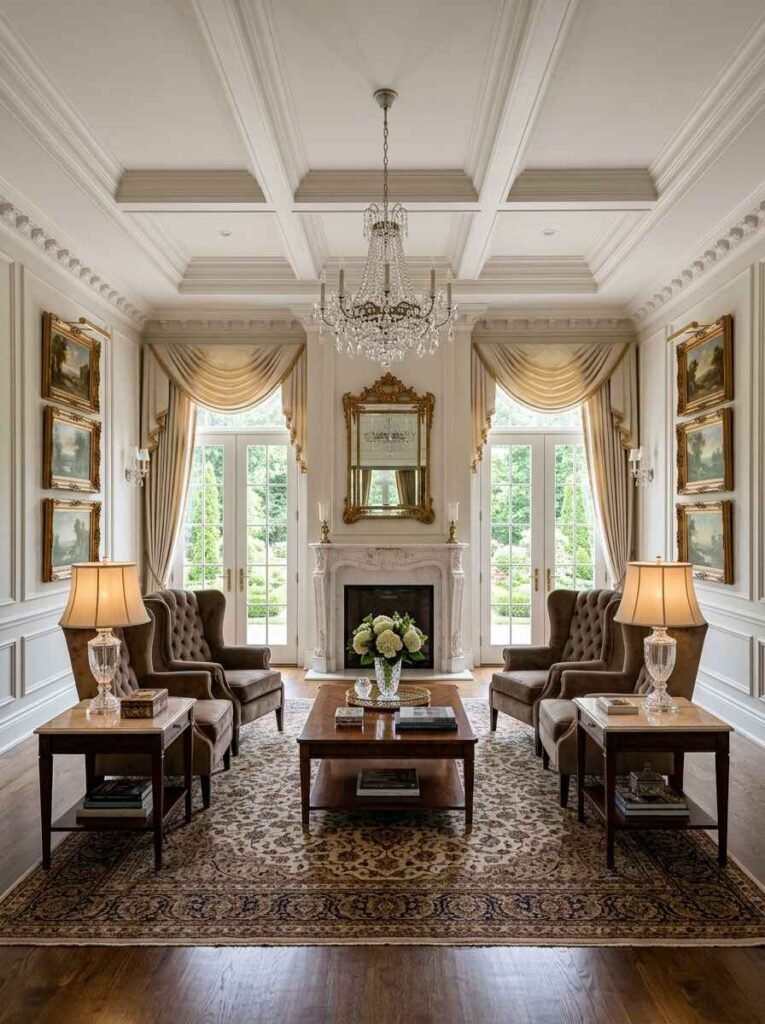
Symmetry introduces balance, order, and classical harmony. Arrange a balanced layout around a central focal point—such as a fireplace or large window—by positioning matching armchairs, identical side tables, or twin lamps directly opposite each other. Symmetrical arrangements calm the visual field, establishing a timeless foundation.
23. Add Living Greenery and Organic Elements
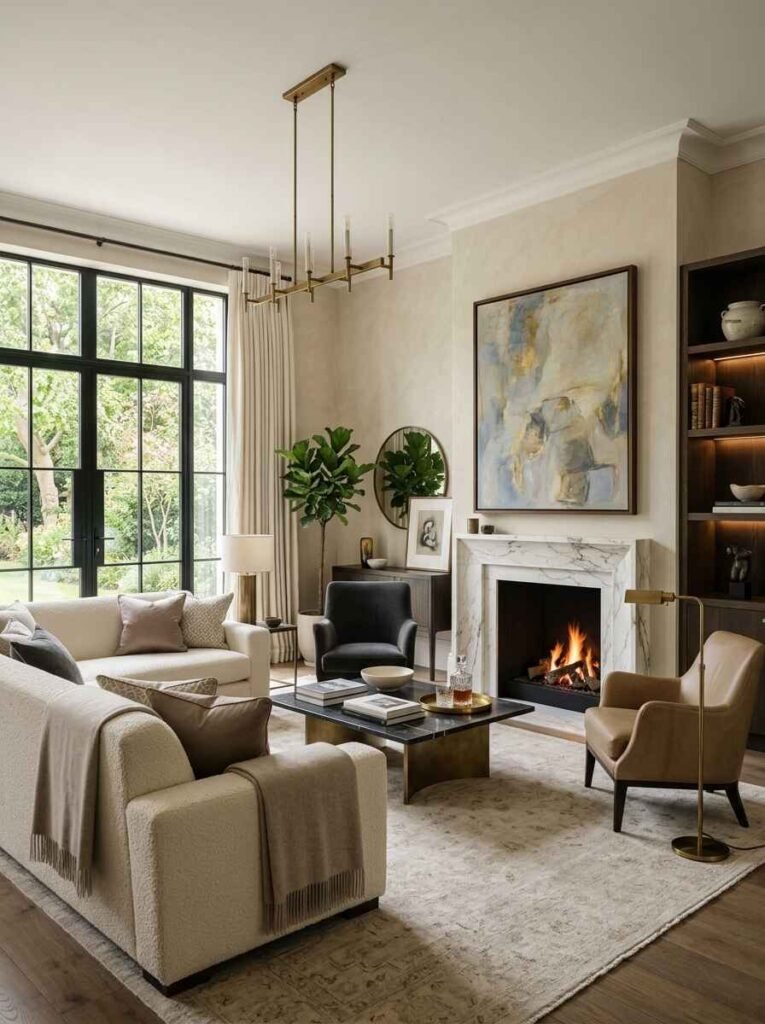
Introduce natural life to balance structured architecture and smooth stone surfaces. Place tall indoor trees—such as a Black Olive, Ficus Lyrata, or Fiddle Leaf Fig—in large hand-thrown terracotta or stone planters near window light. Pair living plants with arrangements of seasonal branches, dried botanicals, or raw stone objects to keep the room feeling fresh, dynamic, and grounded.
How to Make a Living Room Look More Expensive
Achieving a high-end look comes down to mastering proportions, materiality, and spatial layout rather than accumulating high-priced decor.
- Focus on Scale: Standard or undersized furniture pieces instantly cheapen a room. Invest in larger, well-proportioned furniture—such as an extra-long sofa or a generously sized rug—that fits your room’s footprint perfectly.
- Elevate Architectural Details: Upgrade basic builder-grade elements by replacing plain trim with tall baseboards, crown molding, or wall paneling to add structural weight and historic detail.
- Prioritize Authentic Materials: Swap synthetic fabrics, laminates, and faux plants for solid timber, natural stone, genuine leather, slubbed linen, and pure wool. Natural materials age gracefully, developing a beautiful patina over time.
- Streamline Display Surfaces: Edit coffee tables, open shelving, and mantels down to a few high-quality, intentional decorative objects—such as a hand-crafted ceramic bowl, heavy art books, or a singular stone vessel.
- Conceal Electronics and Cables: Mount televisions into custom cabinetry, use frame-style art TVs, or hide electrical wiring within wall channels. Eliminating visible cords immediately sharpens the overall level of finish.
Luxury Living Room Design Mistakes to Avoid
Even spaces constructed with fine materials can fall short if common layout mistakes are overlooked.
- Pushing Furniture Against Walls: Floating sofas and armchairs inward creates better conversational groupings while making room layouts feel larger and more intentional.
- Over-Relying on Recessed Overhead Lighting: Harsh overhead grids flatten architectural depth and cast unflattering shadows. Use recessed cans sparingly, relying instead on layered lamps, sconces, and ambient lighting.
- Choosing Undersized Area Rugs: A rug that only fits beneath the coffee table fragments the seating zone. Ensure your rug grounds all major furniture pieces to unify the room.
- Hanging Window Treatments Too Low: Mounting curtain rods directly above window frames cuts off vertical flow. Always place drapery hardware high near the ceiling line to draw the eye upward.
- Buying Matching Furniture Sets: Purchasing identical furniture suites (matching sofa, loveseat, and coffee table) creates a sterile showroom feel. Mix different periods, materials, and textures for a curated, custom look.
FAQs
What colors make a living room look luxurious?
Warm neutrals like alabaster, taupe, camel, and soft stone create an expansive, elegant backdrop. Pairing these with deep accents like forest green, charcoal, espresso, or navy adds rich depth without overwhelming the space.
How do I choose the right rug size for a luxury living room?
Select a rug large enough that all four legs of your seating rest on it, or at least the front legs of every sofa and chair sit on its surface. This anchors the room and leaves an even border of hardwood floor along the edges.
What furniture pieces are essential for a luxury living room layout?
The essential foundation includes a tailored main sofa or modular sectional, two complementary accent chairs, a central statement coffee table, side tables, and layered lighting fixtures. Adding custom built-ins or a sleek credenza keeps clutter out of sight.
How do I make a small living room look sophisticated?
Utilize low-profile furniture, continuous ceiling-height drapery, a large area rug, and oversized artwork to create the illusion of grand scale. A warm, monochromatic color palette also softens edges, making compact spaces feel open and elevated.
What lighting works best in a high-end living room?
A layered lighting setup combining ambient ceiling cove lights, warm wall sconces, picture lights over artwork, and floor lamps works best. Placing all warm-temperature bulbs (2700K–3000K) on dimmers gives you full control over the mood.
How can I make my living room look luxurious on a budget?
Focus on spatial editing, clearing visual clutter, and hanging drapery flush with the ceiling to maximize vertical height. Incorporating thrifted vintage brass accents, large art prints, and fresh natural branches adds instant high-end character affordably.
Conclusion
Designing a luxury living room comes down to intentional choices, quiet quality, and thoughtful execution. By prioritizing natural materials, balanced furniture proportions, layered architectural lighting, and curated decorative accents, you create an environment that transcends fleeting design trends. Focus on refined craftsmanship and authentic textures to cultivate a living space that feels effortlessly elegant, functional, and timeless.
2 thoughts on “Luxury Living Room Ideas: 23 Elegant Designs for a Sophisticated Home”
Comments are closed.