
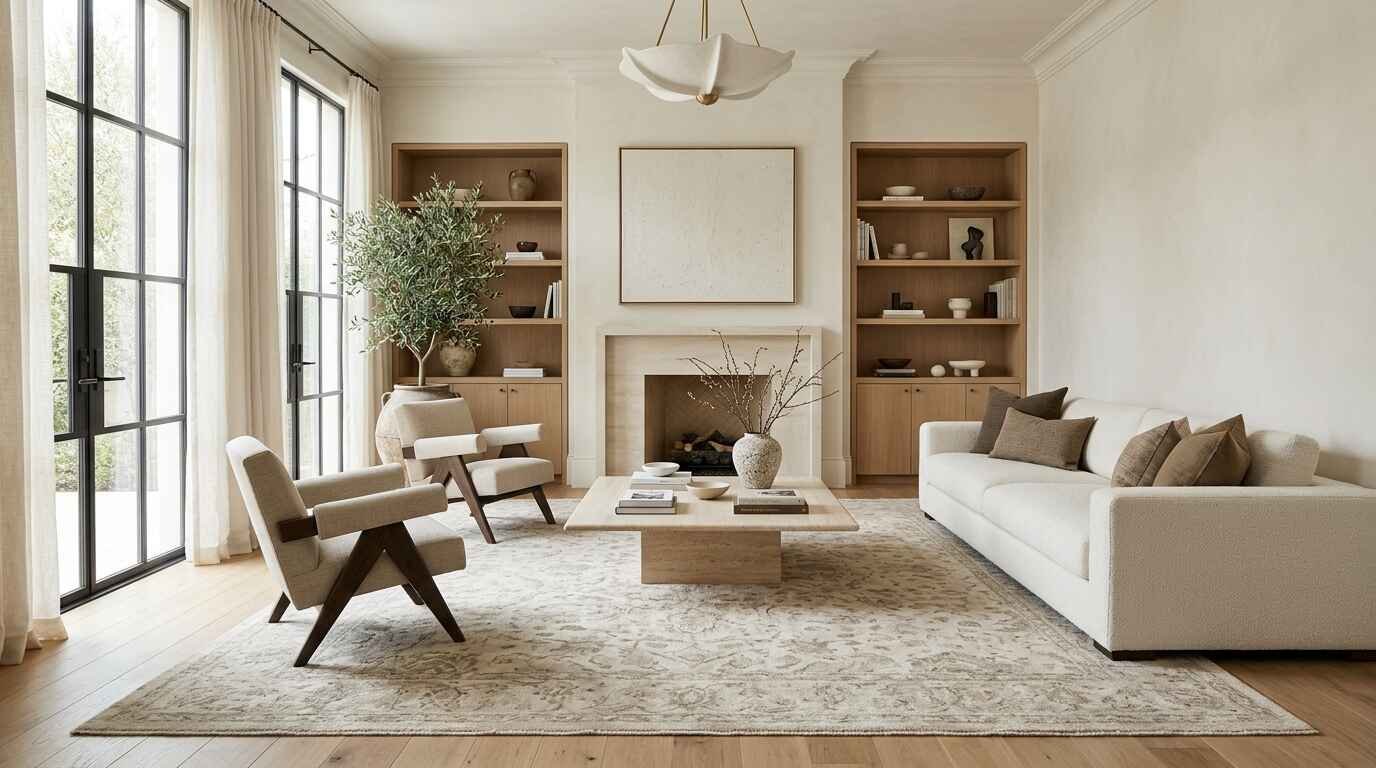
A rug often serves as the visual foundation of a living room, anchoring furniture arrangements and establishing the scale of the entire space. Beyond providing underfoot comfort, the right rug balances architectural hard surfaces—such as hardwood, polished concrete, or stone—while introducing subtle texture, color, and pattern.
Selecting a rug requires balancing aesthetic goals with practical household needs. Considerations such as fiber composition, pile height, weave density, and overall dimensions directly impact how a rug performs in high-traffic environments. Whether you are seeking a plush natural fiber to soften a minimal interior or a patterned heritage piece to add character, these 11 luxury living room rug ideas offer practical guidance for varied architectural styles and lifestyles.
11 Luxury Living Room Rug Ideas
1. Choose a Large Wool Area Rug
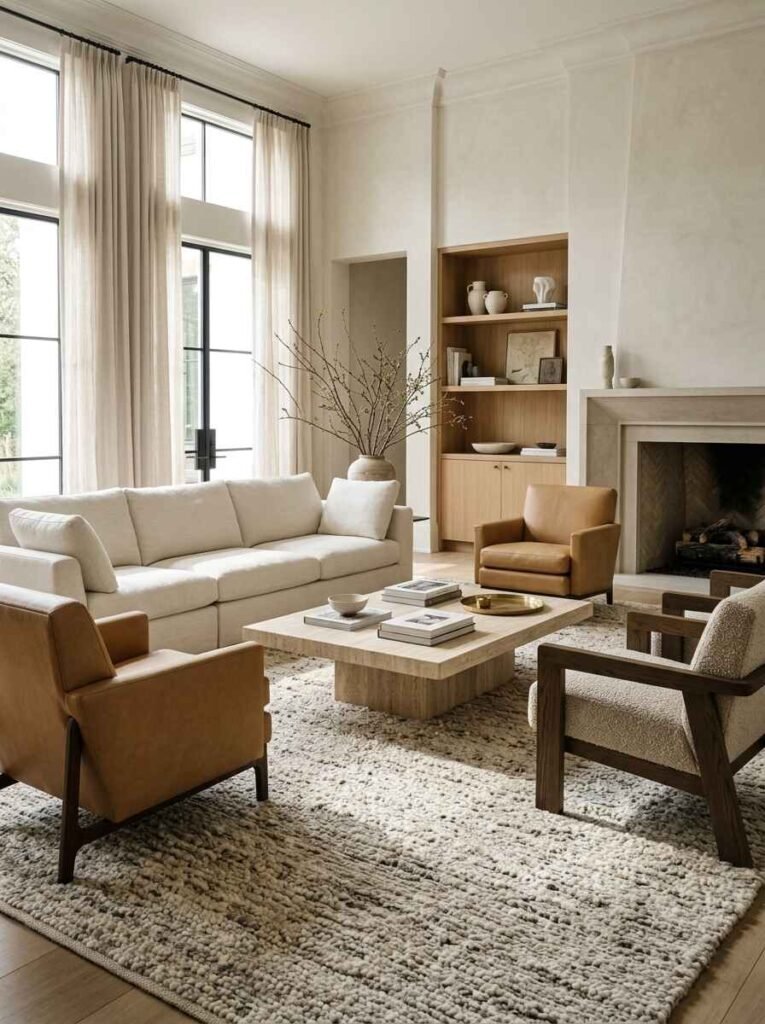
Wool remains a favored material for living room area rugs due to its natural resilience, soft feel, and visual depth. A large wool rug provides substantial presence, connecting key seating pieces into a single, cohesive conversational zone.
Wool fibers have natural elasticity, although a rug’s ability to recover from furniture weight depends on its pile, weave, density, and construction. However, pile height and weave construction significantly influence daily performance:
- High-Pile Loop & Cut Wool: Offers luxurious underfoot cushioning but requires gentle vacuuming without a rotating beater bar to prevent fiber distortion.
- Flat-Weave Wool: Delivers a lower profile that accommodates easy furniture movement, though it provides less cushioning underfoot.
Some wool rugs shed during initial use, with the amount and duration depending on fiber quality and construction. Follow the manufacturer’s care instructions when vacuuming. Selecting a rug large enough to accommodate at least the front legs of all major seating pieces ensures the arrangement feels grounded rather than disjointed.
2. Layer Neutral Rugs for Subtle Depth
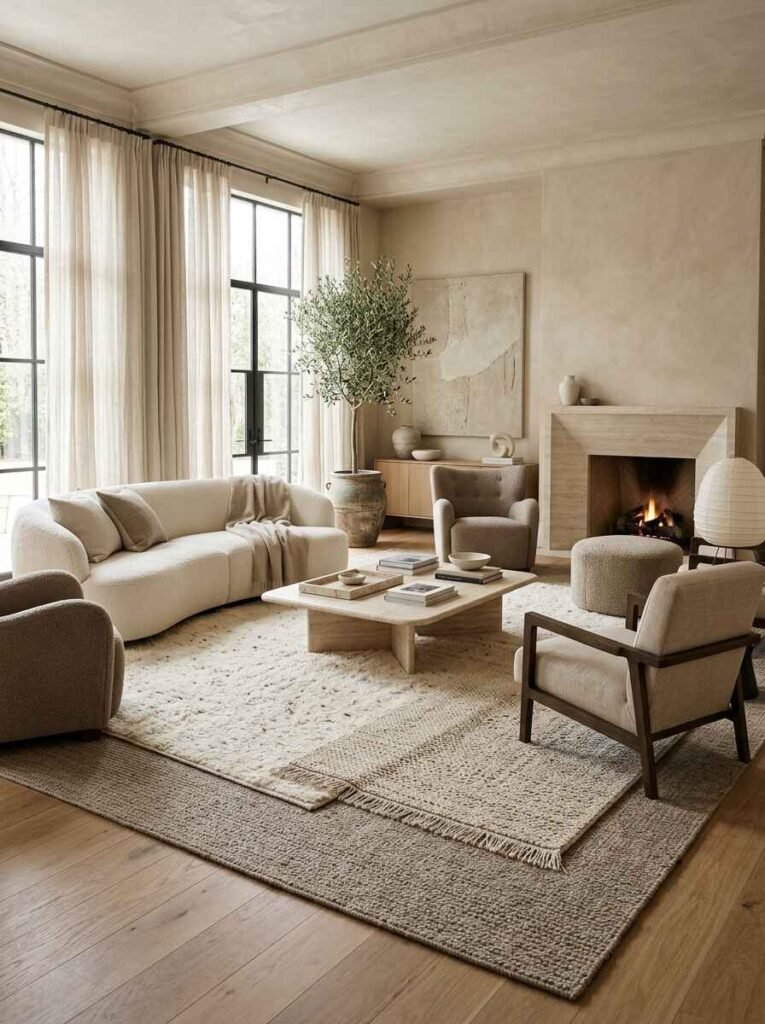
Layering rugs is an effective design technique for introducing physical texture and visual interest without adding strong colors or bold patterns. Combining cream, ivory, beige, and taupe tones creates subtle tonal variation that enriches neutral interiors.
To make layered rugs function well, contrast the underlying constructions:
- Base Layer: A flat-weave jute, sisal, or low-profile wool rug that lies flat against the floor.
- Top Layer: A smaller, plush wool or textured accent rug placed beneath the coffee table or central seating area.
While layering adds warmth, it can create unnecessary bulk or tripping hazards if executed improperly. Ensure the top rug is thin enough along its edges to prevent catch points, and always use non-slip rug pads beneath both layers to maintain stability.
3. Use a Textured Jute or Natural-Fiber Rug
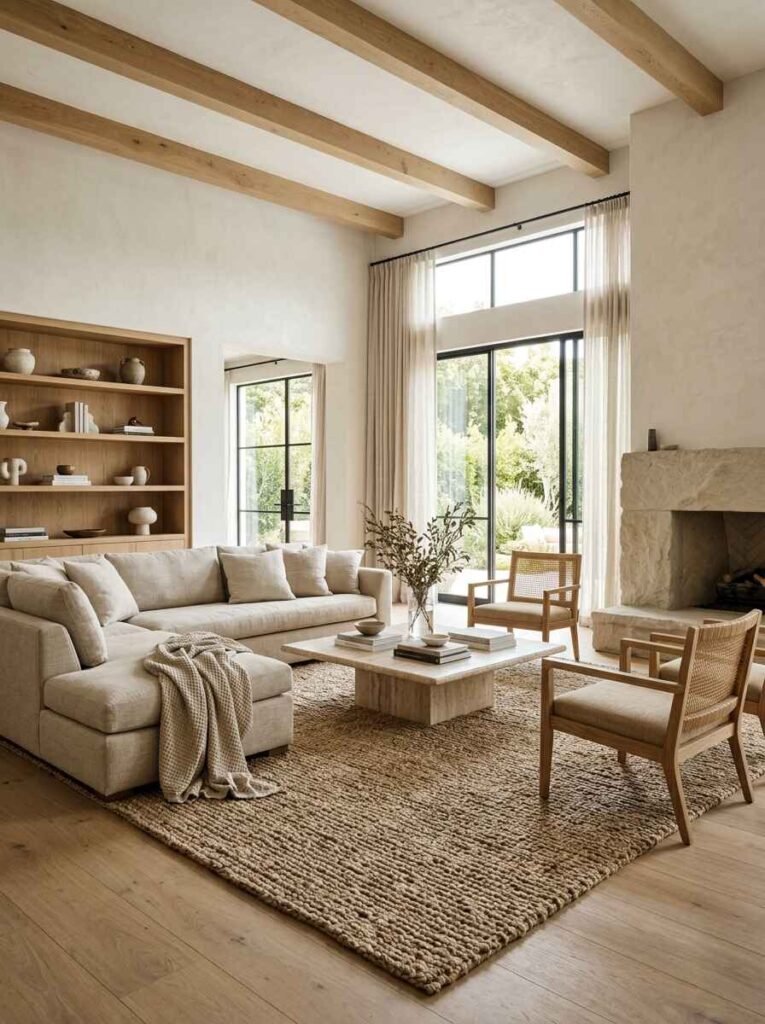
Natural fibers like jute, sisal, and seagrass offer coarse, organic textures that complement wood millwork, natural stone fireplaces, and smooth linen upholstery. A woven jute rug introduces an inviting, unpretentious quality to modern and transitional living spaces.
Despite their organic appeal, natural-fiber rugs possess specific operational characteristics:
- Texture & Comfort: Jute is significantly softer underfoot than sisal, making it better suited for casual living areas where barefoot comfort matters.
- Moisture Sensitivity: Natural plant fibers absorb liquids quickly and are susceptible to water staining, meaning spot-cleaning requires careful attention.
- Shedding & Debris: Coarse weaves can drop small plant fibers beneath the rug over time, necessitating regular floor maintenance underneath.
Jute works exceptionally well in dry, low-moisture environments where its tactile weave can break up the slick surfaces of polished floors and glass tables.
4. Introduce a Subtle Geometric Pattern
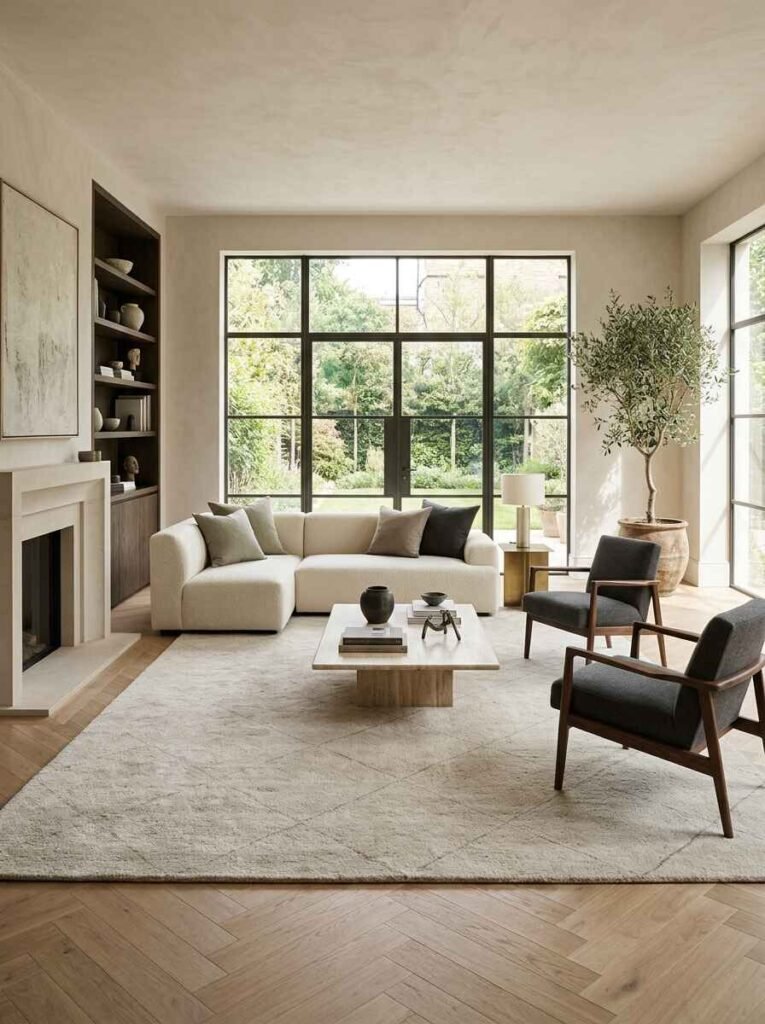
A rug featuring subtle geometric lines—such as low-contrast grids, understated diamonds, or muted repeating shapes—adds structural clarity to a living room without overpowering surrounding furniture.
Pattern scale determines how the rug interacts with the rest of the room:
- Large-Scale Geometrics: Thin, widely spaced lines can create a clean, architectural look without adding too much visual detail to a compact seating area.
- Small-Scale Patterns: Dense, repeating motifs draw the eye inward and can help disguise light surface wear in active households.
To maintain balance, coordinate geometric rugs with plain or faintly textured sofa fabrics. If your seating already features distinct patterns, choose a rug with a very soft, low-contrast line color.
5. Choose a Traditional Persian-Inspired Rug
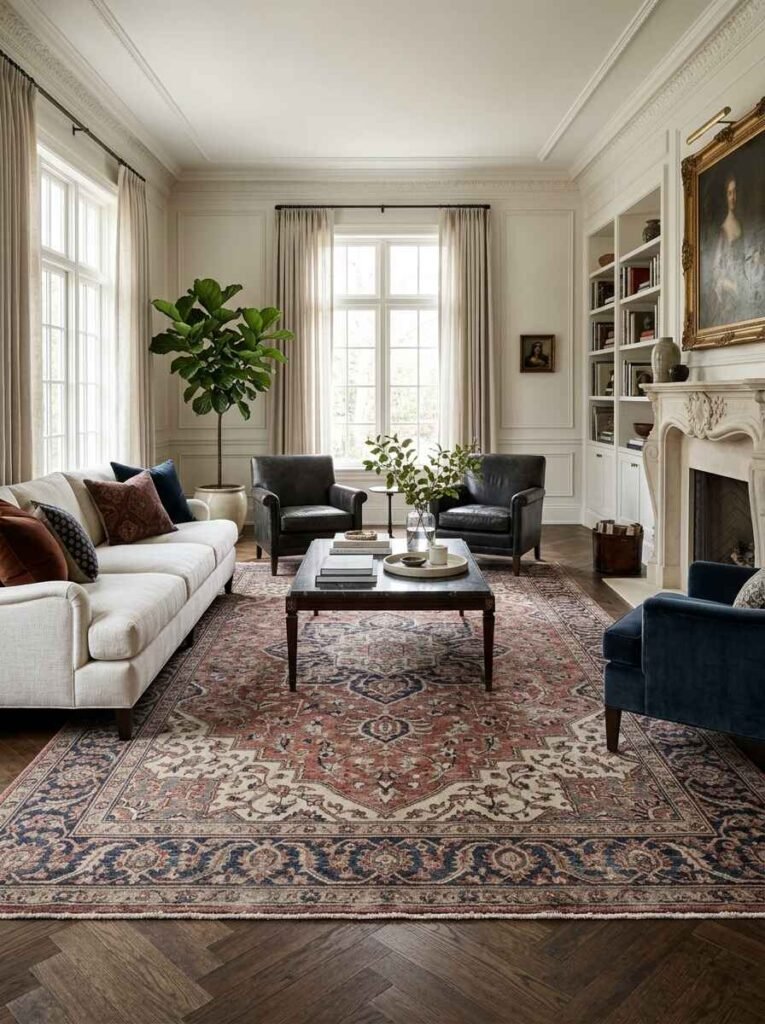
Traditional motifs—including central medallions, intricate floral borders, and palmette details—introduce timeless character to both classic and contemporary interiors. Faded, distress-washed, or vintage-inspired color palettes offer a relaxed, lived-in feel.
Traditional patterns excel at bridging distinct design elements:
- Color Balance: Muted terracottas, dusty blues, deep navies, and antique ivories supply a multi-tonal base that anchors varied accent pillows and upholstery.
- Versatility: Placing a traditional patterned rug beneath clean-lined modern furniture creates a compelling, curated contrast.
When selecting a traditional rug, ensure the central medallion or detail work aligns logically with your coffee table placement so key visual features remain visible.
6. Use a Tone-on-Tone Rug
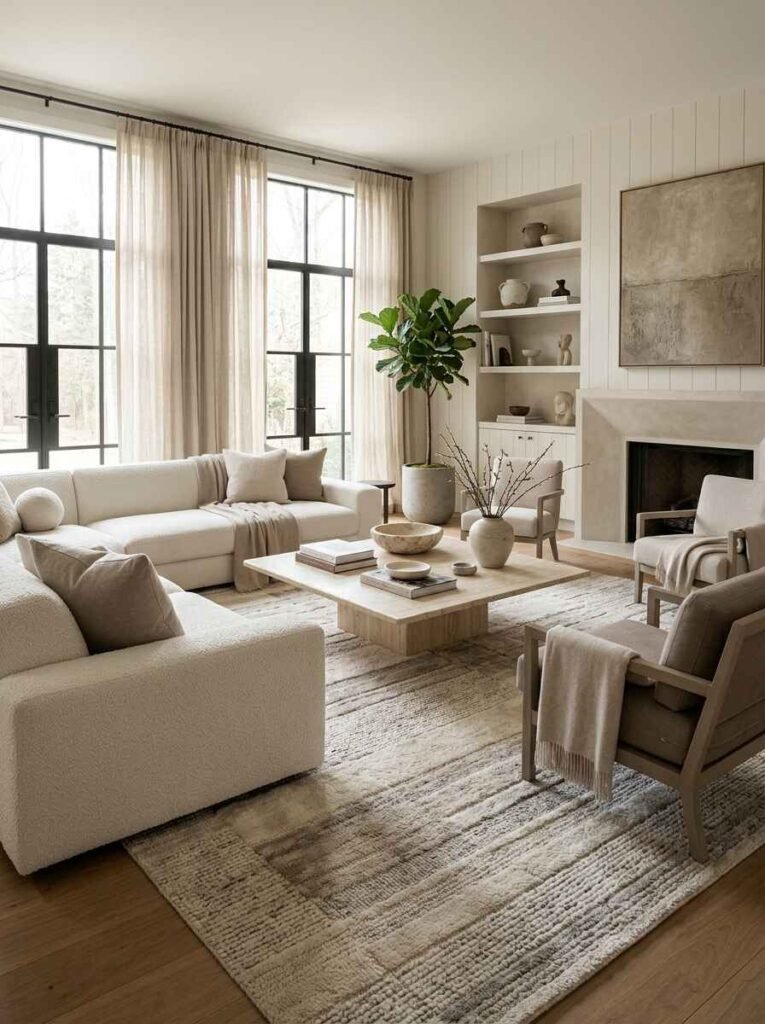
A tone-on-tone rug uses varying pile heights, loop techniques, or slight yarn shade differences within a single color family to create depth. Options like cream-on-cream, beige-on-taupe, or subtle charcoal-on-slate provide visual richness without introducing contrasting hues.
Tone-on-tone designs rely on light play across their surface:
- Cut-and-Loop Pile: Combines sheared yarns with looped yarns to catch light differently, revealing a subtle pattern as you walk around the room.
- Sheen Variations: Blending matte wool with subtle silk or viscose accents highlights woven details under ambient lighting.
This style suits minimalist or highly focused color palettes where maintaining a calm, uncluttered atmosphere is the primary goal.
7. Add Contrast With a Dark Rug
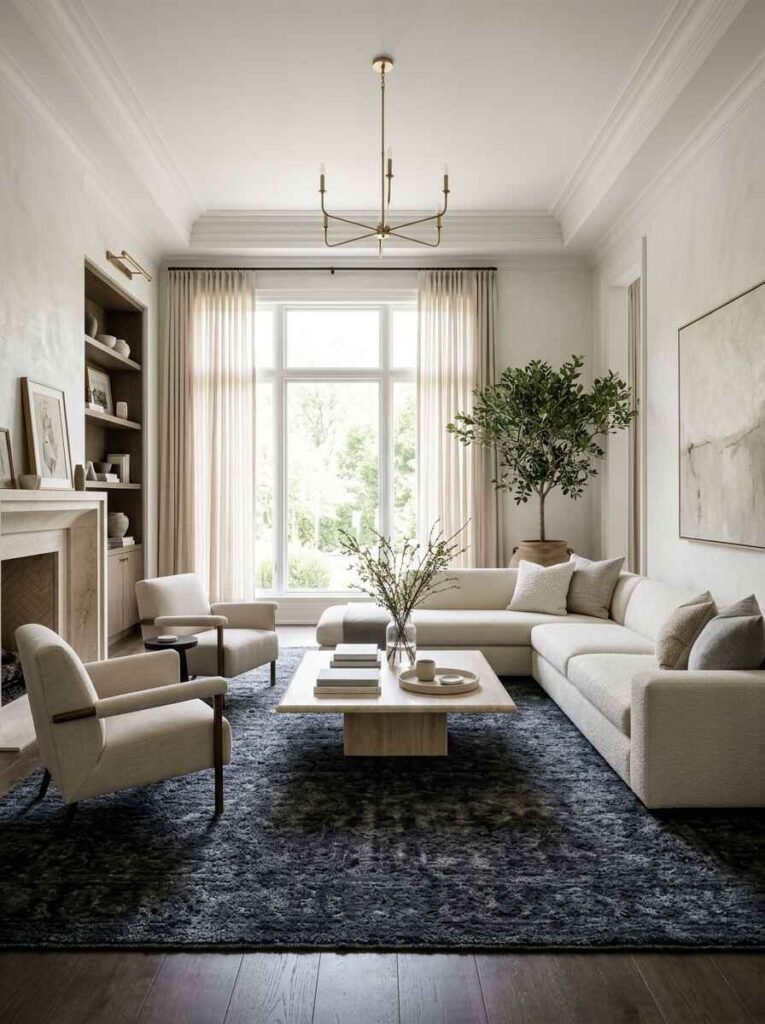
Selecting a rug in charcoal, deep espresso, muted navy, or dark slate grounds a living room, providing a solid foundation beneath light-colored upholstery and cream walls.
Dark rugs offer distinct visual advantages alongside practical considerations:
- Visual Anchoring: A dark surface establishes a clear perimeter for the conversation zone, making large, bright rooms feel more intimate.
- Maintenance Profile: While dark rugs conceal dark spills well, low-contrast fibers can show light lint, dust, or pet hair more readily depending on the pile type.
Ensure the room receives sufficient natural or artificial light so a dark rug feels intentional rather than heavy.
8. Choose a Sculptural or High-Low Texture Rug
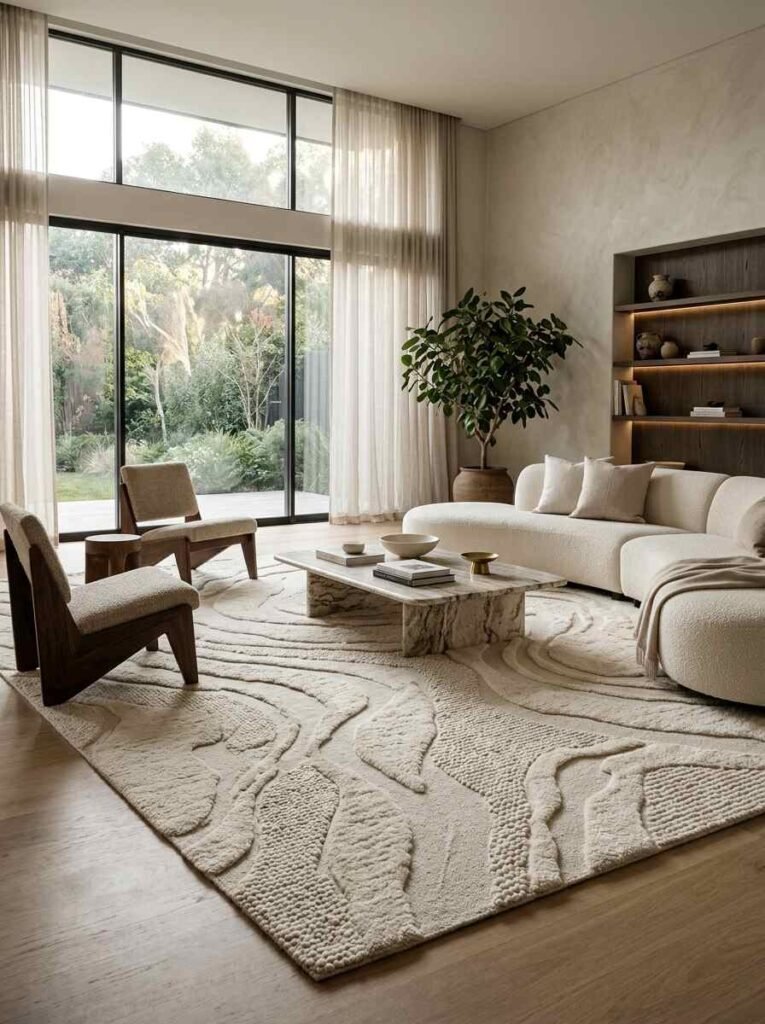
High-low textured rugs utilize carved pile heights and varied weaving techniques to form dimensional patterns across the surface. These organic or geometric ridges create gentle shadow lines that change as sunlight moves across the room.
Consider these factors when evaluating high-low constructions:
- Visual Appeal: Delivers compelling texture and tactile interest without relying on strong color contrast.
- Furniture Stability: Small side tables or thin chair legs placed directly on a high-low ridge may feel slightly unlevel; ensure main table bases sit securely.
- Cleaning: Recessed channels can collect loose debris, requiring thorough vacuuming along the direction of the carved lines.
High-low rugs perform exceptionally well in peaceful, monochromatic interiors where tactile materials replace bold visual patterns.
9. Use a Soft, Muted Color Rug
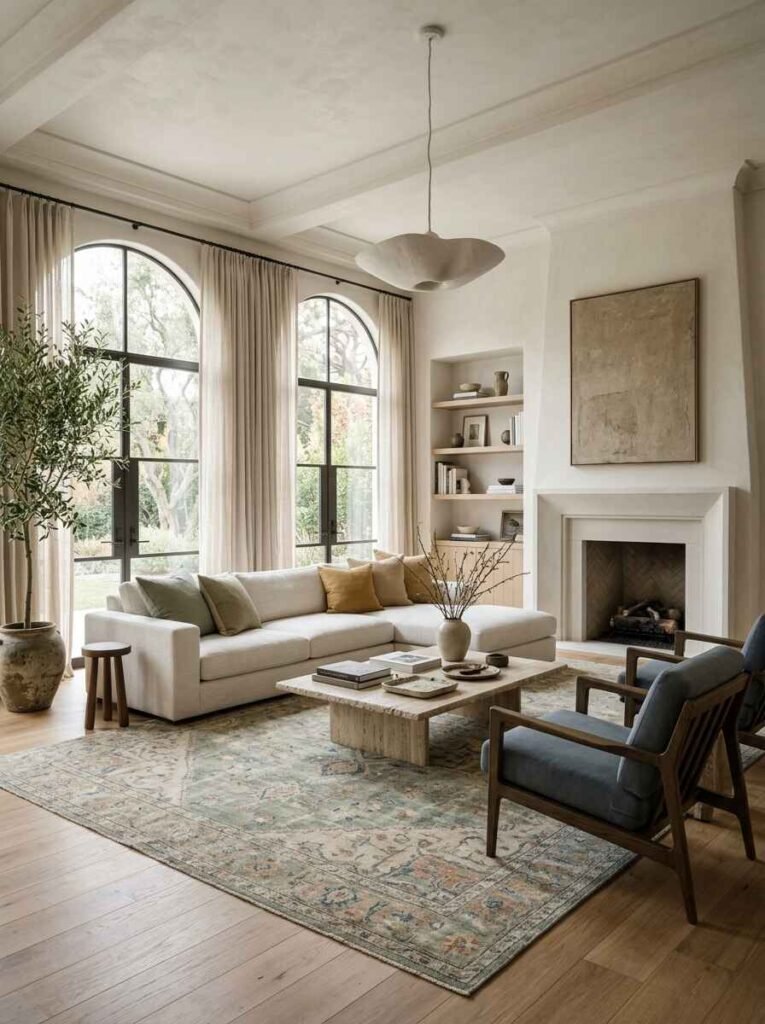
Rugs in muted, desaturated tones—such as sage green, dusty steel blue, soft clay, or pale olive—introduce personality into a room while remaining subtle. These soft shades provide an easy transition between neutral walls and decorative accents.
When choosing a colored rug:
- Harmonize Undertones: Match the cool or warm undertones of the rug to your flooring and wall paint.
- Complement Materials: Soft greens and blues pair beautifully with warm oak floors, walnut millwork, and cognac leather armchairs.
To explore how subtle colors interact with room lighting and finishes, read our detailed recommendations on Luxury Living Room Color Ideas.
10. Select a Rug With a Refined Border
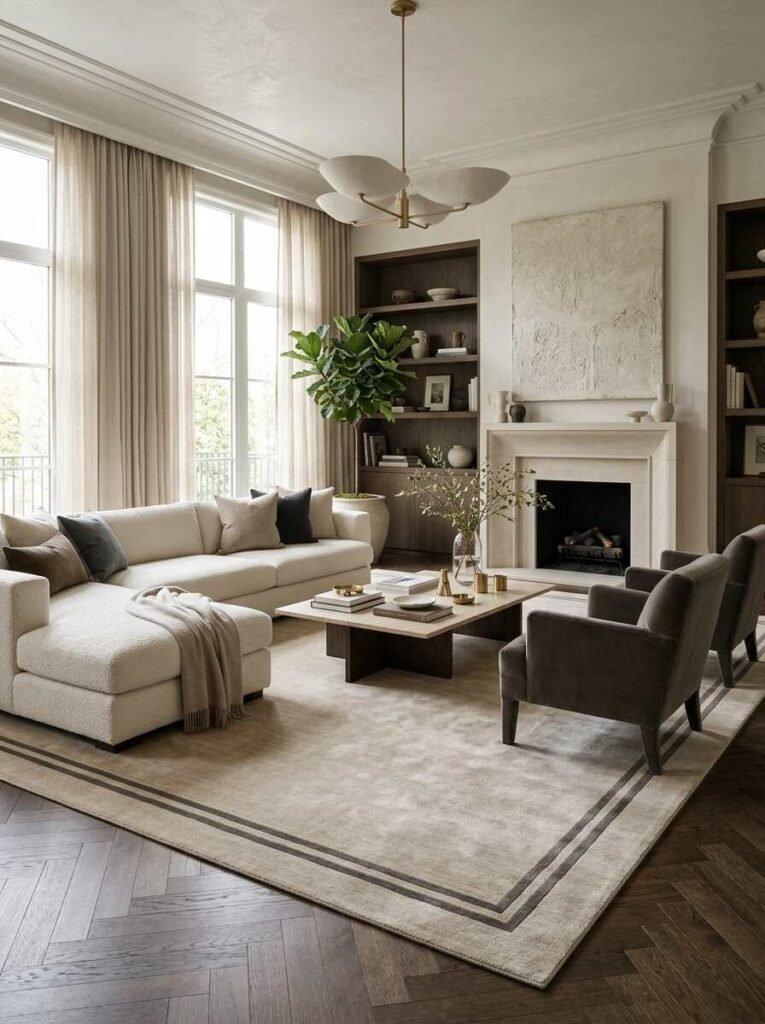
A rug with a distinct border acts like a frame, visually organizing the seating arrangement and defining the perimeters of the conversation area. Borders can range from narrow woven leather bindings to wide, contrasting color bands.
Key structural aspects to keep in mind:
- Proportions: Ensure the border sits wide enough that it remains visible around the outer edges of your sofa and armchairs.
- Placement: Position the rug so the border runs parallel to walls or major architectural features, reinforcing the symmetry of the space.
Bordered designs add a tailored, formal finish that works well in traditional, transitional, and contemporary living rooms alike.
11. Choose a Rug That Complements the Room’s Materials
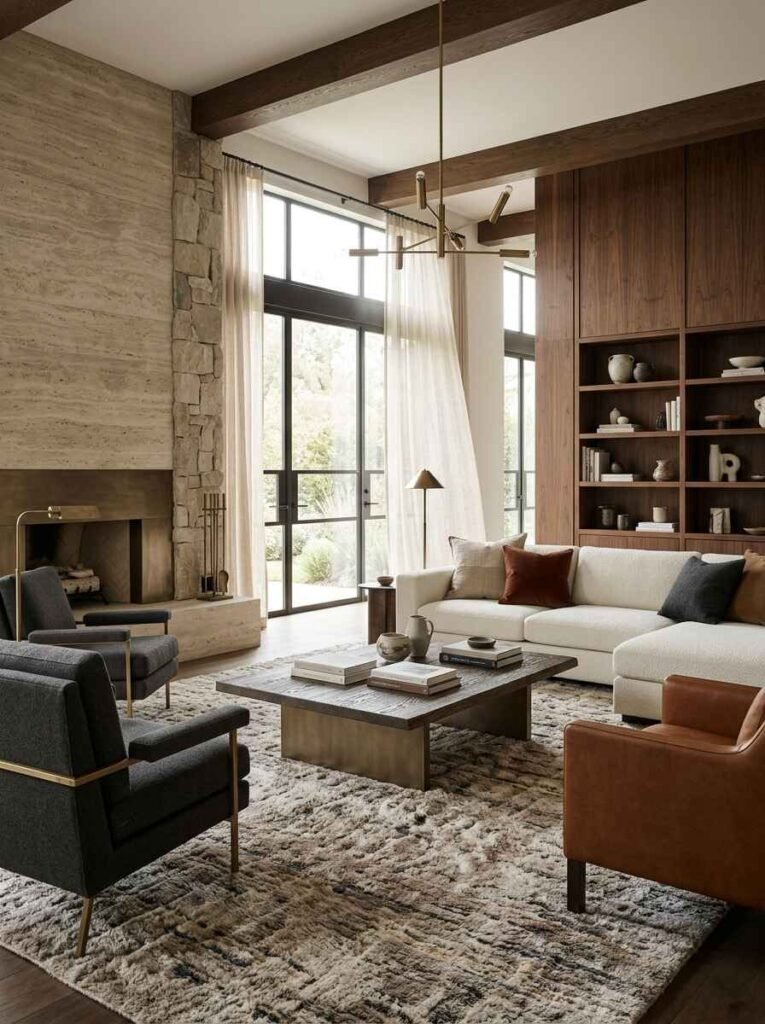
An effective rug selection considers every surrounding material finish—including hardwood floor stains, stone hearths, leather seating, metal table frames, and drapery fabrics.
Rather than matching materials perfectly, focus on complementary texture contrasts:
- Hard Surfaces: Pair smooth hardwood or marble flooring with rich, soft wool or high-texture woven rugs to soften the space.
- Upholstery Coordination: If seating features smooth, flat fabrics like velvet or leather, select a rug with a tactile, textured weave.
Ensuring your rug complements surrounding finishes creates a harmonious environment where no single element feels out of place.
How to Choose a Luxury Living Room Rug
Selecting the ideal living room rug involves evaluating spatial proportions, fiber performance, and daily household activity before purchasing.
Select the Right Rug Size
Rug dimensions dictate how cohesive a living room layout appears. An undersized rug can make a room feel small and disconnected, while an appropriately sized rug unifies the seating arrangement.
Common size configurations include:
- All Legs on the Rug: The rug extends past the back of all sofas and armchairs, creating a complete, self-contained zone.
- Front Legs Only: The rug extends 8 to 12 inches under the front legs of seating, anchoring the pieces while conserving rug area.
- Floating Arrangement: Furniture sits entirely off the rug, which is generally restricted to compact accent zones.
For comprehensive diagrams on planning furniture layouts and traffic paths, explore our detailed guide on Luxury Living Room Layout.
Compare Materials and Maintenance Requirements
Different fibers offer distinct trade-offs in feel, care, and durability:
| Fiber Type | Key Characteristics | Care Considerations |
| Wool | Durable, springy, naturally soft | Requires gentle vacuuming; initial shedding is normal |
| Jute & Natural Fibers | Coarse texture, organic look | Sensitive to moisture; dry clean or spot clean only |
| Synthetics (Nylon/PET) | Stain resistant, budget friendly | Check the product’s stain-resistance claims, pile recovery, and care instructions |
| Silk / Viscose Blends | High sheen, soft texture | Highly sensitive to liquid spills; best for low-traffic areas |
Always check the manufacturer’s care guidelines to ensure the rug material suits your cleaning routine.
Consider Pile Height and Everyday Use
Pile height impacts underfoot comfort, door clearance, and ease of cleaning:
- Low Pile (Under 1/4 inch): Easy to vacuum, durable under sliding chair legs, and ideal for high-traffic entry pathways.
- Medium Pile (1/4 to 1/2 inch): Can offer a balance of comfort and maintenance for many living rooms, depending on the fiber and construction.
- High Pile / Shag (Over 1/2 inch): Provides maximum cushioning but can trap dust and requires specialized vacuum settings.
Coordinate Color and Pattern With Existing Finishes
Always request physical material swatches whenever possible. Place swatches against your hardwood flooring, sofa upholstery, and drapery under both natural daylight and evening lamp light to confirm undertones harmonize before making a final decision.
Choose an Appropriate Rug Pad
A quality rug pad is essential for every area rug. A compatible pad:
- Prevents the rug from slipping or bunching on hard floors.
- Provides additional cushioning and noise absorption.
- Protects both the rug backing and underlying floor finish from premature wear.
Select a pad material (such as felt, rubber, or a combination) specifically approved for your flooring type.
Luxury Living Room Rug Mistakes to Avoid
Avoiding common sizing and material errors ensures your living room remains functional and visually balanced:
- Choosing a Rug That Is Too Small: Floating small rugs in the center of a room isolates furniture pieces and breaks spatial cohesion.
- Ignoring Cleaning Requirements: Selecting delicate viscose or fine natural fibers for high-traffic or pet-friendly spaces leads to premature wear.
- Combining Too Many Competing Patterns: Pairing an intricate patterned rug with heavily patterned drapes and upholstery creates visual fatigue.
- Choosing an Unsuitable Pile Height: Installing high-pile rugs in doorways where clearance is low prevents smooth door operation.
- Selecting Color Without Considering Flooring: Ignoring hardwood or stone undertones can cause light rugs to look washed out or yellowed.
- Layering Rugs Without Securing Them: Placing top rugs directly over base rugs without non-slip grips leads to dangerous shifting and wrinkling.
- Ignoring Furniture Proportions: Choosing a narrow rug that fails to extend past the sides of a wide sofa looks visually top-heavy.
- Forgetting a Suitable Rug Pad: Skipping a rug pad increases slip risks and accelerates wear on the rug backing.
For guidance on selecting complementary seating options to match your rug, review our overview on Luxury Living Room Furniture Ideas.
Frequently Asked Questions About Luxury Living Room Rugs
What Type of Rug Makes a Living Room Look Luxurious?
A luxury appearance stems from proper proportion, fiber quality, and construction rather than brand name alone. Generously sized wool or natural-fiber rugs with high weave density, crisp finishes, and subtle textures elevate an interior by grounding the furniture effectively.
What Is the Best Rug Material for a Living Room?
Wool is a popular living room rug material because it offers a soft feel and natural elasticity. Synthetic blends and natural fibers such as jute are alternatives, but the most suitable choice depends on construction, foot traffic, cleaning requirements, and budget.
How Big Should a Rug Be Under a Living Room Sofa?
As a starting point, choose a rug wide enough to extend beyond the sides of the sofa and visually connect the main seating pieces. Placing the front legs of the sofa and chairs on the rug is one common approach, but the ideal dimensions depend on the room and furniture arrangement.
Should a Living Room Rug Be Lighter or Darker Than the Furniture?
Both approaches can work well. A rug lighter than the sofa creates soft contrast and brightens dark flooring, while a rug darker than the upholstery grounds light furniture and adds drama to the seating zone.
Are Wool Rugs Worth Considering?
Wool rugs offer natural warmth, a soft feel, and elasticity that can help the pile recover from everyday use. Prices, shedding, and durability vary by construction and quality, so compare care requirements and product specifications before purchasing.
Can You Layer Rugs in a Luxury Living Room?
Yes, layering a smaller plush or patterned rug over a larger, low-profile base rug (such as flat-weave wool or jute) adds depth and texture. Ensure both layers are secured with appropriate pads to avoid shifting.
Conclusion
Choosing the right living room rug relies on balancing spatial scale, fiber performance, texture, and color with your household’s daily routines. A well-proportioned rug unifies furniture arrangements, enhances underfoot comfort, and protects floor finishes. By testing physical material swatches, selecting an appropriate pile height, and investing in a supportive rug pad, you can select an option that complements your interior architecture. These luxury living room rug ideas can help you select a rug that complements your interior, suits your household’s needs, and works with your existing furnishings. For additional inspiration on unifying every element of your interior, explore our complete overview on Luxury Living Room Ideas.
1 thought on “11 Luxury Living Room Rug Ideas for an Elegant Home”
Comments are closed.