
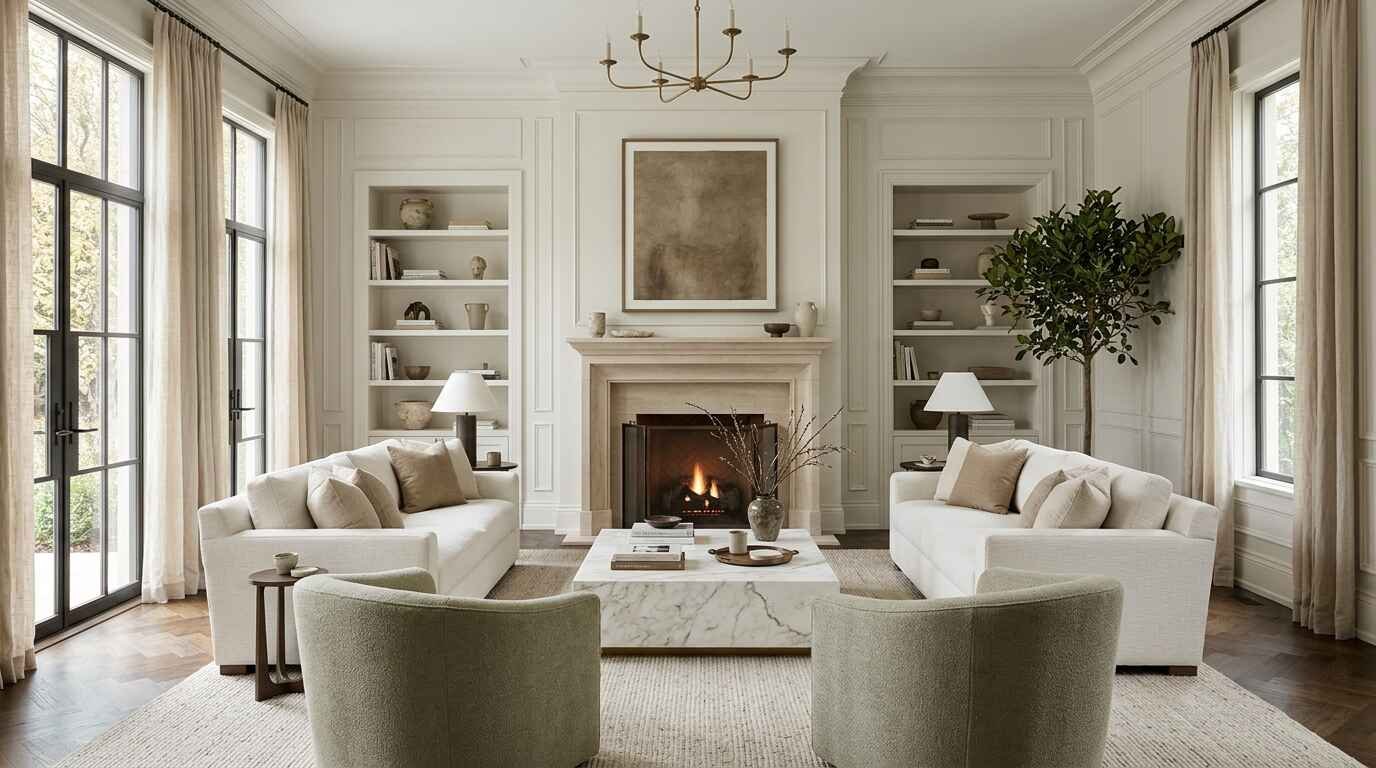
A fireplace can serve as a strong architectural focal point in a living room. Its proportions can influence the visual balance and scale of the room alongside the furniture and other architectural elements. Beyond providing warmth, its proportions and surround materials anchor the seating layout and frame surrounding features. Natural stone, clean millwork, and marble veining can influence the character of the living room and connect it with the wider interior.
Designing a fireplace requires balancing material selection, structural proportions, and spatial integration. A surround should complement the wall width, ceiling height, and natural light rather than competing with them. Whether introducing a dramatic floor-to-ceiling hearth or refined, low-profile masonry, these 11 luxury living room fireplace ideas demonstrate how to integrate fireplaces across varied architectural styles.
11 Luxury Living Room Fireplace Ideas
1. Create a Floor-to-Ceiling Stone Fireplace
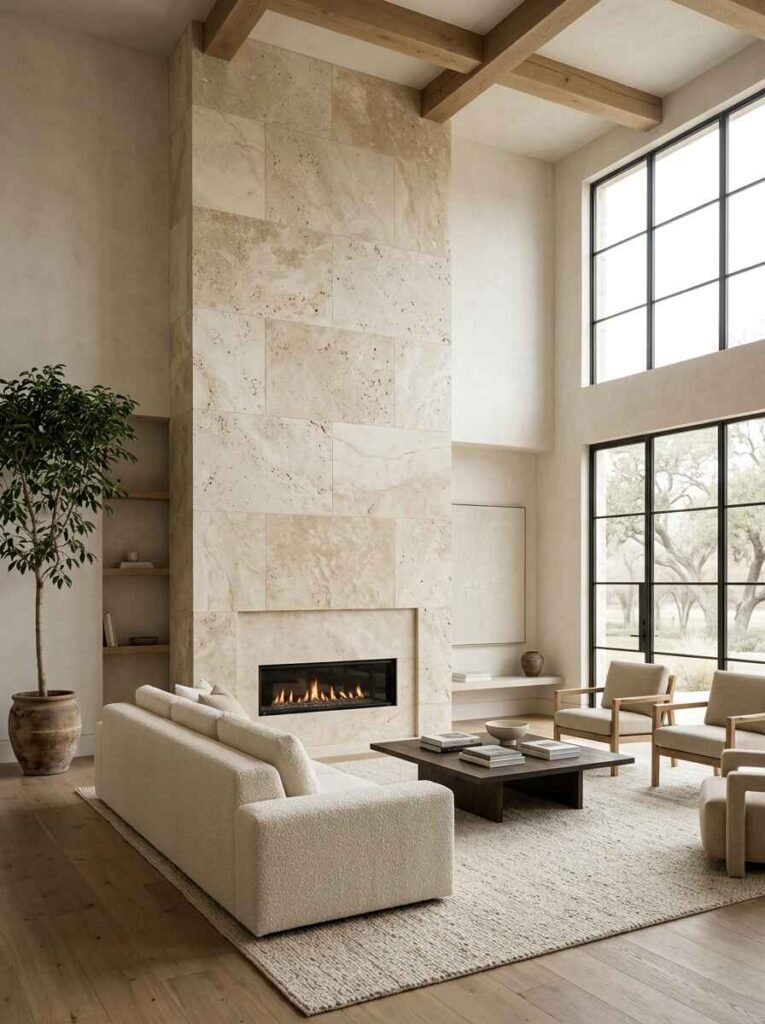
A full-height stone surround draws the eye upward and emphasizes vertical volume in high-ceiling spaces. Continuous masonry from the floor plane to the ceiling creates a unified architectural element. This approach can provide a strong architectural anchor in spacious living areas.
Natural stone can add texture and visual depth without relying on heavy ornamentation. Consider these common stone choices for full-height designs:
- Limestone or Travertine: Provides smooth, muted tones that suit understated interior schemes.
- Cut Fieldstone: Delivers rich texture and natural variation for organic spaces.
When choosing a floor-to-ceiling layout, keep surrounding wall finishes neutral and furniture profiles restrained. This prevents the room from feeling visually heavy. Large-format stone slabs and dry-stack masonry can suit rooms with generous proportions, depending on the home’s architectural style.
2. Choose a Minimalist Marble Fireplace
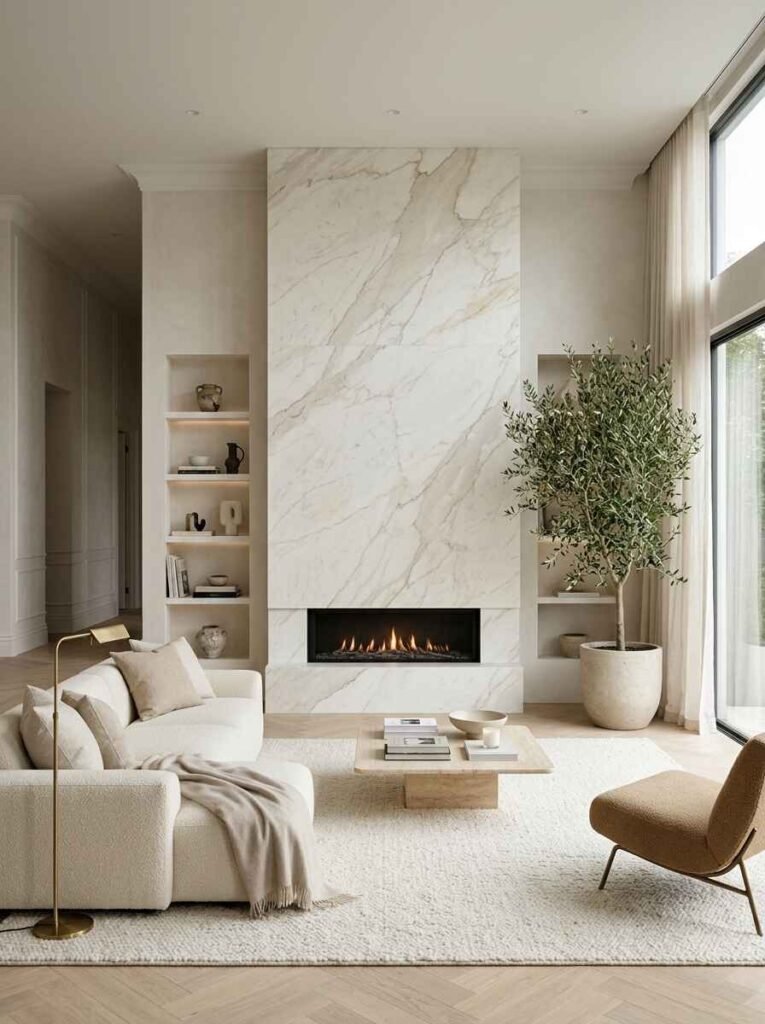
A minimalist marble fireplace relies on slab quality, natural veining, and precise joinery rather than complex carvings. Continuous stone faces allow the natural movement of the stone to serve as the main visual detail.
Surface treatment changes how the marble interacts with room light:
- Honed Finishes: Present a soft, matte texture that absorbs light gently.
- Polished Marble: Offers a subtle sheen that reflects natural light from nearby windows.
To maintain visual balance, coordinate the marble’s undertones with nearby trim work. Avoid trying to match every stone accent in the room exactly. Instead, let the marble serve as an understated focal point.
3. Use a Warm Travertine Fireplace Surround
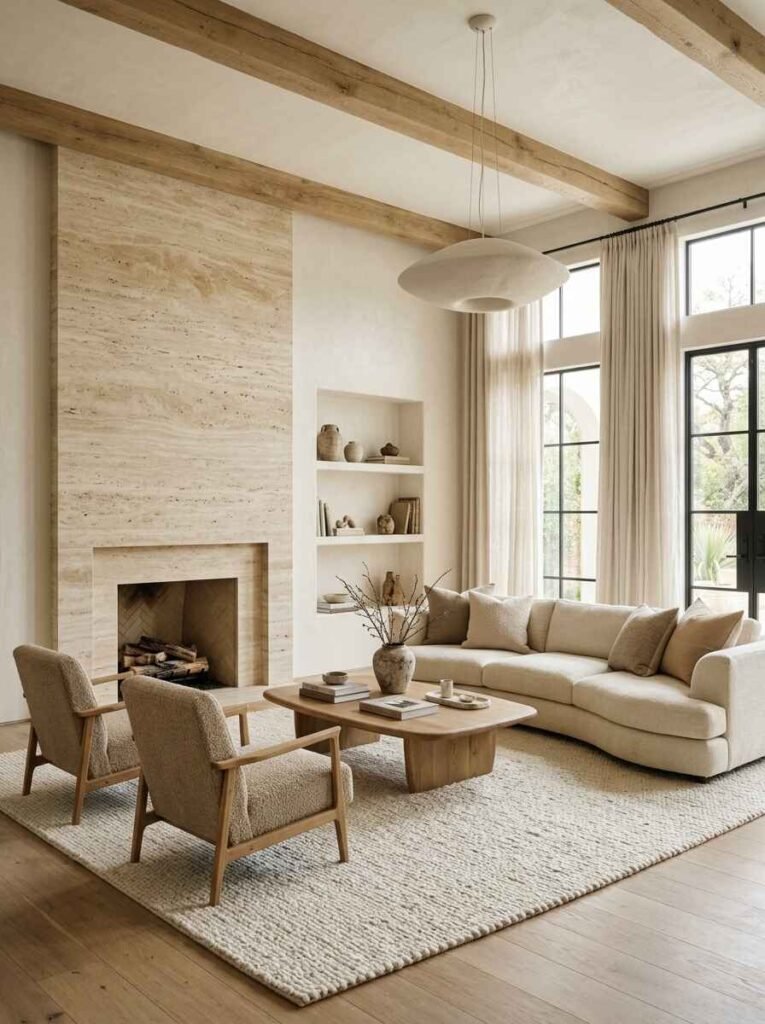
Travertine offers a textured, earthy quality that softens sharp architectural lines. Characterized by subtle pitted details and soft cream or beige tones, travertine brings organic warmth to neutral color schemes.
This natural stone pairs easily with linen upholstery, exposed timber beams, and matte lime-wash plaster. It can complement organic-modern or Mediterranean-inspired living spaces when its color and finish suit the surrounding materials.
Unfilled or lightly honed travertine can emphasize the stone’s natural texture and variation. Avoid using overly rustic mantels or heavy iron accessories. Keeping the surrounding accents simple ensures the stone looks contemporary and clean.
4. Build a Statement Fireplace Wall
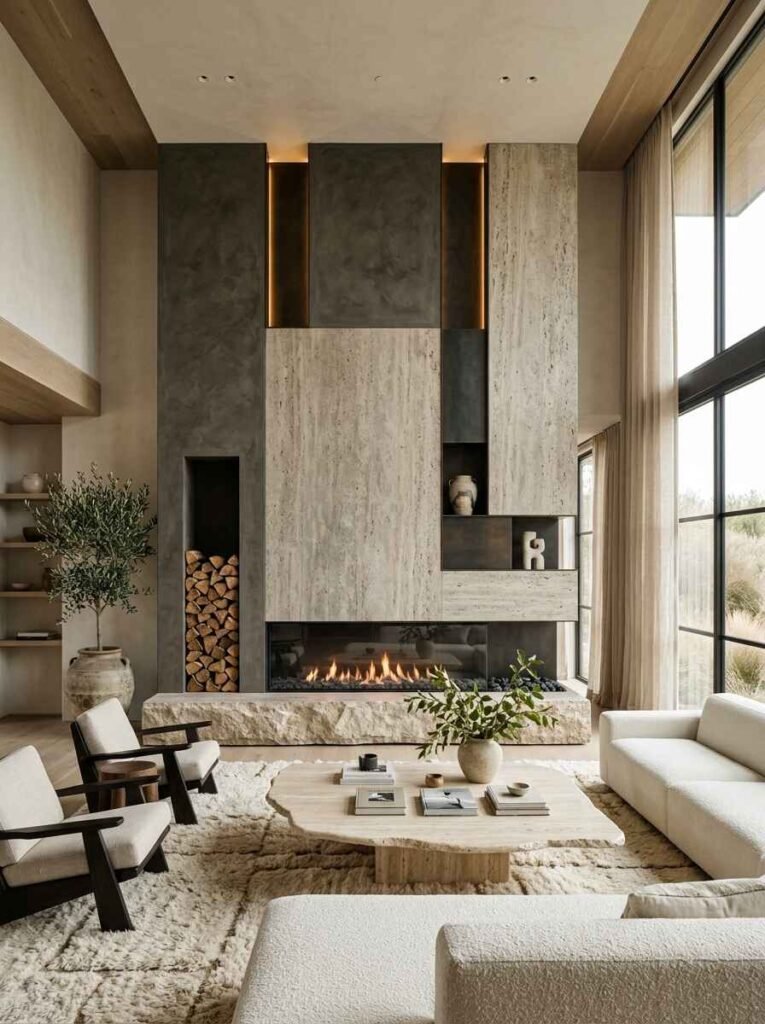
Integrating a fireplace into a full feature wall creates a strong architectural anchor. This approach combines the firebox with textured plaster panels, stone slabs, log storage, or metal accents across a single continuous surface.
Maintaining balance between open surfaces and recessed niches is essential when designing a feature wall. Keep these functional tips in mind:
- Media Placement: If a television is incorporated into the wall, consider its placement carefully so it does not visually overpower the fireplace.
- Styling Restraint: Keep surrounding art and decorative objects minimal to avoid visual clutter.
A well-composed feature wall organizes the entire room layout. It delivers clean functionality while serving as a refined visual anchor.
5. Pair the Fireplace With Built-In Storage
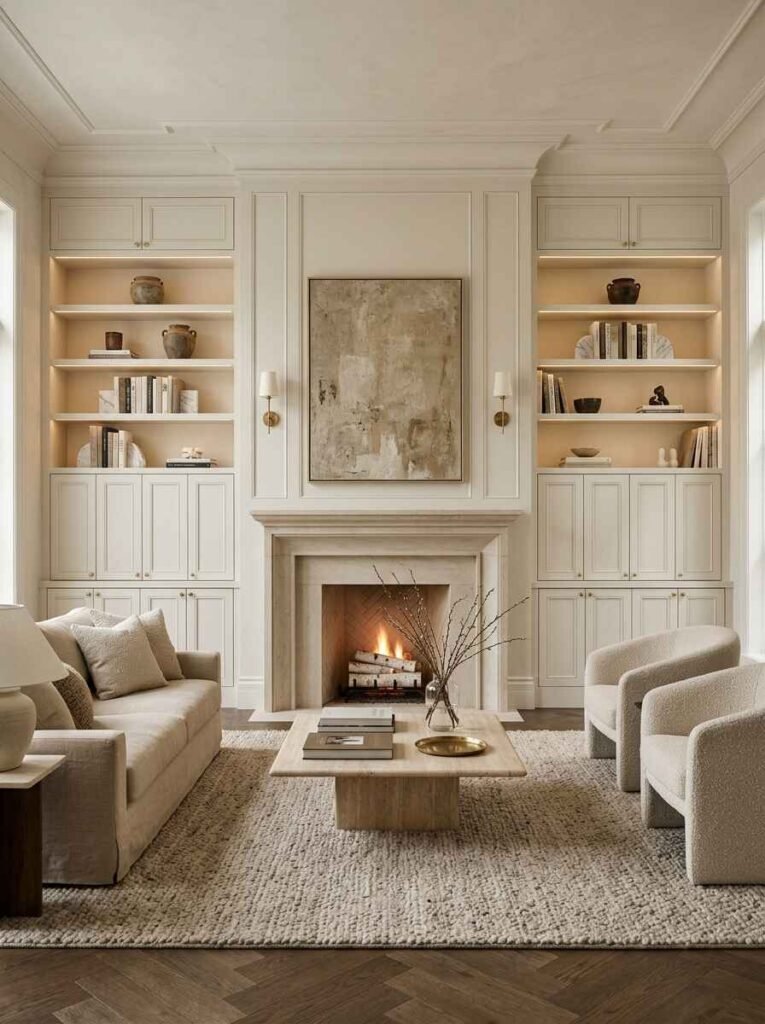
Flanking a fireplace with custom built-in cabinetry can make efficient use of wall space while creating a balanced frame. Built-in shelving offers dedicated space for books, art objects, and pottery while keeping lower storage hidden behind closed doors.
Layout choices depend on your room’s overall design language:
- Symmetrical Cabinetry: Brings classical order and balance to traditional living rooms.
- Asymmetrical Shelving: Suits modern, casual spaces that favor informal balance.
Integrating warm LED strip lighting inside display niches can highlight textures while keeping the lighting visually subtle. Finishing the cabinetry in the same shade as the wall trim creates a cohesive, custom look.
6. Install a Linear Fireplace for a Modern Look
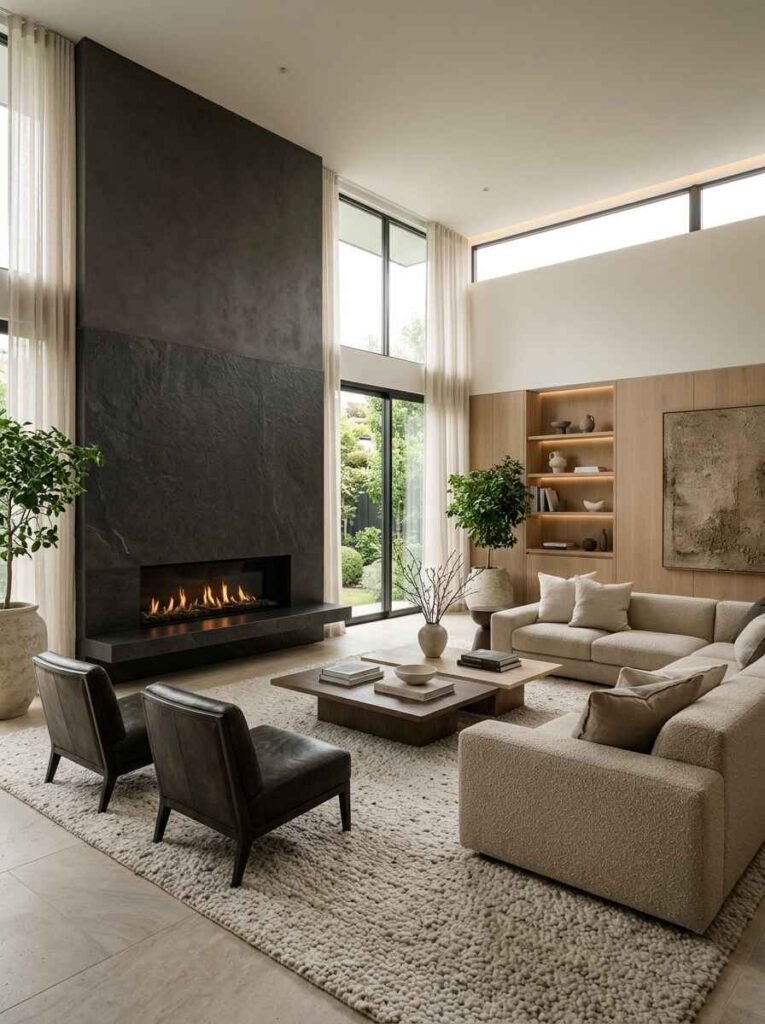
Linear fireplaces feature elongated horizontal fireboxes that suit contemporary interior architecture. Their low-profile proportions emphasize clean horizontal lines, complementing modern low-slung seating and expansive glass walls.
These units can be installed flush into smooth plaster walls, dark slate panels, or concrete surrounds for a minimal profile.
Linear gas and electric fireplaces are available in a range of installation formats and designs. Required clearances, ventilation, heat output, and installation methods vary by model, so the manufacturer’s specifications should be reviewed before selecting a unit.
7. Create a Traditional Fireplace With an Elegant Mantel
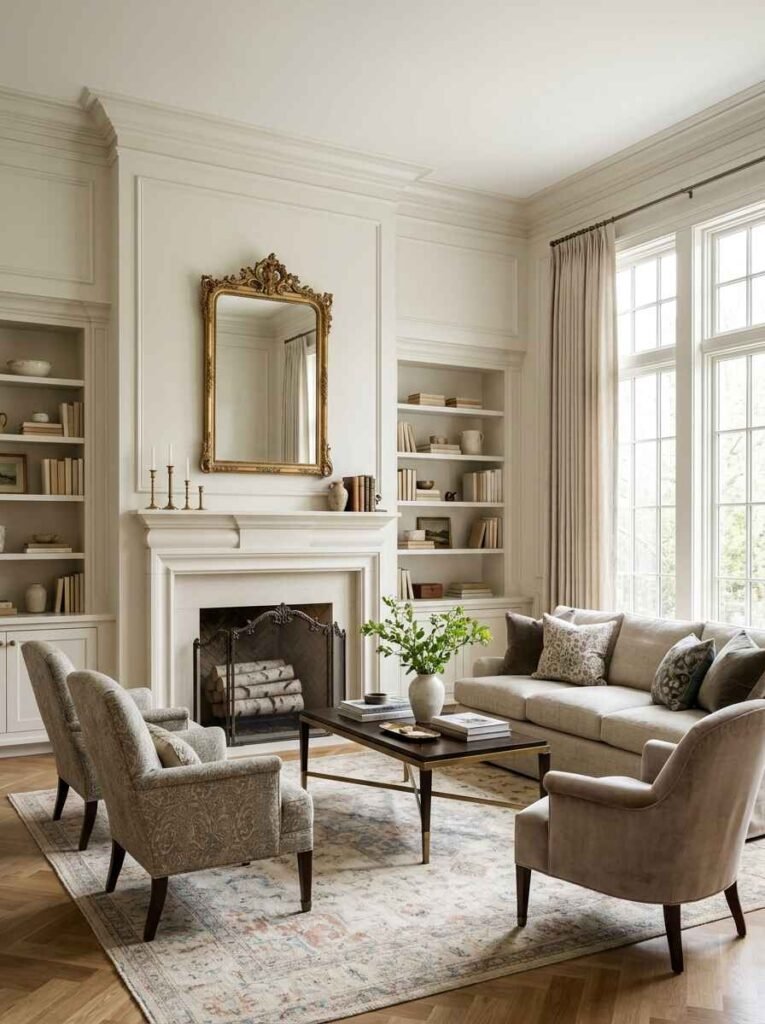
A traditional fireplace often features classic proportions, molded trim, and detailed surround or mantel work. Molded stone, carved marble, or crisp painted wood mantels add architectural detail to formal living areas.
Focus on clean profile lines rather than excessive decorative carvings to keep classic mantel designs feeling fresh.
Framing the hearth with a simple fire screen and mounting a gilded mirror or large oil painting above reinforces traditional symmetry. This setup maintains clarity and timeless style.
8. Frame the Fireplace With Custom Millwork
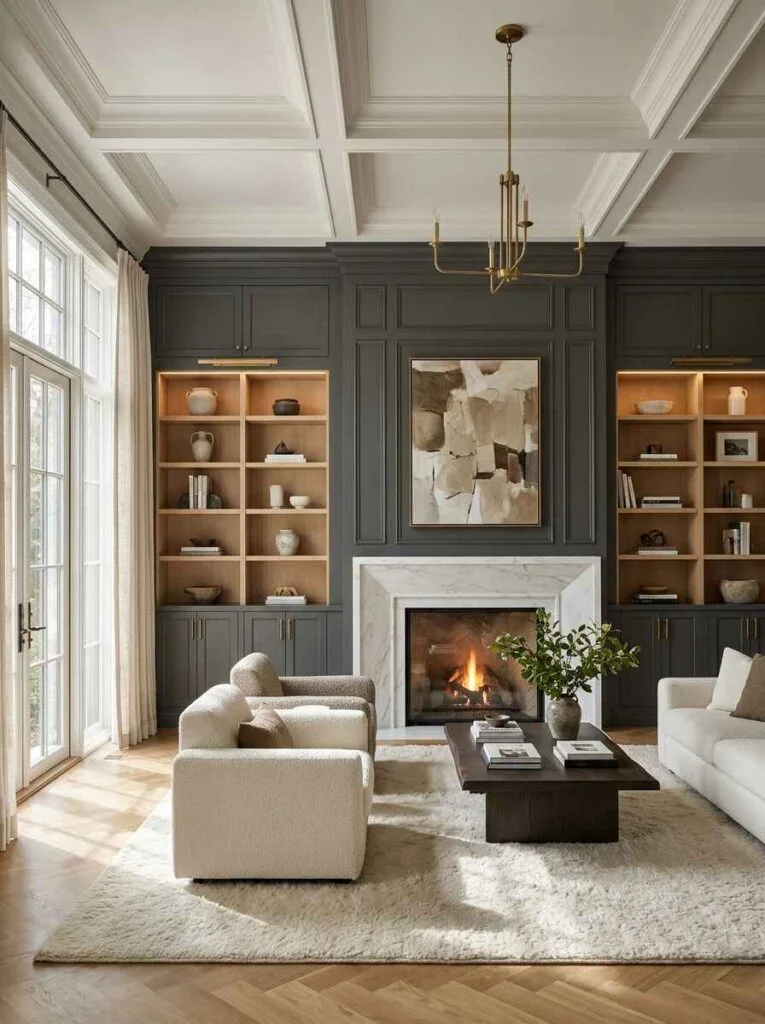
Extending custom wall paneling or millwork around a fireplace surrounds the hearth with rich architectural texture. Full-height wood paneling—such as picture-frame molding, vertical v-groove, or dark painted casing—creates an integrated frame that unifies the fireplace wall.
Custom millwork provides smart practical benefits:
- Concealed Wiring: Hides television cables, sound systems, and hardware seamlessly.
- Integrated Doors: Can help integrate hidden storage compartments more cleanly into the surrounding wall.
Selecting a dark paint finish—such as charcoal, deep olive, or navy—creates a dramatic background. A dark backdrop can create contrast against lighter stone or marble hearth materials.
9. Use a Double-Sided Fireplace to Connect Spaces
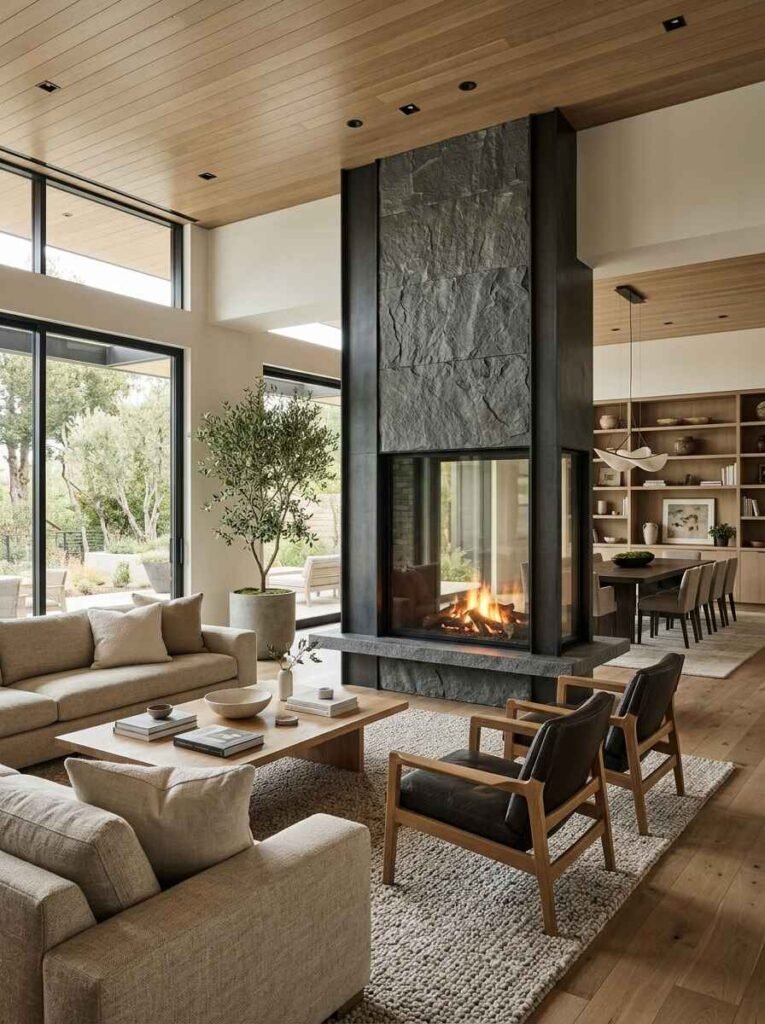
A double-sided or see-through fireplace acts as an architectural room divider. It can provide a visual connection between two adjacent living areas while allowing both spaces to share the fireplace feature.
This layout works exceptionally well in open-plan homes. It can connect a living room with an adjoining dining area, study, or other interior space while helping maintain a sense of separation.
Positioning a glass firebox inside a central stone or steel column maintains sightlines across spaces. Ensure stone choices and hearth heights align thoughtfully with furniture layouts on both sides.
10. Create Contrast With a Dark Fireplace Surround
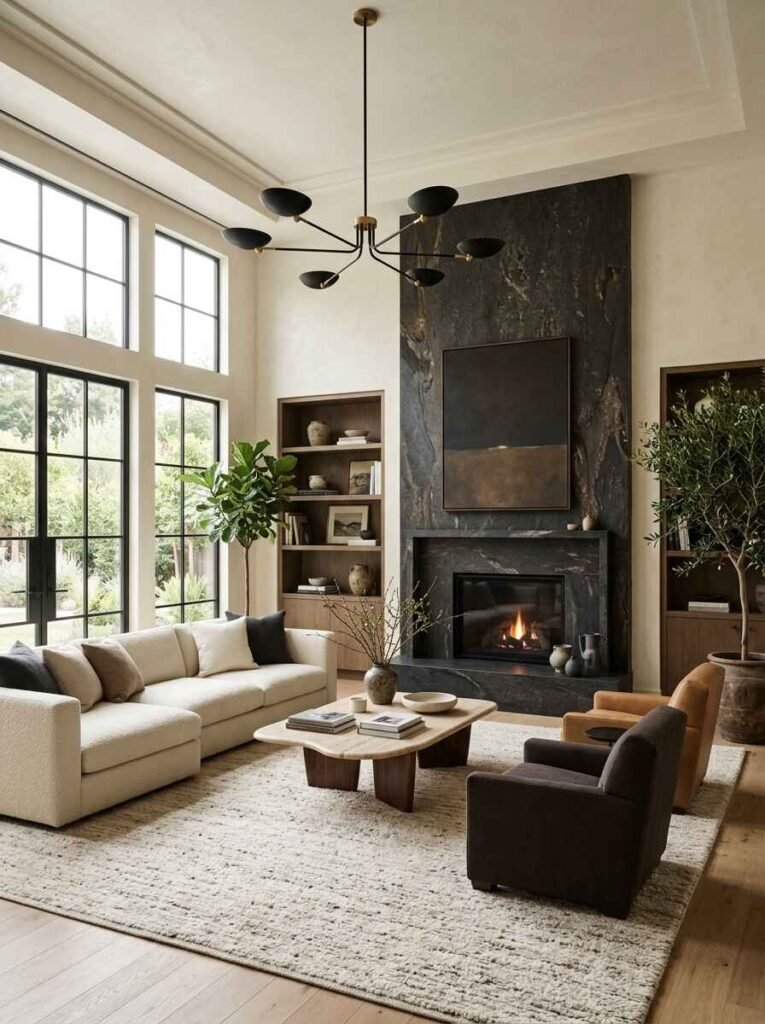
A dark fireplace surround introduces strong visual weight. It creates a bold anchor within light-toned or neutral living rooms.
Materials such as dark soapstone, black Nero Marquina marble, charcoal slate, or dark stained wood frame the firebox with crisp clarity.
Dark contrast can feel more balanced when supported by natural light and softer surrounding textures. Pairing a dark stone surround with light cream walls and warm oak flooring prevents the hearth from feeling overly heavy.
11. Make the Fireplace the Architectural Focal Point
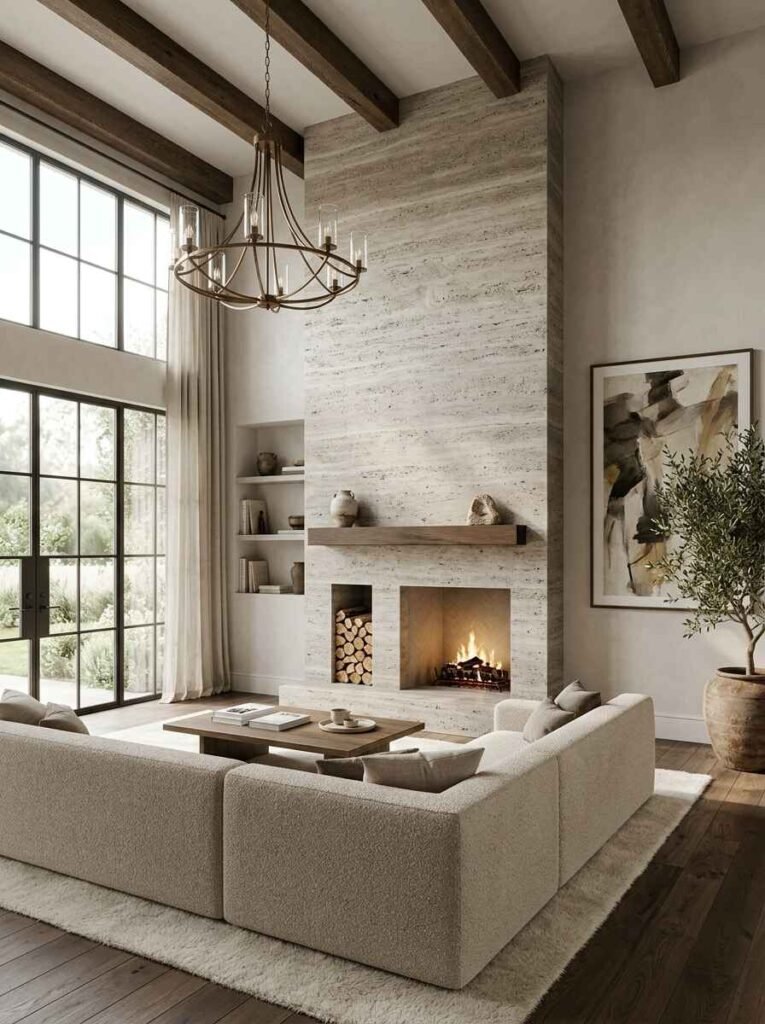
Treating the fireplace as a primary focal point involves giving the hearth an appropriate level of visual importance within the room’s overall composition. Artwork, lighting, furniture scale, and surrounding architectural details can be coordinated to support the fireplace without competing with it.
To maintain an effective visual hierarchy, avoid competing focal points on adjacent walls. Ensure coffee tables and sectionals leave clear sightlines toward the hearth.
Scale artwork and mantel accessories proportionally so they accent the fireplace structure. For guidance on arranging furniture around your central hearth, explore our comprehensive guide on Luxury Living Room Ideas.
Luxury Living Room Fireplace Mistakes to Avoid
Avoiding common design and placement errors ensures your fireplace remains functional and visually balanced:
- Choosing an Undersized Fireplace: Selecting a small firebox or narrow surround for a large accent wall creates an unbalanced visual scale.
- Mixing Too Many Competing Materials: Combining too many contrasting marbles, woods, and metals within a single hearth composition can make the finish feel visually busy.
- Ignoring the Home’s Architectural Style: Installing an intricate, traditional carved mantel inside a sleek, modern glass structure creates visual conflict.
- Overdecorating the Mantel: Layering excessive small trinkets across the mantel shelf clutters the fireplace’s clean lines.
- Making the Television Dominate the Fireplace: Mounting an oversized television directly above a small fireplace pulls visual priority away from the hearth.
- Using a Dark Surround Without Considering the Available Light: Dark slate, marble, or other deep finishes can create significant visual weight, particularly in rooms with limited natural or artificial light.
- Creating Built-Ins With Poor Proportions: Constructing cabinetry beside a fireplace without considering proportion, alignment, and spacing can make the overall composition feel unbalanced.
- Ignoring Clearance and Ventilation Requirements: Failing to verify local building codes regarding heat clearances and flue venting can delay installation and compromise safety.
For practical advice on layering artificial lighting around architectural hearths, review our article on Luxury Living Room Lighting Ideas.
To explore coordinating furniture arrangements, see our overview on Luxury Living Room Furniture Ideas.
Frequently Asked Questions
What makes a living room fireplace look luxurious?
A luxurious fireplace relies on balanced proportions, high-quality natural materials, precise craftsmanship, and uncluttered styling. Seamless architectural integration makes any hearth look high-end.
What is the best material for a luxury fireplace surround?
The most suitable material depends on your home’s architecture, desired appearance, maintenance requirements, and the fireplace system being installed. Marble and travertine offer classic veining, limestone delivers smooth matte texture, and plaster provides a clean modern finish.
Are marble fireplaces timeless?
Marble can remain visually appealing for many years because of its natural variation and established architectural character. However, care requirements vary by stone type and finish, so the manufacturer’s recommendations should be followed.
How do you make a modern fireplace look elegant?
Focus on clean lines, appropriately scaled materials, integrated architectural details, and restrained styling. Minimal decorative styling allows the natural firebox and stone texture to stand out.
Should a fireplace be the focal point of a living room?
A fireplace can serve as a natural focal point, but it does not have to dominate every living room. Expansive windows, architectural views, artwork, or media features may also contribute to the room’s visual hierarchy.
How should you decorate a luxury fireplace mantel?
Keep mantel decoration simple. Choose a small number of appropriately scaled pieces, such as artwork, a ceramic vase, or understated candleholders, while leaving enough open space to keep the mantel visually balanced.
Conclusion
A well-designed fireplace serves as both a structural anchor and a visual focal point, defining how a living room is experienced. Whether choosing a full-height limestone surround, a sleek linear gas firebox, or custom-paneled millwork, successful hearth design relies on balancing proportion, material selection, and architectural integration. By aligning the fireplace scale with room dimensions and maintaining restrained styling, you can create an inviting architectural focal point for daily living. These luxury living room fireplace ideas can help you choose a fireplace design that suits your home’s architecture, proportions, materials, and everyday needs.