
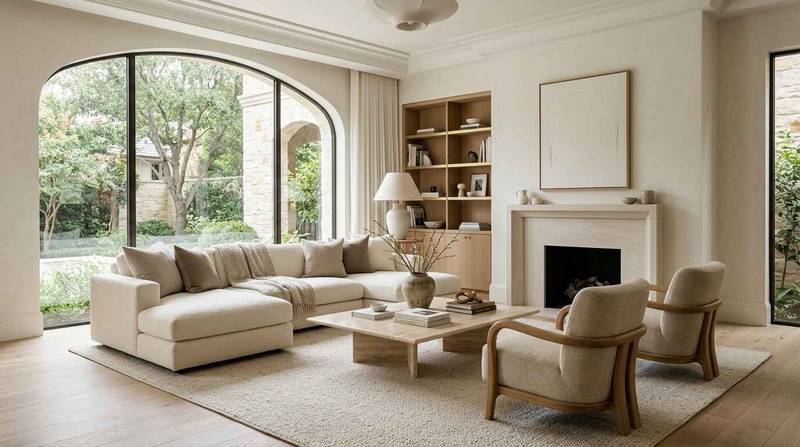
Choosing luxury living room furniture is about balancing appearance, comfort, proportion, craftsmanship, and everyday function. Rather than relying on short-lived trends, a well-designed living room benefits from furniture choices that feel considered and work naturally within the space.
Whether you are furnishing a new space or updating your current home, choosing the right main pieces and supporting accents shapes how the room feels and functions every day. If you are planning your overall spatial layout, our guide on Luxury Home Layout explores how to balance flow and architectural structure. For broader style concepts beyond furniture, explore our comprehensive guide to Luxury Living Room Ideas.
Below are 13 luxury living room furniture ideas to help you choose pieces that combine sophisticated design with comfort, proportion, and everyday functionality.
1. Invest in a Well-Proportioned Statement Sofa
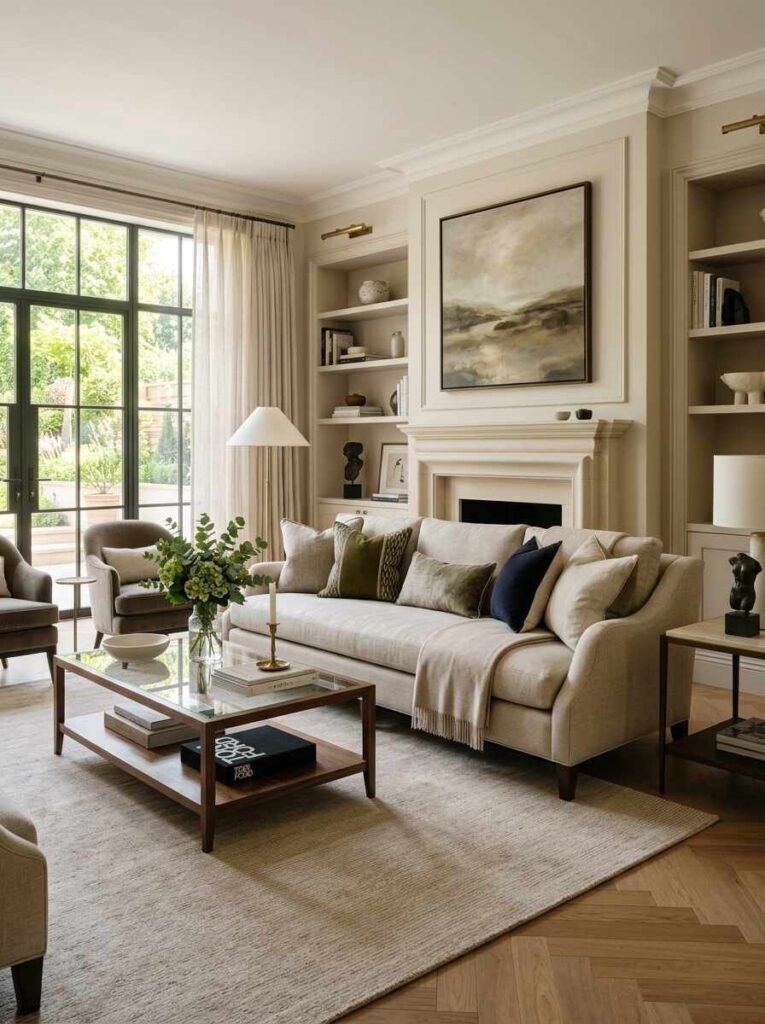
The primary sofa is often the anchor of the entire living room. When choosing a statement sofa, proportion is just as important as appearance. A piece that is too large can overwhelm the room, while a frame that is too small can make the space feel sparse and disjointed.
Look for a well-constructed frame, supportive seat suspension, and cushions suited to the level of firmness and comfort you prefer. Tailored upholstery, such as tight-back designs or clean-lined bench cushions, provides a crisp silhouette that maintains its structure over time. Neutrals like beige, warm white, or soft taupe offer long-term styling flexibility.
- Seat Depth Consideration: Deep seats accommodate relaxing and lounging, while standard seat depths offer a more upright, formal posture for entertaining.
- Fabric Weight: Heavy-weight woven linens and structured cotton blends hold tailored seams better than lightweight fabrics.
2. Opt for a Modular Sectional for Flexible Seating
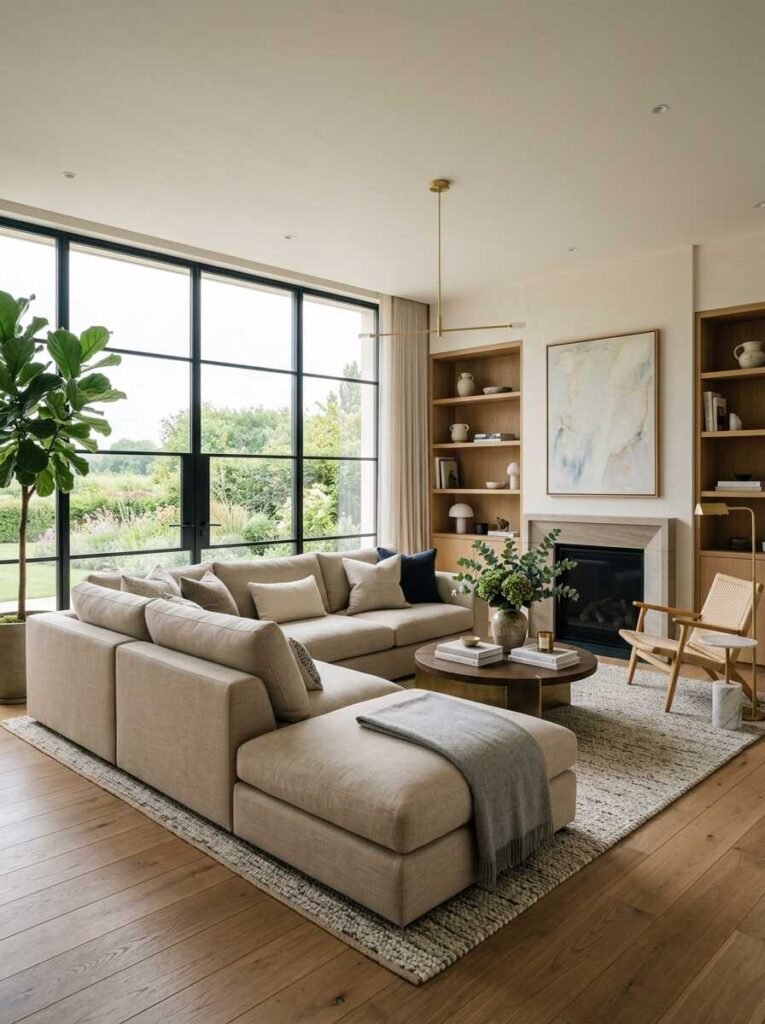
For spacious living areas or homes designed for frequent gatherings, a modular sectional offers adaptable seating configurations without sacrificing a sleek profile. Individual modules can be arranged to fit different room dimensions or separated when seating needs change.
When shopping for a modular sectional, pay attention to how the individual units lock together. High-quality connectors keep the pieces aligned during daily use. A low-profile frame with low backrests keeps sightlines open across large open-plan living rooms and windows.
- Module Variety: Ensure the collection includes armless chairs, corner units, and ottomans to allow multi-directional seating setups.
- Proportional Scale: Check that the depth of the sectional leaves sufficient room for walkways and secondary furniture.
3. Add Sculptural Accent Chairs
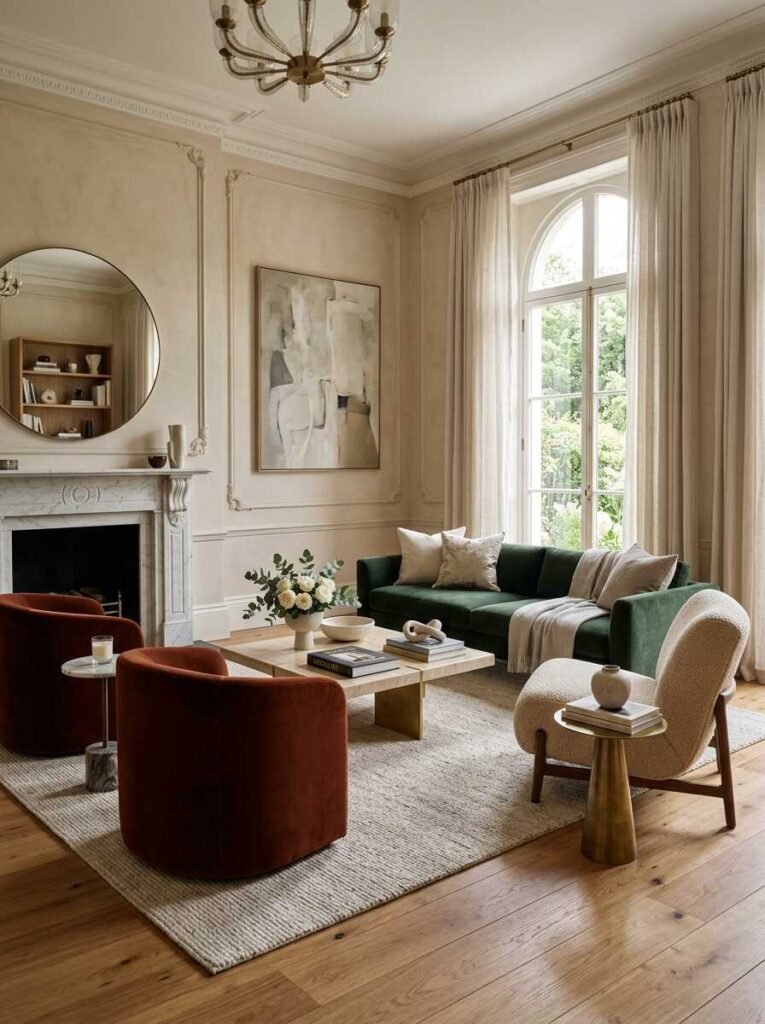
Accent chairs provide an opportunity to introduce distinct geometric shapes and contrasting textures into a room. Instead of purchasing matching furniture sets, mixing distinct chair silhouettes creates a custom, layered atmosphere.
Tub chairs, barrel backs, and curved armchairs soften rooms dominated by straight architectural lines. When selecting sculptural chairs, test the ergonomic support of the backrest and arm height. A chair should feel comfortable for extended conversations while serving as an artistic element when viewed from any angle.
- Distinct Silhouettes: Curved and rounded seat backs help ease visual sharpness in rectangular rooms.
- Tactile Upholstery: Rich velvet, plush bouclé, or smooth leather adds visual contrast when paired against standard woven sofa fabrics.
4. Use a Statement Coffee Table as a Focal Furniture Piece
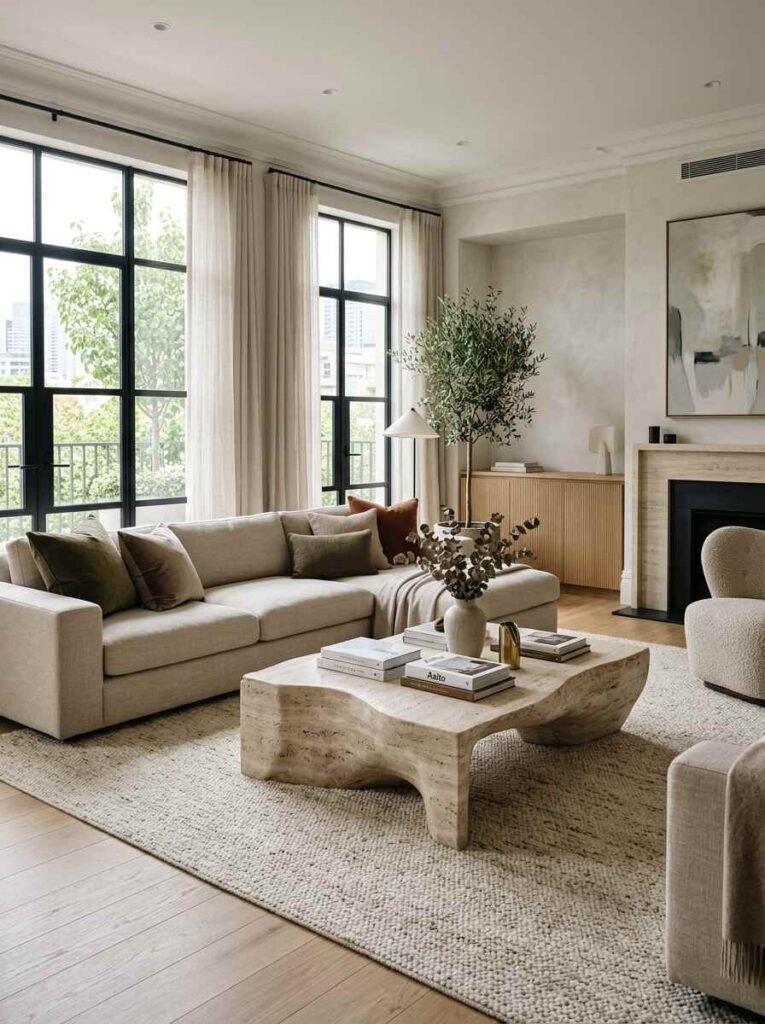
Positioned at the center of the main seating area, a statement coffee table anchors the surrounding furniture. Organic shapes, solid plinth bases, and sculptural legs draw the eye downward and establish balance across the seating layout.
Consider low-profile plinth designs carved from natural stone or solid timber. The coffee table should be proportional to your sofa, typically measuring roughly one-half to two-thirds of the sofa’s overall length. Ensure the height aligns closely with or sits slightly below the sofa seat cushions for convenient access.
- Plinth vs. Legged Bases: Solid plinth coffee tables bring visual weight to large rooms, while open-legged designs suit smaller footprints.
- Surface Maintenance: Honed stone and sealed woods handle daily surface contact better than raw, unsealed finishes.
5. Introduce Elegant Side Tables
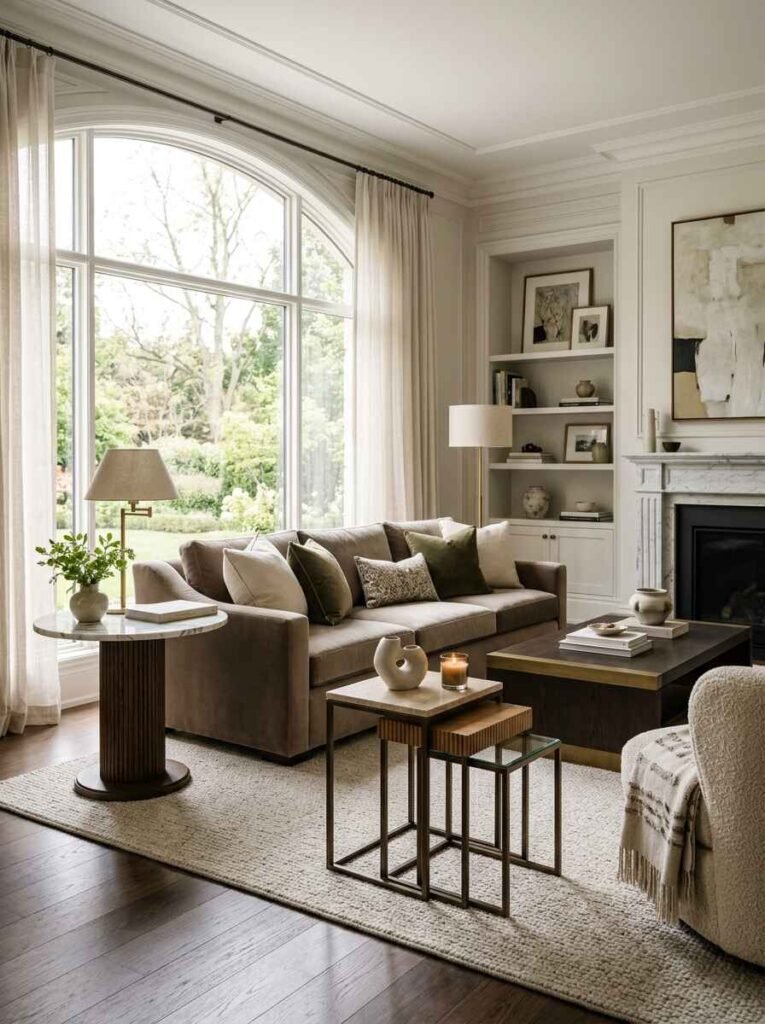
Side tables add functionality to seating areas by providing convenient surfaces for drinks, reading lights, and small accents. Varying the height and material of side tables keeps the room from appearing rigid.
Look for details like fluted pedestals, metal inlay accents, or floating stone tops. Nesting side tables offer additional surface area that can be pulled out when hosting guests and tucked away when not in use.
- Proportional Height: A side table should ideally stand within one to two inches of the adjacent armrest height.
- Material Mix: Pair stone or glass side tables near fabric sofas to vary the surface textures throughout the seating zone.
6. Add a Refined Console Table
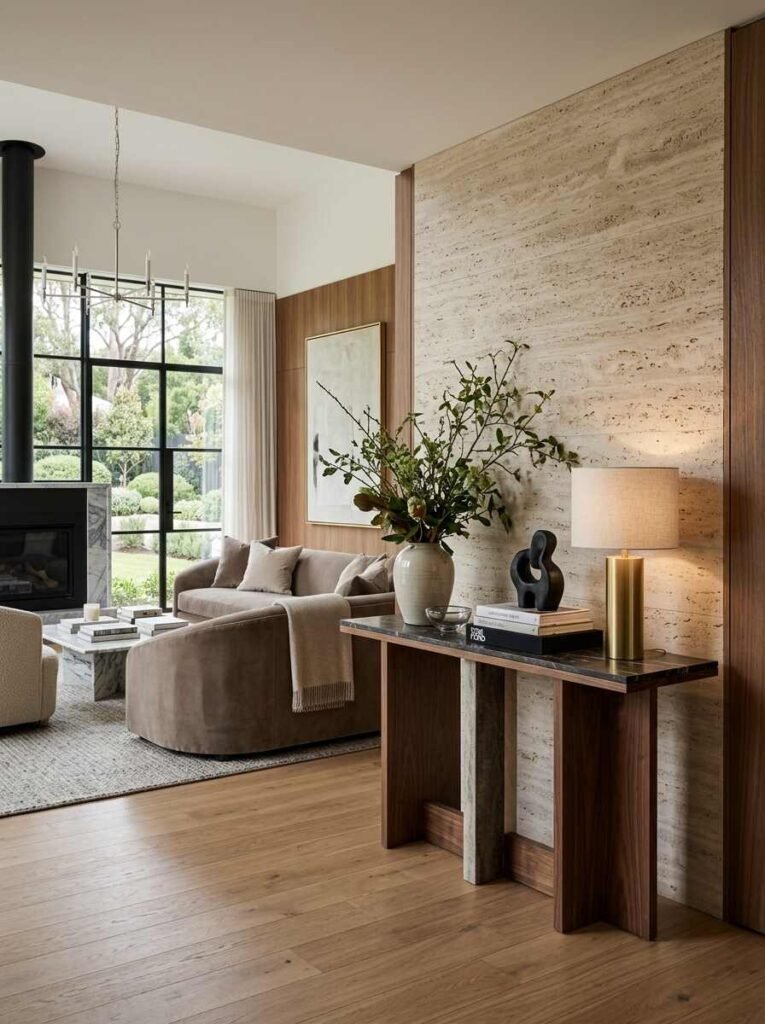
Console tables work well behind freestanding sofas, along entry areas, or against expansive walls where a narrow piece can add both function and visual structure. A slender profile allows a console table to add visual substance without occupying substantial floor area.
Select consoles built with architectural bases, such as trestle frames, fluted legs, or geometric pedestals. Materials like walnut, oak, brass, and marble give these slim tables visual presence. Ensure the depth of the console matches the intended location to maintain clear traffic paths.
- Sofa Back Alignment: When placing a console behind a sofa, choose a height that sits slightly below the top of the sofa backrest.
- Functional Drawers: Shallow integrated drawers provide hidden storage for keys, remotes, and small accessories.
7. Choose an Elegant Media Cabinet
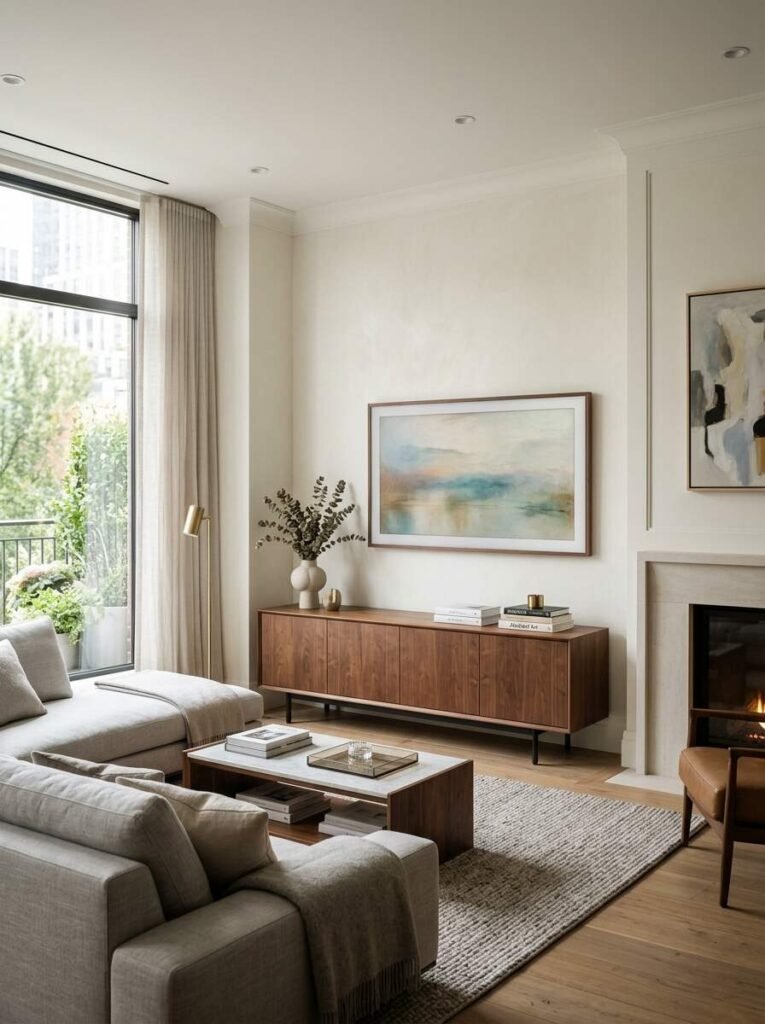
A media cabinet should balance media storage needs with beautiful furniture design. Low-profile credenzas keep televisions at comfortable eye level while concealing wires, gaming consoles, and audio equipment.
Look for media furniture crafted with solid wood framing, concealed hardware, and soft-close cabinet doors. Slatted wood doors or acoustic mesh fronts allow remote control signals and air circulation to reach electronics while keeping equipment out of view.
- Cable Management: Check for pre-drilled back panels and interior cord channels to keep wires organized.
- Proportional Width: Select a media cabinet that extends at least several inches beyond the television frame on both sides for visual balance.
8. Incorporate a Tufted Upholstered Ottoman or Bench
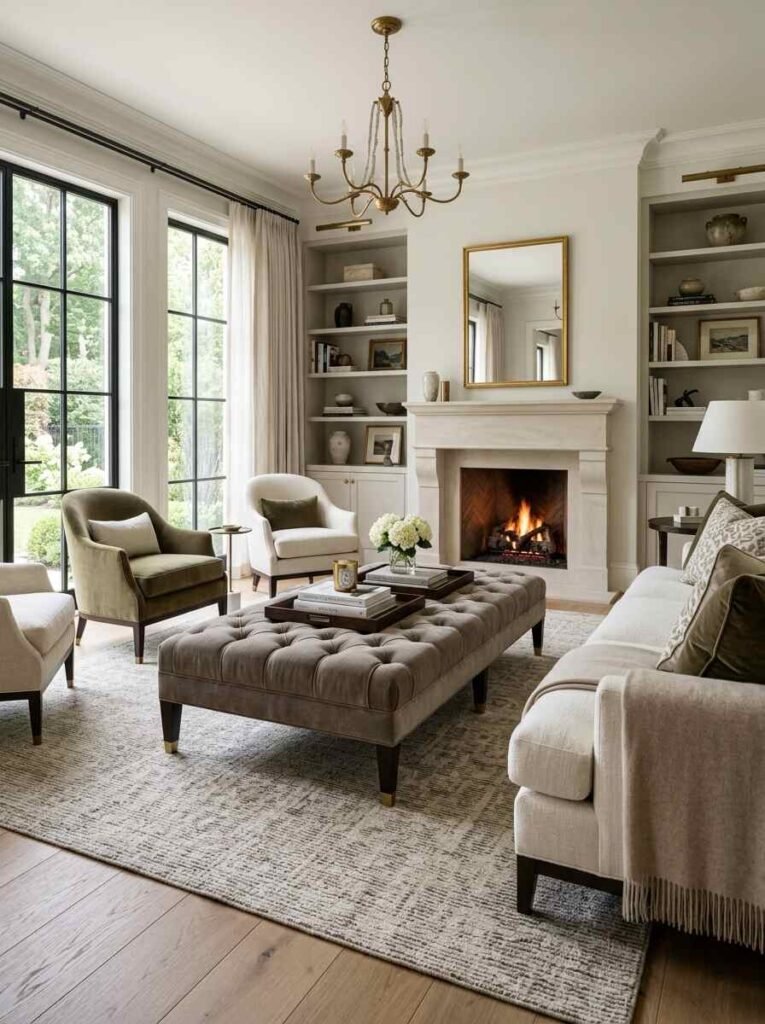
Upholstered ottomans and benches offer versatile functionality, functioning as extra seating, footrests, or alternative coffee tables when styled with solid trays. Deep button tufting introduces classic detail and texture to modern and traditional rooms alike.
When selecting an ottoman to serve as a central table, look for firm cushioning that provides a stable surface for trays. Wood or metal legs with brass caps add an extra detail that elevates the piece.
- Firm Cushion Construction: High-density foam tops hold heavy trays steadily without sinking over time.
- Double-Duty Use: Placed under windows or along open walls, benches provide low-profile extra seating when needed.
9. Add Natural Wood Furniture for Warmth
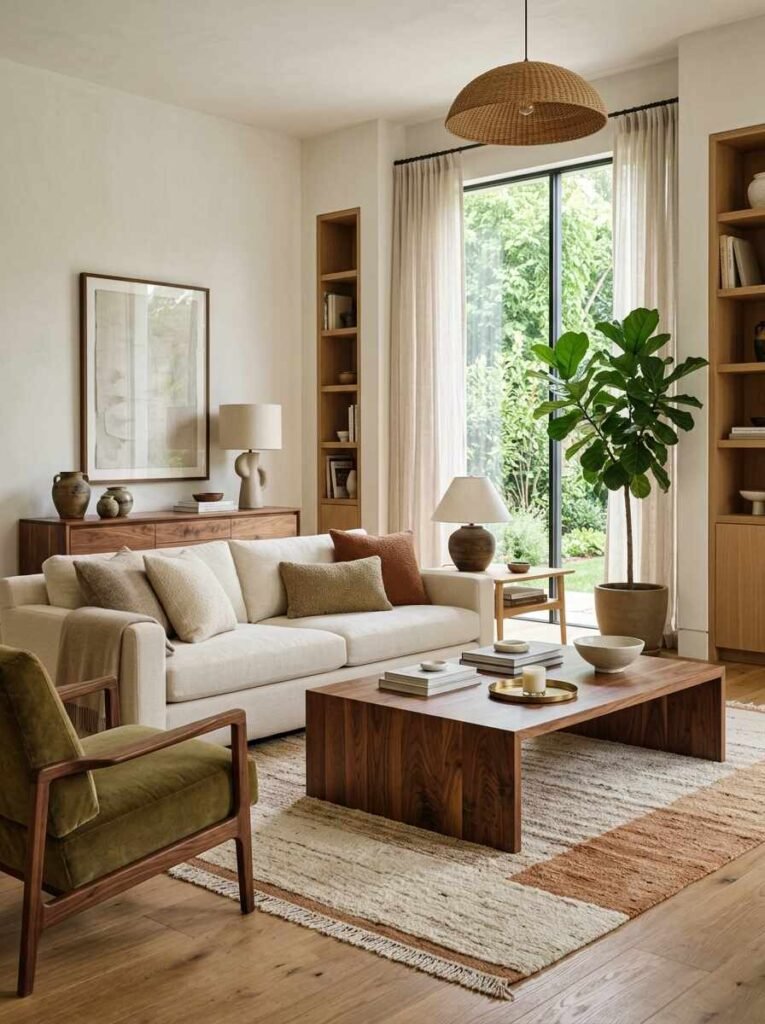
Incorporating natural wood furniture introduces organic grain patterns, warmth, and visual grounding to living spaces. Wood pieces keep spaces featuring smooth plaster walls or stone tiles from feeling overly cold.
Focus on solid wood tables, bookcases, and chairs made from white oak, walnut, or teak. Matte or low-sheen finishes can emphasize natural grain while maintaining a more understated appearance.
- Grain Characteristics: Select woods with visible, subtle graining to add depth without overpowering adjacent patterns.
- Protective Finishes: A suitable protective finish can help make wood furniture easier to maintain and better suited to everyday use.
10. Introduce Stone Furniture Pieces
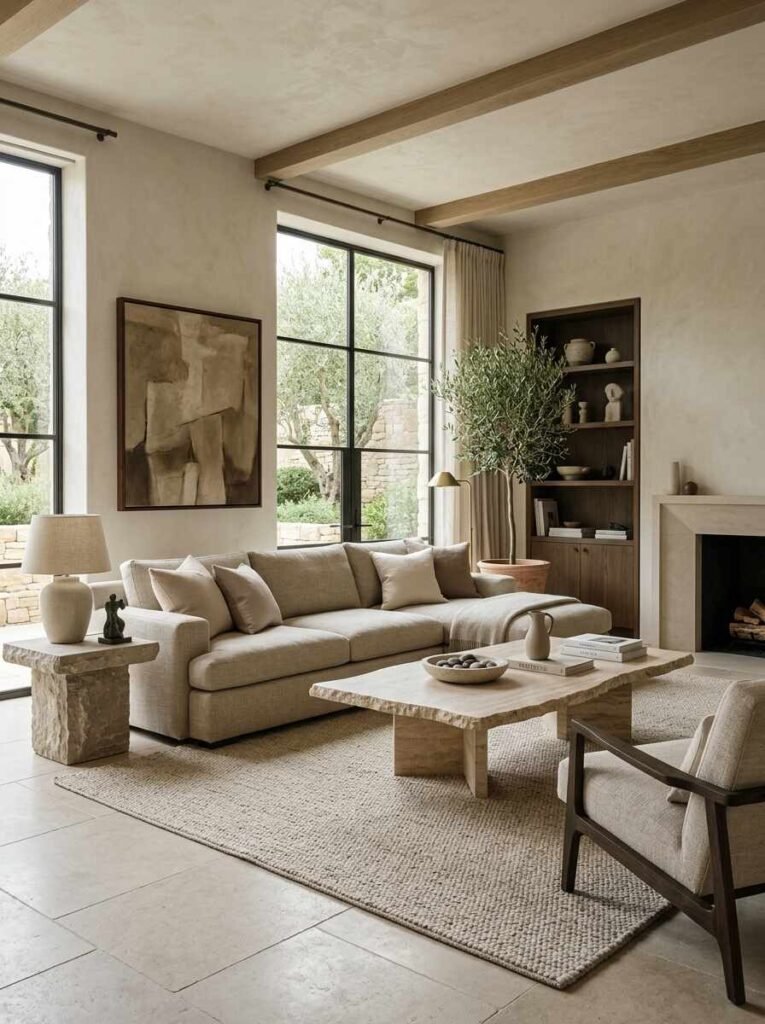
Stone furniture pieces introduce natural variation, texture, and visual weight into the room. Tables crafted from travertine, marble, limestone, or quartzite feature unique natural veining that makes each piece distinct.
Consider honed stone surfaces if you prefer a softer matte appearance rather than the reflective finish of polished stone. Pair stone coffee or end tables with soft upholstered furniture to create a balanced interplay between soft and hard materials.
- Honed vs. Polished Finish: Honed matte finishes soften stone reflections, while polished surfaces create a crisp, formal look.
- Stone Sealing: Check the manufacturer’s care recommendations to determine whether the stone requires sealing and how frequently it should be maintained.
11. Use Custom-Looking Storage Furniture
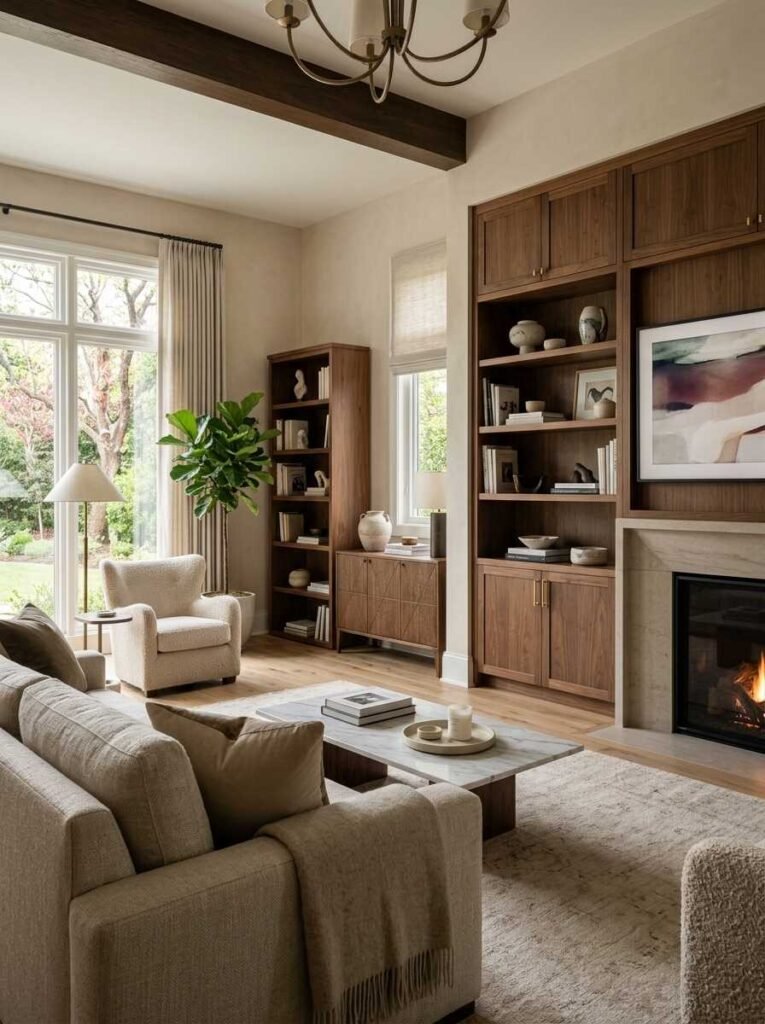
Storage furniture should look like an intentional architectural element rather than an afterthought. Floor-to-ceiling bookcases and integrated wall cabinets maximize vertical height and draw the eye upward.
Look for storage furniture with features such as integrated lighting, concealed cabinets, adjustable shelves, and a combination of open and closed storage. Coordinating bookcases or cabinets around a fireplace or media area can create a more integrated and intentional appearance.
- Integrated Display Lighting: Concealed LED channel lighting highlights books, art objects, and decorative items.
- Closed vs. Open Storage: Combine upper open display shelves with lower closed cabinets to hide clutter out of sight.
12. Mix Furniture Materials for a Collected Look
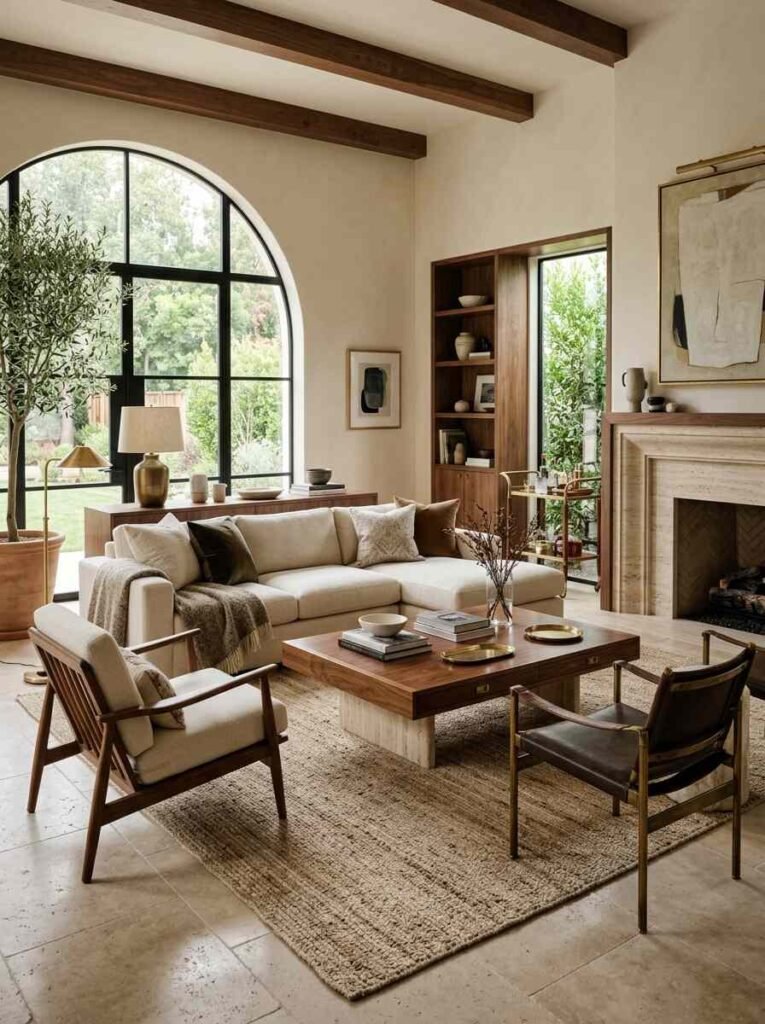
Using too many matching furniture pieces or repeating the same material throughout the room can make the space feel visually uniform. Combining wood, leather, stone, metal, and woven upholstery creates a rich, collected space that feels thoughtfully assembled over time.
When mixing materials, establish a unifying element, such as consistent wood undertones or matching metal finish accents. For example, a wood-and-stone coffee table can be paired with a leather accent chair and a neutral upholstered sofa to create contrast without making the room feel disconnected.
- Material Balance: Distribute hard surfaces like stone and metal evenly alongside soft fabric upholstery across the space.
- Consistent Undertones: Match warm wood tones with warm metal accents like soft brass or bronze for smooth cohesion.
13. Choose Furniture With Timeless Silhouettes
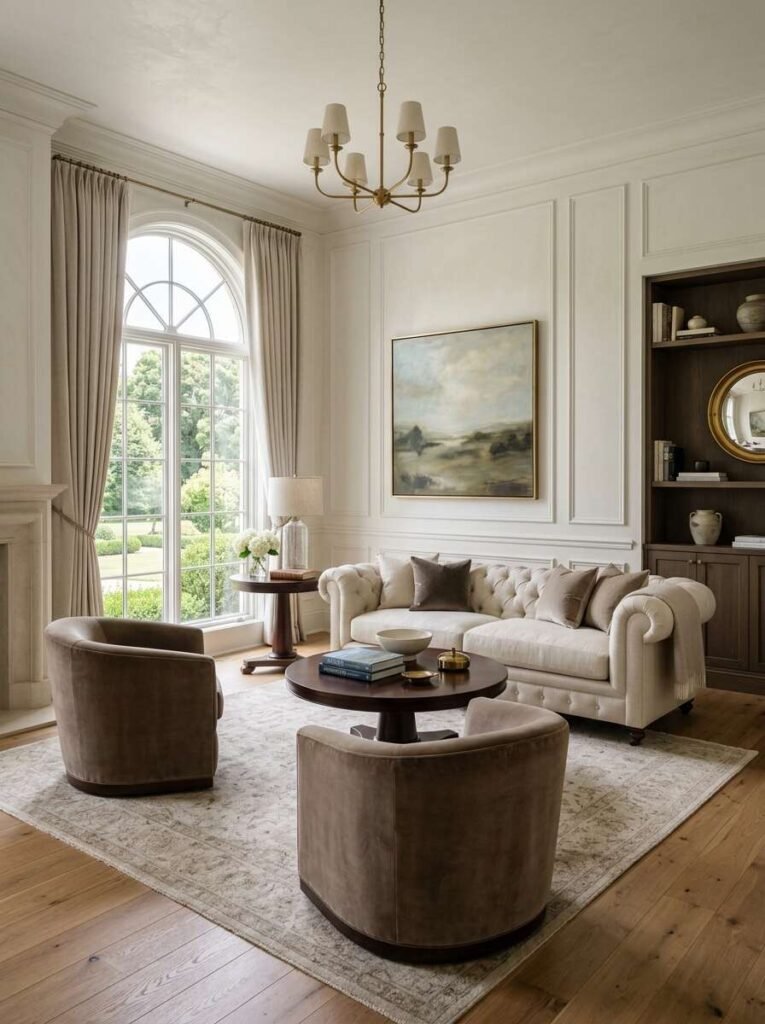
Furniture with classic silhouettes provides lasting aesthetic appeal that easily adapts as your interior preferences evolve. Designs inspired by traditional furniture, such as tufted sofas, rolled-arm seating, and pedestal tables, can provide a familiar foundation that adapts to changing decorative preferences.
Look for classic elements like soft button tufting, smooth swivel bases, and understated wood joinery. Classic forms combined with contemporary upholstery can create a useful connection between traditional character and modern comfort.
- Classic Framing: Traditional frame shapes with clean upholstery details easily suit both historic and modern homes.
- Concealed Functionality: Hidden swivel mechanisms on classic lounge chairs provide full movement without breaking the room design.
How to Choose Luxury Living Room Furniture for Your Home
Selecting furniture for an elegant home requires assessing both design aesthetics and everyday practical requirements.
1. Measure and Plan Clear Pathways
Before purchasing furniture, measure the room dimensions, ceiling height, and door frame openings. As a general starting guideline, maintain roughly 14 to 18 inches between the coffee table and sofa edge for comfortable movement. Leave primary walkways at approximately 30 to 36 inches wide to ensure natural movement throughout the room.
2. Prioritize Internal Construction Quality
Furniture construction is worth examining alongside appearance and upholstery. Look for a sturdy frame, secure joinery, supportive suspension, and cushions that suit your preferred level of firmness. If purchasing upholstered furniture, ask the manufacturer about the frame materials, suspension system, cushion construction, and warranty rather than relying on appearance alone.
3. Balance Scale and Visual Weight
Mix heavy solid pieces, such as stone plinth tables, with lighter elevated furniture featuring exposed legs. Balancing ground-level weight with open-framed furniture keeps the living room feeling spacious and open.
4. Select Materials Matched to Your Lifestyle
Choose upholstery and furniture finishes that suit your daily routines. Busy households with children or pets may prefer performance fabrics and durable hardwood surfaces, whereas formal entertaining rooms can accommodate delicate weaves and polished natural stones.
How to Make Living Room Furniture Look More Expensive
Even high-quality furniture benefits from thoughtful styling and spatial presentation.
- Create Visual Breathing Room: Avoid filling every available area with furniture or accessories. Leaving intentional space around major pieces can make the room feel more composed.
- Tailored Decorative Pillows: Replace standard pillow inserts with oversized down-blend fills for a full, relaxed appearance.
- Elevate Lighting Accent Details: Pair side tables and consoles with heavy brass, ceramic, or alabaster table lamps to cast soft warm light across furniture surfaces.
- Keep Accessories Minimal: Avoid overcrowding tables and shelves. Group a small number of complementary objects while leaving enough surface area visible to maintain visual balance.
- Maintain Upholstery: Follow the manufacturer’s care instructions, rotate reversible cushions when appropriate, and address spills or stains promptly to keep furniture looking well maintained.
Luxury Living Room Furniture Mistakes to Avoid
Avoiding these common selection mistakes ensures your living room remains comfortable, cohesive, and easy to navigate.
- Buying Matching Sets: Purchasing complete matching furniture sets (sofa, loveseat, and coffee table) can make a room feel generic. Mix different textures and materials instead.
- Ignoring Furniture Scale: Choosing an oversized sectional for a modest room or a tiny coffee table for a sprawling sofa disrupts visual balance.
- Prioritizing Style Over Comfort: A beautiful chair that lacks back support or comfortable seating depth quickly becomes unused space. Always evaluate physical comfort alongside appearance.
- Neglecting Lighting: Relying on a single overhead fixture can make an otherwise carefully furnished room feel flat in the evening. Layer ambient, task, and accent lighting where appropriate.
- Overcrowding the Floor Plan: Filling every empty corner with accent tables or extra seating restricts traffic flow and makes the room feel chaotic.
Frequently Asked Questions
What is the most durable frame construction for a luxury sofa?
A well-constructed hardwood frame can provide a strong foundation for an upholstered sofa, but frame quality also depends on joinery, construction, suspension, and manufacturing standards. When comparing sofas, ask the manufacturer about the frame materials and construction rather than relying on the wood species alone.
How do I maintain travertine and marble coffee tables?
Care requirements vary by stone type and finish. Follow the manufacturer’s recommendations for cleaning and sealing, and use coasters or protective surfaces where appropriate to reduce the risk of staining or etching.
What is the ideal rug size for a living room furniture layout?
Choose a rug size that visually connects the main seating pieces rather than leaving each piece isolated. In many living rooms, placing at least the front legs of sofas and chairs on the rug creates a cohesive seating zone, while larger rooms may benefit from a rug that accommodates the entire furniture grouping.
Can I mix leather and fabric furniture in the same living room?
Yes. Combining a fabric sofa with a leather accent chair introduces rich textural contrast. To keep the look cohesive, select leather tones that complement the wood or neutral fabric undertones present throughout the space.
How high should art be hung above a console table or sofa?
As a general starting point, artwork should be positioned at a comfortable viewing height and scaled appropriately to the furniture below it. Above a sofa or console, leave enough space between the artwork and furniture to visually connect the two without making the arrangement feel crowded.
Conclusion
The choice of luxury living room furniture is not just about furnishing the room with luxurious items but rather maintaining a balance between comfort, size, materials, and functions. An appropriate selection of sofa, sculptural chair, decorative table, storage solutions, and finish can create an elegant atmosphere without overcrowding the room with excessive items.
First select the most functional furniture for the room and then complement them with other materials, textures, and forms. Think about the size of the room, its proportions, your lifestyle, maintenance and preferences before you make any purchases. With an appropriate balance, luxury living room furniture will create an elegant and comfortable interior.
1 thought on “13 Luxury Living Room Furniture Ideas for an Elegant Home”
Comments are closed.