
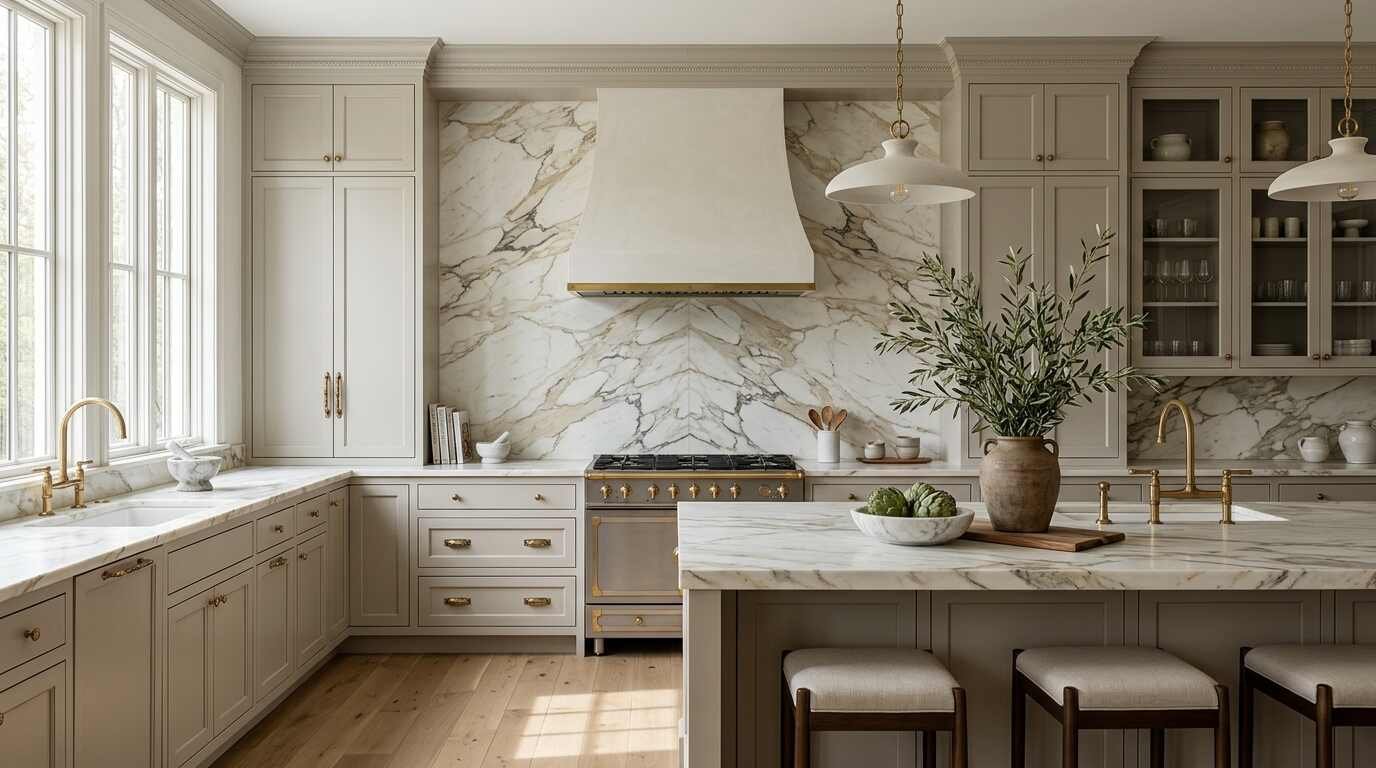
The kitchen backsplash serves as an essential design anchor that connects cabinetry, countertops, and hardware into a cohesive scheme. While its primary functional role is protecting walls from water, steam, and cooking splatters, the backsplash also defines the kitchen’s visual character. Selecting the right combination of material, color, tile format, and surface finish allows you to set a refined tone for the entire room.
When planning a kitchen renovation or updating existing finishes, choosing a backsplash requires balancing visual appeal with long-term maintenance requirements. In this guide, we explore 11 elegant kitchen backsplash ideas, alongside practical guidance for matching stone veining, evaluating tile layouts, choosing grout, and coordinating your wall finishes with luxury kitchen cabinetry ideas.
1. Marble Kitchen Backsplash for Timeless Elegance
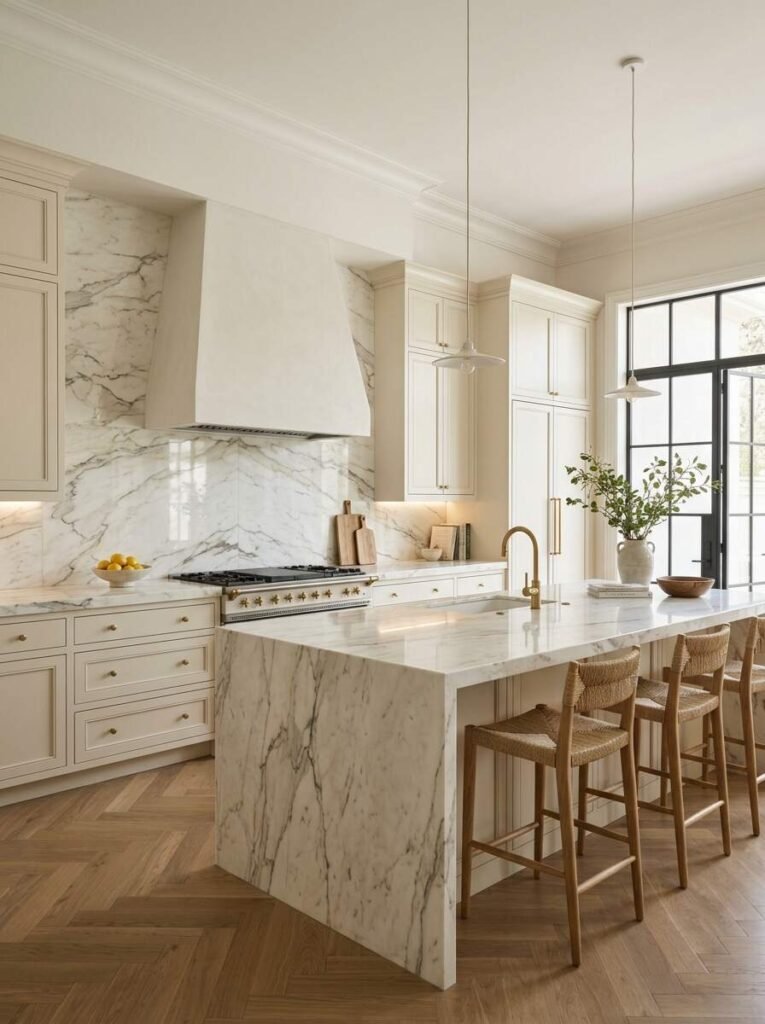
A marble backsplash introduces natural movement and character through its distinct veining patterns. Classic white and cream varieties—such as Calacatta, Statuary, and Carrara—bring a bright, sophisticated quality to both traditional and contemporary kitchens. The soft grey, gold, or charcoal veins running through white marble create a rich visual backdrop that complements painted cabinets and warm wood finishes.
To create a cohesive interior, coordinate the marble’s secondary tones with surrounding elements. For instance, marble featuring warm gold veining pairs naturally with brass plumbing fixtures and warm oak accents, while cool grey veining aligns well with polished nickel or dark charcoal cabinetry.
Marble is a porous natural stone, so its maintenance needs depend on the specific stone and the sealer used. Follow the stone supplier’s recommendations for sealing and cleaning, and wipe up spills promptly. A honed finish can make light etching less noticeable than a polished finish, but it does not prevent etching or staining.
2. Full-Height Slab Backsplash for a Seamless Look
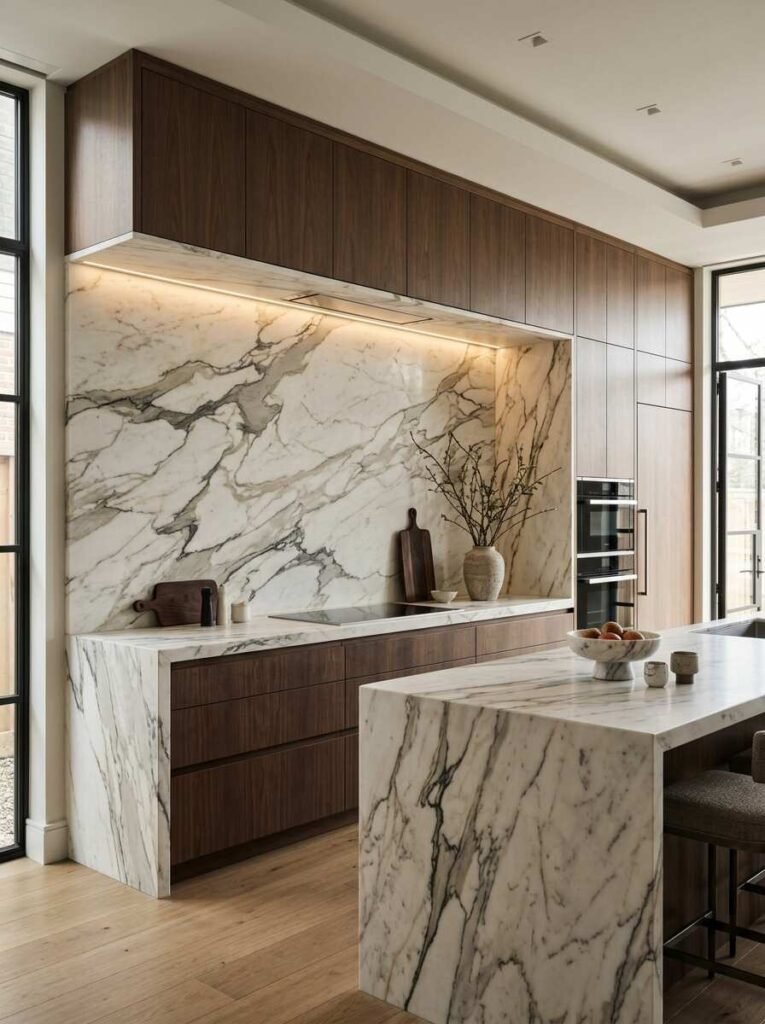
Extending a single solid stone or quartz slab from the countertop directly up to upper cabinets or the ceiling creates an uninterrupted visual surface. Eliminating horizontal grout lines allows the natural pattern of marble, quartzite, or porcelain to take center stage, creating a clean, modern aesthetic.
A full-height slab backsplash is particularly effective when paired with book-matched stone behind a range hood, where two mirror-image slabs meet to display symmetrical veining. This application pairs exceptionally well with flat-panel modern cabinets and streamlined, handleless joinery.
Installing a heavy stone slab requires precise wall leveling, specialized transport, and professional fabrication. Outlets and switches must be measured and cut into the slab prior to mounting. Although material and installation costs are often higher than those of standard tile, a slab backsplash has fewer grout joints to maintain. Cleaning and maintenance still depend on the material, finish, seams, and manufacturer’s care instructions.
3. Handmade Ceramic Tiles for Artisanal Character
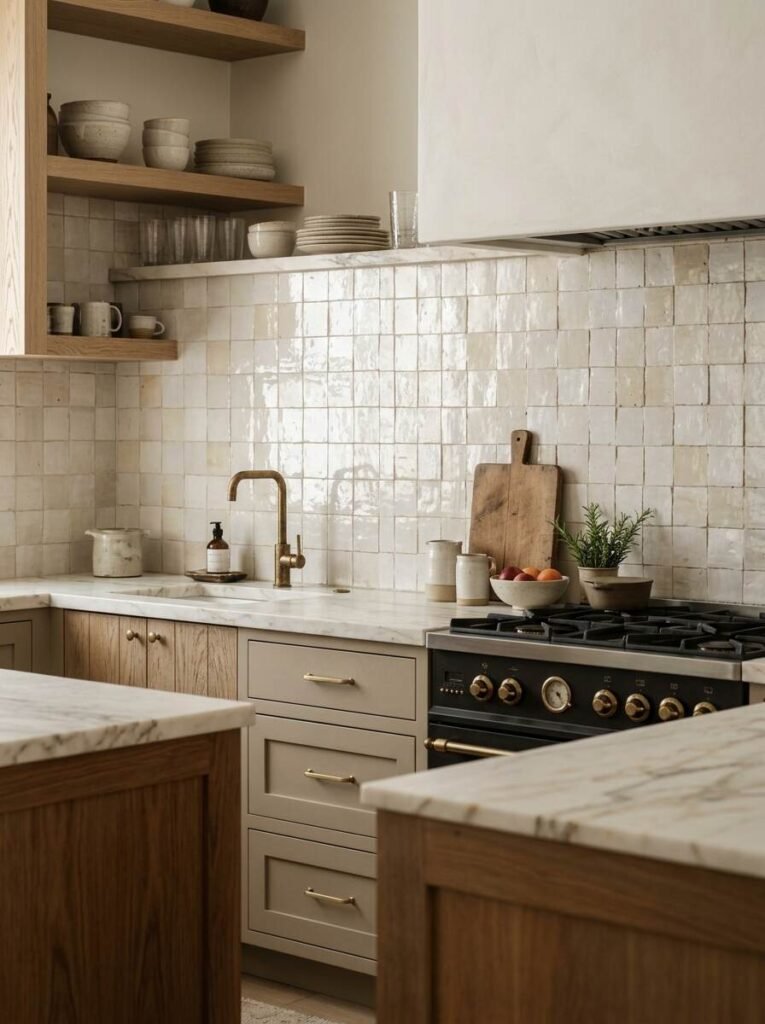
Handmade ceramic tiles, such as Moroccan zellige, feature subtle variations in shape, thickness, and glaze tone that catch natural light unevenly. These slight imperfections give the backsplash an organic, tactile texture that prevents neutral kitchens from feeling cold or uniform.
Glossy square or rectangular handmade tiles in ivory, cream, or soft greige bring subtle depth to kitchen walls. They pair beautifully with natural oak cabinetry, honed marble countertops, and unlacquered brass hardware, grounding the kitchen with a warm, crafted feel.
Because handmade tiles feature uneven edges and varied heights, grout lines will appear organic rather than perfectly straight. Selecting a grout color that closely matches the tile tone ensures a subtle, blended look that highlights the glaze variation without over-emphasizing joint lines.
4. Classic Subway Tiles with a Refined Finish
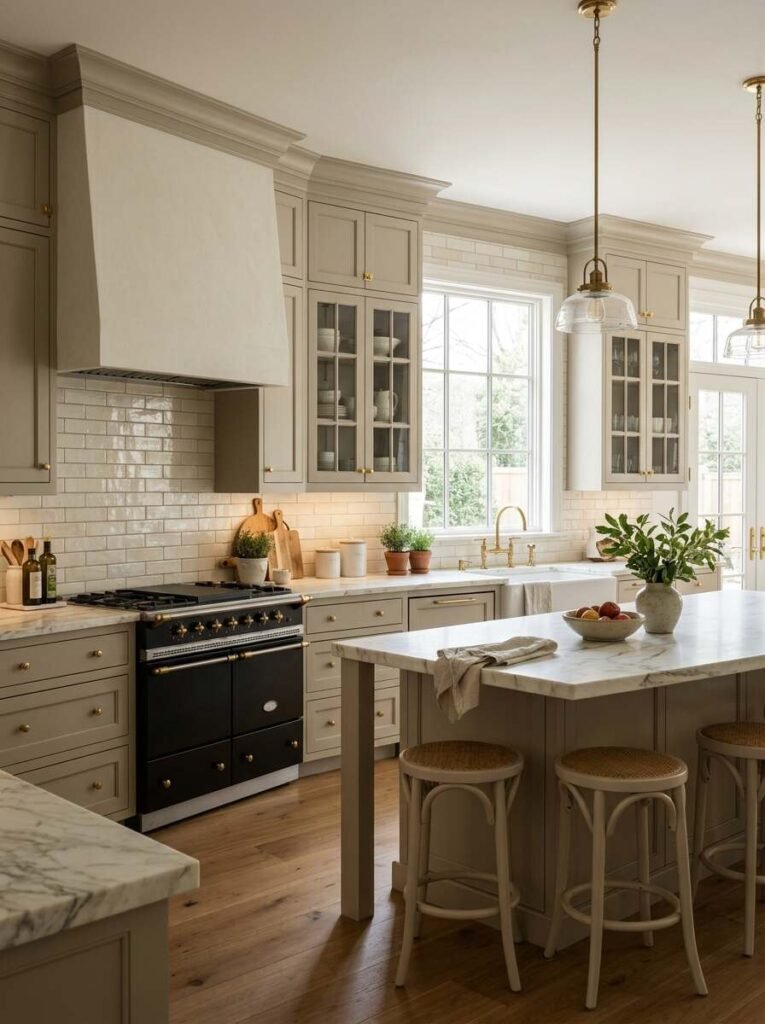
Rectangular subway tiles remain a versatile option for kitchen walls due to their clean geometry and adaptable proportions. Updating classic 3×6-inch proportions with elongated formats—such as 2×8 or 3×12 inches—gives this traditional tile layout a fresh, tailored appearance.
Arranging subway tiles horizontally in a traditional running bond creates a calm, familiar feel. For a subtle modern variation, consider stacking the tiles vertically to emphasize ceiling height, or laying them in a herringbone pattern to add geometric movement.
The choice of grout finish significantly alters the final result. Matching grout to the tile color creates a smooth, continuous surface, whereas a slightly contrasting grout defines the individual tiles and emphasizes the installation pattern.
5. Warm Neutral Backsplash for a Soft, Timeless Kitchen
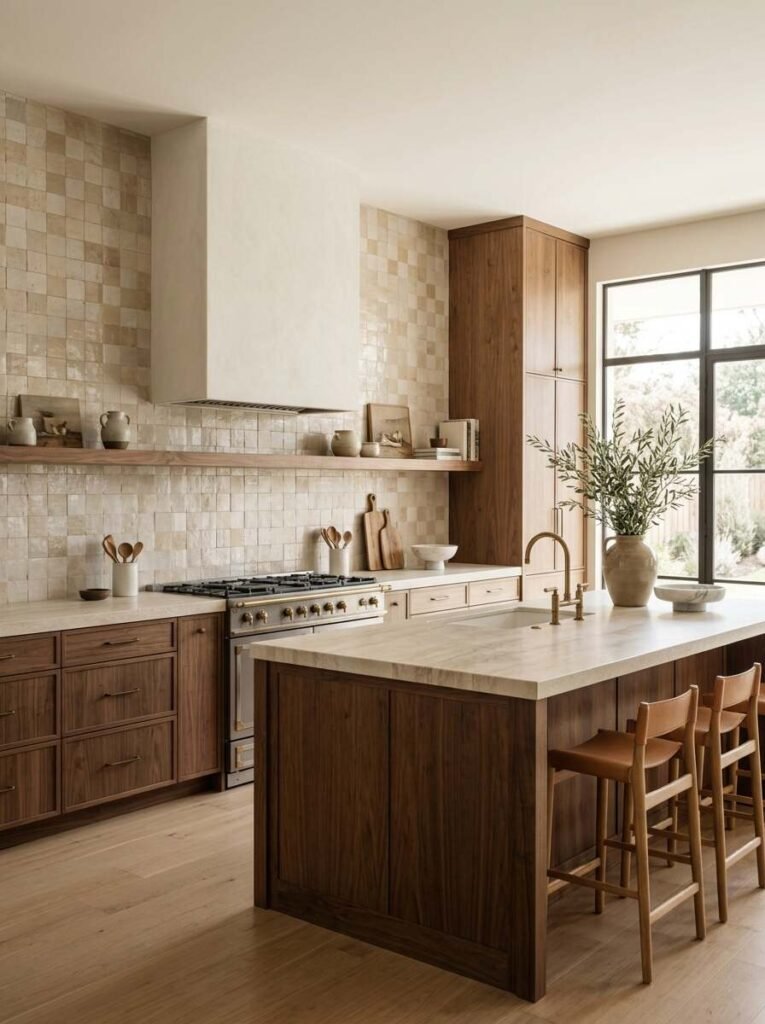
Warm neutral shades—including sand, beige, taupe, mushroom, and soft warm-white—introduce inviting warmth to culinary spaces. A warm neutral tile backsplash creates a soft bridge between rich wood cabinetry, such as walnut or stained oak, and light stone countertops.
To prevent a neutral palette from appearing flat, focus on varying material textures. Combining matte-painted cabinetry with glossy neutral wall tiles or subtle travertine stone creates visual depth while keeping the color scheme quiet and restrained.
Warm neutrals work well in open-plan spaces, providing a peaceful backdrop that blends smoothly with adjoining living and dining rooms. They also adapt easily to changing decorative accents and hardware finishes over time.
6. Green Kitchen Backsplash for Natural Color
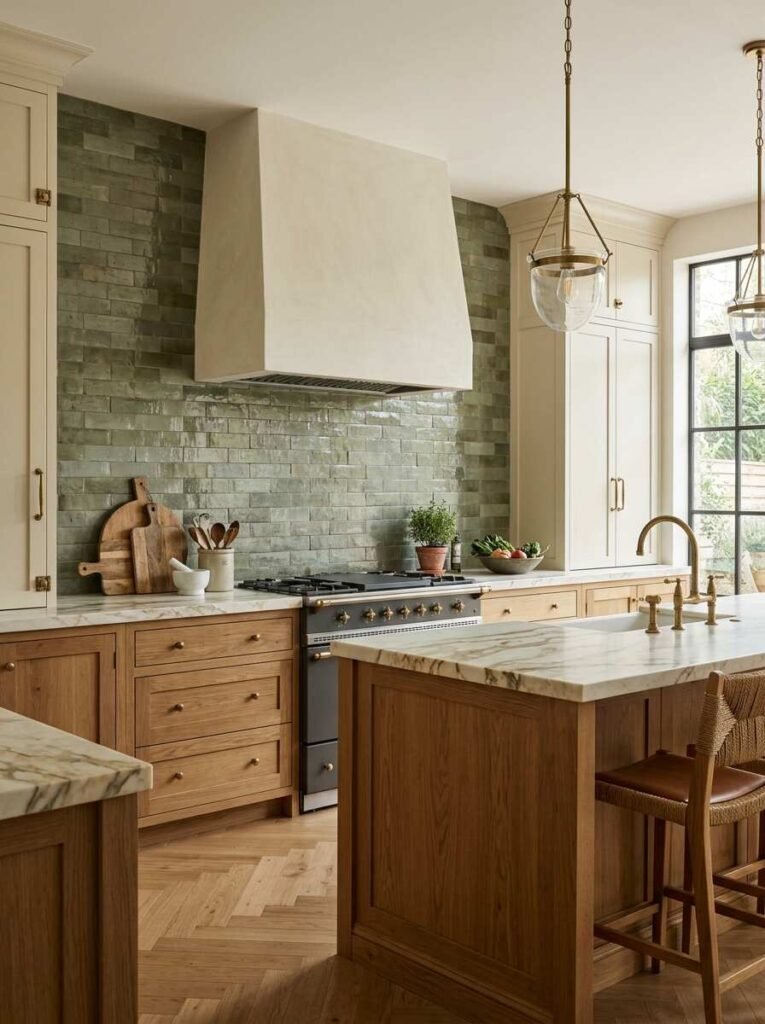
Incorporating green tile into the backsplash brings a subtle connection to nature indoors. Muted shades like sage, olive, moss, and eucalyptus provide a soft pop of color that remains sophisticated and versatile.
Green tile pairs exceptionally well with natural wood cabinetry, painted cream units, and marble countertops with subtle green or warm grey veining. Glossy green glazes reflect light around cooking zones, while matte finishes produce an earthy, understated mood.
Lighting plays a critical role in how green shades appear on the wall. Under-cabinet task lights with a warm color temperature (around 2700K to 3000K) preserve the natural richness of green glazes without casting a harsh or cool glare.
7. Textured Backsplash Tiles for Subtle Dimension
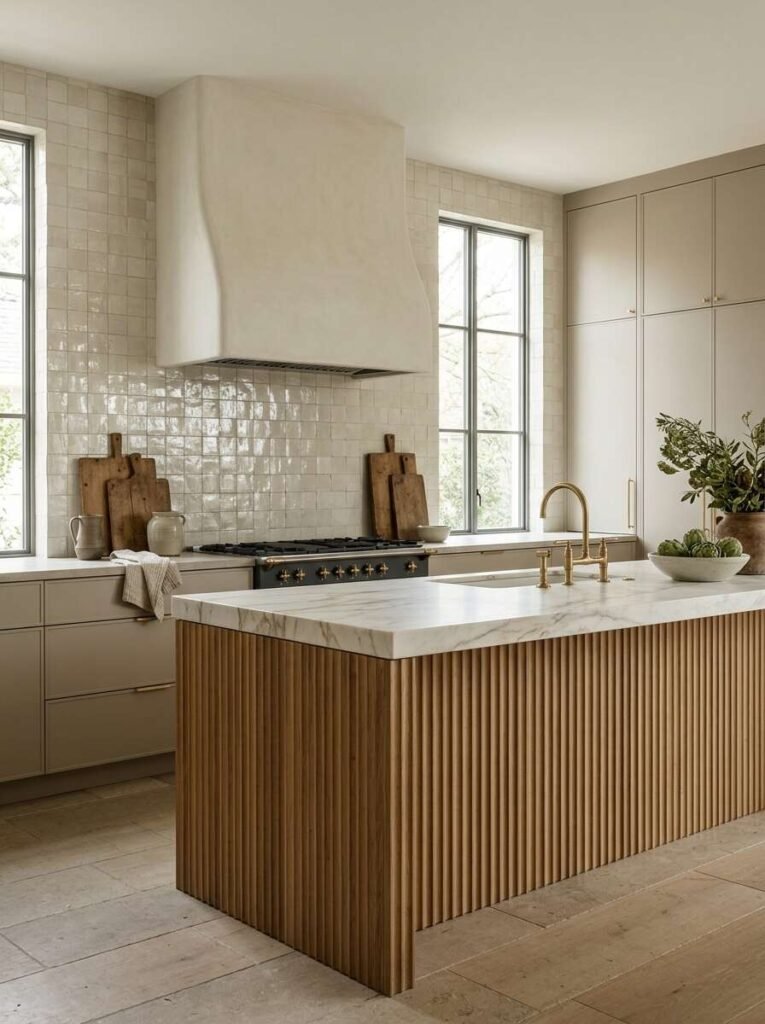
Three-dimensional and textured tiles—including fluted, reeded, concave, and bevel-edged designs—add architectural shadow lines to kitchen walls. These tactile surfaces create subtle visual interest through light and shadow rather than bold color contrasts.
Using textured tiles behind a range or along a single main feature wall establishes a focal point in minimalist or neutral kitchens. Pairing a textured ceramic backsplash with a fluted wood island base creates a subtle repetition of texture across different surfaces in the room.
When choosing deep grooves or pronounced three-dimensional profiles, consider proximity to active cooking areas. Deeper ridges behind cooktops require more attention during routine cleaning to remove accumulated cooking splatters.
8. Herringbone Backsplash for Pattern and Movement
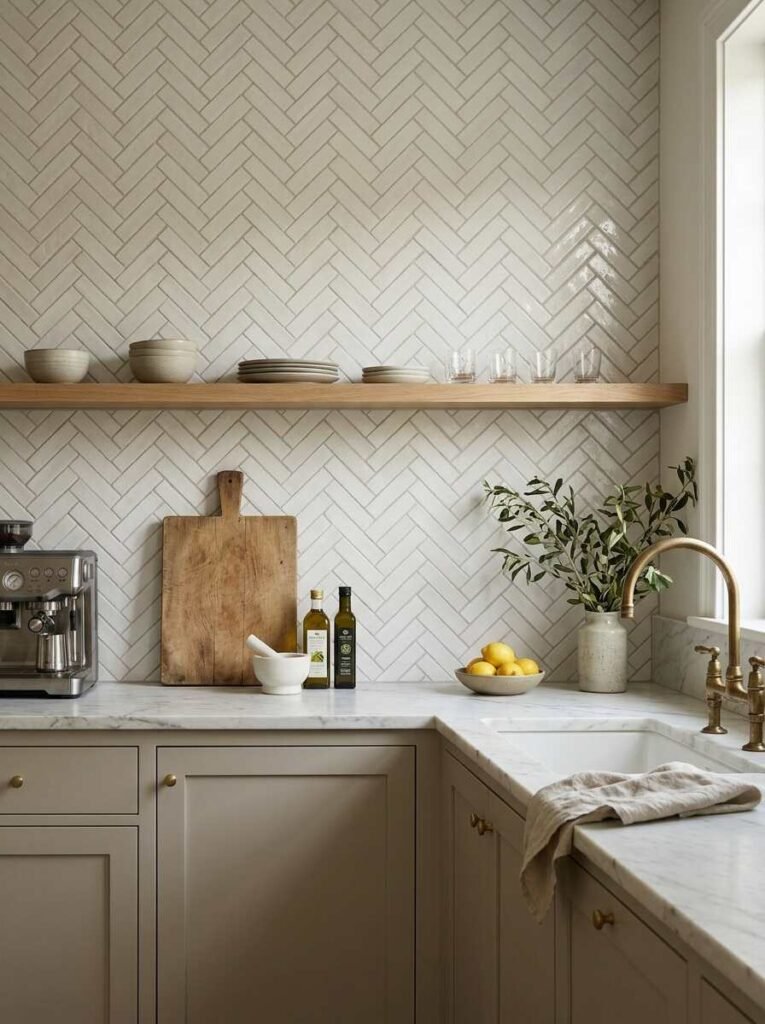
Laying rectangular tiles at a 45-degree angle to create a V-shaped herringbone pattern introduces energy and classic elegance to kitchen walls. This dynamic arrangement draws the eye upward and outward, giving the illusion of a wider, taller space.
Slim, elongated rectangular tiles laid in a herringbone configuration produce an intricate, woven look. To keep the kitchen feeling balanced, pair pattern-rich backsplashes with clean Shaker or flat-panel cabinetry and understated countertops.
Herringbone patterns require careful layout planning and precise cuts. They may also generate more offcuts than a straightforward layout, so ask your installer or tile supplier to calculate an appropriate allowance based on the room, tile dimensions, and pattern.
9. Large-Format Porcelain Backsplash for Modern Simplicity
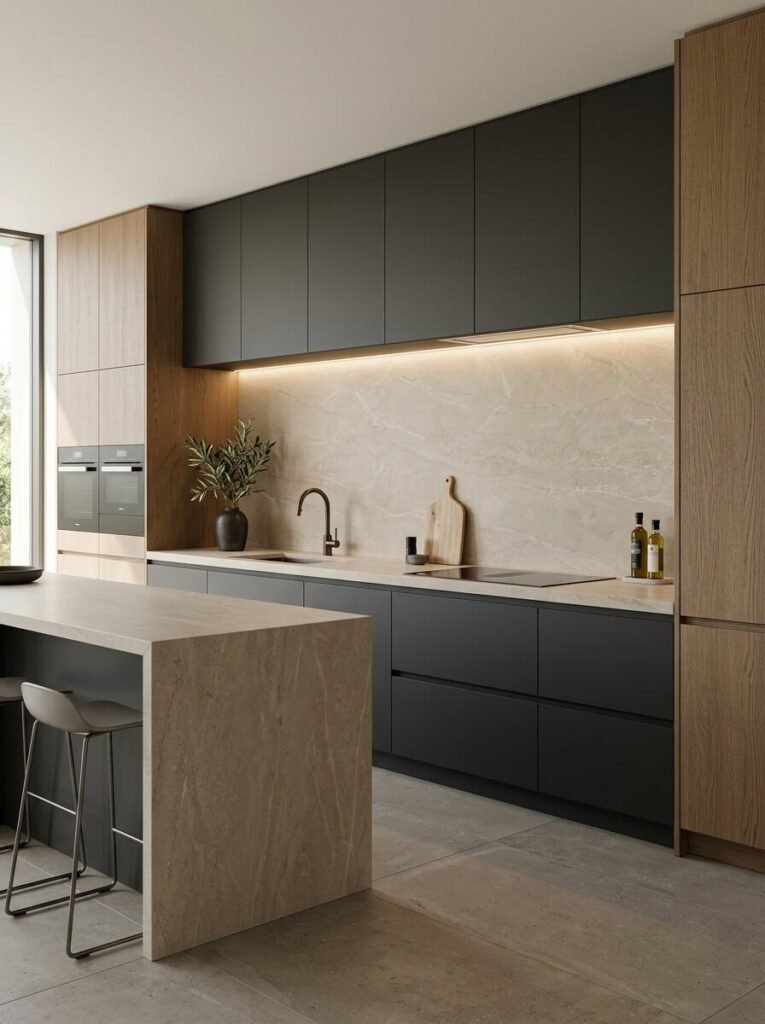
Large-format porcelain panels can recreate the look of natural stone or concrete while offering a practical surface for many kitchen backsplashes. Their performance depends on the specific product, finish, and installation. Available in large tile dimensions and thin-slab formats, porcelain minimizes visible grout joints across expansive wall surfaces.
Advanced manufacturing allows porcelain slabs to mimic natural Calacatta marble, limestone, or travertine with impressive fidelity. They pair seamlessly with modern flat-panel cabinetry, dark charcoal units, and minimalist open shelving.
Porcelain generally has low water absorption and is available in finishes suited to kitchen use. Its resistance to stains, heat, and cleaning products varies by product and installation, so check the manufacturer’s specifications before choosing a panel. However, handling large porcelain slabs during installation requires flat wall preparation and specialized suction equipment.
10. Contrasting Backsplash for a Statement Kitchen
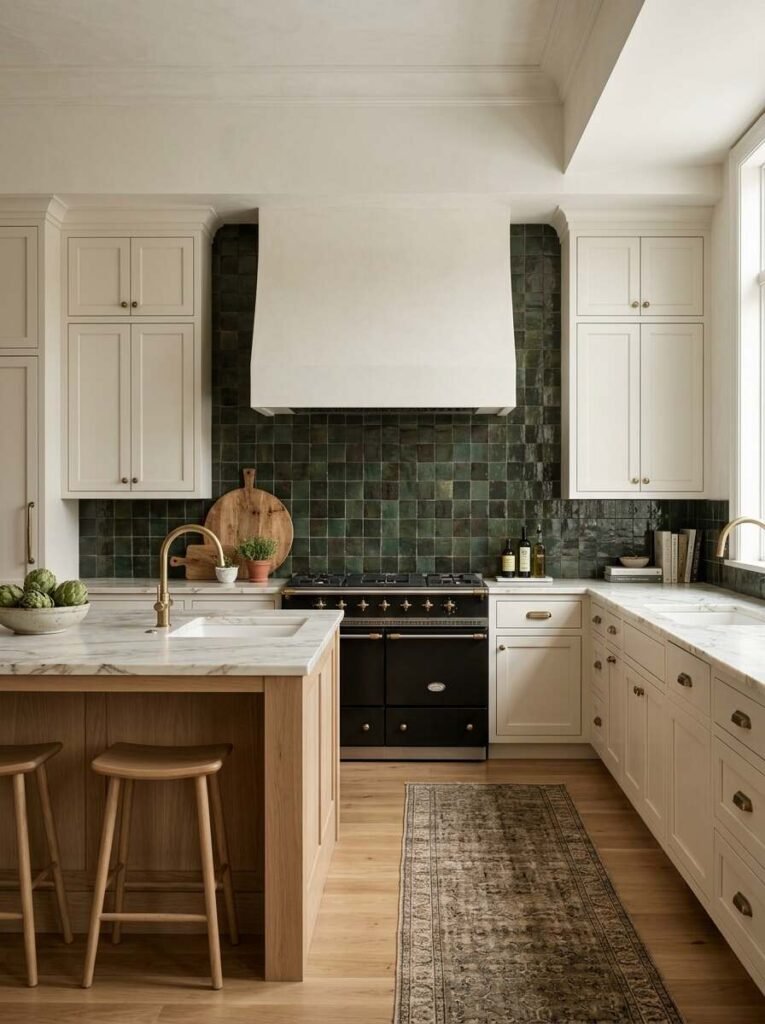
Introducing a dark or richly saturated backsplash creates immediate visual contrast in light kitchens. Deep forest green, navy blue, charcoal, or dark bronze tiles set against off-white or cream cabinetry define the cooking area as an intentional focal point.
In this setup, rich emerald zellige tiles framed by off-white cabinets and light marble counters establish a grounded feature wall. The dark tiles draw out deeper accents in range cookers, hardware, and decorative runner rugs.
When designing a contrasting backsplash, keep surrounding finishes restrained. Pair deep tile shades with neutral countertops and consistent hardware finishes to maintain visual harmony throughout the space.
11. Decorative Kitchen Wallpaper for a Distinctive Accent
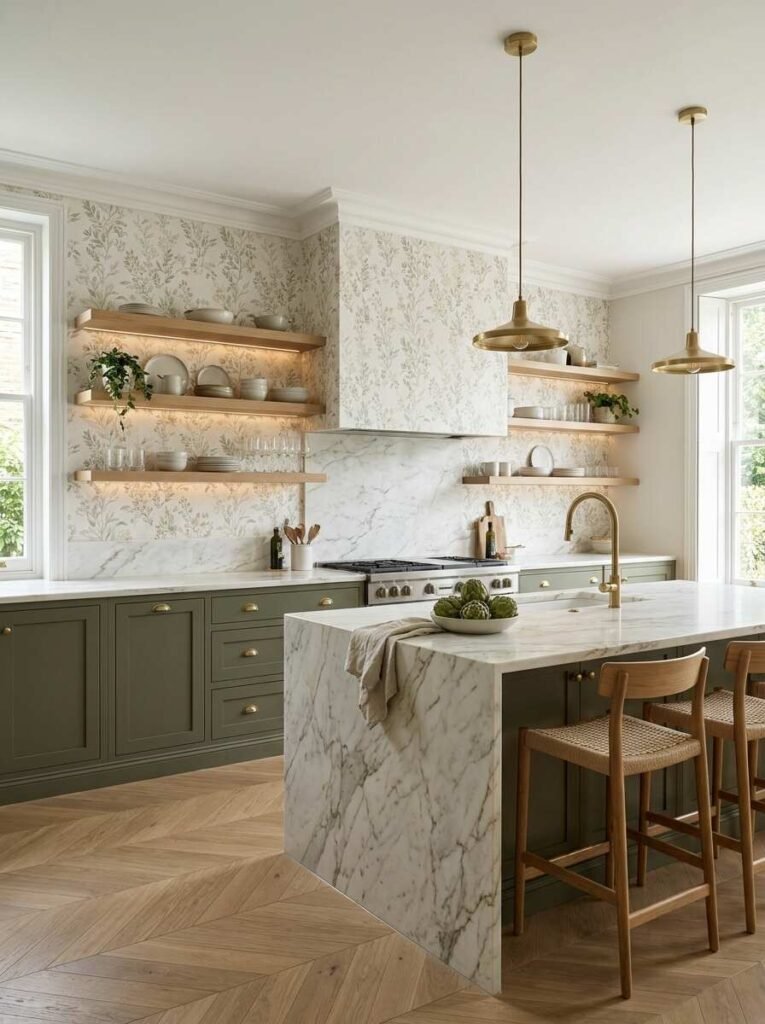
Wallpaper introduces soft pattern, botanical motifs, and subtle color stories that tile cannot replicate. Used along dining nooks, coffee stations, or upper wall runs, decorative wallpaper softens hard surfaces like stone and wood.
Wallpaper can introduce pattern and color to areas of the kitchen that receive limited splashes and heat. Choose a product specifically rated for the intended environment and follow its cleaning and installation instructions. A protective glass panel may be suitable in some locations, but it must be specified and installed for that application.
Avoid placing wallpaper directly behind a cooktop or in areas exposed to frequent splashes unless the complete installation is approved for those conditions. Use a suitable backsplash material around cooking and sink zones, following the appliance clearances and the material manufacturer’s installation guidance.
How to Choose the Right Kitchen Backsplash
Coordinate the Backsplash with Your Countertops
Your backsplash and countertops sit directly adjacent to one another and must operate as a team. If your countertop features bold, dramatic veining, choose a simple, quiet tile or extend the same stone up the wall. Conversely, if your countertops are solid quartz or uniform stone, you can introduce subtle pattern or texture through subway, zellige, or herringbone tile arrangements.
Consider Cabinet Color and Kitchen Style
Cabinets occupy the largest visual footprint in the kitchen. Select backsplash tones that share common undertones with your joinery. Warm white, cream, and beige tiles harmonize naturally with stained oak or walnut cabinetry, whereas cool light-grey or crisp white tiles pair cleanly with cool-toned painted units. For detailed cabinetry inspiration, read our guide on luxury kitchen cabinetry ideas.
Choose a Practical Material for Your Cooking Area
Evaluate your cooking style before committing to a surface. For areas behind a range, choose a backsplash material and installation system suitable for the appliance and its required clearances. Confirm the appliance instructions, material specifications, and applicable local building and safety requirements before installation. Cleaning and sealing needs vary by material and finish. Porcelain and some slab surfaces may be relatively easy to maintain, while certain natural stones and crackle-glazed tiles may need additional care. Follow the specific product’s maintenance instructions rather than assuming every surface needs the same treatment.
Select the Right Tile Size, Finish, and Grout
Tile dimensions affect perceived room scale. Large tiles and full-height stone slabs reduce grout lines, creating a calm, expansive feel. Smaller tiles add intricate texture but introduce more grout joints. Choose a grout compatible with your tile, joint width, and installation conditions. Consider the grout’s stain resistance, cleaning requirements, and manufacturer’s recommendations, then select a color that either blends with the tile or deliberately defines the pattern.
Plan the Budget and Installation
Account for total installation costs early in the planning phase. Total expenses include tile or slab materials, substrate preparation, edge trim finishing (such as bullnose tiles or metal Schluter strips), sealing products, and skilled labor. Complex layouts like herringbone or intricate mosaics carry higher installation labor costs than straightforward horizontal running bond patterns.
Kitchen Backsplash Mistakes to Avoid
- Competing Patterns: Pairing a heavily veined stone countertop with a busy, high-contrast mosaic backsplash can make the design feel visually crowded. Let one surface be the focal point while the other provides balance.
- Ignoring Grout Lines: Selecting bright white tile with dark charcoal grout without planning the visual outcome can result in an overly harsh grid appearance.
- Using Unsealed Porous Stone: Installing unsealed marble or limestone directly behind a primary cooking surface leads to oil and acid staining.
- Incorrect Material Placement: Installing non-washable wallpaper or unsealed decorative plaster directly behind a high-heat cooktop leads to peeling and grease discoloration.
- Neglecting Edge Transitions: Forgetting to plan where the tile terminates along open walls or under cabinets results in exposed, unpolished tile edges.
- Choosing Materials Without Lighting Considerations: Dark or high-gloss tiles reflect under-cabinet light fixtures differently. Test tile swatches under your actual kitchen lighting before purchasing.
- Ignoring Outlets and Switches: Placing electrical cutouts in the middle of intricate tile focal points disrupts the design. Where permitted by local electrical codes, consider low-profile outlets mounted horizontally near the cabinet base.
Frequently Asked Questions
What is the most timeless kitchen backsplash?
White or softly neutral ceramic subway tiles and natural-stone slab backsplashes are popular choices for a timeless kitchen. Their relatively restrained colors and patterns can work with a range of cabinetry styles, although the best option depends on the kitchen’s architecture and the homeowner’s preferences.
What backsplash looks best in a luxury kitchen?
The strongest choice depends on the kitchen’s architecture. Book-matched marble slabs, large-format porcelain panels, and authentic handmade zellige tiles are popular in high-end kitchens due to their material authenticity, seamless installation, and custom appearance. For layout ideas that integrate these backsplashes seamlessly, explore our luxury kitchen ideas pillar guide.
Should a kitchen backsplash match the countertop?
A backsplash does not need to match the countertop exactly, but it must complement it. Extending the countertop stone up the wall as a slab backsplash creates a seamless, modern look. Alternatively, pairing a patterned stone counter with a simple ceramic tile backsplash establishes a balanced, layered feel.
Are large-format backsplash tiles better than small tiles?
Neither format is universally better; each offers distinct benefits. Large-format tiles and continuous slabs create a sleek, modern look with minimal grout lines that are easy to clean. Small tiles bring detailed pattern, texture, and crafted charm to traditional or transitional kitchens.
Is a full-height kitchen backsplash worth considering?
Yes, a full-height backsplash extending to the upper cabinets or ceiling is worth considering if you want to create a continuous feature wall, eliminate horizontal grout lines, and maximize cleanability behind prep areas.
What is the easiest kitchen backsplash to clean?
A full-height slab or large-format tile can reduce the number of grout joints that need cleaning. Smooth, glazed ceramic tiles can also be practical choices. The easiest option to maintain depends on the material, surface finish, seams, grout, and the manufacturer’s care instructions.
Final Thoughts on Kitchen Backsplash Design
A thoughtfully chosen kitchen backsplash balances aesthetic appeal with practical daily durability. Whether you choose the continuous elegance of a full-height marble slab, the tactile warmth of handmade zellige ceramic tiles, or the tailored structure of a herringbone pattern, your backsplash should tie your cabinetry, stone surfaces, and hardware into a unified composition.
When selecting your backsplash, consider how the material will handle daily cooking splatters, heat exposure, and routine cleaning. For more ideas on how to coordinate your island joinery with your wall tiles, explore our guide to luxury kitchen island ideas.