
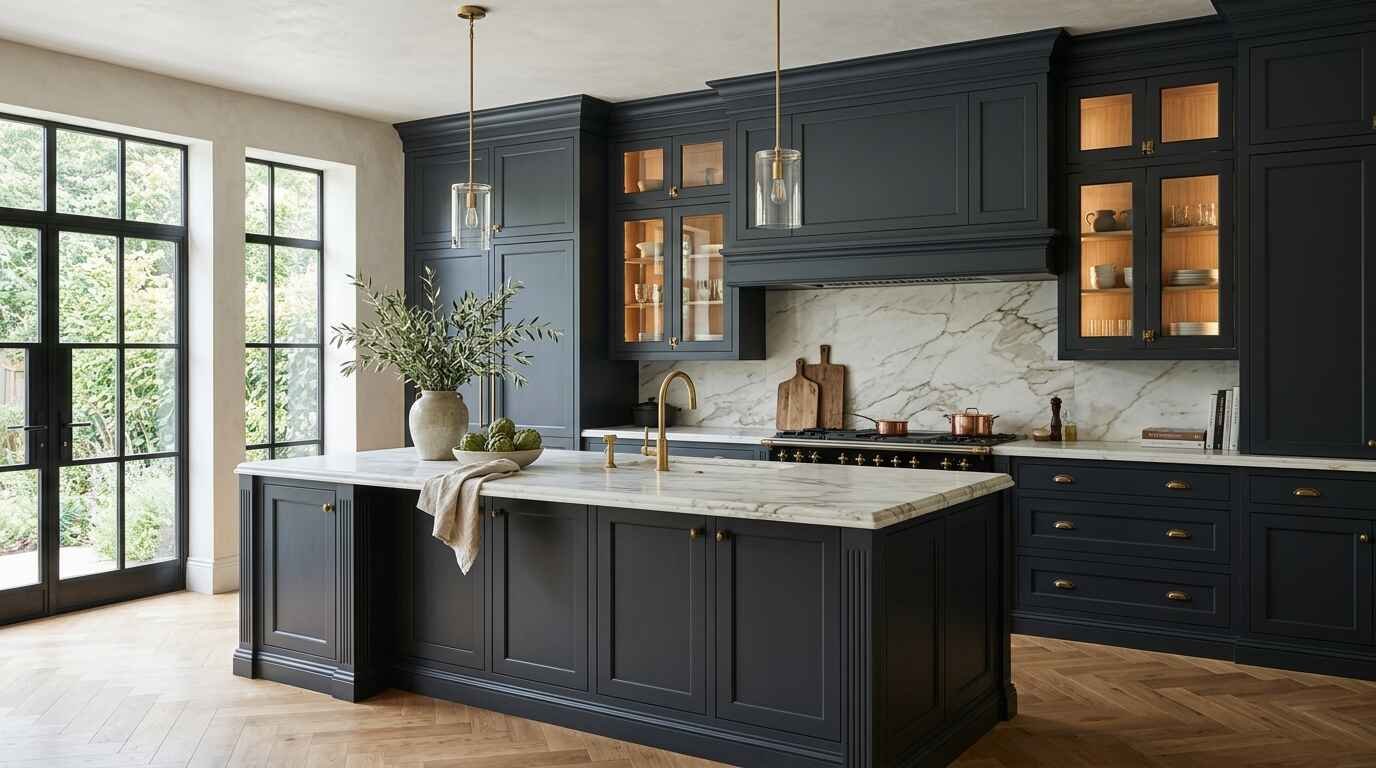
Kitchen cabinetry shapes the look, storage, and everyday function of a kitchen. Cabinet colors, door styles, materials, and hardware all influence how the space feels and works. Thoughtfully selected cabinetry can create a cohesive, refined kitchen while keeping daily essentials organized.
Creating an elevated kitchen requires looking beyond basic storage. Cabinet colors, door profiles, wood species, and hardware selection must work together to reflect your home’s unique style. When balanced thoughtfully, custom cabinetry provides both aesthetic longevity and effortless daily use.
In this guide, we explore 13 luxury kitchen cabinetry ideas to inspire your design process. From floor-to-ceiling runs to tactile wood grains and integrated hardware, these concepts will help you build a refined, highly functional kitchen. For broader layout strategies and structural inspiration, explore our overarching guide to luxury kitchen ideas.
13 Luxury Kitchen Cabinetry Ideas
1. Choose Custom Floor-to-Ceiling Cabinets
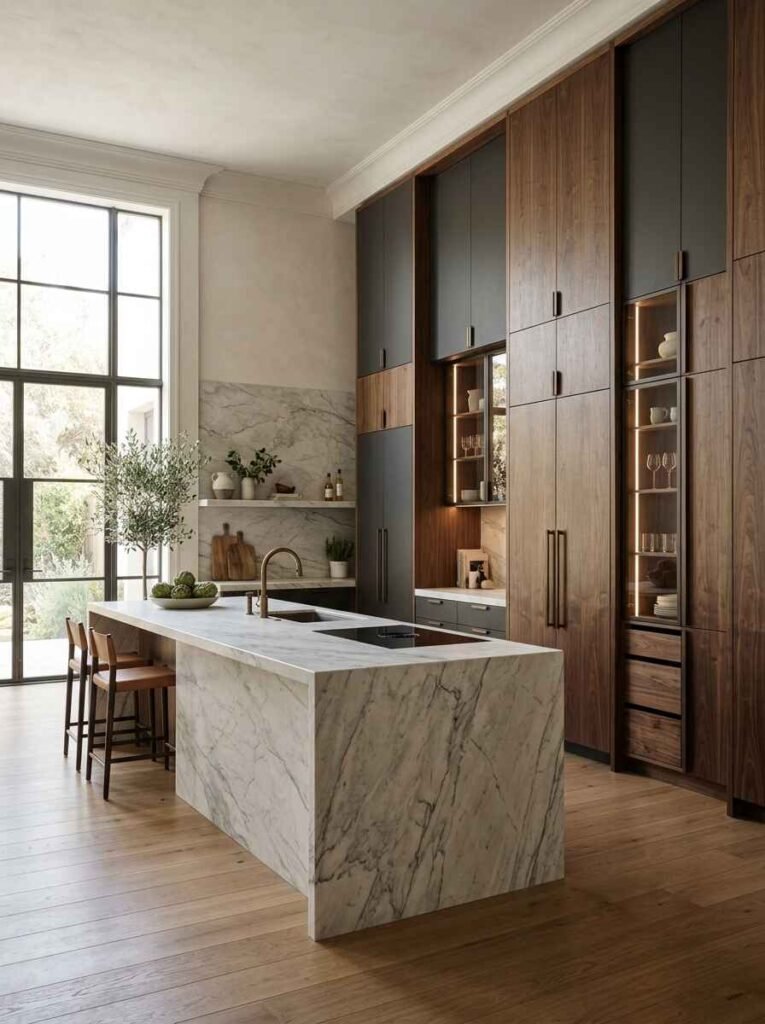
Floor-to-ceiling cabinetry creates a continuous, built-in appearance by extending storage from the floor to the ceiling. In this design, rich walnut tall units are combined with dark upper panels and integrated glass display columns, fully framing the kitchen’s vertical space. The warm, linear wood grain pairs with interior accent lighting to showcase fine stemware while concealing primary storage behind solid doors.
Designing custom floor-to-ceiling units maximizes vertical storage capacity, eliminating the awkward dust-collecting gap often left above standard upper cabinets. Extending joinery to the ceiling draws the eye upward, accentuating room height and creating a streamlined, architectural wall.
When planning full-height units, consider how higher shelves will be accessed. Integrating pull-down shelving inserts or keeping seasonal items on top tiers keeps daily essentials within easy reach while preserving a clean exterior profile.
2. Create a Warm White and Cream Cabinet Scheme
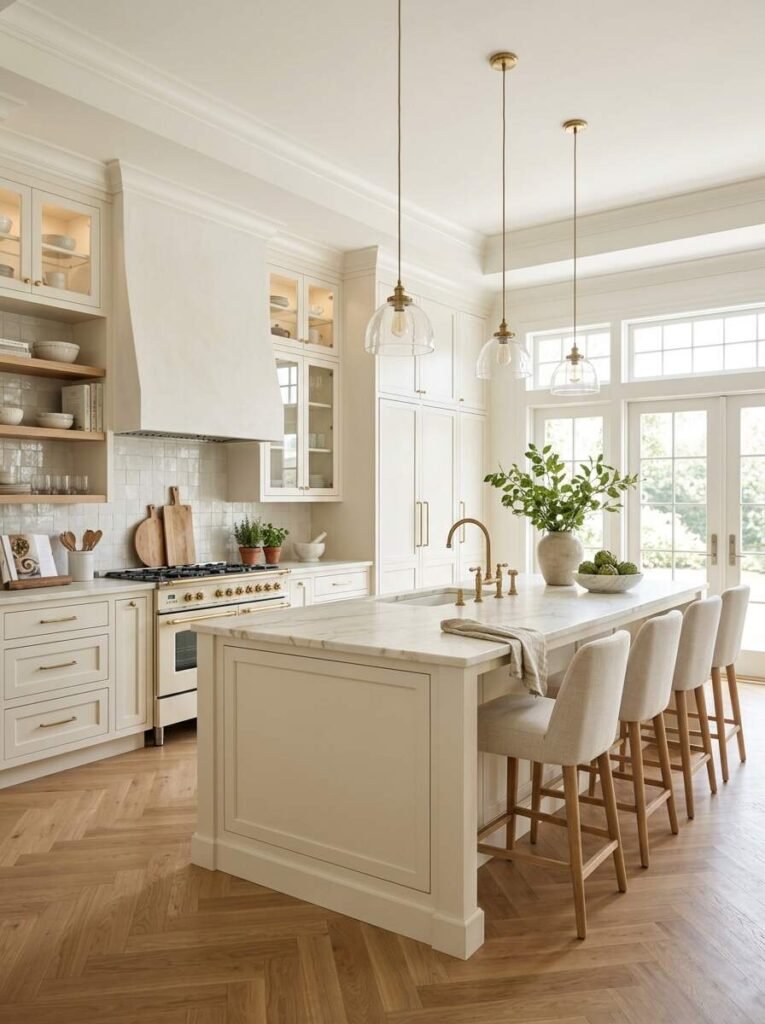
Soft off-white and cream paint finishes bring an inviting, luminous quality to kitchen joinery. This space utilizes warm ivory Shaker cabinets paired with a matching cream island base, framed by a soft plaster range hood and glossy zellige backsplash tiles. Polished brass faucets and slender hardware add subtle warmth against the bright backdrop.
Selecting warm white or cream for custom kitchen cabinets provides a timeless alternative to clinical, bright white tones. Creamy undertones absorb and reflect natural light gently, softening sharp architectural lines and creating a comfortable atmosphere.
To prevent an all-cream scheme from feeling flat, introduce varied surface textures throughout the room. Combining matte cabinet paint with glossy backsplash tiles, veined natural stone, and warm timber flooring establishes subtle visual depth.
3. Introduce Natural Oak Kitchen Cabinets
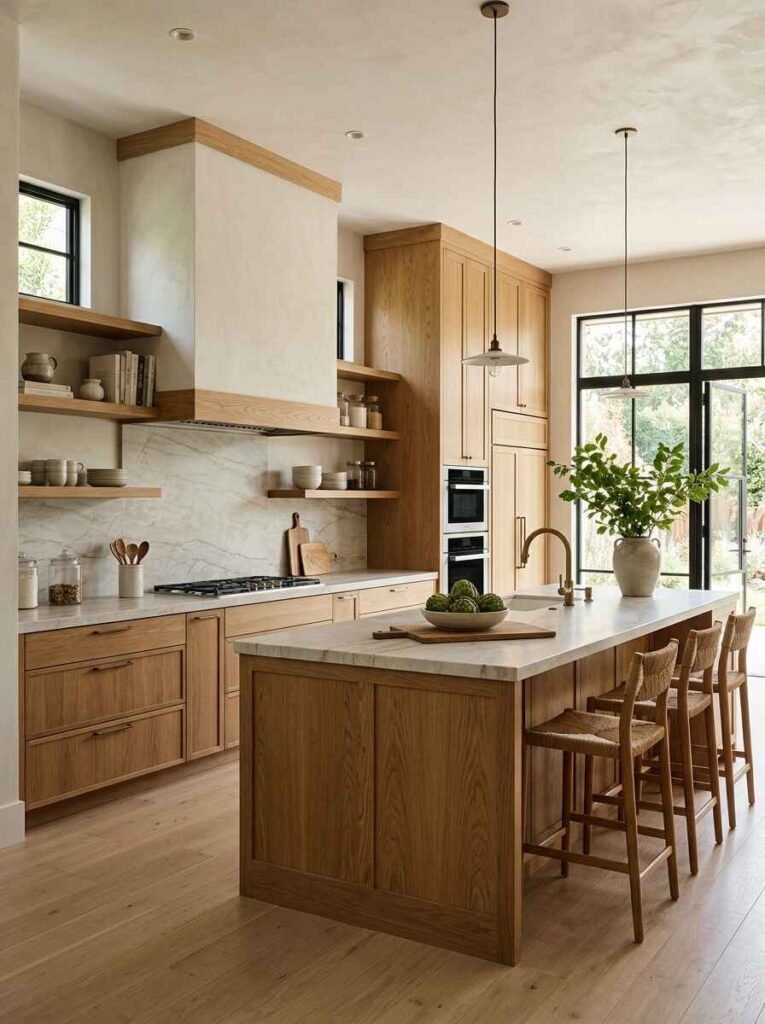
Natural oak cabinetry provides organic texture and grounded character through visible wood grain. Here, full-overlay oak cabinets feature a light, clear finish that highlights the timber’s natural figure. Open floating shelves and an oak-trimmed range hood integrate smoothly with full-height pantry joinery and light marble surfaces.
Using oak kitchen cabinets introduces warmth without relying on dark stains or heavy paint coats. Oak cabinetry comes in a range of grain patterns and tones, making it easy to pair with natural stone countertops, neutral backsplashes, and brushed-metal hardware.
Because natural wood responds to environmental humidity, ensure your cabinet maker uses properly kiln-dried timber and protective matte topcoats. A suitable finish and proper installation can help protect the cabinetry, although wood remains sensitive to moisture and changes in humidity.
4. Add Rich Walnut Cabinetry
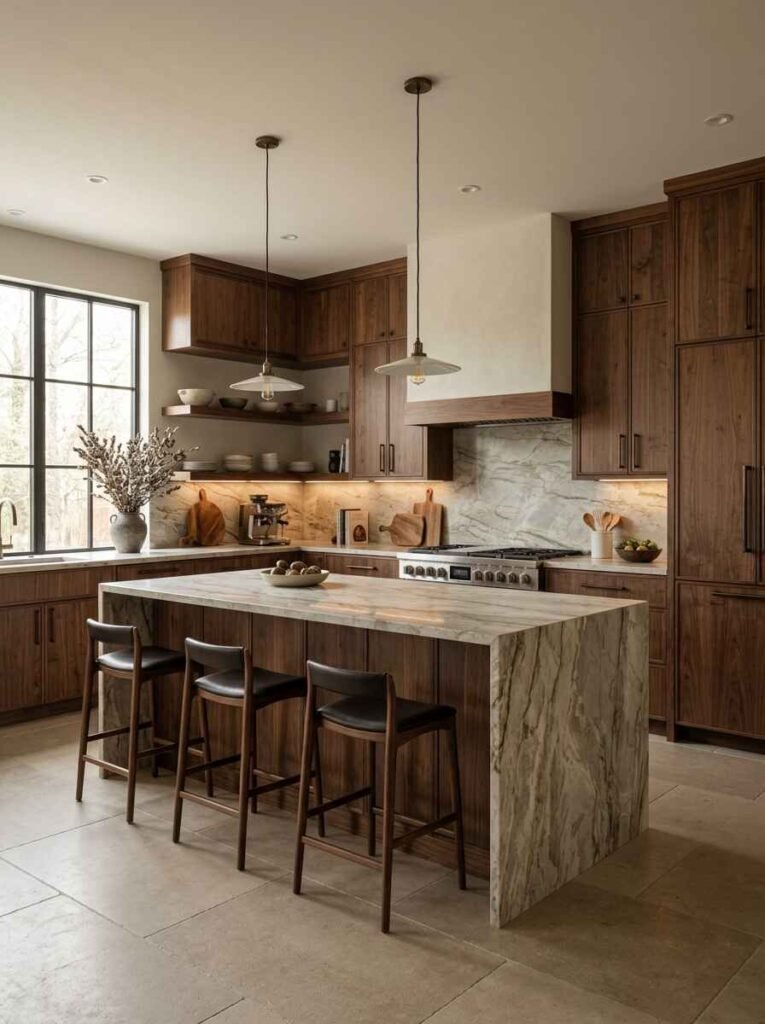
Walnut cabinetry offers deep chocolate undertones and striking grain variations that bring immediate warmth to interior spaces. This kitchen showcases full walnut joinery across the main wall and island, contrasted by a light quartzite waterfall countertop and soft under-cabinet task lighting. Open corner shelves display curated ceramics against a full-height stone backsplash.
Incorporating walnut kitchen cabinets introduces sophisticated natural contrast, particularly in rooms with generous natural light. Walnut’s varied grain adds natural character to cabinet doors, allowing the wood itself to become a visual feature of the kitchen.
Keep in mind that walnut is a premium hardwood that can alter color slightly when exposed to direct, unfiltered sunlight over time. Utilizing UV-protective window films or protective wood finishes preserves the rich depth of the timber.
5. Combine Two-Tone Cabinet Finishes
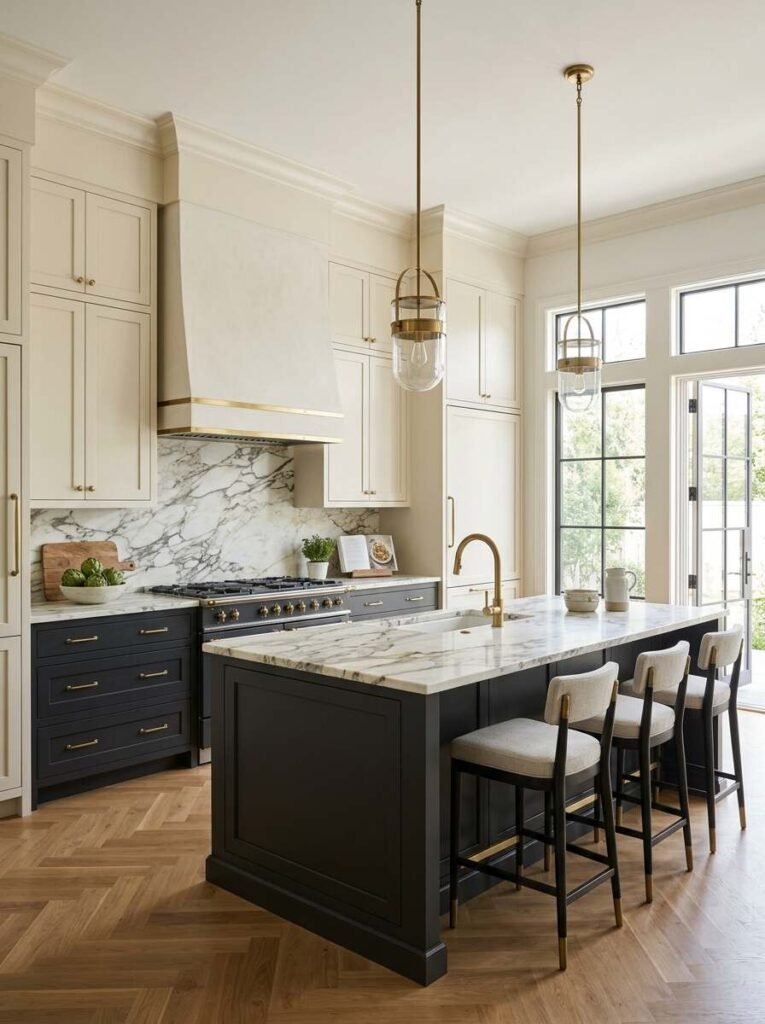
A two-tone cabinet strategy uses contrasting colors or materials to divide upper, lower, or island joinery. In this kitchen, warm cream upper cabinets extend to the ceiling while a deep charcoal shade anchors the lower drawers and central island. Brass pendant lights and a veined marble backsplash tie the light and dark elements together.
Designing two-tone cabinetry adds visual dimension to a room. Placing darker colors on lower cabinets grounds the space, while keeping upper cabinets light helps low or standard ceilings feel bright and expansive.
When combining two finishes, maintain a unified design element across both sections. Using consistent door profiles, coordinated hardware, or complementary countertop materials helps the combination feel intentional rather than visually fragmented.
6. Choose Elegant Shaker Cabinet Doors
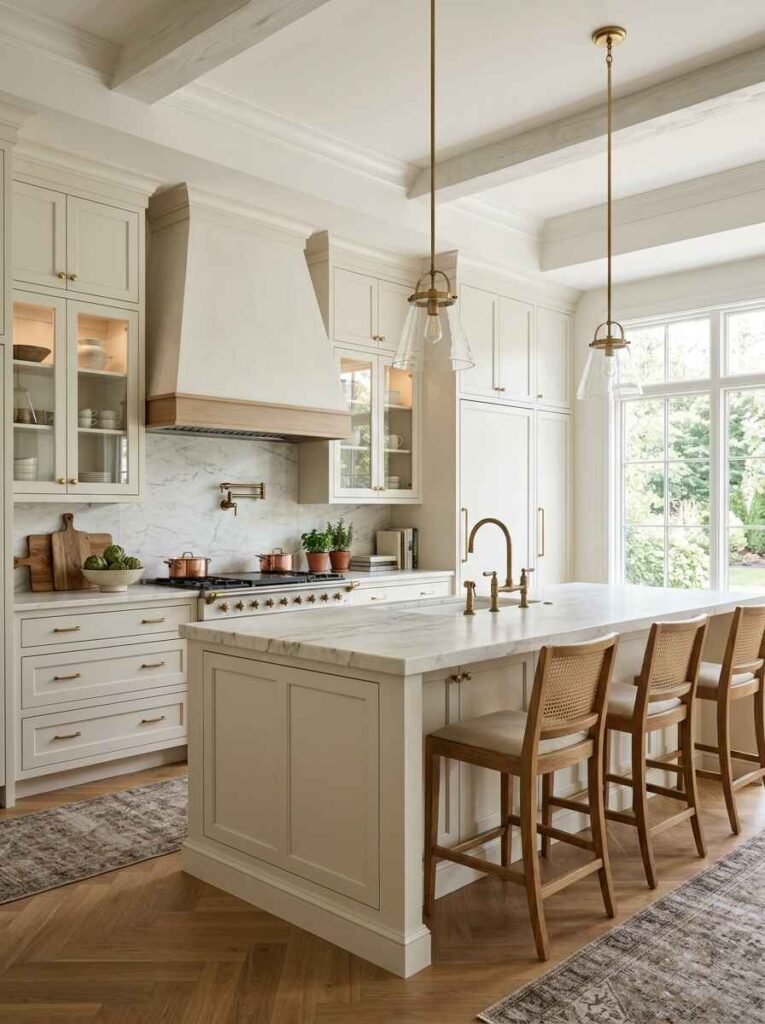
Shaker cabinetry features a classic five-piece door design with a recessed center panel and clean outer frame. This kitchen pairs off-white Shaker joinery with glass-front upper units, antique brass cup pulls, and a matching island crowned with white marble. A plaster range hood and warm hardwood floors complement the structured door details.
Shaker kitchen cabinets offer versatility across traditional, transitional, and modern farmhouse interiors. Their simple framed design can also suit contemporary kitchens when paired with streamlined hardware and restrained finishes.
Pay attention to the frame width and inner bevel of the door style. Narrow-frame Shaker profiles (often called micro-Shaker) lend a slightly sleeker, contemporary feel, while wider stiles present a classic, traditional weight.
7. Use Flat-Panel Cabinets for a Modern Look
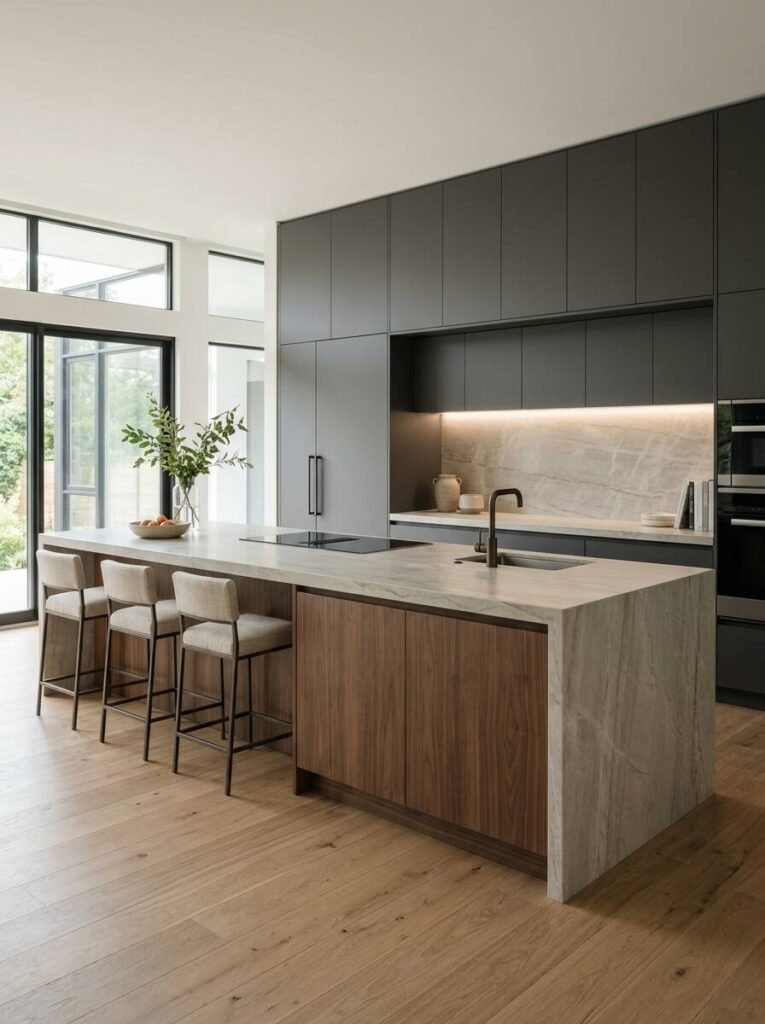
Flat-panel or slab cabinet doors feature smooth, uninterrupted surfaces without decorative framing or recessed profiles. This modern kitchen uses matte dark grey flat panels for the tall surround, set against a rich walnut base island and a seamless quartzite splash slab. Concealed strip lighting casts a soft glow across the minimalist prep counter.
Choosing flat-panel kitchen cabinets emphasizes clean lines and continuous material grain, making them ideal for modern kitchen cabinetry concepts. The smooth fronts have fewer recessed details where dust can collect, although cleaning needs still depend on the cabinet finish and surface.
Because slab doors are entirely plain, the quality of the finish and grain match is paramount. High-end flat-panel joinery relies on book-matched wood veneers or pristine matte lacquers to achieve a refined, custom finish.
8. Add Glass-Front Cabinet Doors
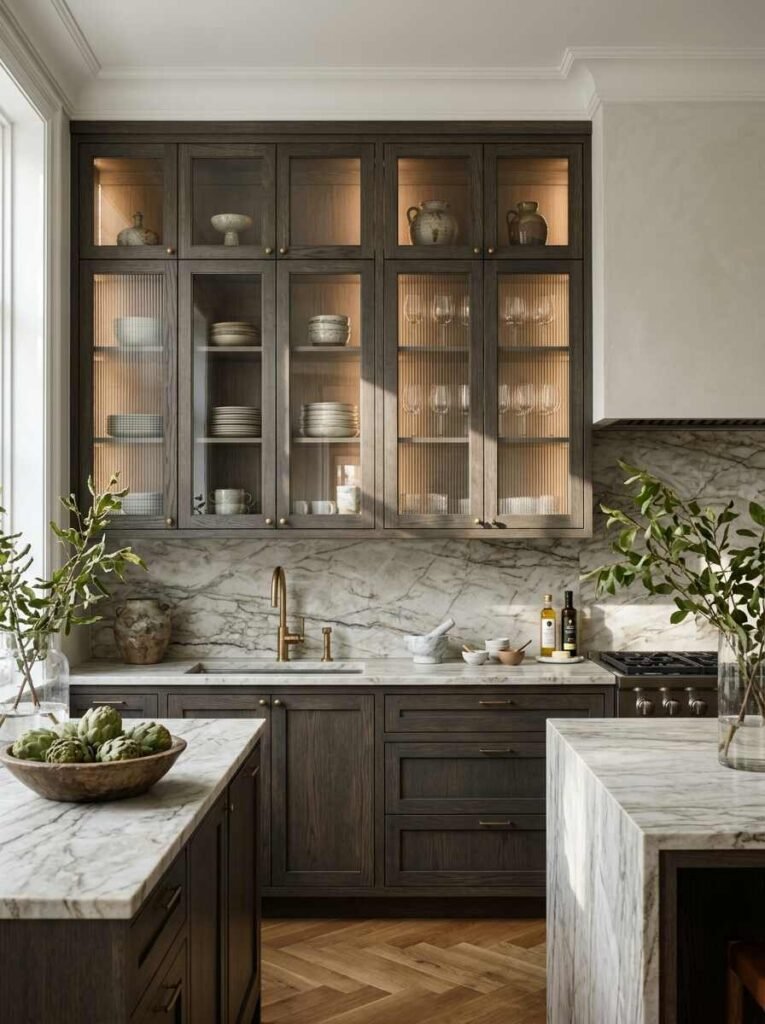
Glass-front cabinetry breaks up continuous runs of solid wood, introducing translucency and light reflection. Here, dark oak upper cabinets feature fluted, vertical-reeded glass panels with built-in interior warm lighting. The illuminated glass displays fine dishware while echoing the veining of the marble backsplash below.
Incorporating glass-front kitchen cabinets creates a display showcase for glassware and prized serving pieces. Adding interior LED strip lighting transforms these cabinets into soft ambient light sources during evening hours.
If maintaining perfectly organized internal shelves feels challenging, choose textured, fluted, or seeded glass options over clear panes. Textured glass softly distorts internal contents while still reflecting light across the kitchen.
9. Introduce Fluted or Textured Cabinet Details
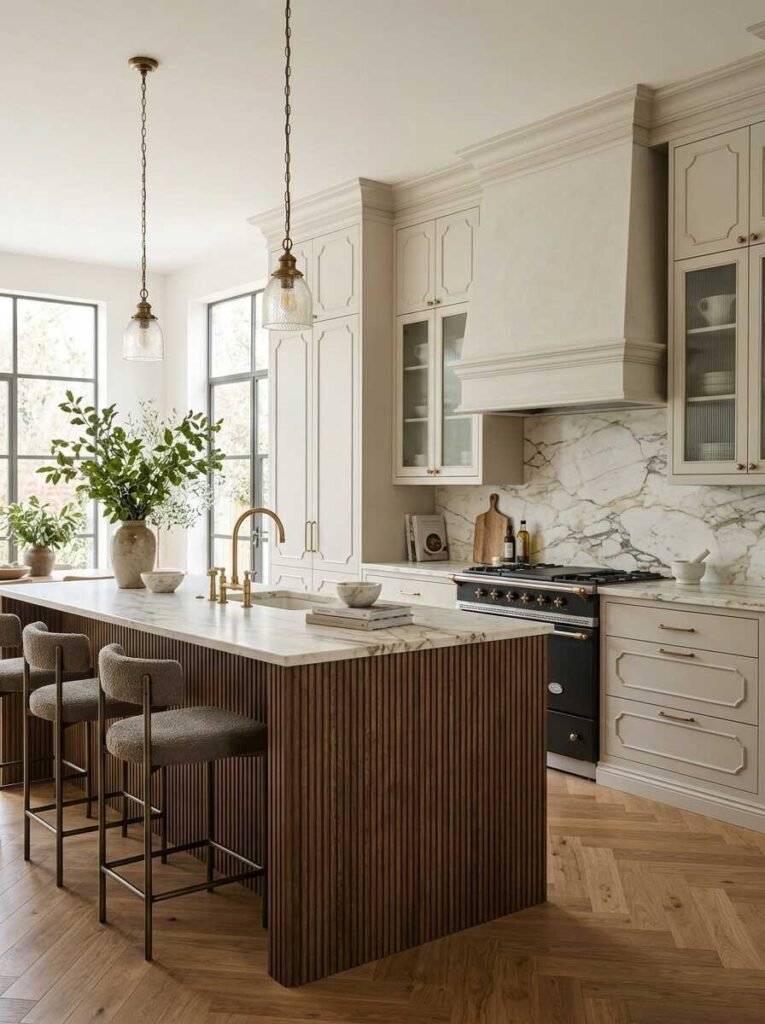
Fluted cabinet panels feature repeating vertical grooves that cast subtle shadows and introduce tactile depth. This kitchen incorporates a rich, fluted dark wood island base, creating a rhythmic focal point beneath a white marble top. Surrounding perimeter units showcase subtle molded panel detailing that echoes the island’s detailed craftsmanship.
Adding textured cabinet details introduces subtle visual interest without introducing additional colors or competing finishes. Fluting works exceptionally well on island bases, curved end panels, or select upper accent doors.
Because vertical grooves collect dust over time, consider using fluted details primarily on vertical accent surfaces rather than daily prep drawers. Dusting with a soft microfiber attachment keeps the detailed wood grain clean.
10. Choose Handleless Kitchen Cabinetry
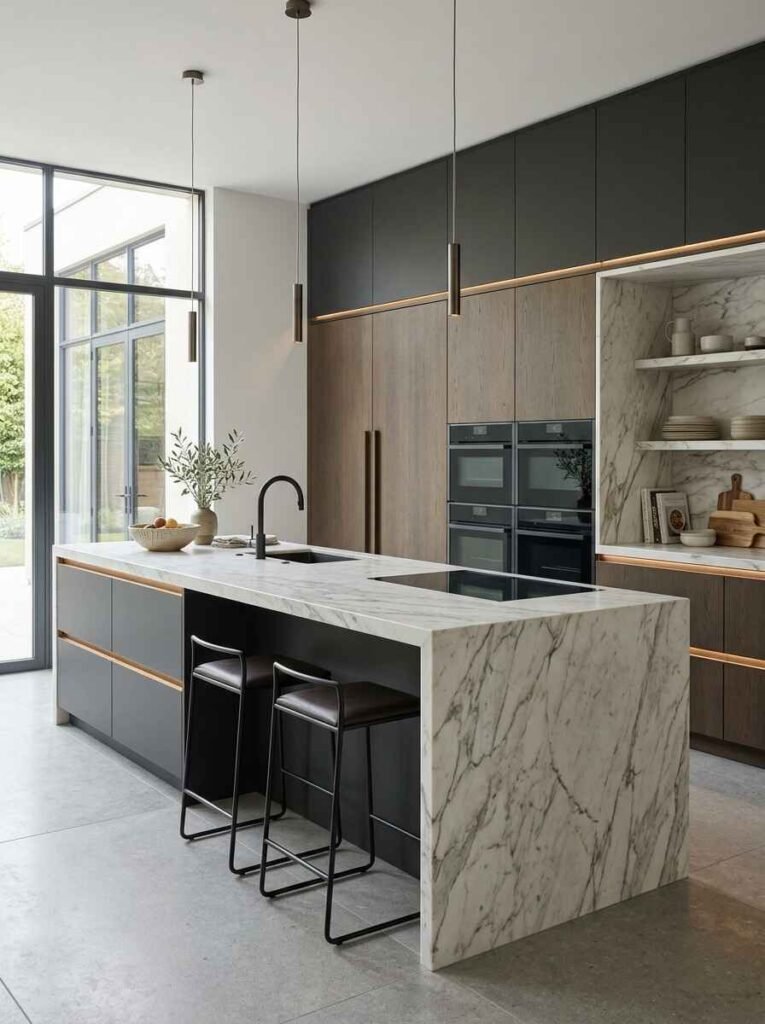
Handleless joinery removes traditional external knobs and pulls in favor of integrated channel grips or push-to-open mechanisms. This contemporary space pairs matte dark charcoal uppers with vertical grain oak tall cabinets, featuring continuous bronze-toned J-pull channels and warm channel lighting. A marble waterfall island reinforces the uncluttered aesthetic.
Selecting handleless joinery yields an ultra-streamlined silhouette that highlights the architectural form of the cabinetry. It eliminates hardware projection, making it a clever choice for narrow pathways or tight kitchen traffic zones.
Consider daily use when choosing between push-to-open mechanisms and recessed channel pulls. For integrated dishwashers and panel-ready refrigerators, confirm handle compatibility, panel weight limits, and operating clearances with the appliance manufacturer and cabinetmaker.
11. Upgrade Cabinets With Refined Hardware
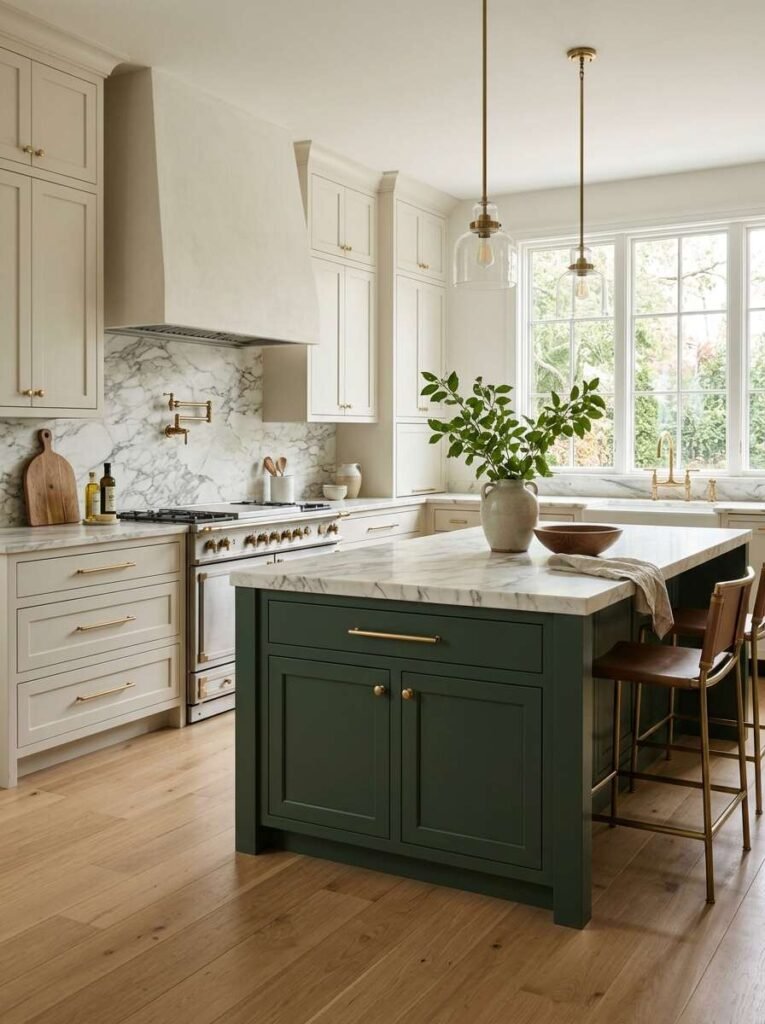
Cabinet hardware acts as functional jewelry, defining the final character of your joinery. In this design, warm cream Shaker drawers are finished with polished brass bar pulls, while the deep olive green island features matching brass knobs and pulls. The warm metal tones pick up highlights from the pot filler and pendant lights.
Upgrading kitchen cabinet hardware is a practical way to personalize existing or new cabinetry. Brass, bronze, nickel, and other finishes can complement different cabinet colors and styles. Quality, construction, and finish all influence how hardware feels and performs over time.
Select hardware proportions that correspond to door and drawer sizes. Longer pulls can be practical on wide drawers, while smaller knobs may suit compact doors. Choose hardware that feels comfortable to grip and follow the cabinet and drawer hardware manufacturer’s installation guidance.
12. Create a Seamless Built-In Appliance Wall
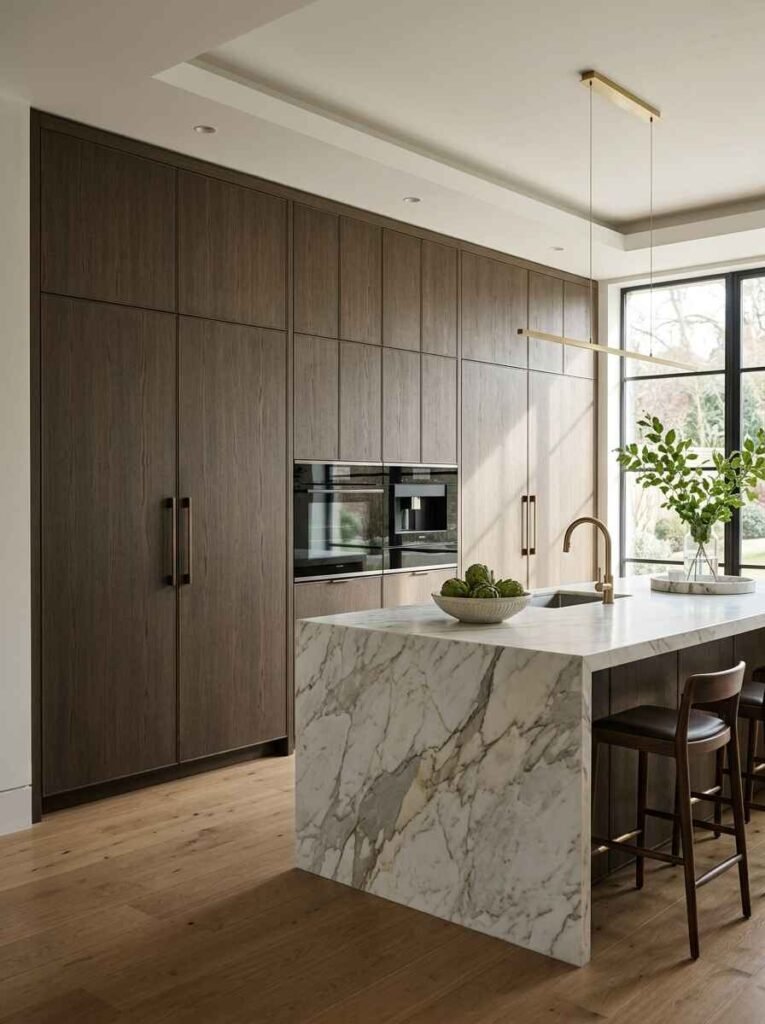
A built-in appliance wall integrates refrigeration, double ovens, and pantry storage behind a single, continuous plane of joinery. This kitchen features full-height dark oak paneling with panel-ready refrigerator doors, flush-mounted wall ovens, and streamlined vertical handles. A marble waterfall island sits parallel to the organized cabinetry run.
Designing an integrated appliance wall reduces visual clutter by concealing large stainless steel refrigerator doors behind matching cabinet panels. This cohesive look bridges the transition between open-plan kitchens and adjacent living zones.
Ensure your cabinet maker coordinates exact cutout dimensions and ventilation clearances specified by appliance manufacturers. Panel-ready units require precise door weight allowances to ensure heavy doors operate smoothly.
13. Coordinate Cabinetry With Countertops and Backsplash
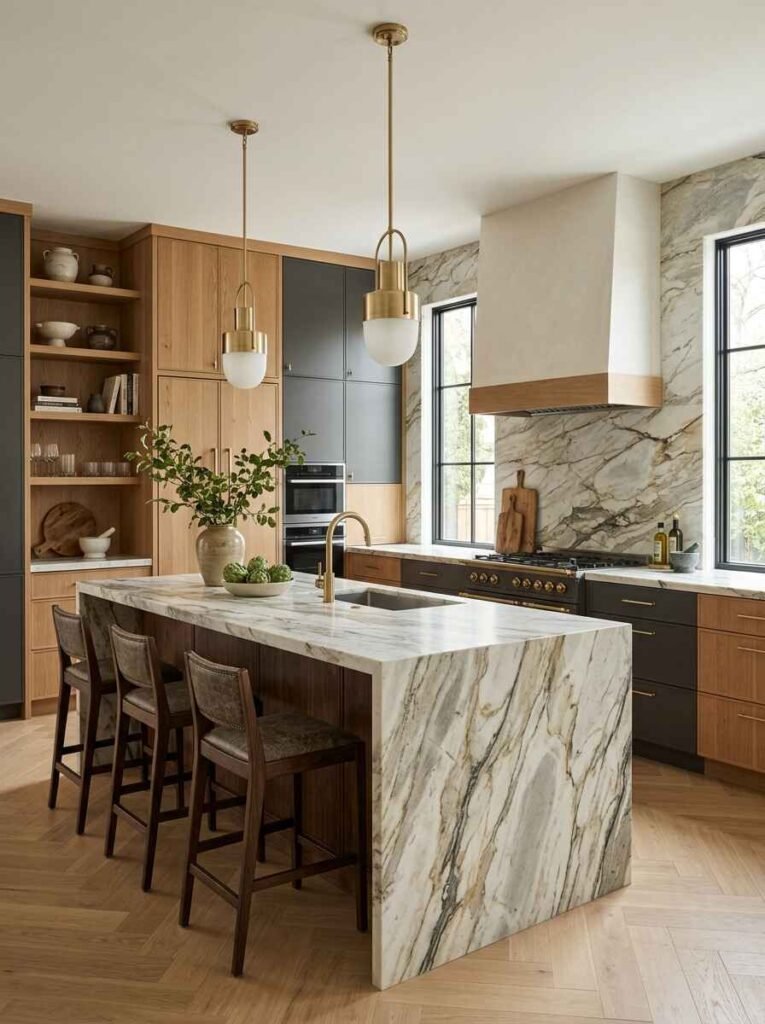
Achieving a harmonious kitchen design requires establishing a strong visual dialogue between cabinetry, stone surfaces, and backsplash tiles. This kitchen combines natural oak lower units with dark grey uppers, a full-height marble slab backsplash, and a matching marble waterfall island. Warm brass fixtures pick up warm tones within the stone’s veining.
Coordinating cabinet finishes with surrounding materials prevents individual elements from competing for attention. When selecting a bold, dramatically veined stone, choose simpler cabinet door styles and muted wood or paint finishes.
If your island features a distinct finish, explore our specialized guide to luxury kitchen island ideas to ensure your island joinery complements your main perimeter cabinets seamlessly.
How to Choose the Right Kitchen Cabinet Style
Selecting the right cabinetry involves evaluating your home’s architecture, lifestyle needs, and maintenance preferences. Use these steps to guide your selection:
- Respect Architectural Context: Match door profiles to your home’s structural character. Modern homes suit flat-panel slab doors, while classic residences align naturally with Shaker profiles.
- Test Paint and Wood Samples On-Site: Review samples in your kitchen at different times of day to see how natural daylight and artificial lighting affect cabinet colors, undertones, and wood grain.
- Balance Closed and Display Storage: Combine solid doors for hidden utility with select glass-front or open shelves to display decorative items without creating dusting chores.
- Assess Material Maintenance: Cleaning and wear vary by material and finish. Painted surfaces may show chips or scuffs, while scratches and other marks on wood cabinetry depend on the wood species, finish, and grain pattern.
- Prioritize Interior Organization: Specify pull-out spice racks, deep pot drawers, and concealed trash systems during the initial joinery design phase.
- Verify Appliance Specifications: Confirm panel-ready dimensions and door hinge clearances with your appliance dealer before final joinery fabrication begins.
Luxury Kitchen Cabinetry Mistakes to Avoid
- Combining Too Many Finishes: Mixing multiple wood species, bold paint colors, and conflicting metal hardware creates visual chaos. Limit primary cabinetry finishes to two cohesive options.
- Choosing Colors Without On-Site Testing: Ordering cabinets based solely on showroom lighting often leads to disappointment when undertones shift under residential lighting.
- Overlooking Storage Access: Deep drawers and pull-out organizers can make cookware and everyday items easier to reach. Choose a combination of drawers, shelves, and cabinets based on what you store and how you use the kitchen.
- Selecting Poorly Proportioned Hardware: Installing tiny knobs on large pantry doors or oversized pulls on small drawers throws off visual balance and feels awkward in hand.
- Ignoring Maintenance Requirements: Placing delicate unsealed finishes near high-moisture prep sinks can lead to premature surface wear.
- Adding Excessive Decorative Detailing: Overloading joinery with heavy corbels and intricate moldings can overwhelm the room and complicate routine dusting.
Frequently Asked Questions
What Makes Kitchen Cabinets Look Luxurious?
Kitchen cabinets look luxurious through precise custom fitting, high-grade natural hardwoods, smooth soft-close joinery, concealed appliance integration, and thoughtfully chosen hardware.
Which Cabinet Colors Work Best in a Luxury Kitchen?
Warm neutrals such as cream, taupe, and warm white offer timeless appeal. Rich natural timber tones like walnut and white oak, alongside deep shades like navy, charcoal, and forest green, provide elegant depth.
Are Custom Kitchen Cabinets Worth the Cost?
Custom cabinets are worth considering if your space requires precise wall-to-wall fitting, tailored storage organizers, custom wood species, or full-height ceiling integration that stock units cannot achieve.
What Is the Best Wood for Luxury Kitchen Cabinets?
White oak and walnut are popular choices for kitchen cabinetry because of their distinctive grain and natural appearance. The right option depends on the desired color, budget, cabinet construction, finish, and maintenance requirements.
Are Shaker or Flat-Panel Cabinets Better for a Modern Kitchen?
Both work exceptionally well. Flat-panel slab doors offer a sleek, minimalist aesthetic, while slim-frame Shaker doors bring subtle texture and warm transitional structure to modern spaces.
How Can I Make Existing Kitchen Cabinets Look More Expensive?
You can refresh existing cabinets by updating the hardware, improving under-cabinet lighting, repainting suitable doors in a complementary color, or adding trim above upper cabinets where appropriate. Choose upgrades that suit the existing cabinet construction and the kitchen’s overall style.
Conclusion
Designing custom kitchen cabinetry requires balancing architectural form, tactile materials, and efficient internal organization. Whether you prefer clean flat-panel surfaces, classic Shaker frames, or the warm texture of natural oak and walnut, your joinery sets the tone for the entire kitchen.
When planning your cabinetry project, select door profiles, wood species, and hardware that complement your daily habits and home architecture. Choosing suitable materials, quality craftsmanship, and cohesive finishes can help your kitchen cabinetry remain attractive and practical over time.