
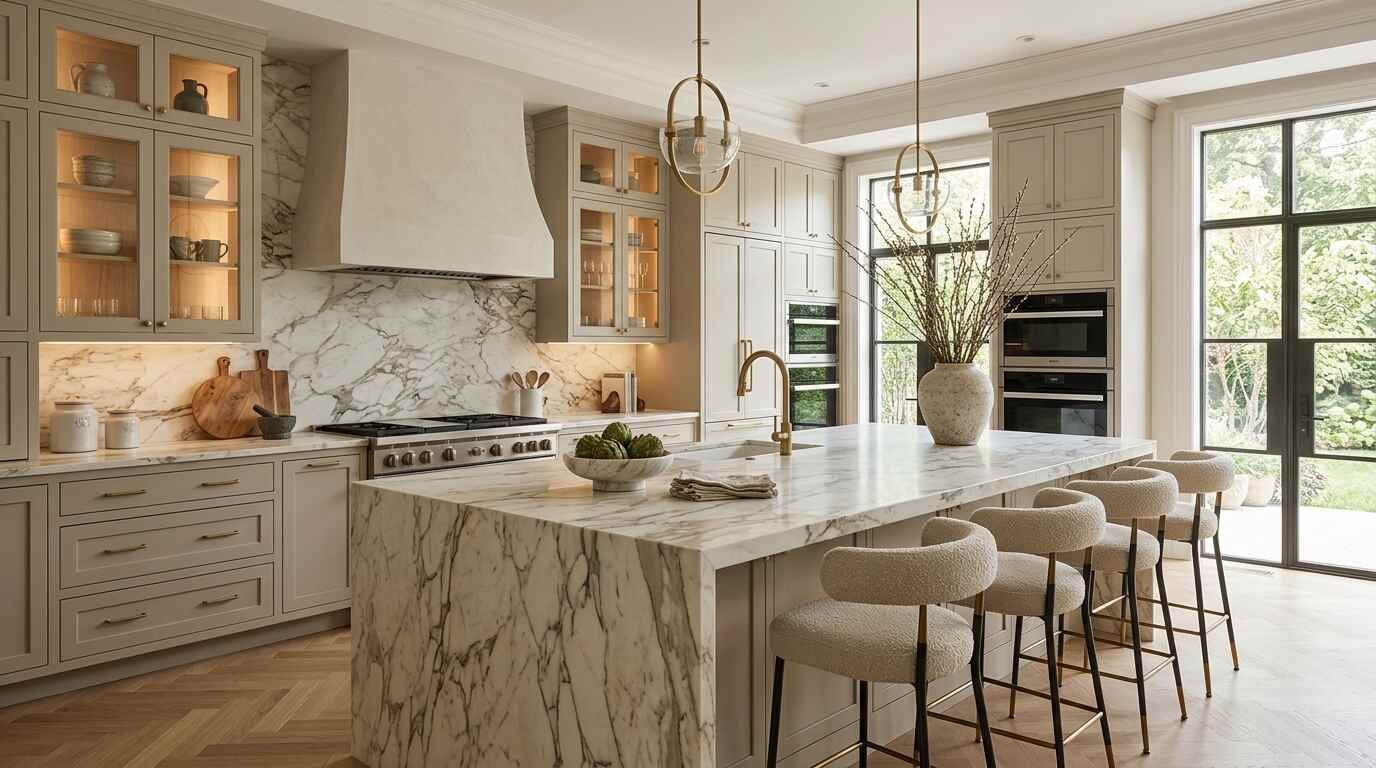
A luxury kitchen is defined by how effortlessly it functions, the quality of its materials, and the harmony of its design. While premium appliances and beautiful materials can add luxury, a well-designed kitchen also needs good storage, comfortable space, and practical details that make everyday tasks easier.
To create an elevated culinary space, you must look at how cabinetry, countertops, lighting, colors, and spatial flow interact. Every detail should work well with the rest of the kitchen. Whether you are planning a full renovation or seeking architectural inspiration, incorporating refined materials and bespoke layout strategies will transform your cooking space.
In this guide, we explore 21 luxury kitchen ideas that blend timeless aesthetics with modern functionality. From dramatic marble waterfall islands to concealed storage and tailored lighting schemes, these design concepts will help you build an elegant dream kitchen.
21 Luxury Kitchen Ideas for an Elegant Dream Kitchen
1. Design a Statement Kitchen Island
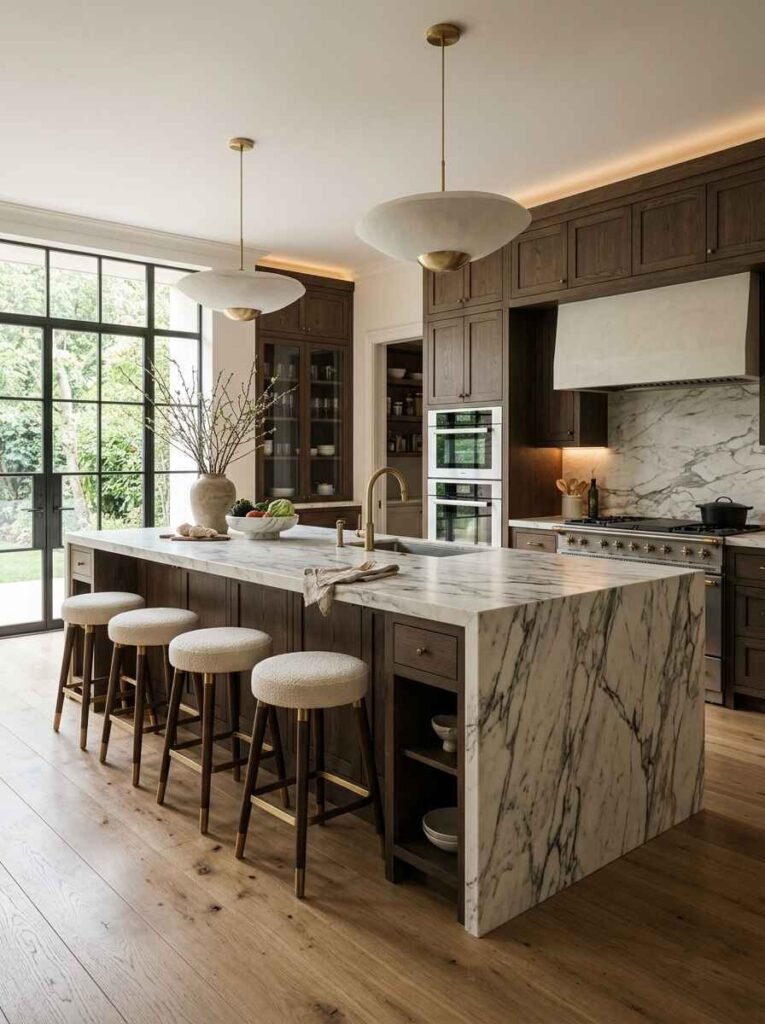
The kitchen island is often the central anchor of a modern luxury home. Choose an island size that suits your kitchen and leaves enough room to move around it. Plan space for food preparation, seating, and storage based on your needs.
To elevate the design, consider contrasting the island’s base material or color from the surrounding cabinetry. Add deep drawers, open shelves, or a wine cooler if they suit your needs and available space. These features can make the island more useful while keeping its design clean.
2. Choose Elegant Marble Countertops
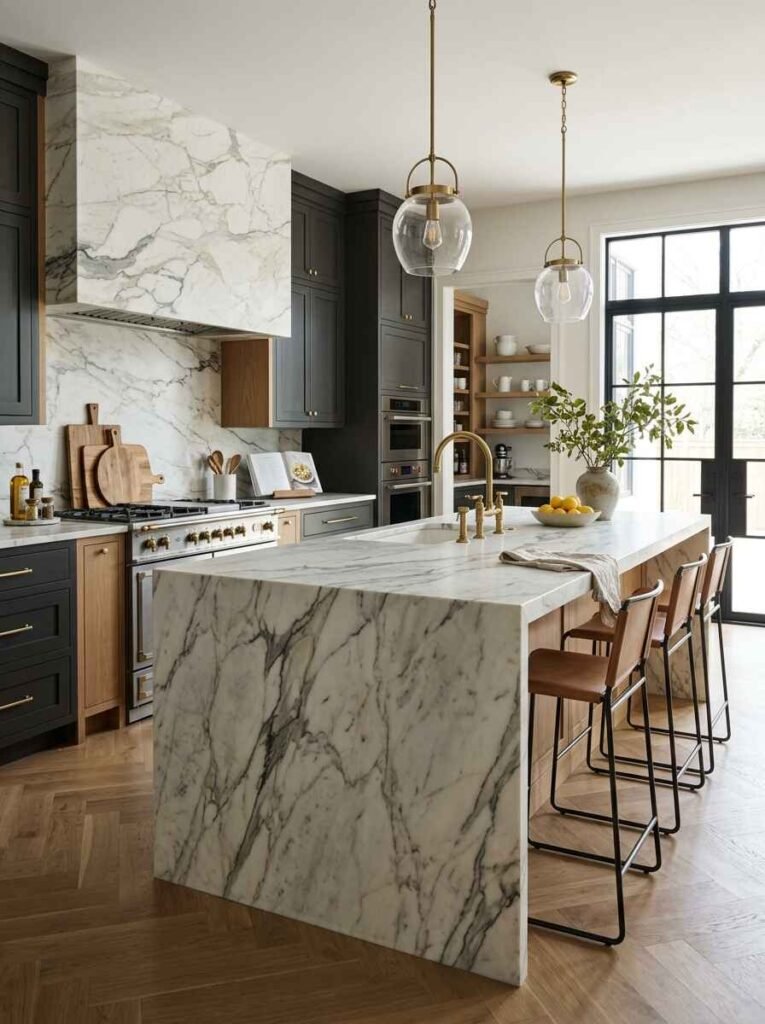
Few materials convey sophistication like natural marble. Marble adds natural patterns and a smooth, cool surface to a kitchen. It can be useful for baking, but it needs careful handling because it can stain, scratch, and develop etch marks.
While Calacatta and Carrara remain classic choices, explore honed finishes over polished ones to reduce glares and hide minor wear. Sealing may help reduce staining, but it will not prevent every mark or etch. Marble can develop a natural patina with use, so consider its care needs before choosing it for a busy kitchen.
3. Invest in Custom Kitchen Cabinetry
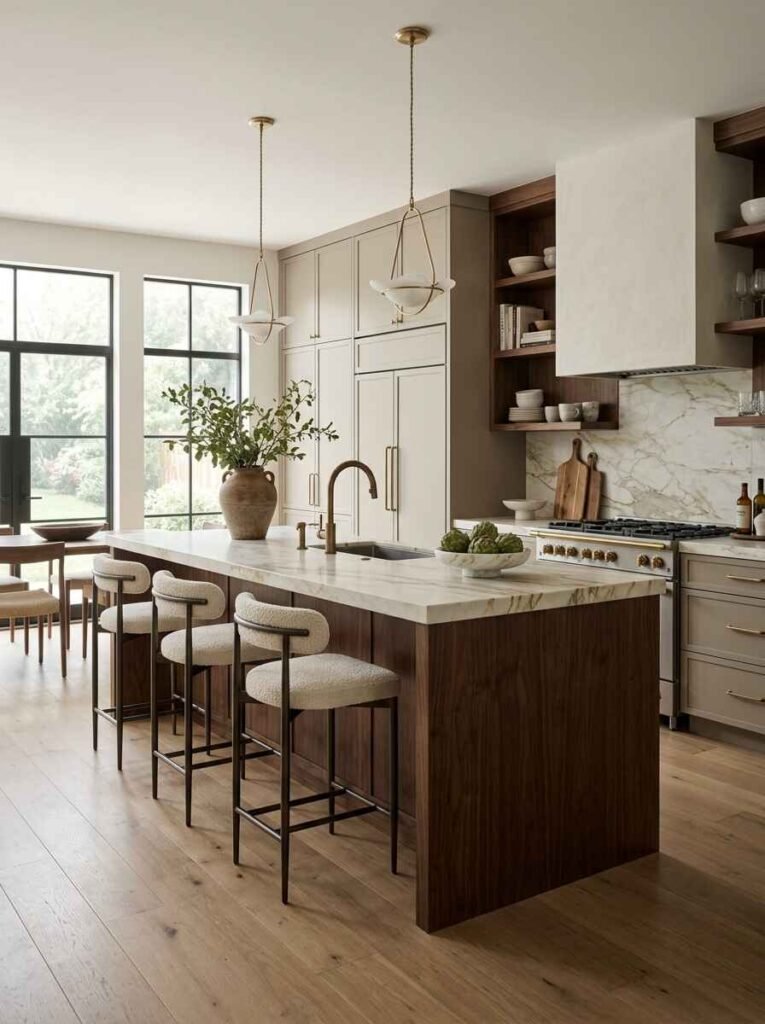
Custom cabinetry provides seamless integration and tailored storage solutions that stock options simply cannot replicate. Custom cabinets can fit your kitchen’s dimensions more closely and make better use of available space. The final result depends on the design, measurements, and installation.
Focus on inset or full-overlay door styles with smooth-closing hardware. Coordinated finishes, such as hand-applied paint or rich wood stains, create a tailored aesthetic that unifies the entire culinary layout.
4. Combine Two-Tone Kitchen Cabinets
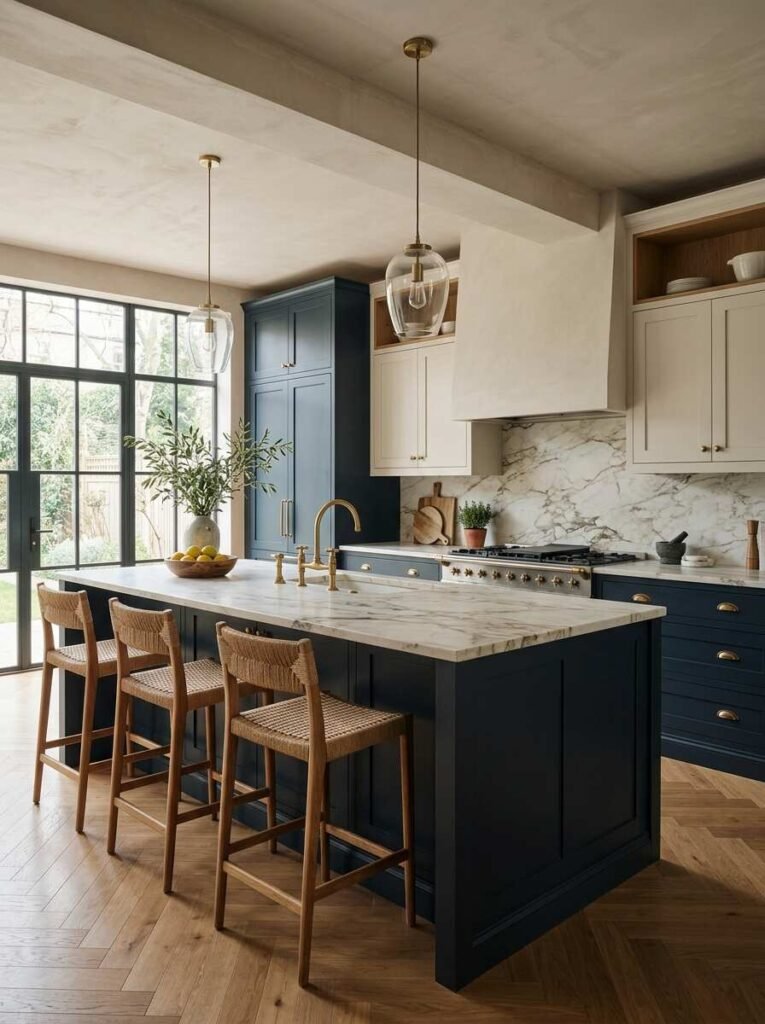
Using two distinct cabinet finishes adds depth and breaks up large expanses of single-color cabinetry. A common approach is pairing dark lower cabinets or a dark island with lighter upper units to keep the ceiling feeling tall and bright.
To maintain visual balance, choose colors with matching undertones. For instance, pair warm cream upper cabinets with navy, charcoal, or deep olive lowers for a sophisticated contrast.
5. Create a Warm Neutral Kitchen Palette
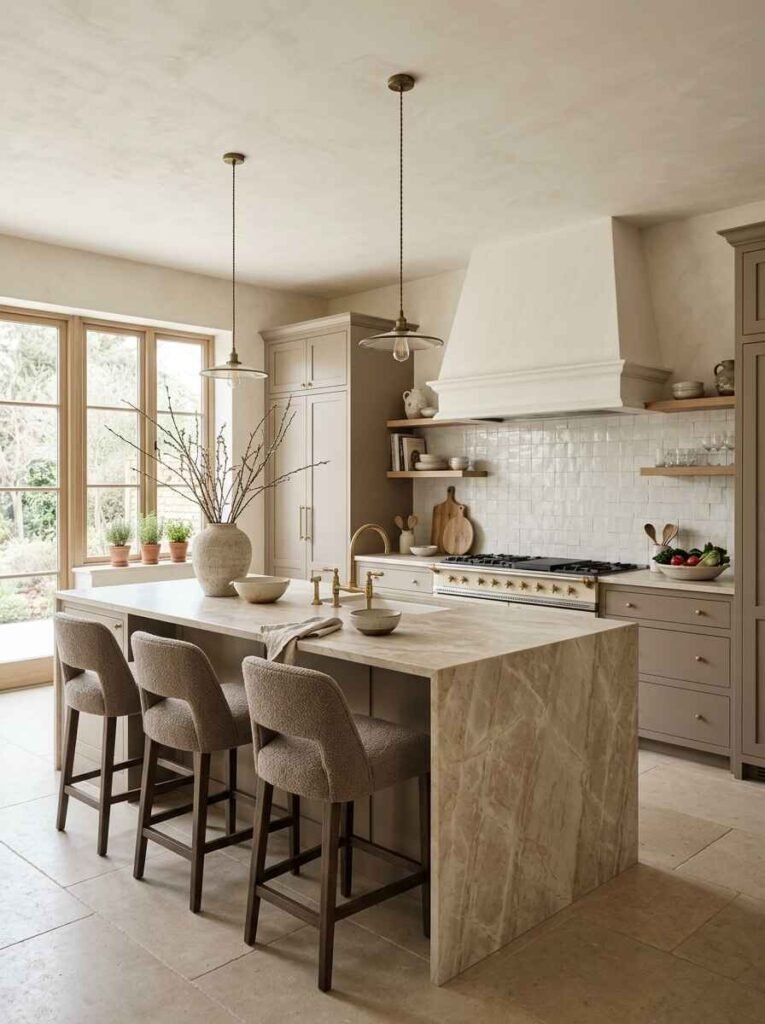
Warm neutral colors are a popular choice for kitchens because they create a soft, welcoming look without feeling too plain. Soft shades like cream, warm beige, taupe, and mushroom create a cozy, inviting atmosphere that reflects natural light beautifully.
Layering subtle variations of these earthy tones across walls, cabinetry, and tile prevents the room from feeling flat. Warm neutrals also work well with natural stone, wood, and metal accents.
6. Introduce Natural Wood Cabinetry
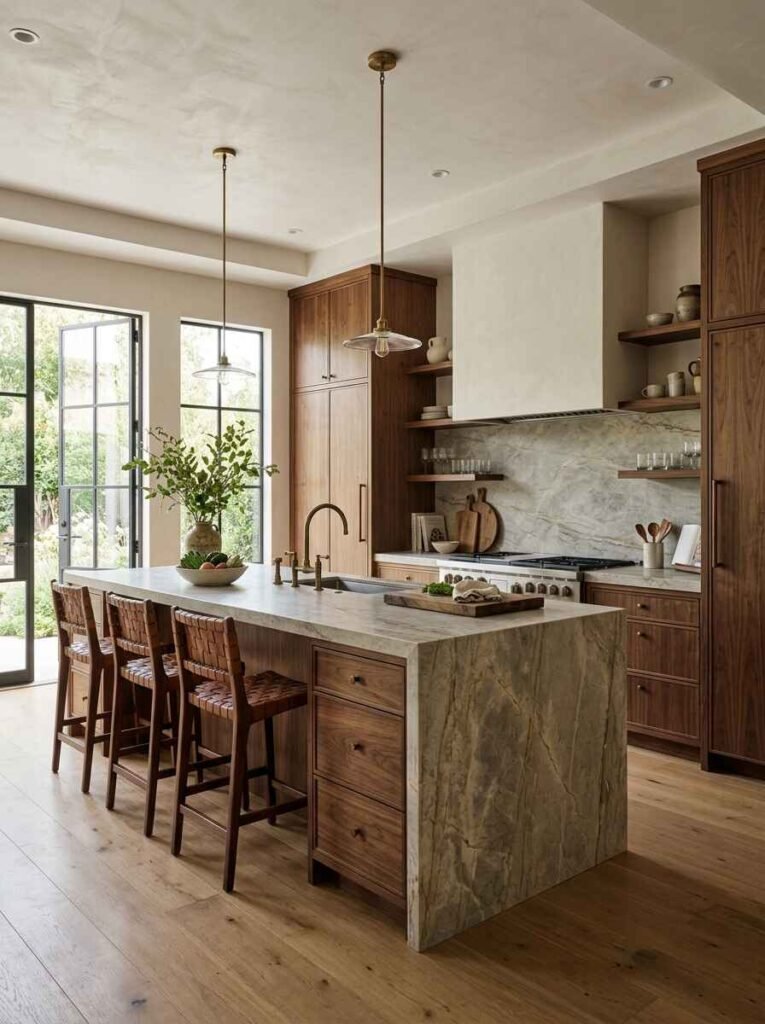
Incorporate natural wood cabinetry to bring warmth, rich texture, and organic balance to stone-heavy spaces. Species like white oak and black walnut display subtle grain patterns that complement smooth marble and quartzite.
A suitable matte finish can help protect wood cabinetry while keeping its natural grain visible. The right finish depends on the wood and the level of protection needed. Combining wood island bases or pantry tall units with painted perimeter cabinets creates an inviting visual texture.
7. Extend the Backsplash for a Seamless Look
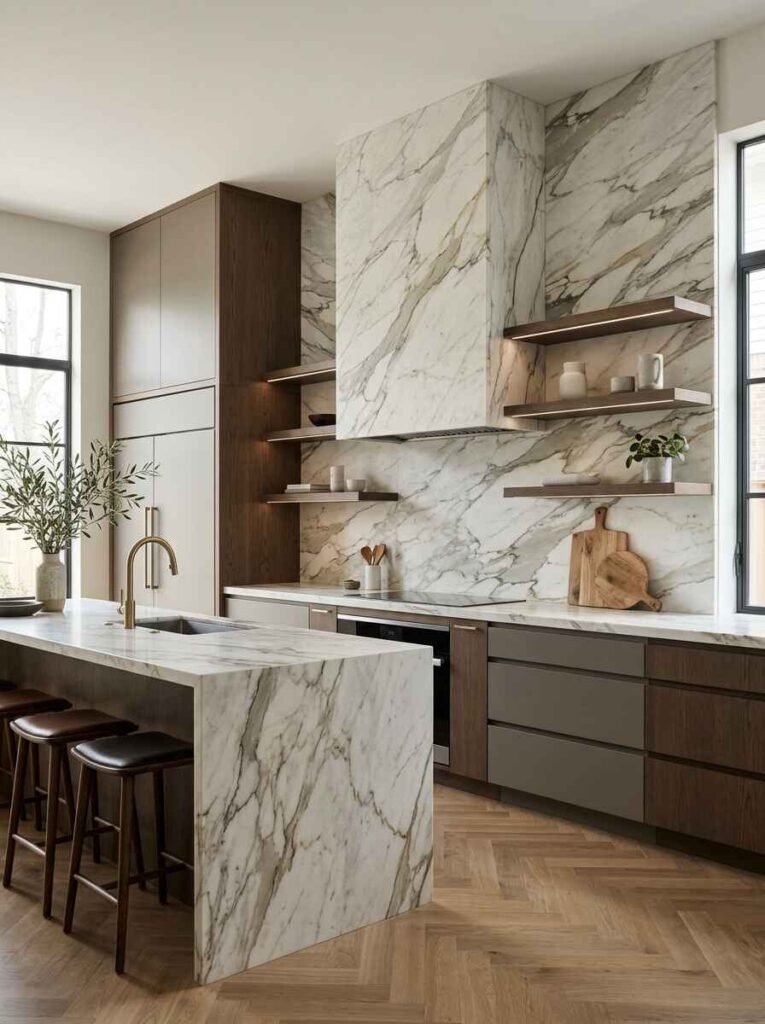
Running countertop stone continuously up the wall as a full-height slab backsplash creates an uninterrupted, clean aesthetic. A full-height stone backsplash has fewer grout lines than a tiled backsplash and can make the kitchen look more unified. It also highlights the stone’s natural pattern, although the surface still needs proper cleaning and care.
This technique works particularly well behind range hoods and beneath floating shelves. The continuous stone surface serves as a dramatic architectural feature that grounds the entire room.
8. Create a Refined Kitchen With Natural Stone
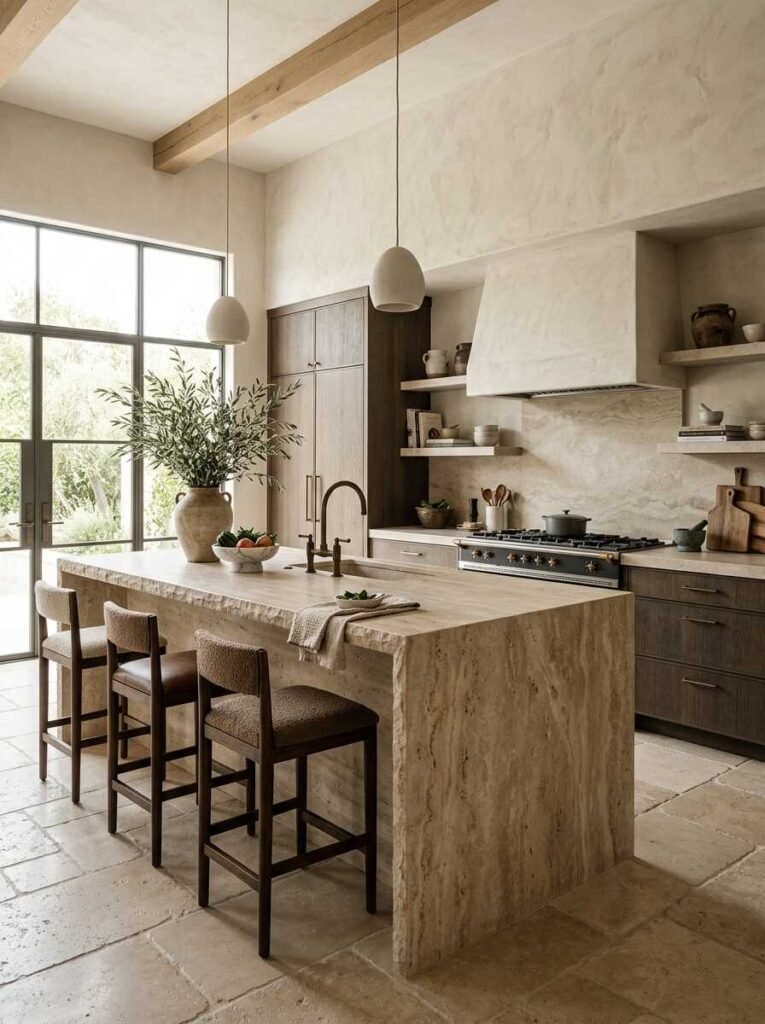
Expanding natural stone beyond countertops introduces grounded tactile luxury. Materials like travertine, limestone, and soapstone offer unique matte finishes and earthy hues that feel authentic and timeless.
Consider using brushed stone for island surrounds or hearth arches. Natural stone varies in porosity and care needs. Use a suitable sealer when recommended for the specific stone, and follow the manufacturer’s cleaning and maintenance instructions.
9. Install a Statement Range Hood
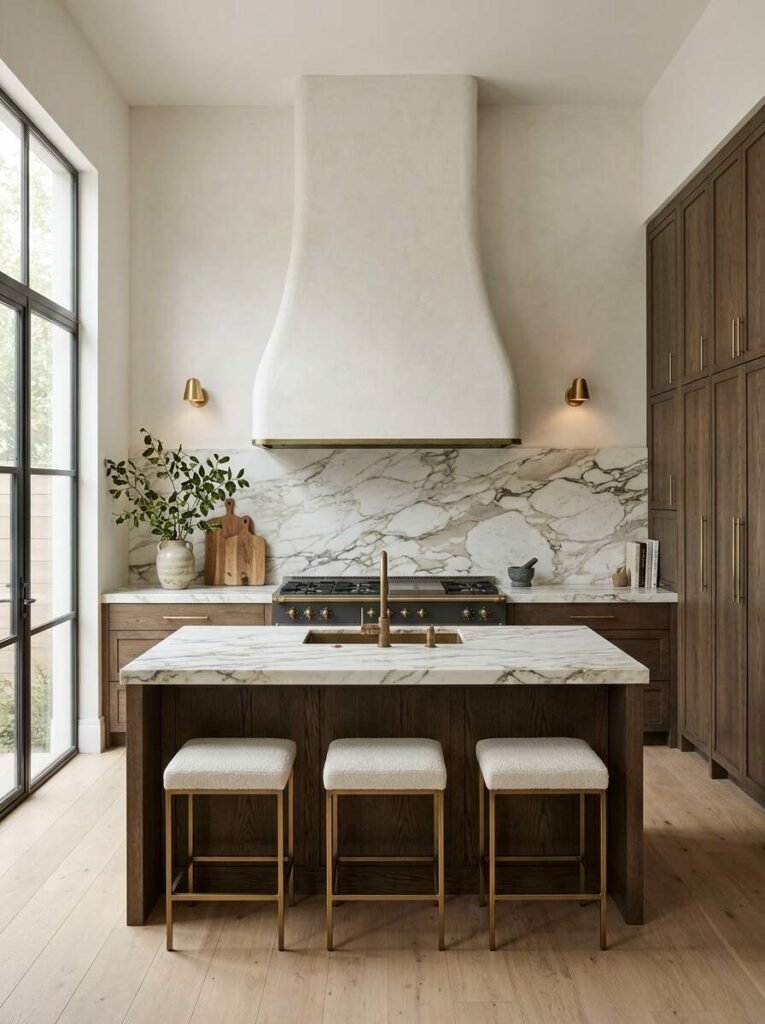
A custom range hood serves as a striking focal point above the cooking zone. Moving away from standard stainless steel hoods, custom designs use plaster, stone slabs, brushed metal, or integrated cabinetry enclosures.
Tapered plaster hoods lend a Mediterranean or European villa character, while clean-lined wood hoods align with modern aesthetics. Choose a range hood that suits your cooktop, cooking habits, and kitchen layout. Check the manufacturer’s ventilation guidance and local requirements before installation.
10. Integrate Appliances Into the Cabinetry
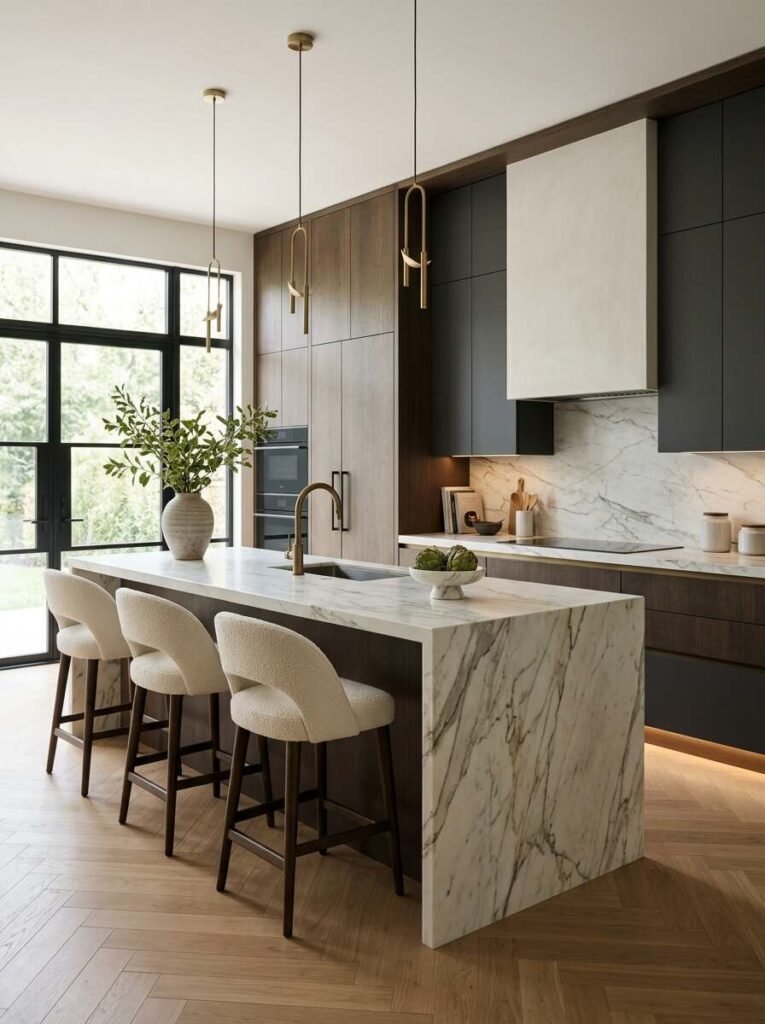
Integrating major refrigeration and dishwashing units behind panel-ready cabinet doors maintains smooth architectural lines across your kitchen perimeter. Concealing bulky steel doors allows cabinetry craftsmanship to take center stage.
Matching hardware on appliance panels unifies the room’s design language. This seamless approach makes open-plan kitchens feel like an extension of the surrounding living area.
11. Use Concealed Storage to Reduce Clutter
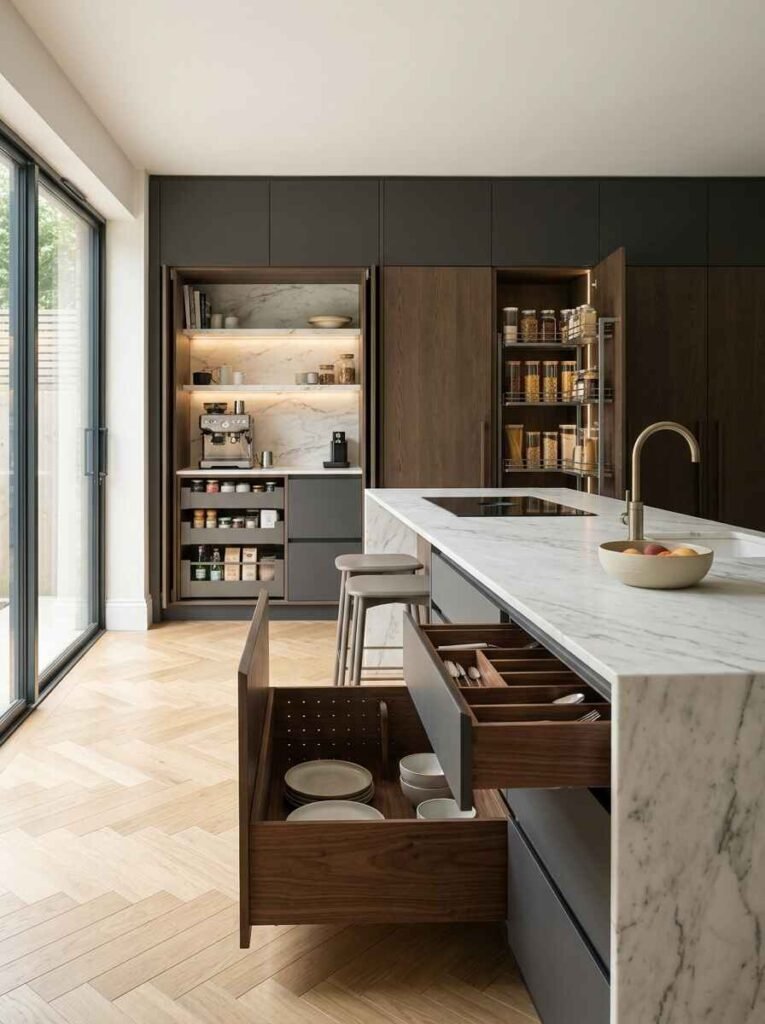
Clutter is the enemy of a luxurious space. Advanced internal storage systems, such as pocketing appliance garages, pull-out spice racks, and deep utensil dividers, keep everyday items hidden yet easily accessible.
Dedicated coffee stations with retracting doors allow you to operate small appliances without permanently cluttering the main countertops. Organized interiors ensure efficient daily preparation.
12. Layer Kitchen Lighting
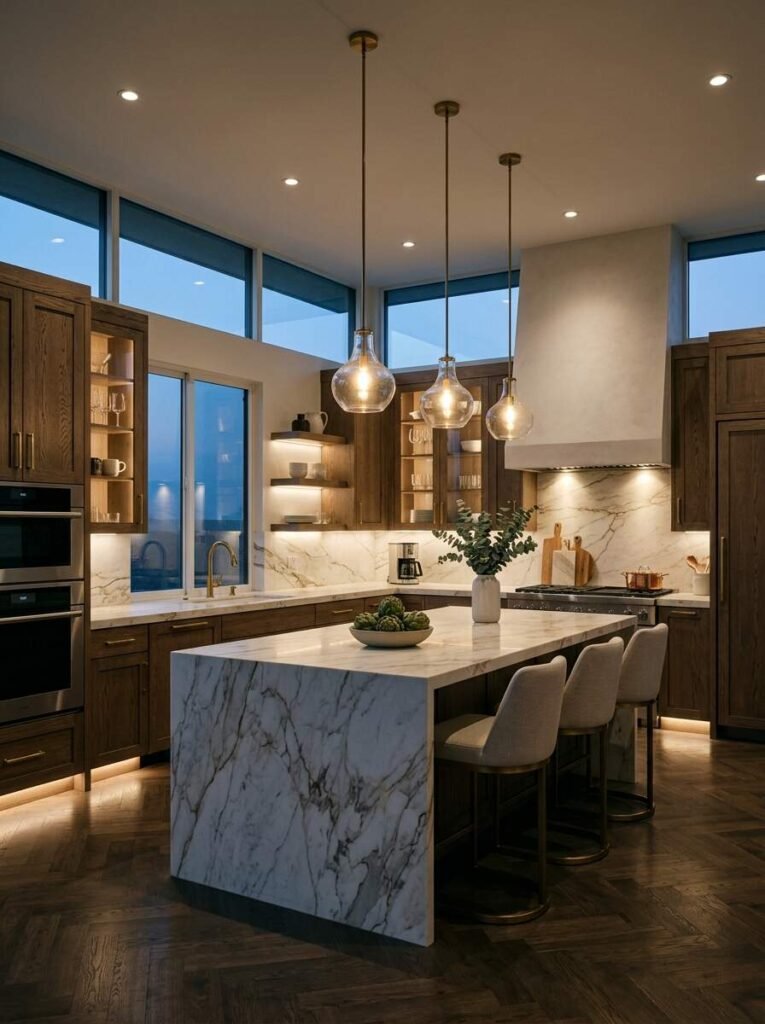
A successful lighting scheme incorporates three distinct layers: ambient, task, and accent lighting. Recessed ceiling fixtures provide general illumination, while under-cabinet LED strips can improve visibility on countertops and reduce shadows while you prepare food.
Accent lighting, such as internal cabinet illumination or kickplate LED strips, adds mood and depth during evening hours. Dimmable controls allow you to switch effortlessly from functional meal prep to relaxing entertainment.
13. Choose Statement Pendant Lights
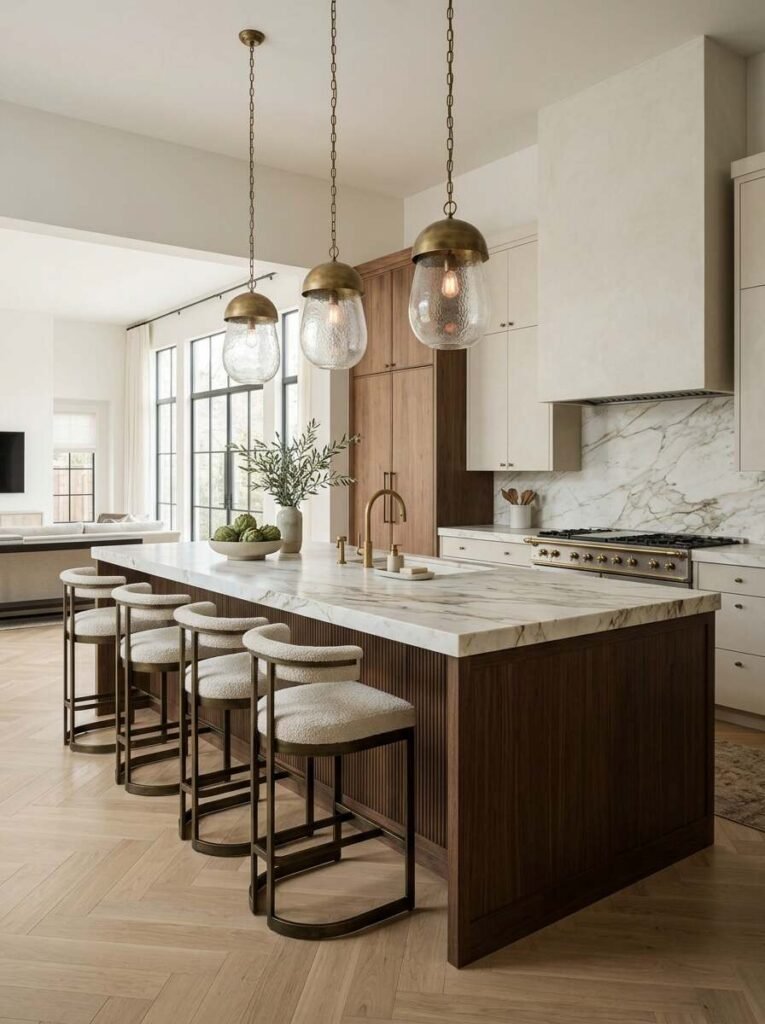
Pendant lights hanging above an island serve as functional task lighting and decorative jewelry for the room. Choosing fixtures with generous proportions prevents them from getting lost in large open spaces.
Materials like hand-blown glass, brushed brass, or woven alabaster introduce tactile contrast against hard stone tops. Pendant lights are often placed about 30–36 inches above the countertop, but the best height depends on the fixture, ceiling height, and sightlines. Check the fixture instructions before installation.
14. Create a Waterfall Kitchen Island
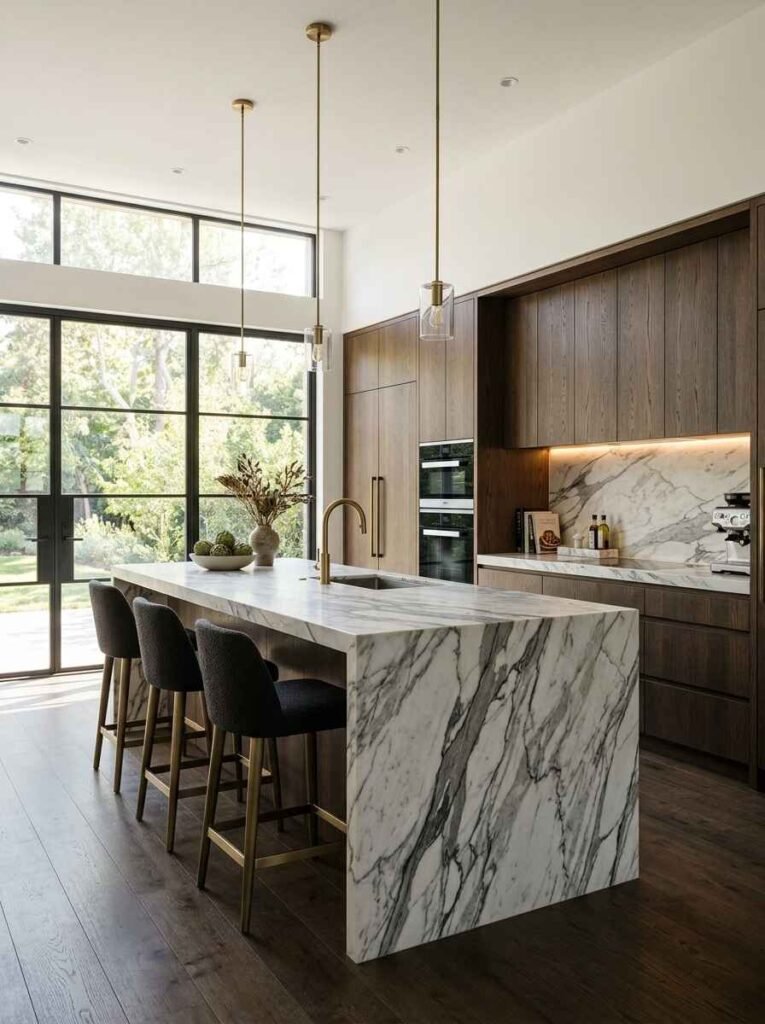
A waterfall island extends the countertop material vertically down one or both sides to the floor. This structural technique highlights stone patterning and creates a clean, monolithic silhouette.
Precision fabrication is essential for book-matching veining seamlessly at the 45-degree mitered edges. Waterfall ends create a continuous look along the sides of an island. They may also cover the cabinet sides, but the countertop material still needs care to avoid chips and damage.
15. Highlight Natural Stone Veining
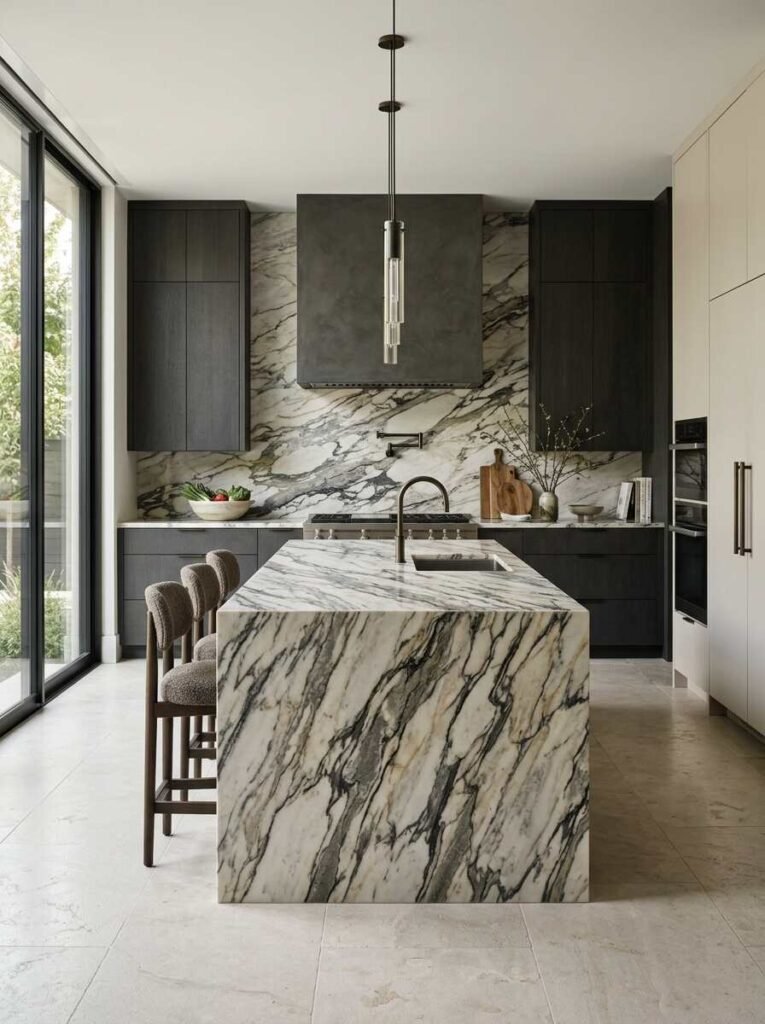
Dramatic stone veining brings movement, personality, and artful energy into a custom layout. Slabs featuring bold charcoal, rust, or gold veins transform functional surfaces into visual highlights.
When selecting expressive stone, balance the rest of the room with simpler cabinet door styles and muted wall paint. Letting the stone’s pattern lead prevents competing focal points.
16. Add Warm Brass and Metal Accents
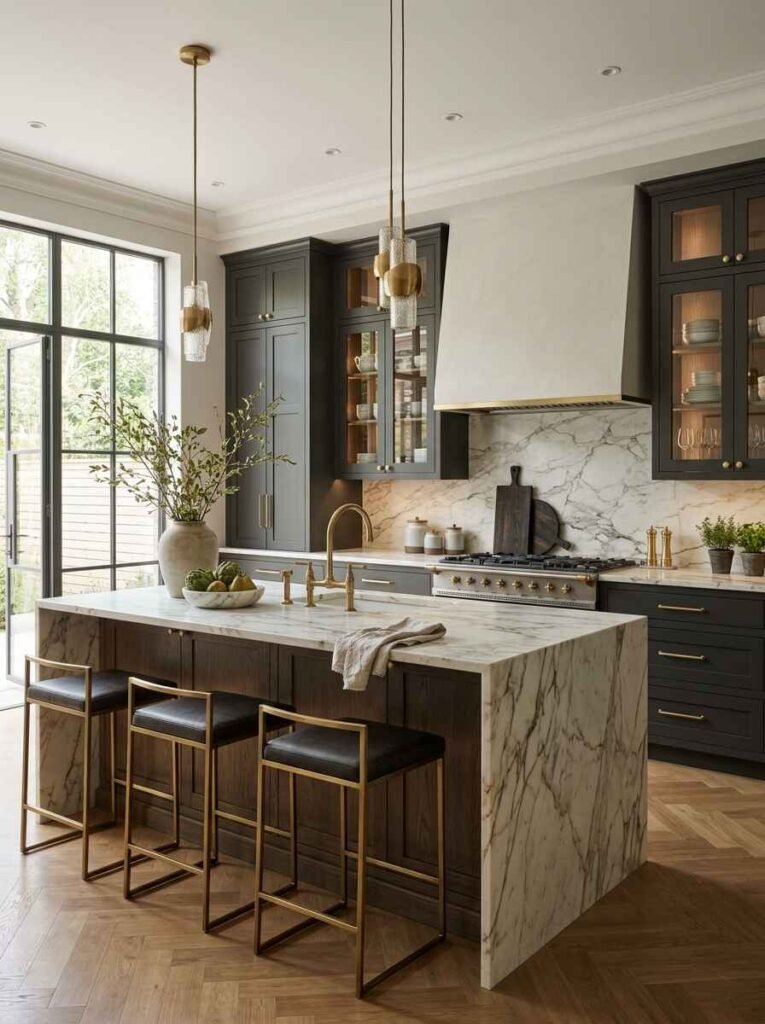
Warm metal accents, such as unlacquered brass, burnished bronze, and polished nickel, inject rich detail into modern spaces. Metal accents add contrast to wood and stone. Their appearance over time depends on the finish, coating, and level of care.
Repeat your chosen metal finish across plumbing fixtures, hardware, and light accents for a cohesive look. Mixing two complementary metals—such as brass hardware with a stainless range—adds tailored character.
17. Select Distinctive Cabinet Handles
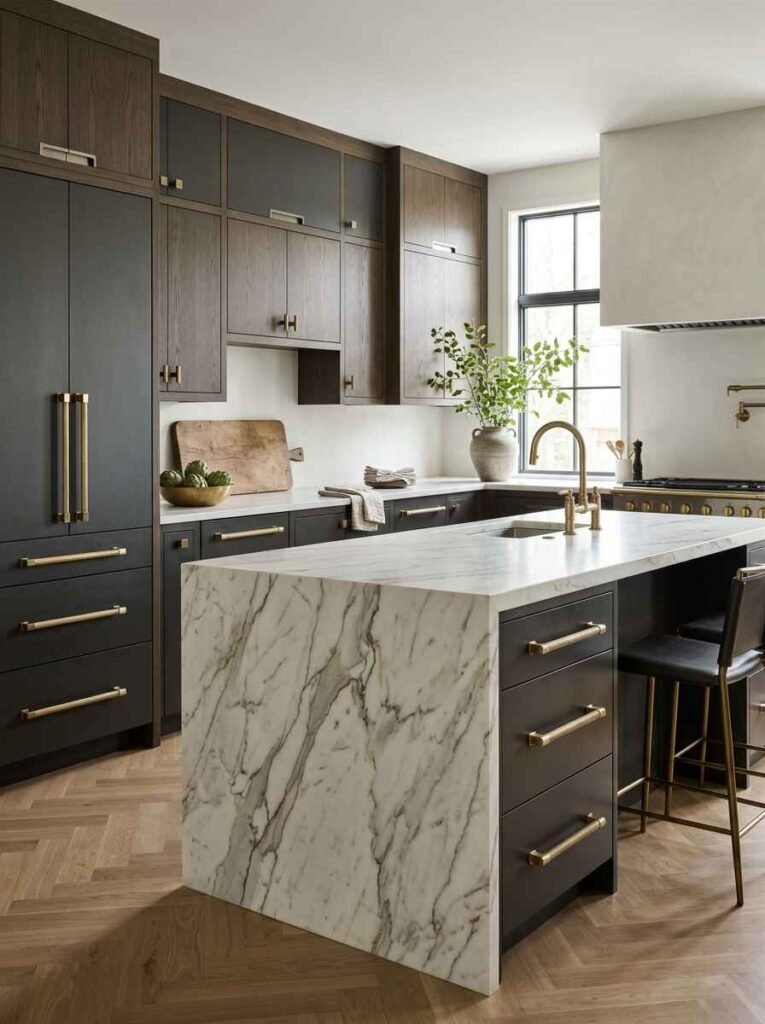
Cabinet hardware is an intimate tactile touchpoint encountered daily. Well-made handles and knobs can make cabinets feel more refined and comfortable to use. Choose a style and size that suit the cabinet doors and your daily needs.
Consider oversized bar pulls on tall pantry doors and small knurled knobs on upper cabinets. Handleless channel profiles or integrated finger pulls offer a sleek minimalist alternative.
18. Use Open Shelving With Restraint
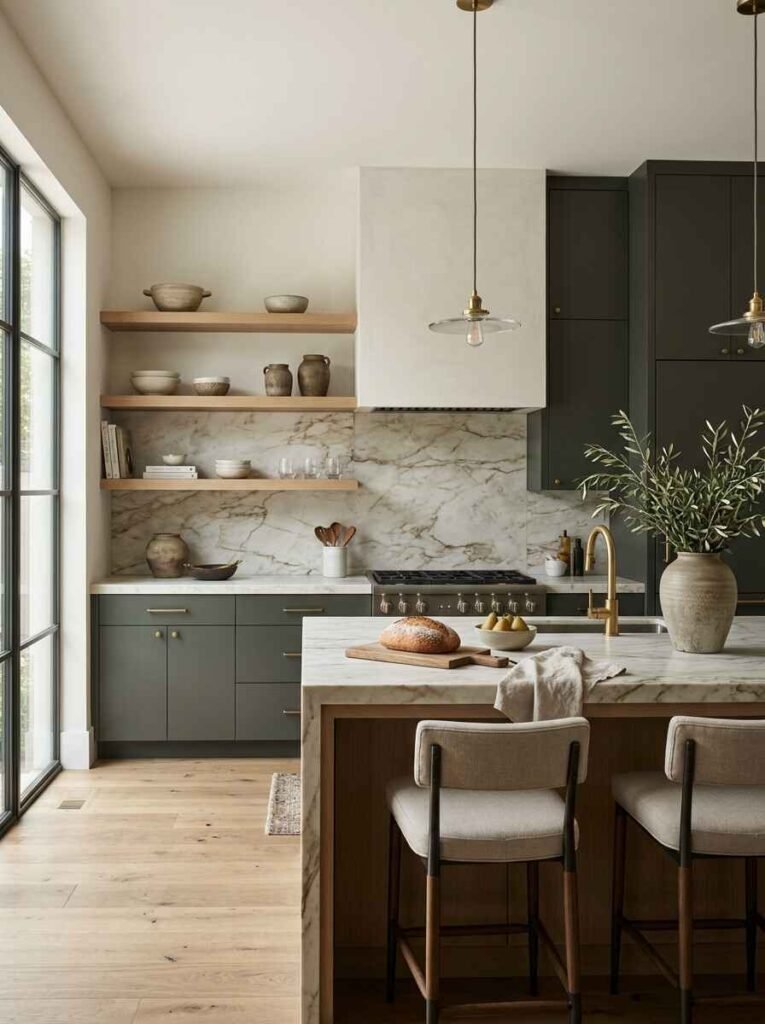
While wall-to-wall open shelving can create visual chaos, styled floating shelves used sparingly add personality. Incorporating a single or double thick-cut wood or stone shelf offers accessible storage for curated glassware and ceramics.
Integrate warm LED strip lighting into the underside of floating shelves to highlight stone backsplashes below. Keep daily-use essentials in closed cabinets to maintain an uncluttered aesthetic.
19. Add Glass-Front Kitchen Cabinets
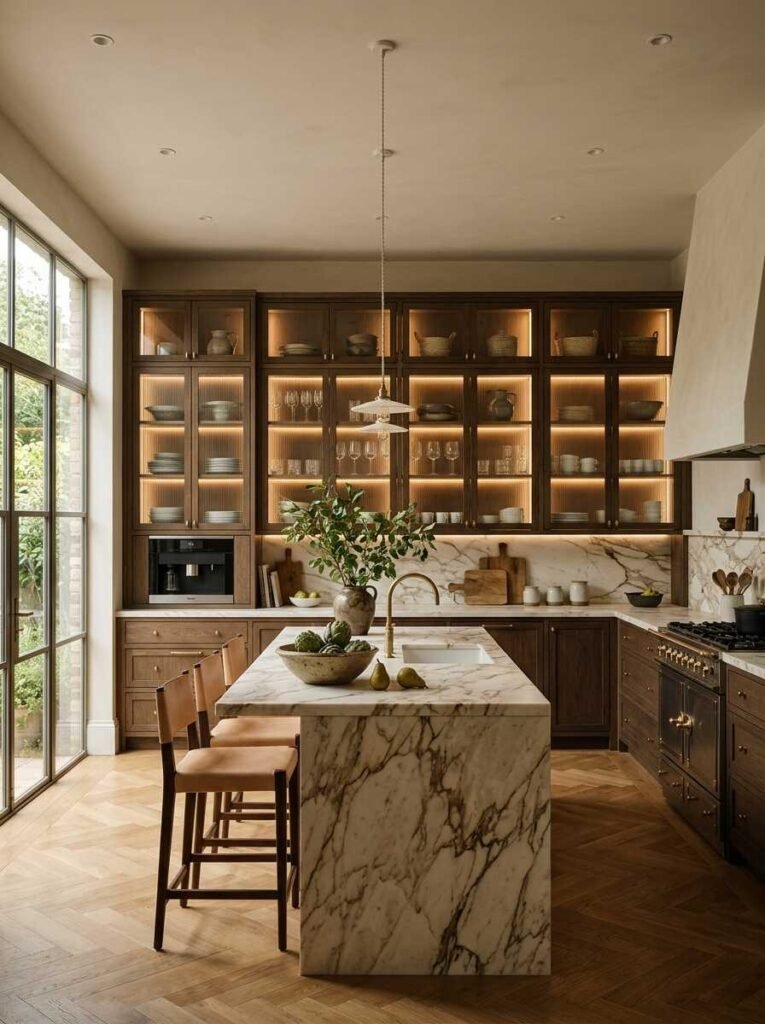
Glass-front cabinets soften long stretches of solid wooden doors and display fine dinnerware. Clear glass offers maximum visibility, while reeded, fluted, or seeded glass subtly blurs internal contents while catching light.
Interior cabinet lighting transforms these units into warm display cases during the evening. Paint or line the interior cabinet backings in a contrasting tone to add subtle depth.
20. Choose Elegant Kitchen Flooring
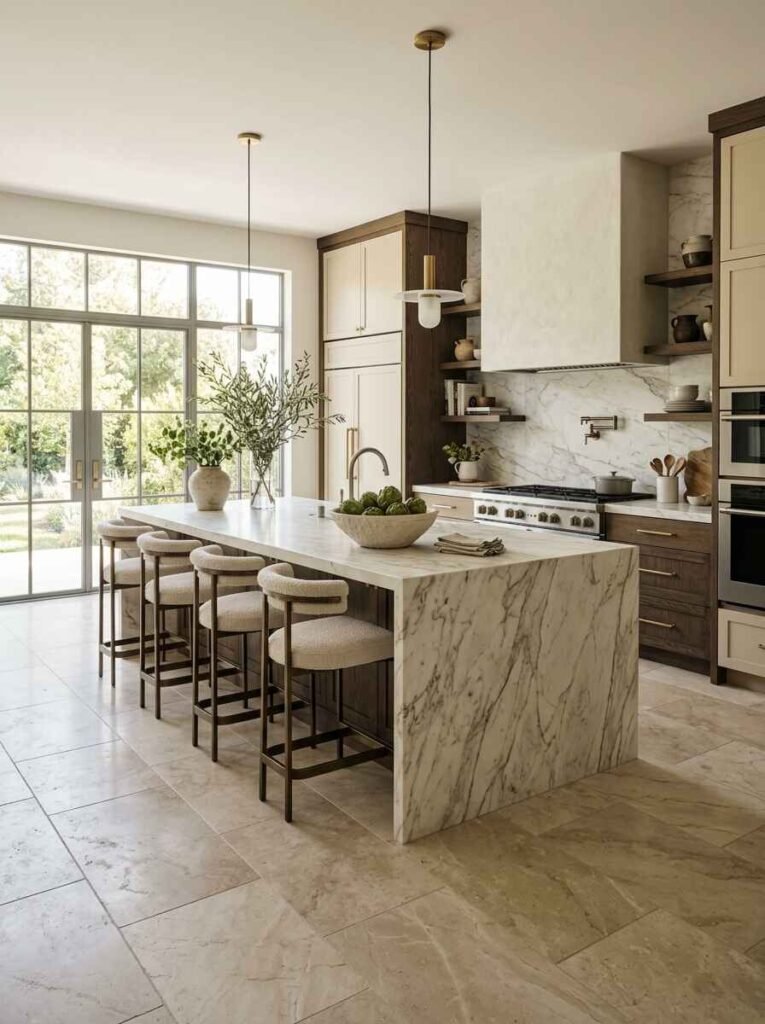
Kitchen flooring must withstand heavy foot traffic, moisture, and dropped utensils while anchoring the room’s aesthetic. Large-format porcelain tiles, natural limestone pavers, and engineered hardwood in herringbone patterns are popular choices.
Engineered hardwood brings warmth across open layouts, provided splatters are wiped promptly. Natural stone and porcelain tile can be practical flooring options, but their performance depends on the material, finish, installation, and care. Underfloor heating is an optional comfort feature when the flooring and heating systems are compatible.
21. Organize a Walk-In or Butler’s Pantry
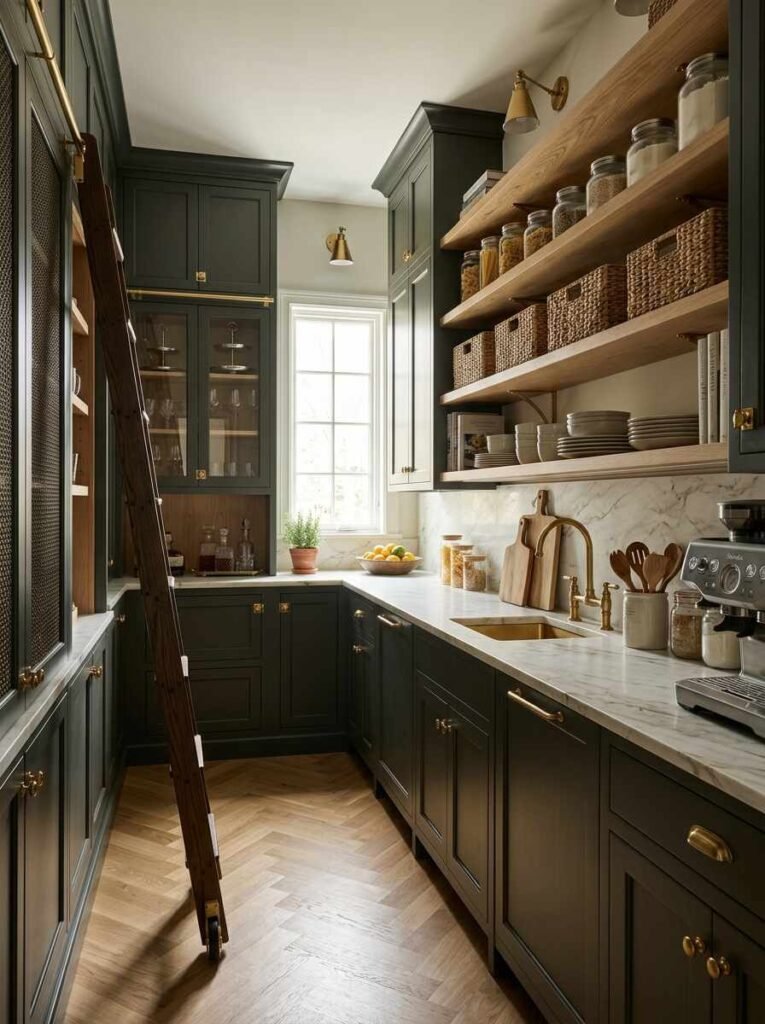
A dedicated walk-in or butler’s pantry keeps prep work, food storage, and loud appliances out of the main kitchen. Equipping this secondary space with extra counter space, a prep sink, and open shelving creates a practical staging zone for hosting.
Matching the pantry joinery, stone, and hardware to your main kitchen maintains design continuity throughout your home.
How to Make a Kitchen Look More Luxurious
- Prioritize Proportion and Scale: Ensure islands, light fixtures, and hoods match the physical volume of the room to avoid overcrowded or sparse layouts.
- Coordinate Materials: Pair contrasting textures, such as matte plaster, veined stone, and warm timber, rather than matching every finish identically.
- Control Your Color Palette: Limit your primary scheme to two or three harmonizing tones to cultivate a calm visual flow.
- Layer Your Lighting: Combine ambient recessed ceiling lights, targeted task under-cabinet strips, and decorative pendants on dimmable zones.
- Keep Countertops Uncluttered: Store appliances in pull-out pantries or dedicated garages to maintain clean work surfaces.
- Invest in Tactile Details: Prioritize high-quality cabinet handles, smooth-closing drawer slides, and solid brass faucets that feel substantial during daily use.
Luxury Kitchen Design Mistakes to Avoid
- Overwhelming the Space With an Oversized Island: Selecting an island that blocks traffic flow creates frustration. Aim for about 42–48 inches of clearance where space allows. Adjust the layout to suit the kitchen size, appliance doors, and number of people using the space.
- Combining Too Many Competing Materials: Mixing multiple dramatic stone patterns, metal finishes, and bold cabinet colors causes visual fatigue. Let one key material lead.
- Ignoring Workflow and Ergonomics: Placing the sink, refrigerator, and cooktop too far apart hinders prep efficiency. Always design for everyday usability.
- Using Inadequate Task Lighting: Relying solely on overhead recessed lights creates harsh shadows over prep areas. Always install under-cabinet task lighting.
- Selecting Finishes Without Considering Maintenance: Placing high-maintenance porous stone in heavy-use family zones without proper sealing leads to premature staining.
- Overusing Open Shelving: Replacing all upper cabinets with open shelves creates dusting demands and exposes everyday clutter. Use open shelving with restraint.
- Ignoring Natural Light Directions: Dark cabinet colors can make a kitchen with limited natural light feel smaller or darker. Test paint samples in your own space and check them in different lighting conditions. Test paint swatches in varying daylight conditions.
- Prioritizing Aesthetics Over Functionality: Choosing shallow drawers or awkward corner cabinets simply for external symmetry compromises long-term utility.
Frequently Asked Questions About Luxury Kitchens
What Makes a Kitchen Look Luxurious?
A luxury kitchen is distinguished by custom cabinetry fitting, high-performance natural materials, cohesive color palettes, layered lighting, and concealed clutter storage systems.
What Colors Are Best for a Luxury Kitchen?
Warm neutrals such as cream, taupe, mushroom, and warm gray create an enduring foundation. Deep tones like charcoal, dark olive, and navy provide rich contrast when balanced with natural timber and stone.
Is a Kitchen Island Necessary for a Luxury Kitchen?
While popular in open layouts, an island is not strictly mandatory. Compact luxury spaces often utilize custom wall-bound galley runs, banquette dining extensions, or moveable prep tables crafted from premium timber and marble.
Which Materials Are Commonly Used in Luxury Kitchens?
Common choices include marble, quartzite, travertine, oak, walnut, brass, and plaster finishes. Each material has different costs, care needs, and practical benefits, so choose options that suit your style and daily use.
How Can I Make My Kitchen Look Expensive on a Budget?
Focus on high-impact upgrades: replace builder-grade handles with solid brass hardware, install under-cabinet LED lighting, refresh the backsplash with simple, coordinated tiles or a slab finish that fits your budget.
How Do I Make a Modern Kitchen Feel Warm?
Add natural wood, warm neutral paint, textured flooring, and comfortable counter stools. Warm lighting around 2700K can create a cozy atmosphere, while task lighting helps keep work areas practical.
Conclusion
A beautiful kitchen should look elegant and work well for everyday life. Thoughtful cabinetry, attractive countertops, layered lighting, useful storage, and coordinated finishes can help create a space that feels both refined and welcoming.
These luxury kitchen ideas can help you choose designs that suit your home’s style, available space, and daily needs. Whether you are planning a full renovation or making a few updates, focus on quality, comfort, and a balanced mix of materials. The best kitchen is one that looks beautiful and makes everyday tasks easier.