
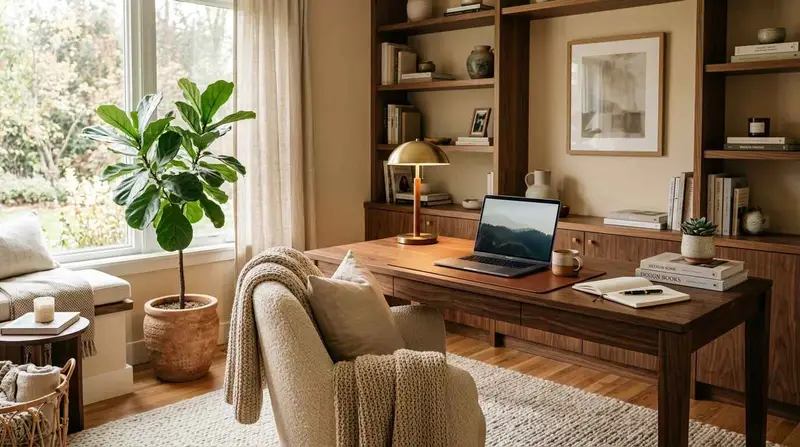
Step into your home office for a moment. Does it inspire focus and ease, or does it feel like a cold, impersonal cubicle tucked into a spare room? Many of us spend long hours at our desks, yet we treat our workspaces like purely utility-driven environments. Stark white walls, sharp metal frames, and harsh overhead fixtures might check the box for basic functionality, but they rarely create an environment where you want to spend your day.
Your workspace should feel like a natural, welcoming extension of your home. By blending natural wood, soft layered textiles, and warm lighting, you can create a room that balances practical work needs with residential comfort. Whether you have an entire room dedicated to work or a small office carved into a quiet alcove, these 19 cozy home office ideas will help you create a warm, refined workspace that feels comfortable and intentional.
1. Choose Warm Wood Furniture
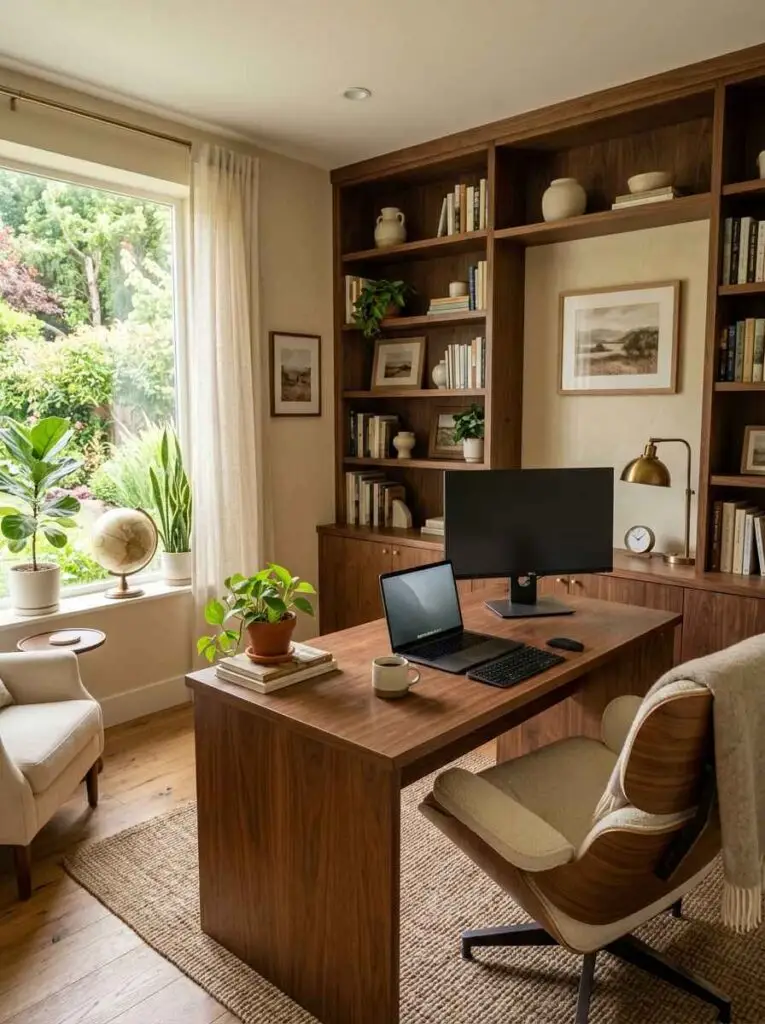
Solid wood brings natural grain variations, rich texture, and a sense of permanence that synthetic laminates lack. Selecting a desk crafted from walnut, warm oak, or deep cherry anchors the entire room and establishes a grounded aesthetic.
To implement this design choice, choose a main desk that fits the scale of your space. For a small home office, look for a desk with slender, clean-lined legs so it provides structural weight without blocking floor space.
Complement the main desk with matching floating shelves or a low wooden credenza to create visual consistency across your storage furniture.
2. Layer Warm Ambient Lighting
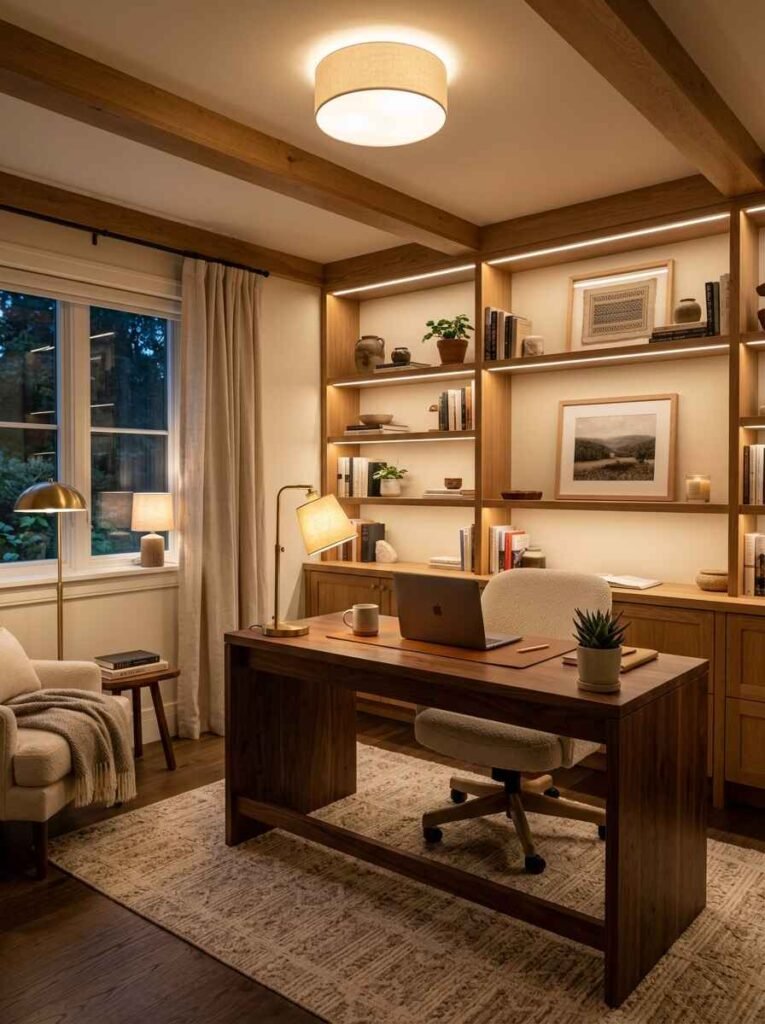
Effective home office lighting relies on balance rather than brightness alone. Combining built-in bookcase lighting, a classic desk lamp, a floor lamp, and a soft ceiling fixture creates depth and eliminates dark corners across the workspace.
Instead of relying on a single overhead fixture, install light sources at varying heights throughout the room. Place a dedicated task lamp directly on your writing surface, position a floor lamp beside a reading chair, and run subtle LED strip lighting along open shelving.
Selecting warm-white light bulbs rated around 2700K maintains a consistent, gentle glow throughout the day.
3. Position the Desk Near Natural Light
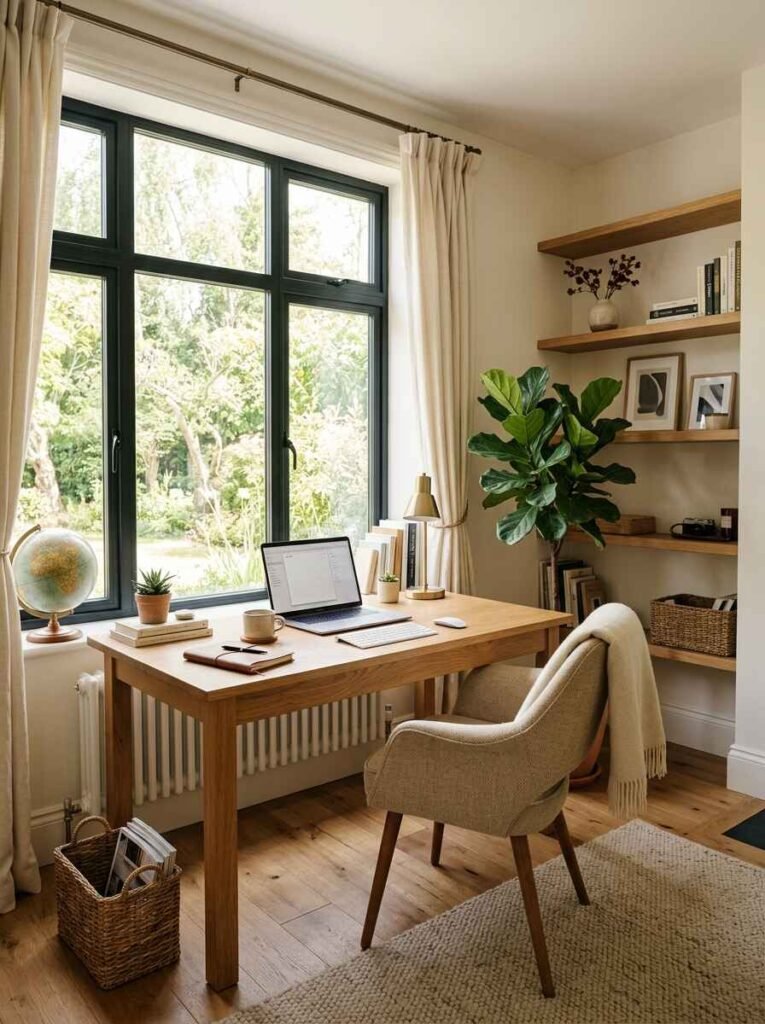
Placing a workspace near a window connects your routine to the outdoors and makes full use of natural daytime illumination. Setting a light oak desk directly facing or adjacent to a window keeps the layout feeling open and connected to the surrounding environment.
To make this arrangement comfortable throughout the day, pay close attention to window orientation. Position your desk perpendicular to the glass if direct sun causes glare on your computer screen.
Adding sheer linen drapes or adjustable shades allows you to filter bright sunlight while maintaining a soft, diffused light across your workspace.
If you want to take your workspace beyond cozy styling, explore our guide to luxury home office design for ideas on premium materials, elegant furniture, and refined finishes.
4. Decorate with Layered Textiles
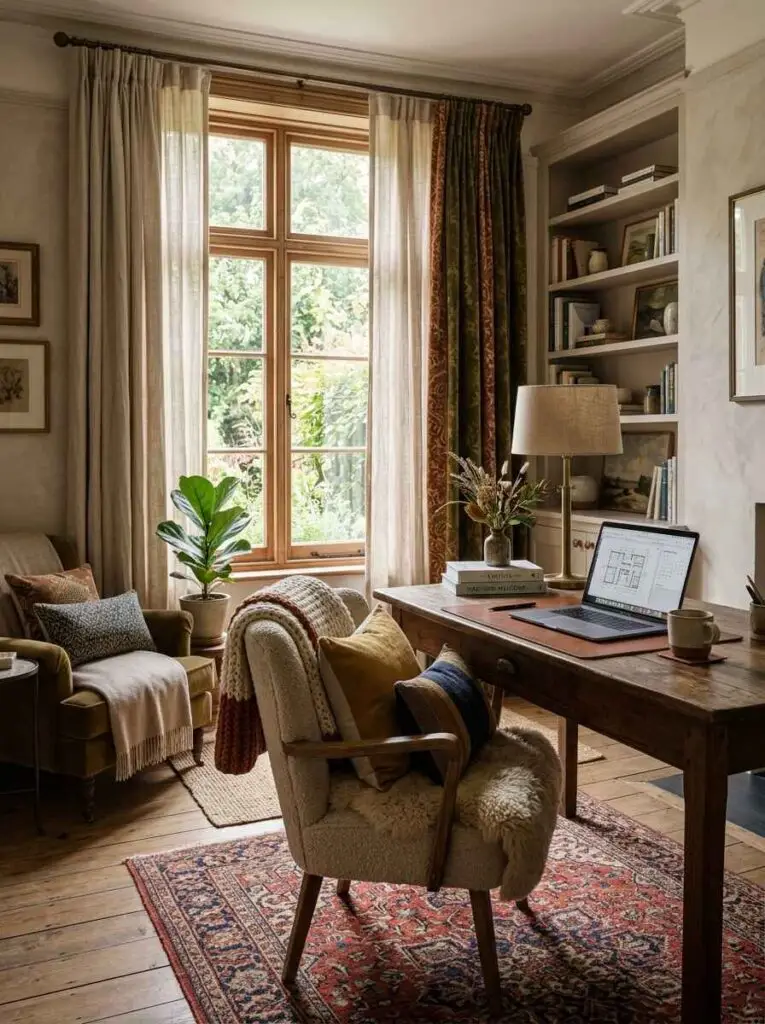
Incorporating various fabric textures softens the hard surfaces typically found in an office, such as drywall, glass, and timber. A patterned rug, an upholstered desk chair, a knit throw blanket, and tailored window drapes work together to create an inviting interior.
Start building your textile layers from the floor up. Lay a flatweave runner or vintage-style patterned rug under the desk area to cushion the floor and soften room acoustics.
Drape a tactile wool or cashmere blanket over your desk chair, and frame your windows with heavy linen or velvet curtains to complete the look.
5. Add Comfortable Upholstered Seating
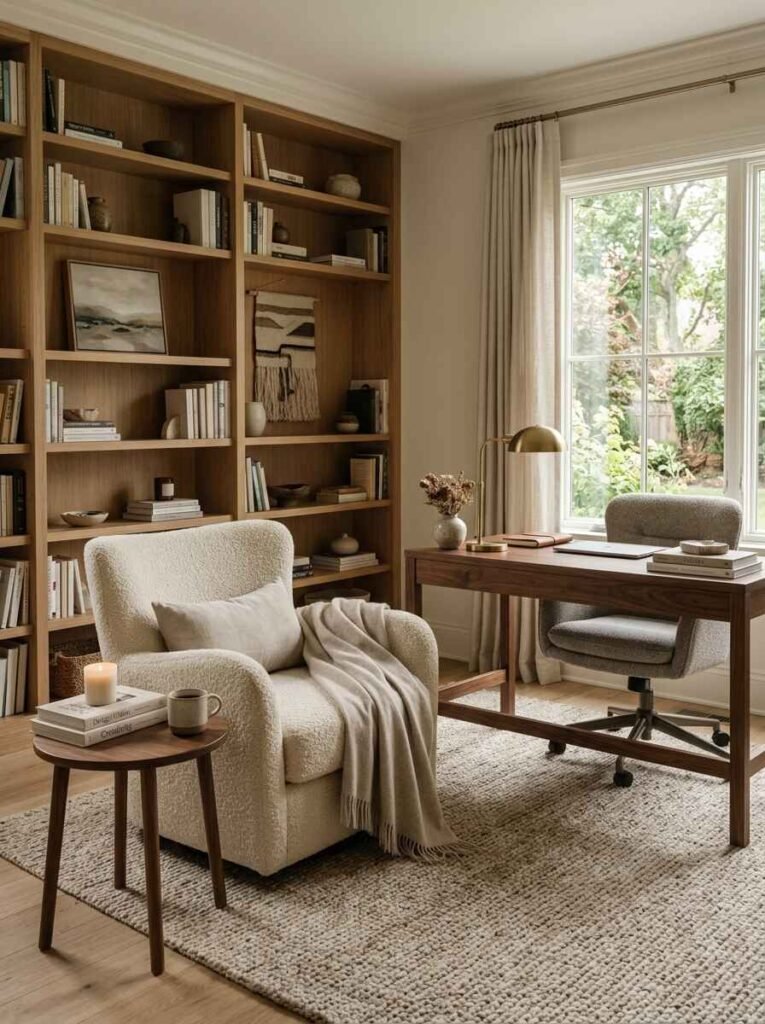
Replacing hard plastic or mesh office chairs with tailored upholstery brings an immediate feeling of residential comfort to a work environment. Seating finished in textured bouclé, linen, or supple leather bridges the gap between ergonomic support and refined interior design.
Select a desk chair with supportive cushioning wrapped in a durable, textured fabric. If space permits, incorporate secondary seating, such as a compact armchair or a small velvet settee in an underutilized corner.
This provides a dedicated spot for reviewing documents or taking phone calls away from your main computer setup.
6. Create a Soft Neutral Color Palette
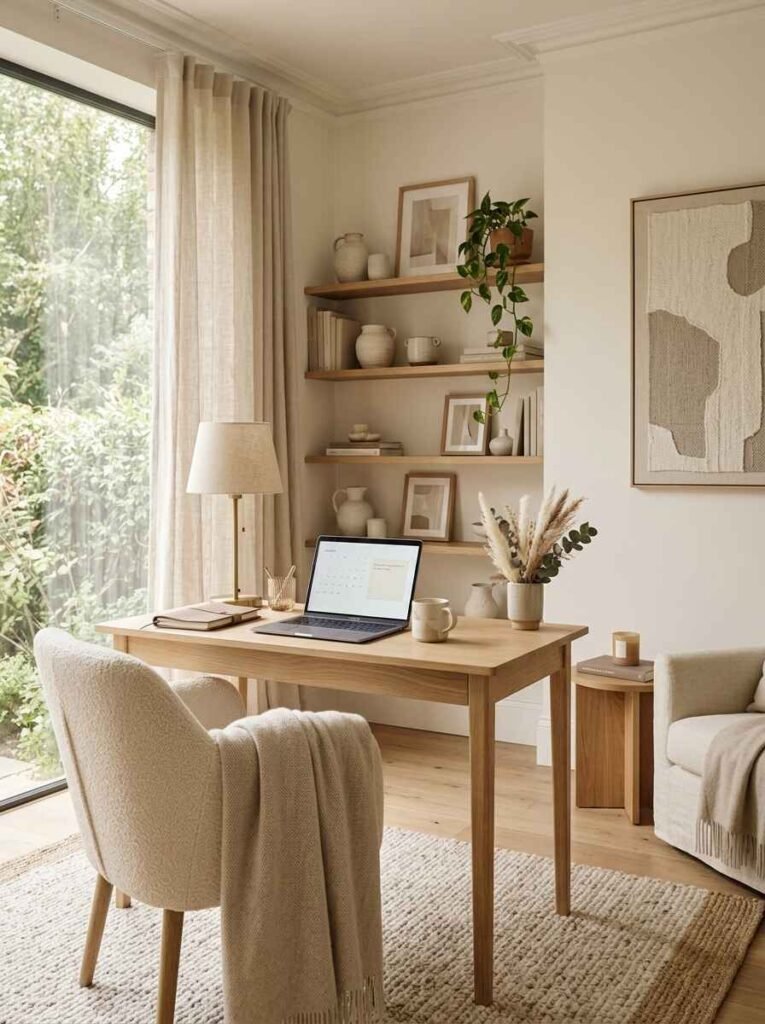
A muted color palette establishes a calm backdrop that lets architectural details and natural materials take center stage. Shades of warm cream, taupe, mushroom, and greige create a seamless visual flow across walls and furniture.
Avoid stark, bright whites that can feel overly clinical. Instead, apply subtle neutral tones to your walls, large rug surfaces, and primary storage cabinets.
Layering slightly varied tones of the same color family throughout the room keeps the design cohesive and visually restful.
7. Use Soft Window Treatments
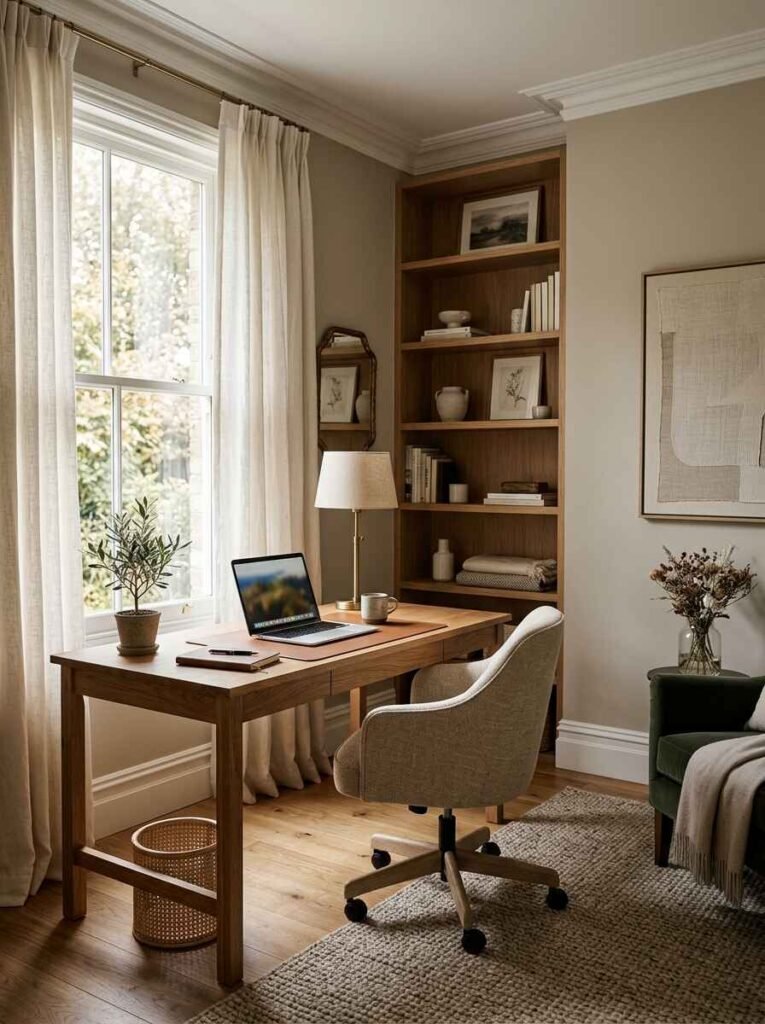
Floor-length linen drapery panels frame window openings, adding vertical texture and drawing the eye toward the ceiling height of the room. High-quality fabrics complete the window trim and soften the transition between wall and glass.
Mount curtain rods close to the ceiling molding and let the fabric drop down to meet the floor.
For precise control over light levels throughout the day, pair outer drapery panels with custom woven wood Roman shades fitted neatly inside the window frame.
8. Bring in Indoor Plants
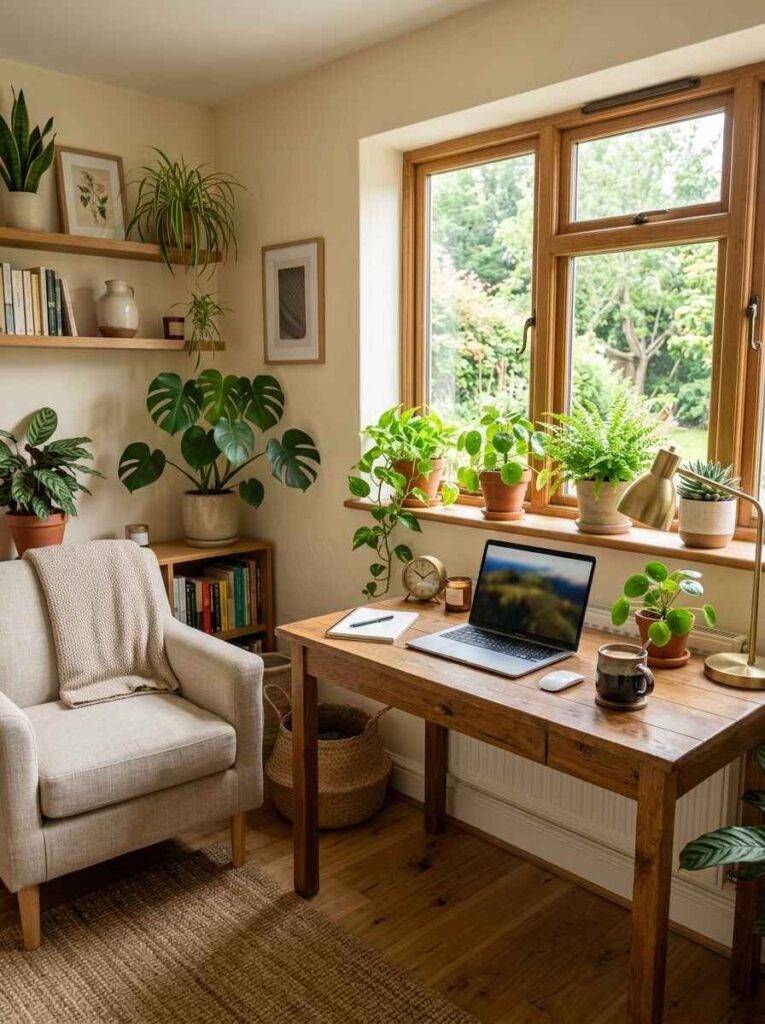
Indoor greenery introduces organic shapes, natural movement, and subtle color into an office space. Plants soften the straight lines of shelving, desks, and storage units.
Select indoor varieties that suit the natural light levels of your room. Position trailing plants like pothos on high shelves, place a potted fiddle leaf fig or snake plant in a floor corner, and keep a small terracotta pot with a succulent on your desk.
Using stoneware, ceramic, or woven pots maintains an organic finish across your plant displays.
9. Add a Soft Area Rug
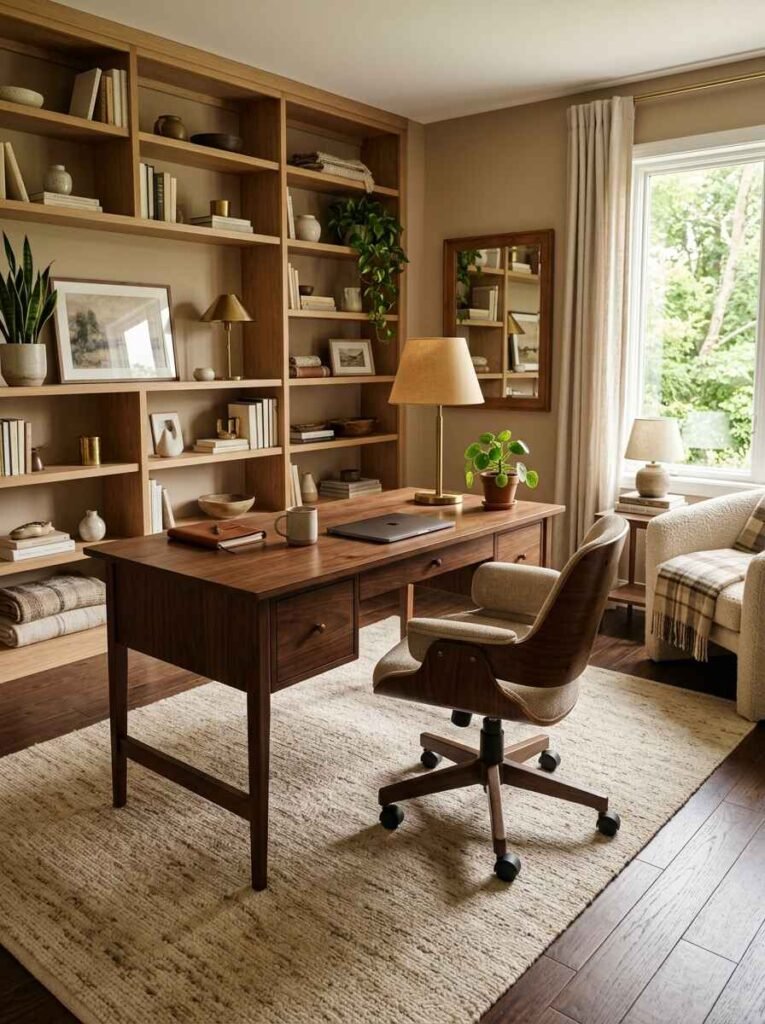
An area rug anchors the central furniture arrangement, defining the main workspace while adding warmth underfoot, particularly on hardwood or tile flooring.
Select a thick wool rug, a muted oriental pattern, or a low-pile jute rug that incorporates the primary accent colors of your room.
Make sure the rug is sized generously so that all legs of your desk rest on the carpet, allowing your desk chair to roll back without catching on the rug’s outer border.
10. Incorporate Personal Decor
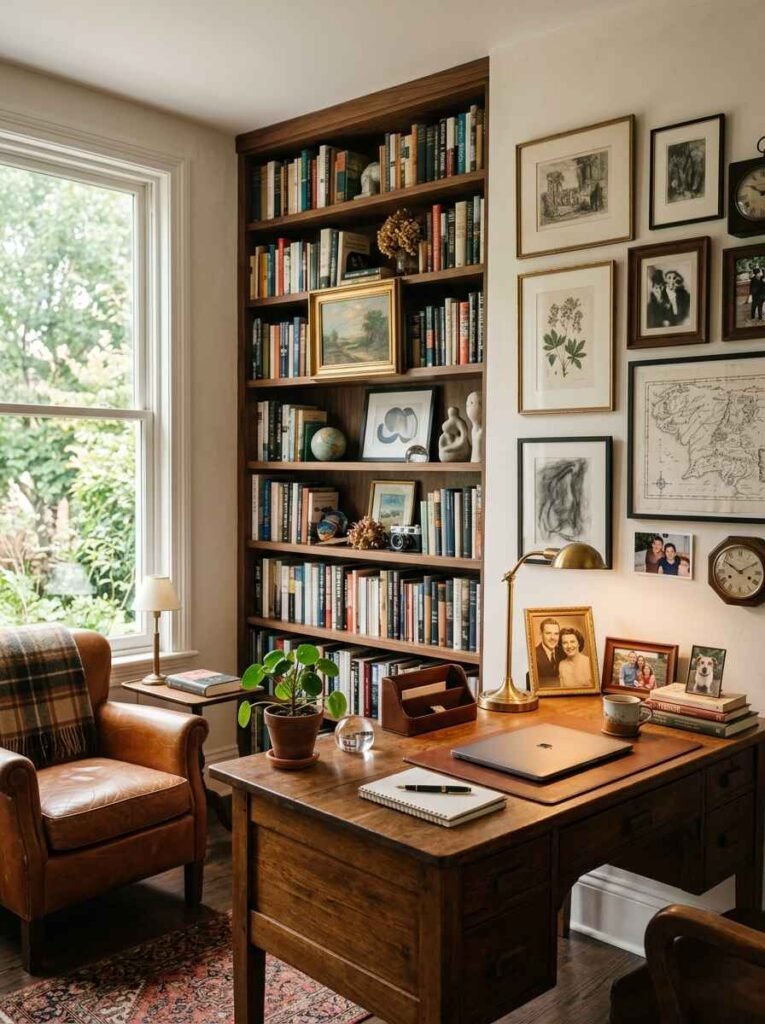
Displaying curated personal objects transforms a basic study into a space that reflects your background and interests. Framed photography, leather accessories, and vintage hardcover books bring character to open surfaces.
Integrate personal items intentionally rather than overcrowding your work area. Style bookshelves and desk surfaces with framed travel photos, heirloom brass objects, vintage bookends, or small art pieces.
Organizing smaller decorative items on wood or leather trays prevents your workspace from feeling disorganized.
11. Add Warm Metallic Accents
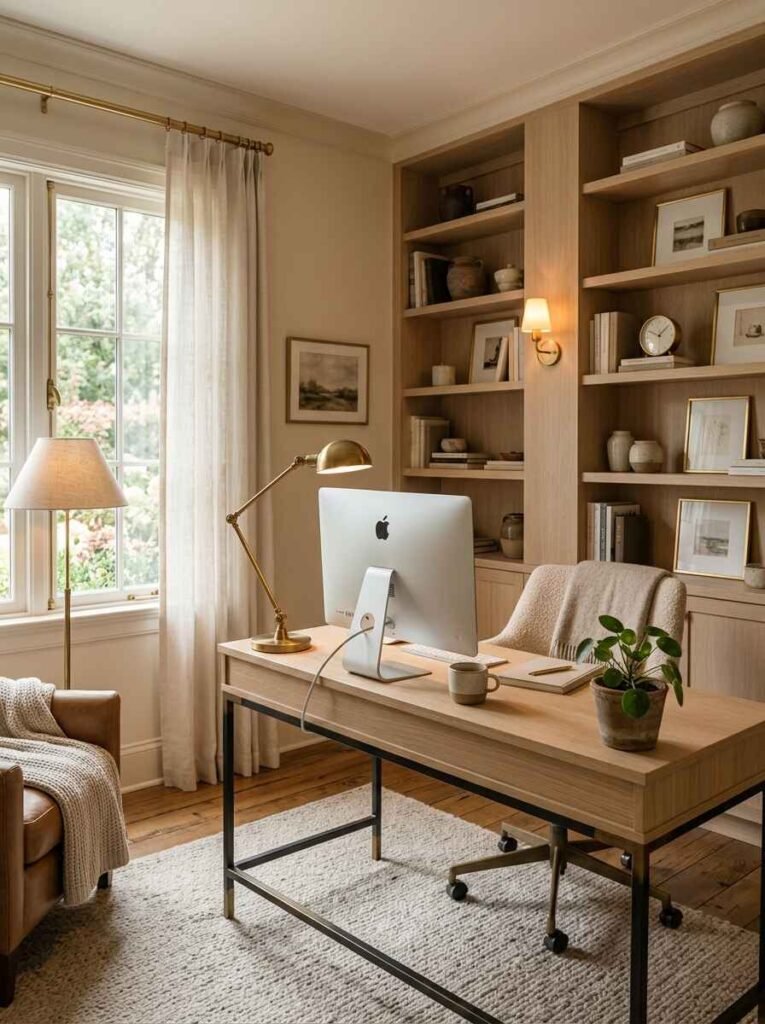
Warm metal hardware brings structure and subtle detail to custom cabinetry, lighting fixtures, and decorative picture frames. Finishing details in brushed brass, warm copper, or antique bronze contrast nicely against wood and soft fabrics.
Swap standard hardware pull handles for warm metallic options across your desk drawers and storage cabinets.
Coordinate these details with matching picture frames, curtain hardware, and table lamps to maintain a consistent finish throughout the space.
12. Create a Cozy Reading Corner
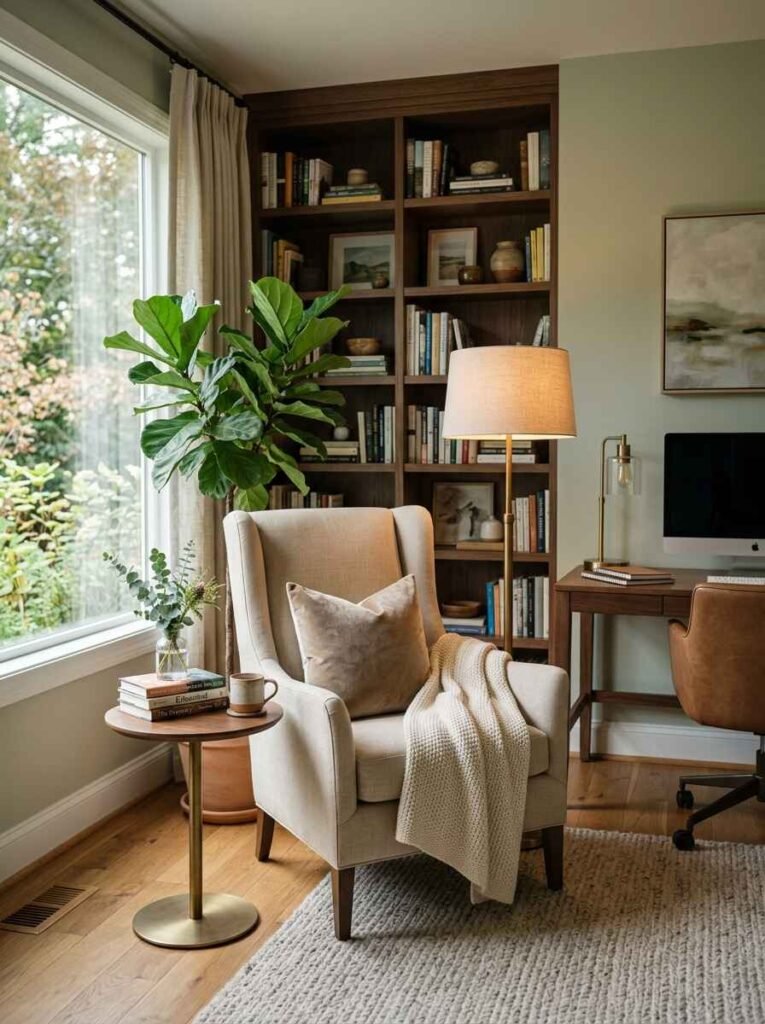
Setting up a secondary seating area provides a designated place to step away from screen work while remaining inside your workspace. A comfortable armchair paired with a reading lamp forms a functional layout nook.
Position a deep leather or fabric wingback chair in a quiet corner of the room.
Pair it with a small wooden side table, a floor lamp with an adjustable shade, and a small accent rug to clearly delineate the reading area from your main computer desk.
13. Use a Desk with Rounded Edges
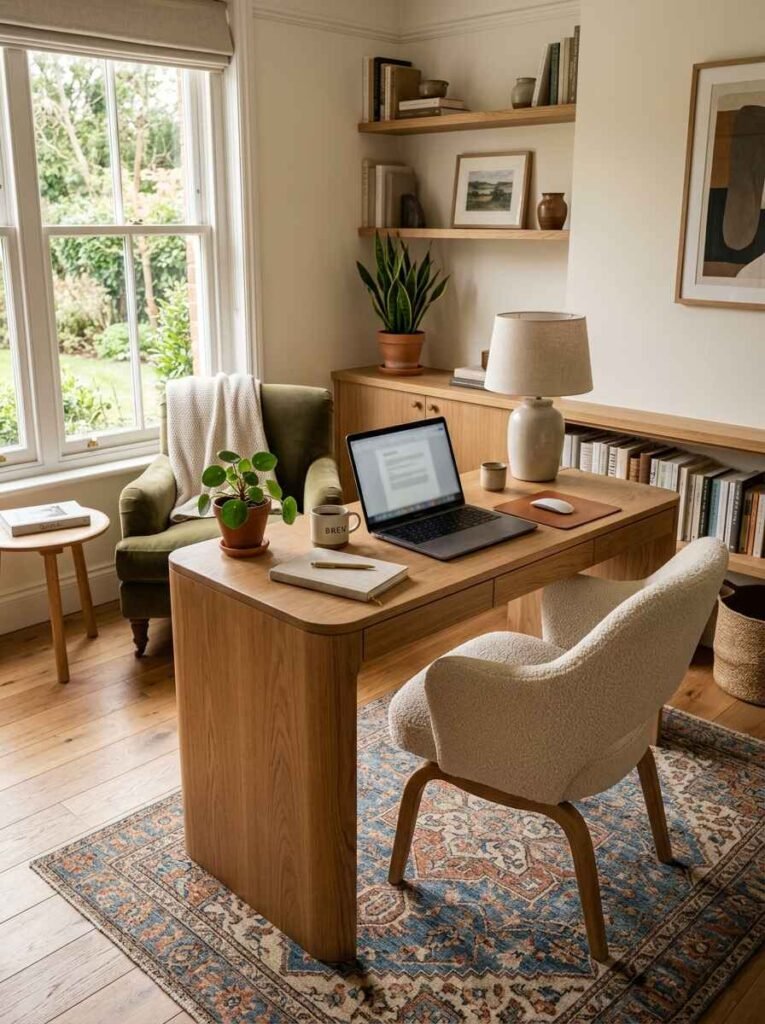
Desks designed with smooth, rounded corners visually soften room transitions and improve movement around the main workspace, particularly in tighter room layouts.
Look for writing tables crafted with soft oval tops, curved corners, or rounded cylindrical wooden legs.
The gentler silhouette eases visual weight, making a small home office layout feel less rigid and more spacious.
14. Keep Open Shelves Carefully Styled
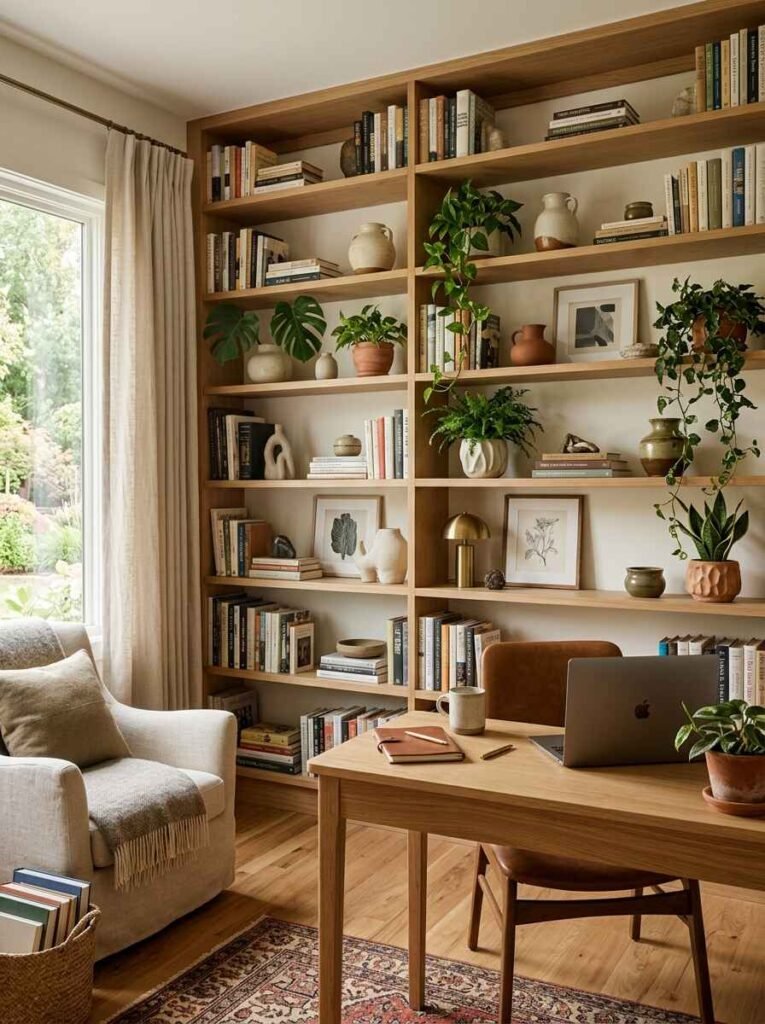
Open shelving provides practical storage space while offering a venue to display art and objects. Arranging books, ceramic vessels, and framed prints thoughtfully keeps the display organized.
Style shelves by alternating between horizontal book stacks and vertical rows.
Intersperse ceramic vases, stone bowls, or small framed artwork, ensuring you leave open space around each grouping to maintain an uncluttered visual balance.
15. Create a Fireplace-Inspired Focal Point
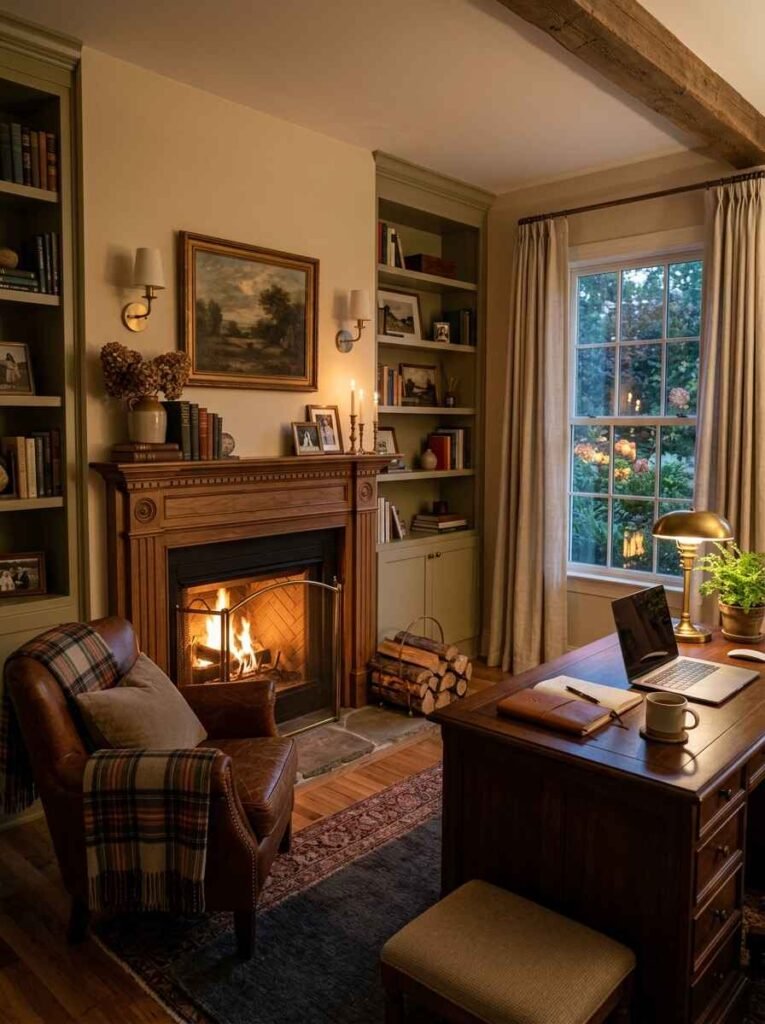
Establishing a central focal point gives an office layout architectural structure. A traditional wooden fireplace surround with a detailed mantelpiece creates an immediate anchor for the rest of the room’s furnishings.
If your space lacks a working fireplace, consider mounting a vintage or custom wood mantelpiece against your primary wall.
Fill the interior space with stacked birch logs, pillar candles on iron stands, or stoneware pots to create a grounded visual anchor.
16. Use Soft, Textured Wall Finishes
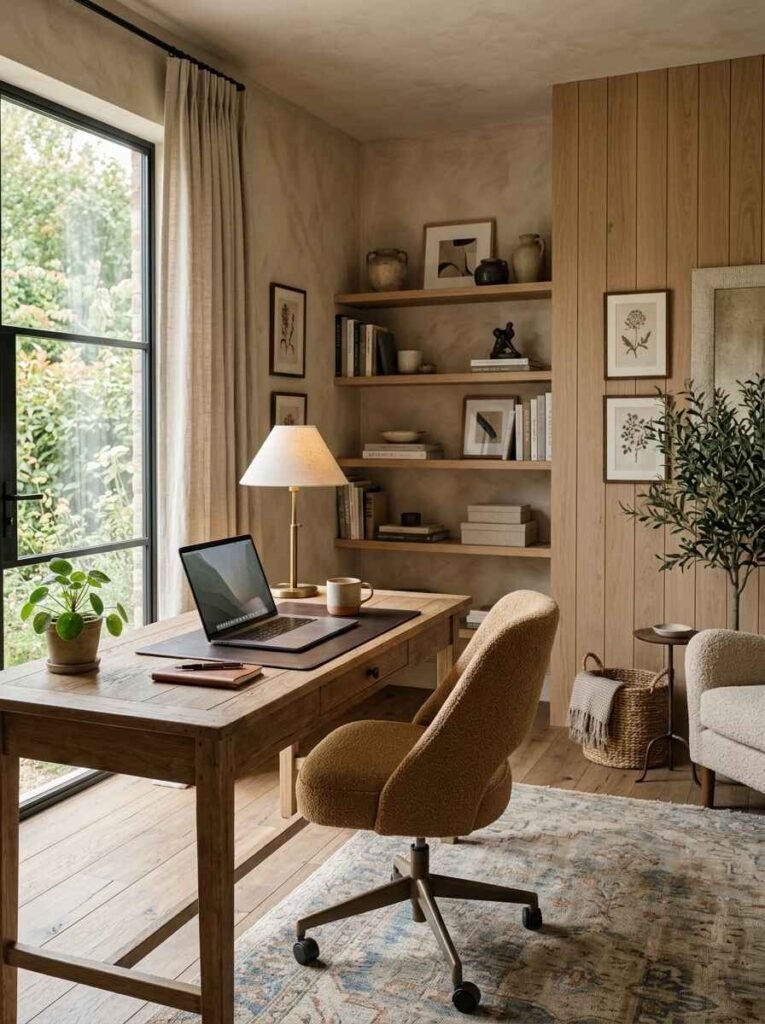
Tactile wall finishes diffuse light gently across vertical surfaces, adding visual depth and subtle movement to a workspace backdrop.
Move beyond flat paint finishes by exploring lime wash, Roman clay, or subtle plaster wall applications.
Alternatively, installing vertical wood slat paneling or board-and-batten millwork adds texture while improving the acoustic qualities of the room.
17. Add a Gallery Wall
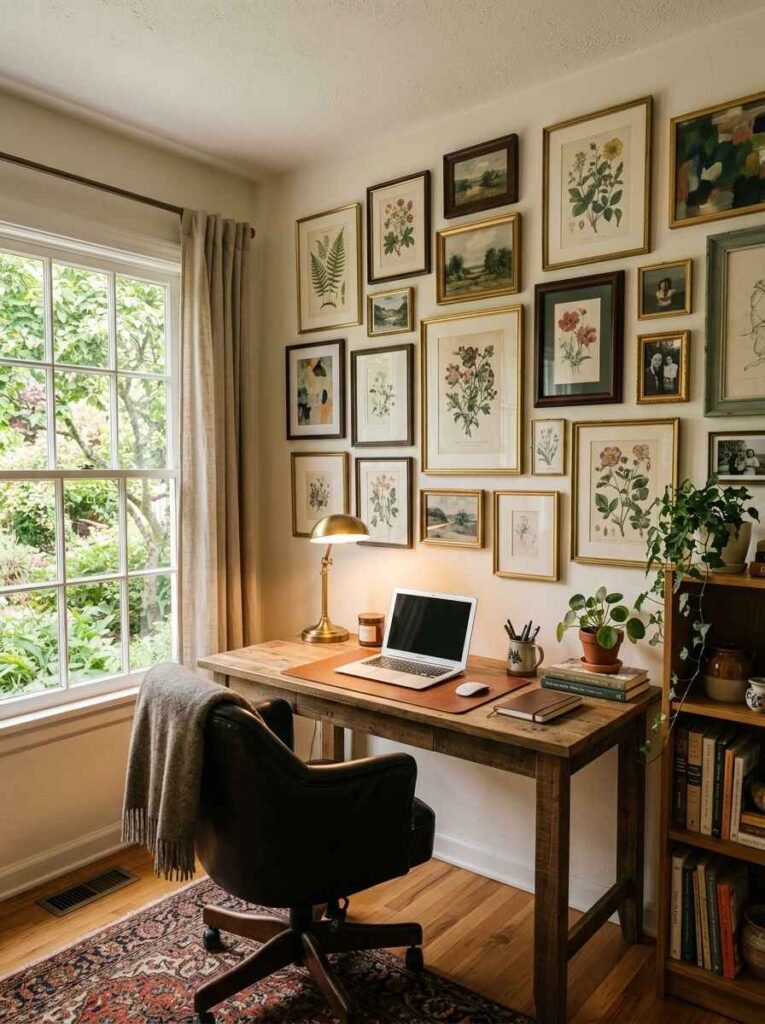
A gallery wall introduces artwork, architectural drawings, and photography to expansive, empty wall surfaces. Arranging framed prints systematically behind a main desk adds interest without cluttering floor space.
Select a cohesive series of botanical prints, landscape photography, or abstract sketches.
Maintain consistent spacing between frames—typically two to three inches apart—and use uniform frames for an orderly, classic gallery aesthetic.
18. Create a Cozy Office Nook
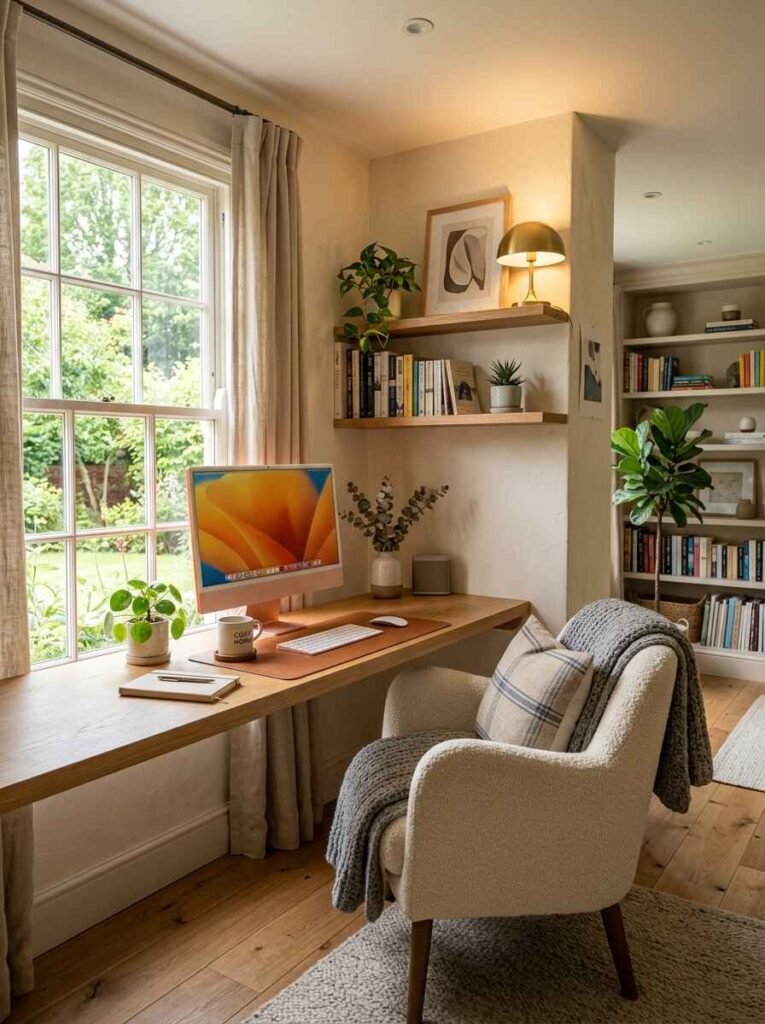
Converting an alcove, a wide closet, or an under-stair area into a built-in office nook is an efficient design approach for homes with limited floor space.
Install a custom floating desk surface wall-to-wall inside the alcove, and add matching floating shelves above for vertical storage.
Painting the interior walls of the nook a warm tone creates an enclosed, dedicated work space within a larger multipurpose room.
Working with limited space? Explore our guide to small home office ideas for practical layouts, space-saving desks, and smart storage solutions.
19. Keep the Workspace Calm and Clutter-Free
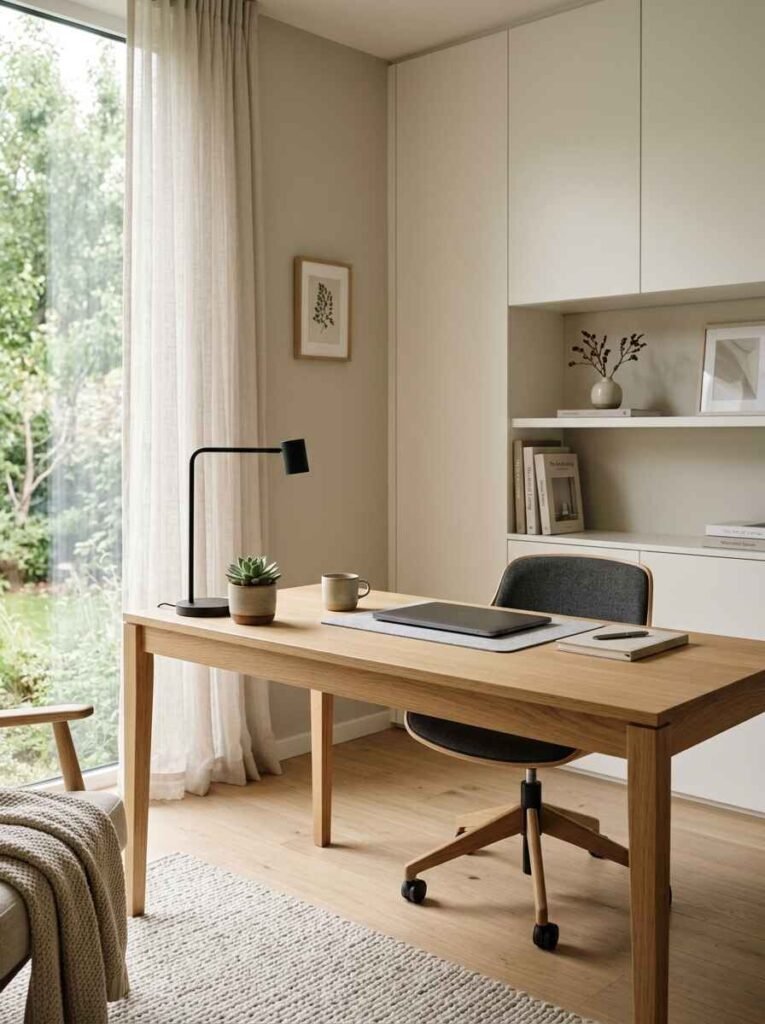
Maintaining clear surfaces is essential to preserving an inviting workspace atmosphere. Built-in storage cabinets, desk drawers, and simple desk organizers keep daily work items stored out of view.
Incorporate closed storage furniture, such as credenzas, filing drawers, or woven baskets, to contain paperwork and office supplies.
Use under-desk cable routing trays and leather desktop mats to hide cords and maintain clean, organized work surfaces.
Design Mistakes to Avoid in a Cozy Home Office
Achieving a balanced home office requires thoughtful editing. Avoid these common layout and styling mistakes when planning your space:
- Overcrowding the Floor Plan: Packing in overly bulky furniture or too many decorative accessories limits physical movement and makes the room feel chaotic. Ensure you leave open space around primary furniture pieces.
- Relying on Cool-Tone Lighting: Using cool-white or blue-toned light bulbs creates a harsh, commercial atmosphere. Stick with warm-white light bulbs rated between 2700K and 3000K across all fixtures.
- Neglecting Wire Management: Exposed power strips and tangled cords draw attention away from quality furniture finishes and soft materials. Route all cables neatly along desk legs or inside concealed channels.
- Choosing Appearance Over Ergonomic Support: Selecting a chair purely based on aesthetics without considering back support or seat height can cause physical discomfort. Make sure your seating offers adequate support for your work routine.
Frequently Asked Questions
How can I make a small home office cozy without clutter?
Utilize vertical wall space with floating wood shelves and keep your main desk surface clear. Choose a slim-profile desk and a neutral color scheme to keep the room feeling open.
What are the best wall colors for a warm home office?
Warm beige, soft cream, taupe, and light mushroom work exceptionally well. These shades absorb and diffuse light softly, creating a versatile backdrop for natural wood furniture.
How do I balance cozy design with proper desk ergonomics?
Select a desk chair upholstered in textured fabric or leather that offers proper height and lumbar adjustments. Position your computer monitor at eye level and use a warm desk lamp for targeted illumination.
What is an easy budget upgrade for a cold office space?
Replace bright overhead light bulbs with warm-white options and add a soft area rug under your desk. Introducing a desk lamp and a potted plant instantly warms up the room.
How can I cozy up an office that lacks natural sunlight?
Layer multiple warm light sources by combining desk lamps, floor lamps, and LED shelf lighting. Use light neutral wall colors and mirrors to bounce light through the room.
Can dark paint colors still feel cozy in an office space?
Yes, deep tones like dark olive, navy, or charcoal create an intimate, traditional library atmosphere. Pair dark walls with warm wood furniture, soft warm lighting, and metallic hardware to keep the space balanced.
Conclusion
Creating a cozy home office is about finding the right balance between comfort, functionality, and personal style. Warm wood, layered textiles, soft lighting, natural greenery, and carefully selected decor can transform an ordinary workspace into a room that feels genuinely connected to the rest of your home.
The most effective approach is not to add more of everything. Instead, focus on a few strong design choices: choose furniture with warmth and appropriate scale, layer your lighting, introduce tactile materials, and keep everyday clutter under control. With these 19 cozy home office ideas, you can create a workspace that feels warm, refined, and comfortable enough to enjoy every day.
1 thought on “19 Cozy Home Office Ideas for a Warm, Inviting Workspace”
Comments are closed.