
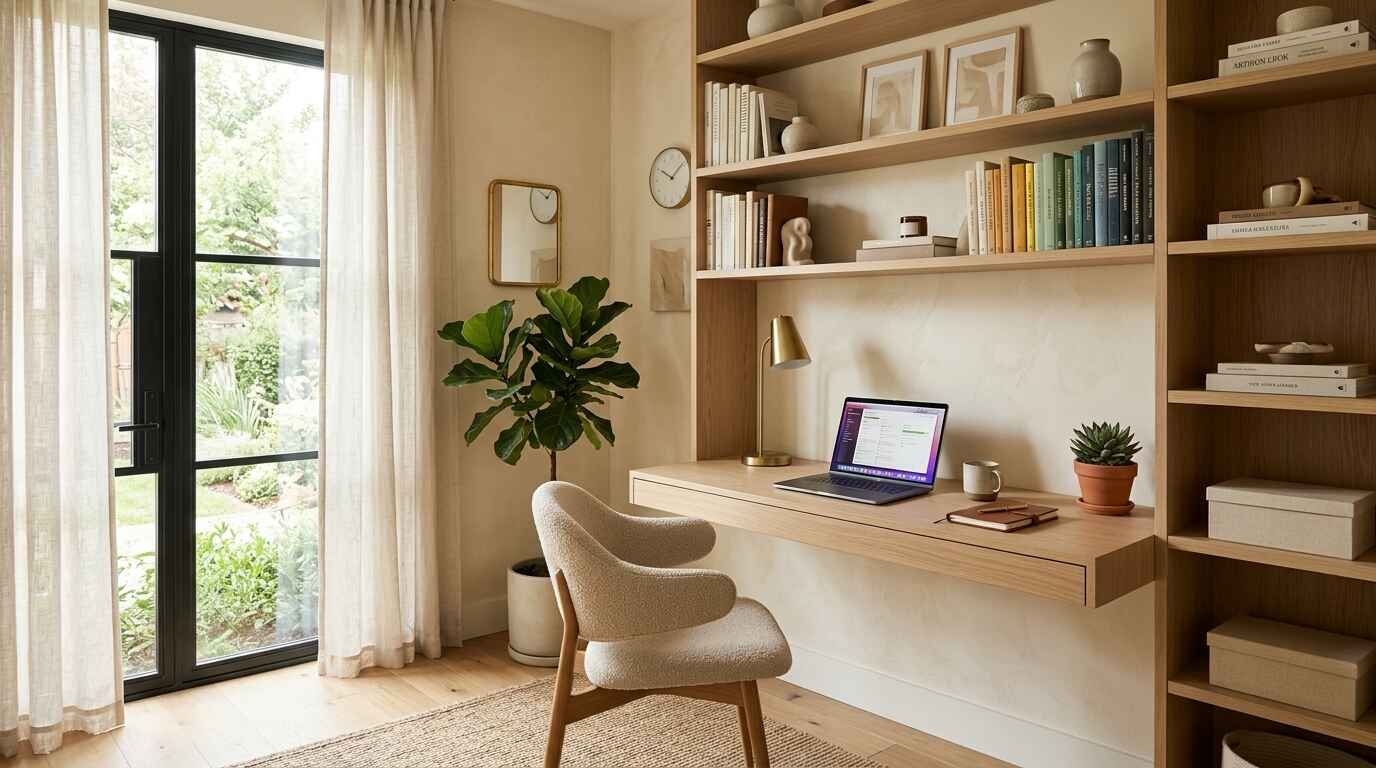
Have you ever sat down to work at your kitchen table, surrounded by daily clutter, and wished you had a quiet place of your own to focus? I know that feeling all too well. When I first tried setting up a dedicated workspace in a tight apartment, it felt almost impossible to balance comfort, style, and productivity without making the room feel squeezed.
The secret isn’t having more square footage; it is all about smart visual planning and clever layouts. In this guide, I’m sharing 13 practical small home office ideas that can make a compact workspace feel more open, organized, and comfortable. We will tackle common layout struggles by smartly choosing your desk, maximizing vertical storage, balancing natural light, and keeping clutter out of sight.
If you want to explore high-end finishes or elevated decor further down the road, you can also check out my complete guide to designing a luxury home office for extra design inspiration.
13 Small Home Office Ideas
1. Use a Wall-Mounted Desk
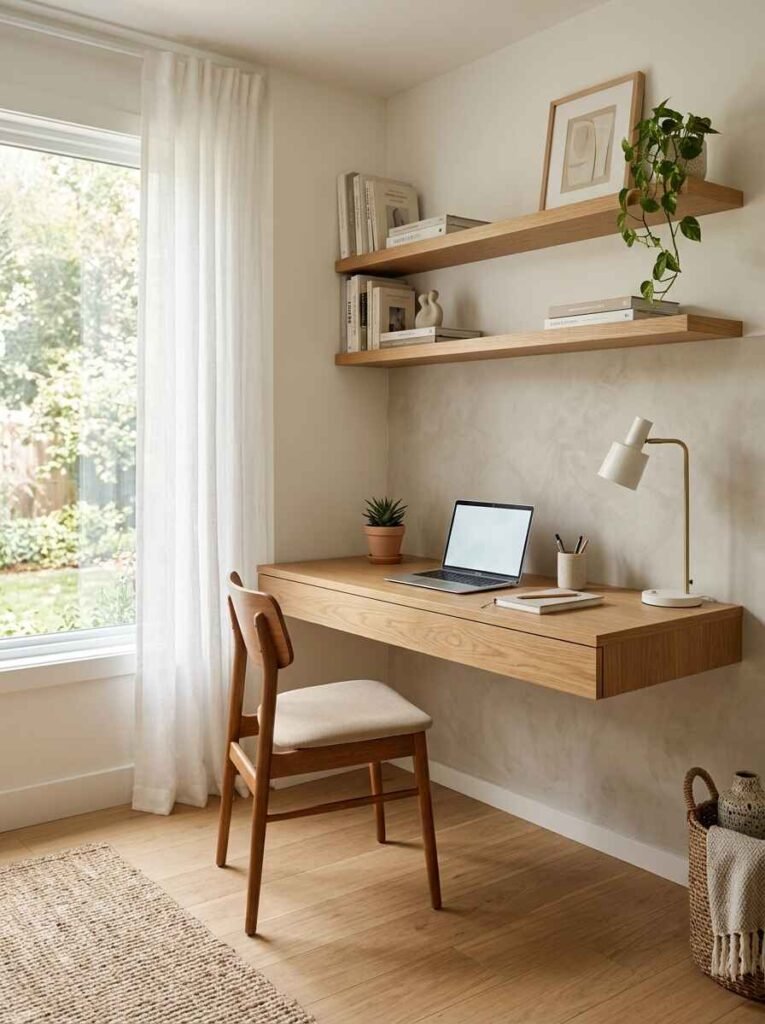
When floor space is tight, taking your furniture off the ground makes an immediate difference. A floating, wall-mounted desk keeps your room looking open and light while giving you a solid work surface for your laptop and daily essentials. By eliminating bulky wooden legs entirely, you gain open room underneath for comfortable seating or neat storage baskets. I love how this approach keeps sightlines totally open across the floorboards. It creates an instant impression of an expansive room while maintaining a permanent, reliable workstation for your daily projects.
- Ideal Application: Perfect for studio apartments, bedroom corners, or narrow hallways where traditional desk legs block natural foot traffic.
2. Make the Most of Vertical Storage
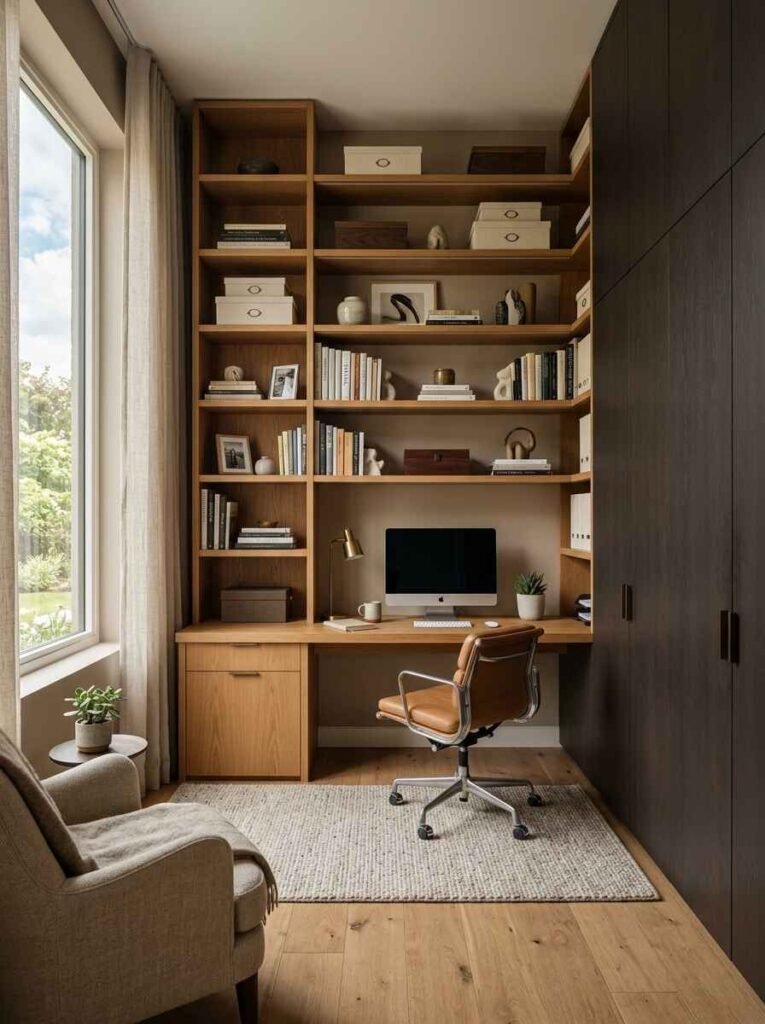
If you cannot expand outward, build upward. Custom floor-to-ceiling shelving turns unused wall space into a high-capacity storage zone, allowing you to keep your actual desk area completely clean and functional. Storing your reference books, document binders, and office supplies high on the wall protects your desktop surface from daily visual overload. I find that extending open shelves all the way to the ceiling draws the eye upward, which cleverly tricks the mind into sensing higher ceilings and a far grander room layout than you actually have.
- Key Advantage: Maximizes open floor space by shifting heavy file cabinets onto tall wall structures.
3. Choose a Slimline Desk
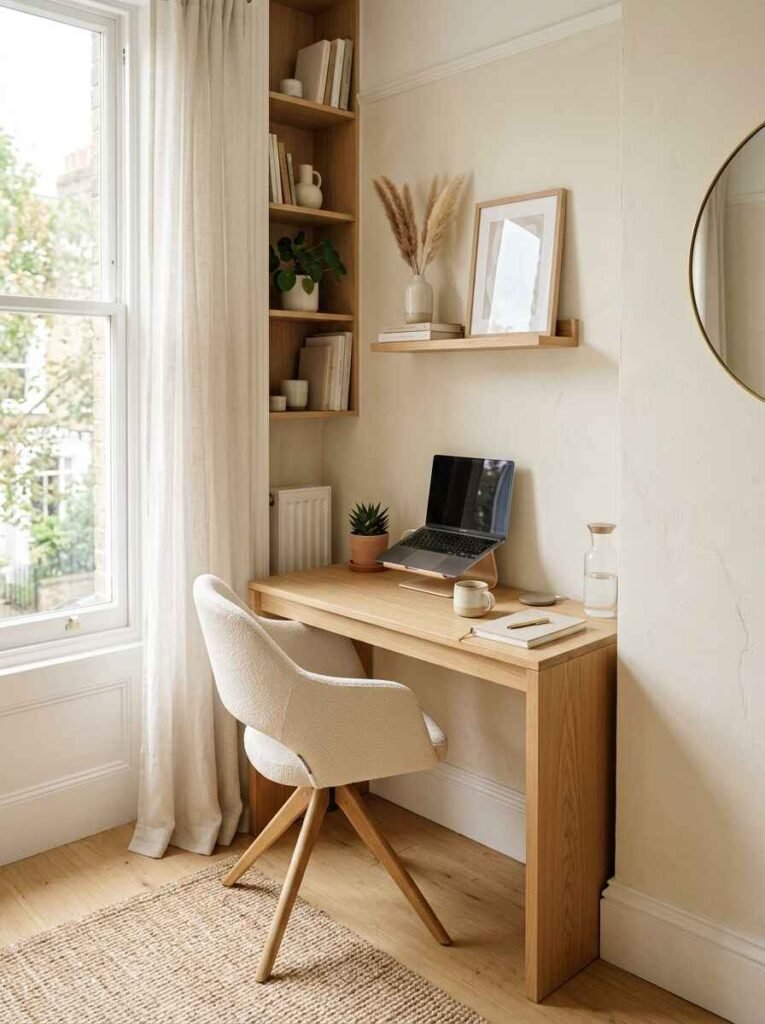
An oversized executive desk can quickly overwhelm a compact room. A slimline desk offers just enough depth for your computer, keyboard, and coffee mug without eating up precious interior floor space. Choosing streamlined furniture with a narrow profile keeps your room feeling light, airy, and tailored. When I styled a tight room recently, switching out a standard deep desk for a slim workstation instantly doubled the walkable floor space. It delivers everything you need for daily tasks while keeping the overall room layout completely balanced and open.
- Design Focus: Prioritizes sleek, scaled-down furniture proportions over massive tabletop surfaces.
4. Turn an Empty Corner into a Workspace
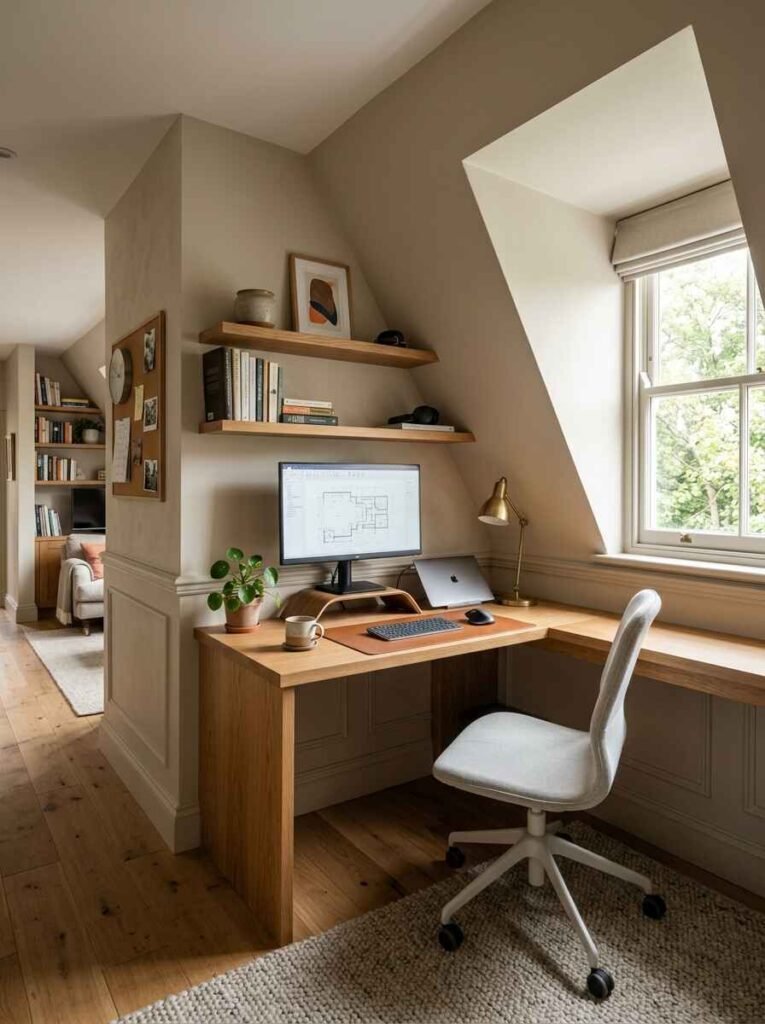
Awkward layout angles and sloped attic ceilings are often left unused. Installing a custom L-shaped wooden desk into an empty corner turns dead space into an inspiring, cozy work hub. Wrapping your desk gently around a corner creates a dedicated zone that feels tucked away from the rest of the house. I especially like using built-in corner desks near windows because they capture indirect sunlight throughout the afternoon. This custom setup turns awkward, forgotten architecture into a tailored workspace that feels deliberate and private without requiring a whole separate room.
- Layout Secret: Converts forgotten room corners and low architectural angles into private productivity zones.
5. Add Floating Shelves Above the Desk
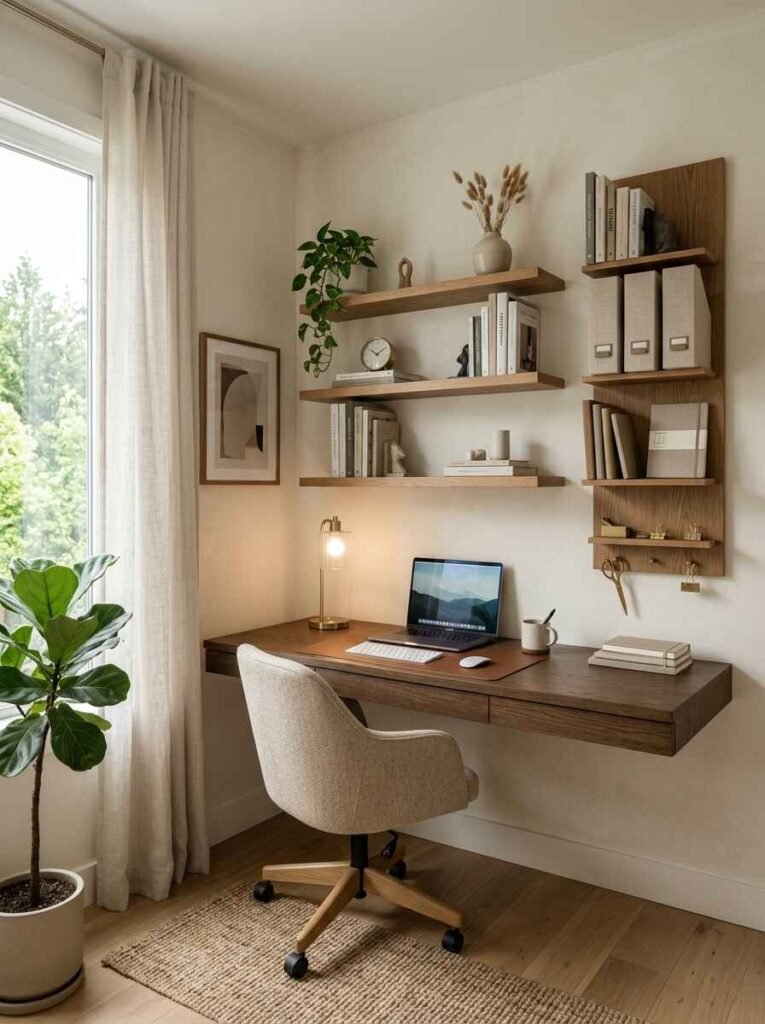
Vertical shelving above your desk keeps everyday tools within arm’s reach while keeping your desktop completely clear. Staggering your shelf heights allows room for taller items like binders or framed art. Hanging open shelves directly over your monitor uses prime wall space that often goes wasted. I like pairing warm wooden shelves with clean white walls to give the workstation a cozy, crafted feel. Keeping your desk surface bare gives you plenty of elbow room to write, sketch, or work comfortably on your computer without constant clutter.
- Organizational Strategy: Keeps daily working tools elevated and within reach while preserving an open desk surface.
6. Use Light Colors to Make the Office Feel Larger
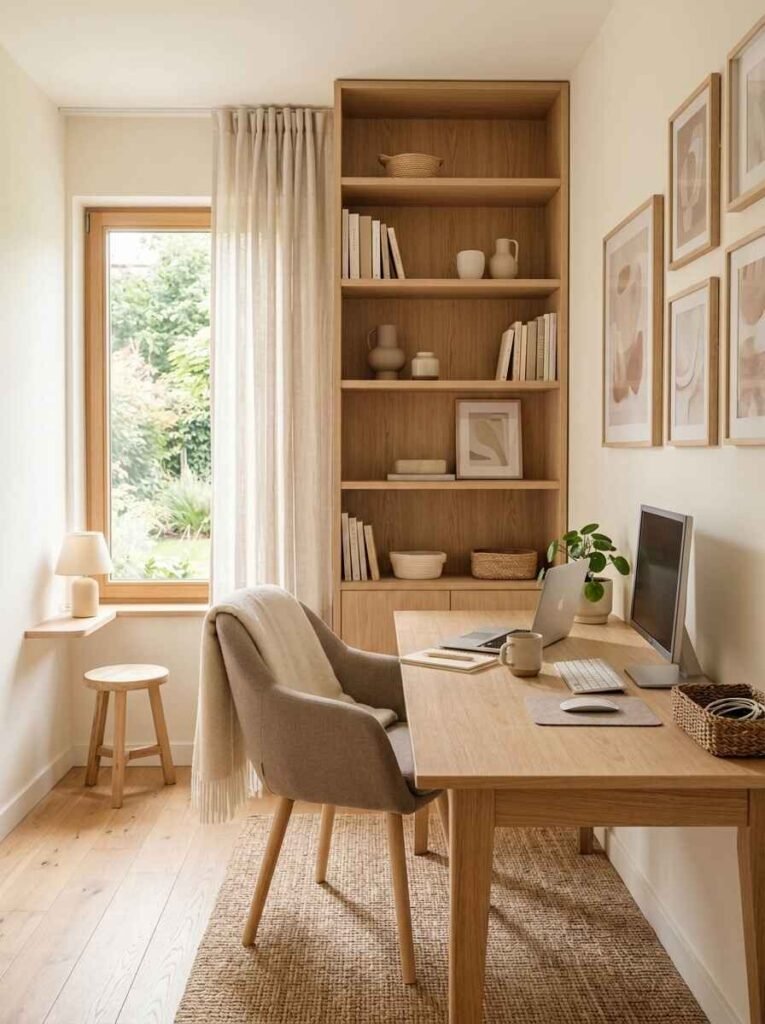
Soft, light color palettes naturally reflect light and make small spaces feel open and calm. Combining cream walls with light wood tone furniture creates a serene environment that encourages daily focus. Pale shades erase dark shadows in room corners, giving tight layouts a fresh, expansive look. When working in compact offices, I always prefer warm white or soft oatmeal tones over harsh stark white. This gentle color palette bounces light across every wall while making long hours spent working at your desk feel exceptionally peaceful and welcoming.
- Color Impact: Reflects light to visibly dissolve hard room boundaries and brighten dark corners.
7. Choose Furniture with Built-In Storage
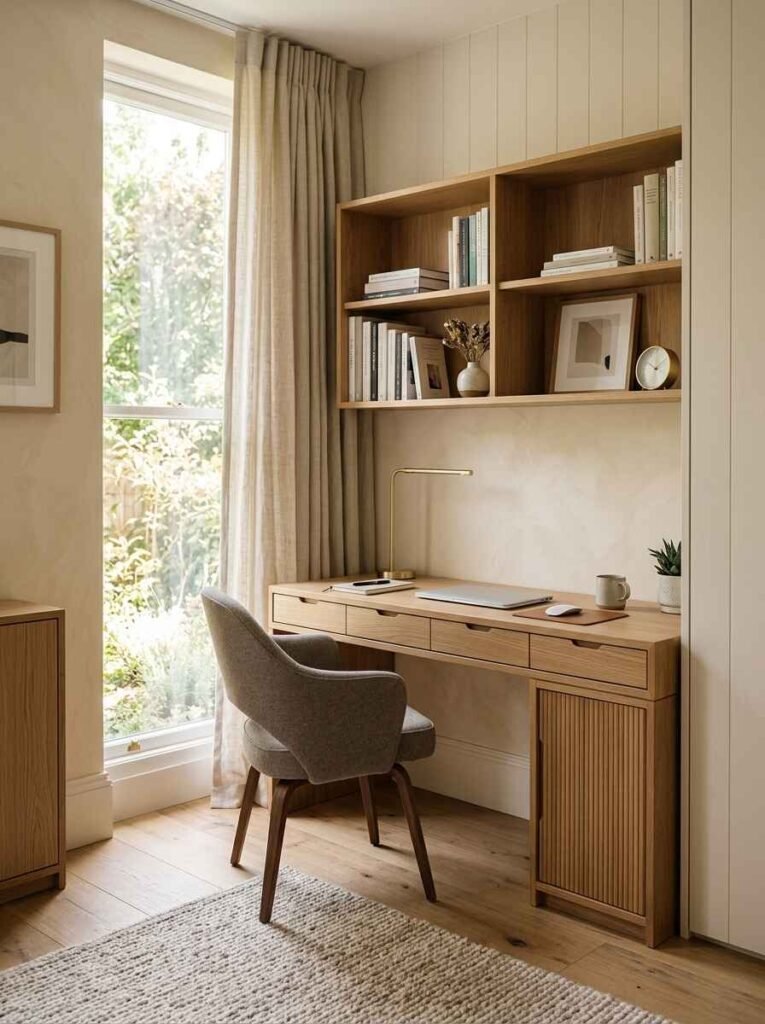
Using multiple pieces of furniture in a small room quickly causes visual clutter. Opting for a desk with integrated storage drawers and attached cabinetry gives you a single streamlined workstation. Consolidating your storage into one piece of furniture eliminates the need for separate file cabinets, bookcases, or side tables. I find that hidden drawer storage is the easiest way to keep loose chargers, stationery, and paperwork out of sight. A single, multi-functional piece of furniture gives your small home office a clean, custom-built look while maximizing every inch.
- Storage Hack: Combines your desktop surface and storage units into one smart piece of furniture.
8. Try a Fold-Down Desk
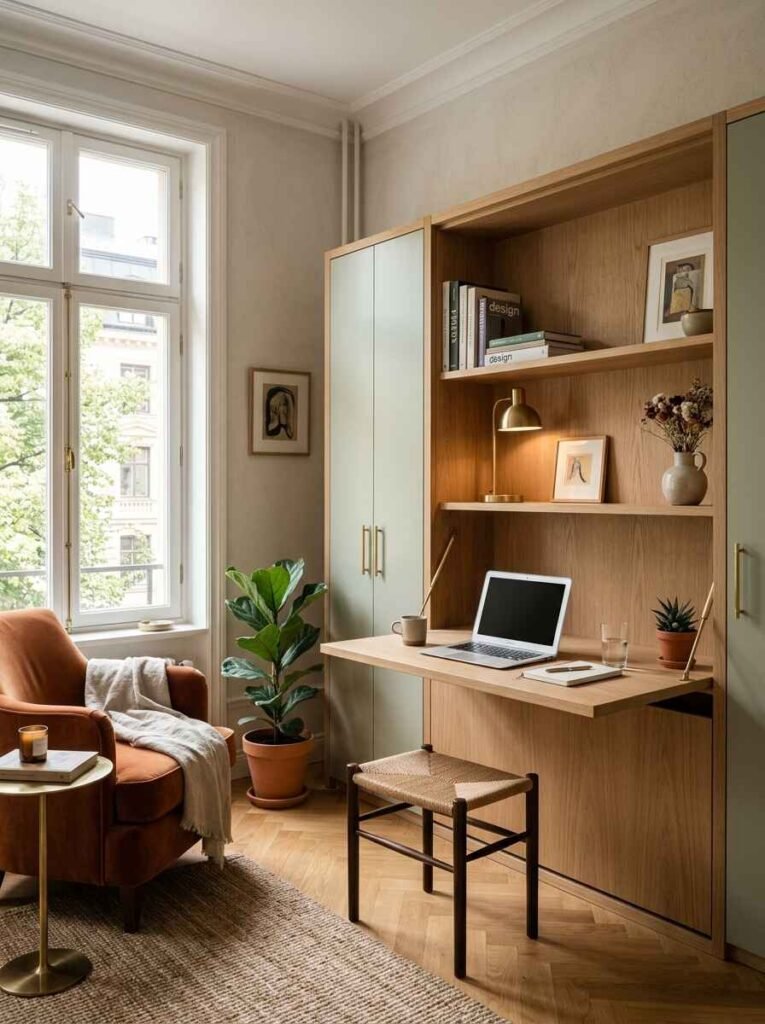
If your home office sits inside a bedroom or living area, a fold-down desk is a game changer. You can open your workspace during office hours and tuck it neatly away into cabinetry when your day ends. Hiding your computer setup behind closed doors creates a clear boundary between your working hours and personal time. I love how drop-front desks completely transform a multifunctional room. When folded shut, your workspace blends seamlessly into your built-in wardrobes, keeping your home environment feeling calm, tidy, and completely free of office work.
- Flexibility Factor: Hides your entire workstation away at the end of the day to maintain work-life balance.
9. Create a Home Office Under the Stairs
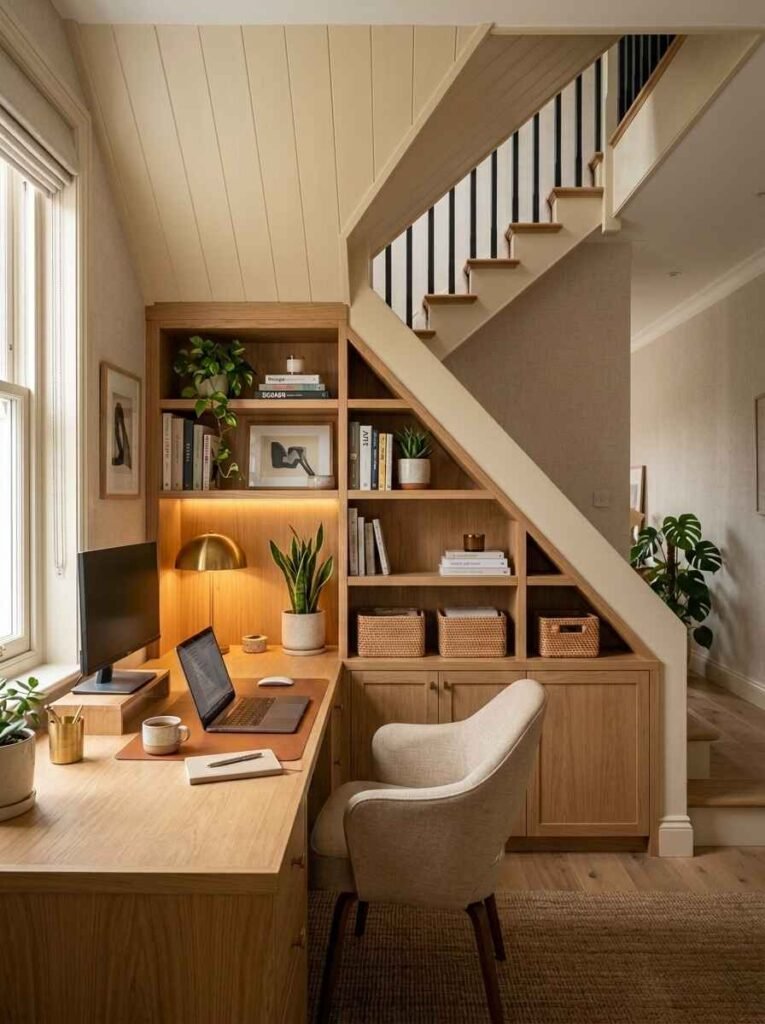
The space under a staircase is often wasted storage. With built-in wooden shelving, hidden cabinets, and focused accent lighting, this awkward spot becomes a quiet home office nook. Tailoring custom woodwork to fit the exact angle of your stairs maximizes every bit of headroom. I recommend installing warm LED cabinet lighting underneath the upper shelves so this cozy nook stays bright and inviting. Turning this underutilized architectural area into a dedicated workstation creates a unique home feature while saving entire rooms for traditional living space.
- Space Saver: Capitalizes on empty architectural pockets under stairs to build a custom work nook.
10. Choose Visually Light Furniture
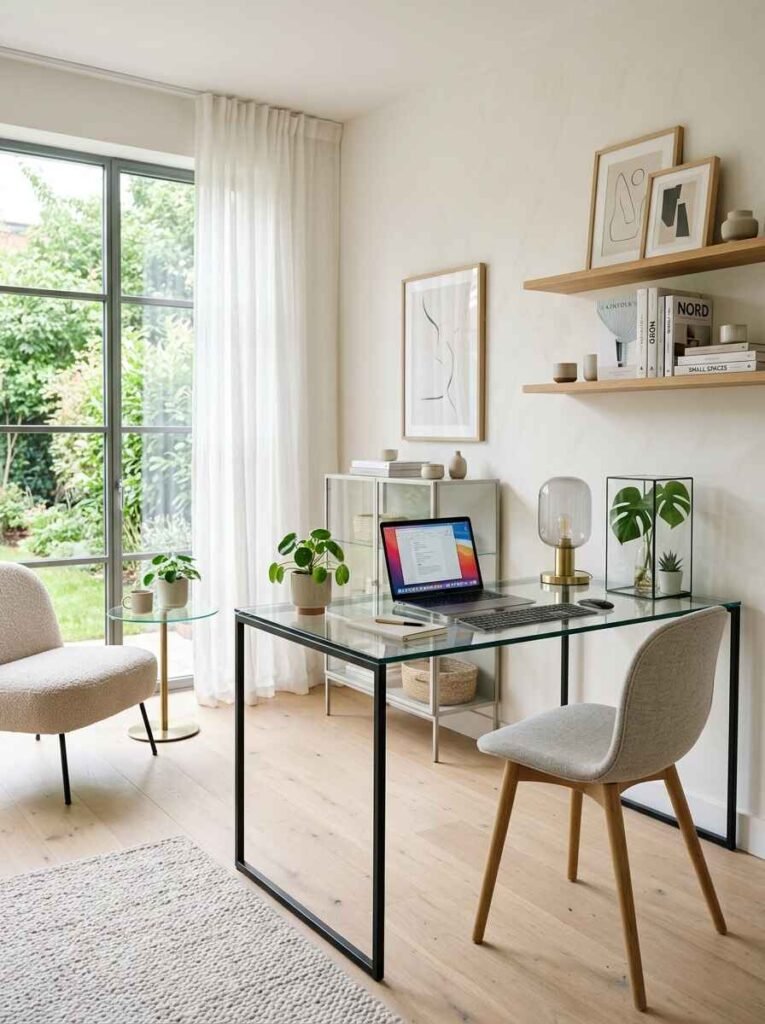
Bulky wooden furniture blocks views and makes small rooms feel crowded. Choosing a glass top desk with slim black metal legs lets light pass through, making your room feel surprisingly open. Glass, acrylic, and open-frame metal pieces allow sightlines to extend right to the walls, creating an illusion of unbroken floor space. I find that pairing clear glass desk surfaces with delicate metal frames keeps small home offices looking sleek and modern. Light moves through these pieces effortlessly, keeping compact work rooms from feeling dark, heavy, or cramped.
- Visual Trick: Uses transparent materials and thin metal frames so sightlines move freely through the room.
11. Position the Desk Near Natural Light
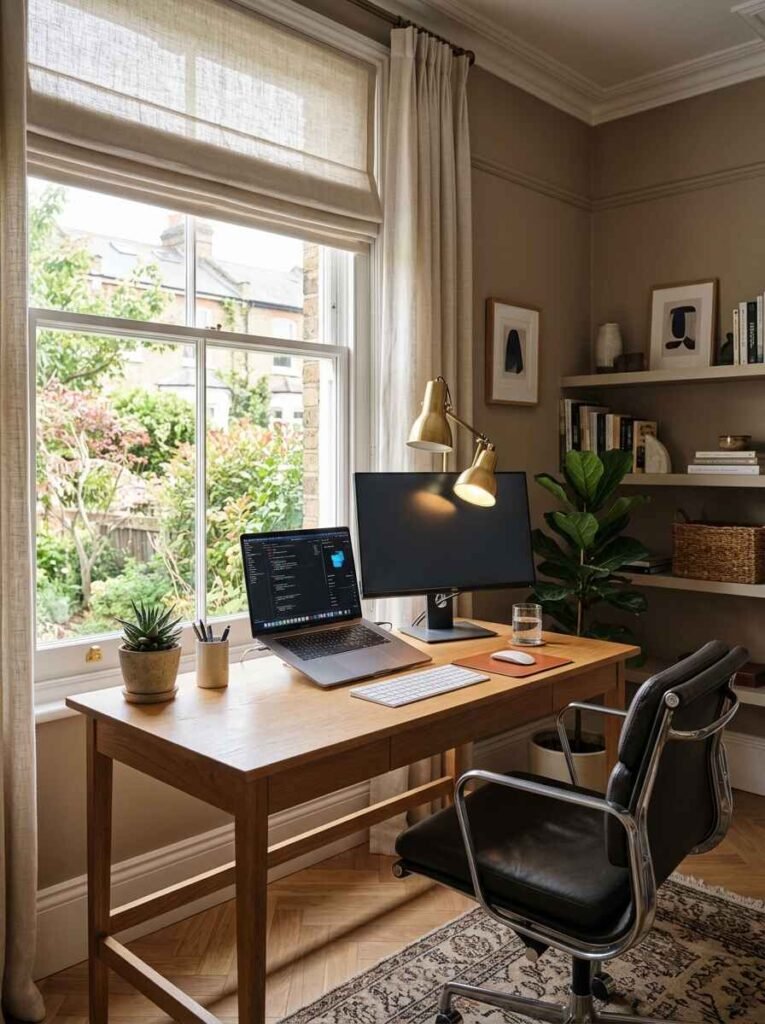
Placing your desk right beside a window boosts your morning energy and offers great natural lighting for video calls. Just make sure to position your monitor to avoid direct glare. Sunlight naturally brightens up compact workspaces, making long working hours feel much less restricting. I always advise placing your desk perpendicular to the window wall rather than facing it directly. This simple positioning trick captures bright, uplifting views and healthy daylight while completely eliminating harsh reflections on your laptop screen throughout the productive working day.
- Placement Benefit: Harnesses natural window sunlight to boost daily focus, mood, and video call lighting.
12. Keep the Desk Area Clean and Organized
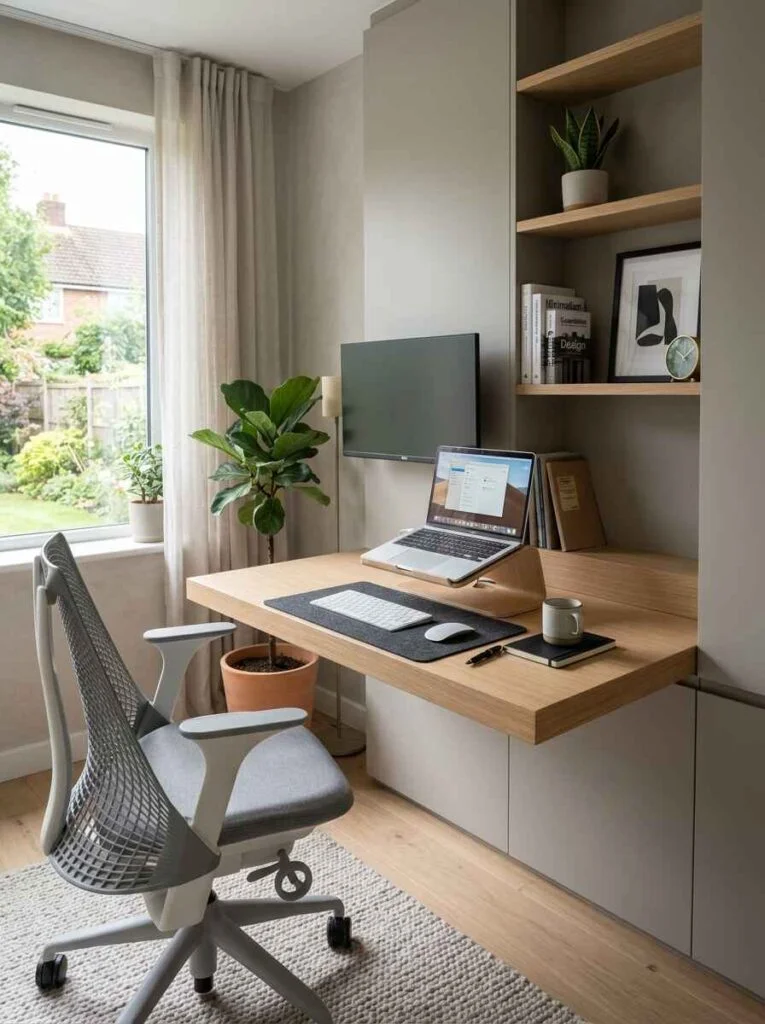
Visual clutter drains energy and reduces focus. Using a clean wooden desk setup with hidden cable management and built-in wall niches ensures your workspace stays neat and inviting. Managing loose cords with hidden wire trays and mounting your monitor on a flexible arm frees up continuous desk space. I find that keeping only three essential items on your desktop creates an open, calm working environment. A clutter-free desk surface makes small home offices feel surprisingly roomier, helping you stay clear-headed, focused, and productive all day long.
- Mindset Shift: Clears visual distractions to make compact workstations feel open, calm, and spacious.
13. Add One Luxury Detail
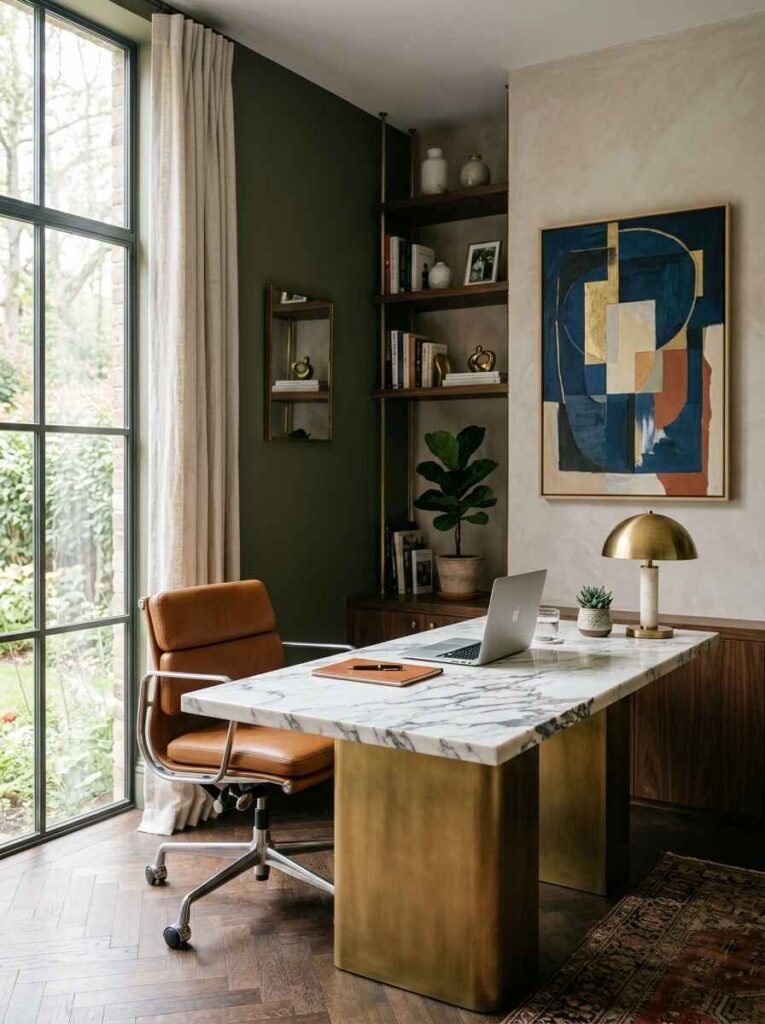
A small home office does not mean you have to sacrifice premium style. Introducing a single high-end accent—like a marble desk surface, a brass lamp, or an elegant leather desk chair—instantly elevates your room. Highlighting one beautiful feature brings a refined, professional energy to your personal workspace without cluttering the room with unnecessary decorations. I love using a rich leather chair or a polished brass task light to anchor a small office nook. A single thoughtful luxury piece transforms a basic working corner into a stunning, high-end design statement.
- Style Upgrade: Elevates a compact workspace by featuring one high-end, eye-catching designer accent.
Common Mistakes to Avoid in a Small Home Office
Setting up a compact workspace comes with a few tricky design traps. Avoiding these common mistakes will keep your small office looking stylish and functioning smoothly every day.
- Overcrowding the Floor with Storage: Adding multiple small file cabinets or extra storage boxes creates floor clutter that makes your room feel cramped. Stick to tall, vertical wall storage instead.
- Choosing the Wrong Scale Furniture: Buying standard, heavy executive furniture will quickly overwhelm a small room. Always measure your space and select slimline, open-leg pieces designed for compact layouts.
- Ignoring Cable Management: Loose cords hanging under a small desk create instant visual chaos. Use under-desk cable baskets and cord clips to keep all wires completely out of sight.
- Blocking Natural Light: Placing tall bookshelves right next to windows cuts off sunlight and darkens your room. Keep high-profile furniture away from windows to let daylight flood the space.
Frequently Asked Questions
What is the minimum recommended space for a small home office?
A functional home office nook requires at least 4 feet wide by 2 feet deep, allowing enough room for a compact desk and chair.
How do I make a small home office look bigger?
Use neutral wall paints, choose open-leg furniture, hang floating shelves, and position your desk near natural window light to open up the room.
What is the best desk style for a tiny bedroom office?
A wall-mounted floating desk or a fold-down desk cabinet works best because both options keep your floor area open and flexible.
How can I hide ugly computer cables in a small setup?
Use under-desk wire baskets, adhesive cable clips along furniture legs, or cable concealer boxes to keep cords neatly hidden out of sight.
Is light or dark furniture better for a compact home office?
Light wood tones, white finishes, and glass elements are best because they reflect light and help your small space feel larger.
How do I organize open office shelves without visual clutter?
Group books neatly by height, display a few decorative objects, and use matching closed storage boxes to hide smaller items out of view.
Conclusion
Designing a productive, inspiring home office isn’t about having a massive spare room; it comes down to smart spatial planning, light-reflecting materials, and intentional furniture choices. By utilizing floating desks, floor-to-ceiling shelving, light color palettes, and hidden storage, you can transform even the tightest corner into a quiet, functional workspace.
Every square foot counts when working with compact layouts. Focus on keeping your floor area clear, managing your cables, and selecting furniture that fits the scale of your room. With these 13 ideas, you have everything you need to create a comfortable, organized, and beautiful home office that supports your daily goals.
4 thoughts on “13 Small Home Office Ideas That Make Any Space Feel Bigger”
Comments are closed.