
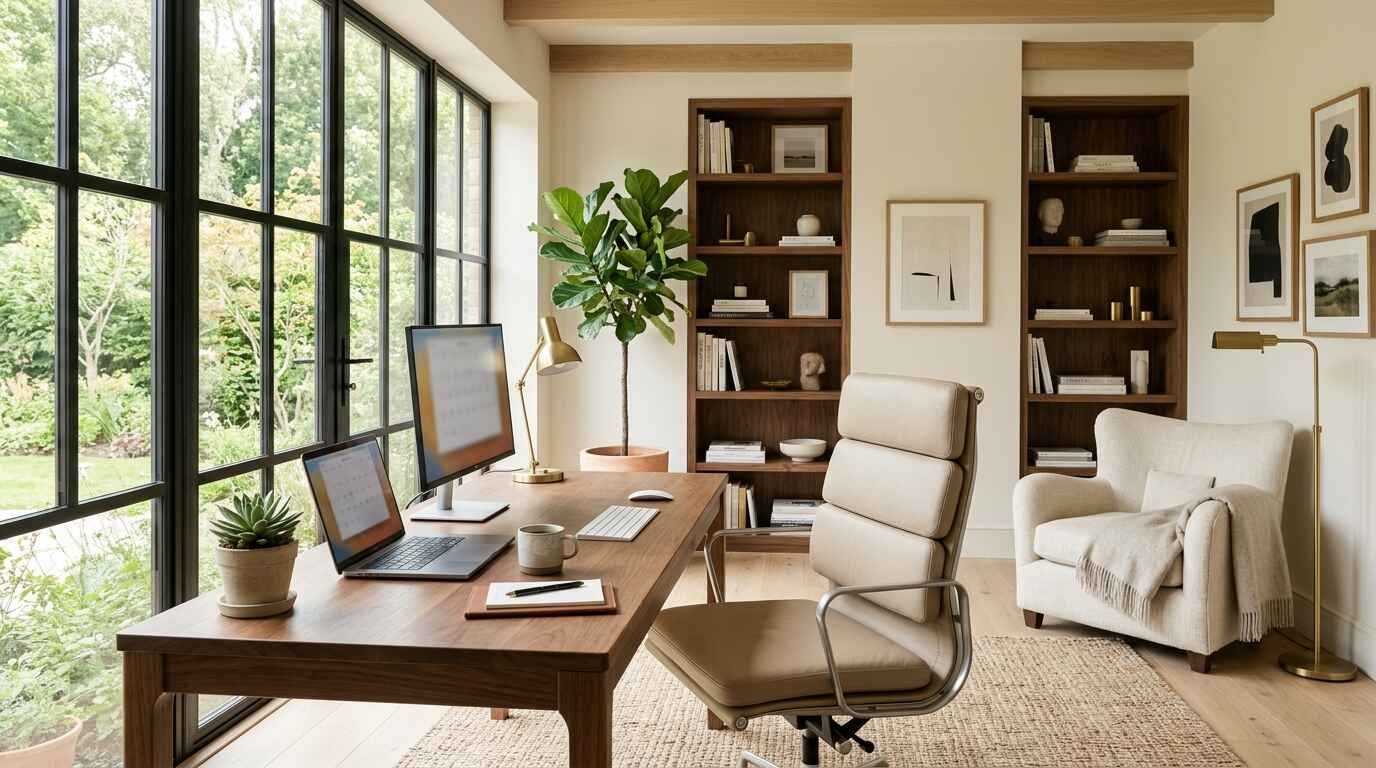
A well-designed home office should do more than look beautiful. It should make everyday work feel organized, comfortable, and intentional. The right combination of natural light, furniture proportions, storage, materials, and color can turn even a simple room or unused corner into a workspace that feels polished and personal.
The best home office ideas balance visual appeal with practical needs. A spacious executive study may benefit from a substantial desk and custom cabinetry, while a smaller workspace may need floating furniture, vertical storage, and carefully controlled visual clutter. The goal is not simply to decorate the room, but to create a space that supports concentration while fitting naturally into your home.
In this guide, you’ll find 15 home office ideas covering modern, minimalist, luxury, cozy, neutral, organic modern, Japandi, feminine, dark, small-space, window-side, built-in, bookshelf, statement-desk, and natural-wood designs. You’ll also find practical guidance on layout, lighting, storage, furniture, and finishing details.
Whether you’re designing a dedicated study or converting a quiet corner into a workspace, these ideas can help you create a home office that feels both beautiful and genuinely functional.
15 Home Office Ideas for Every Style and Space
1. Modern Home Office
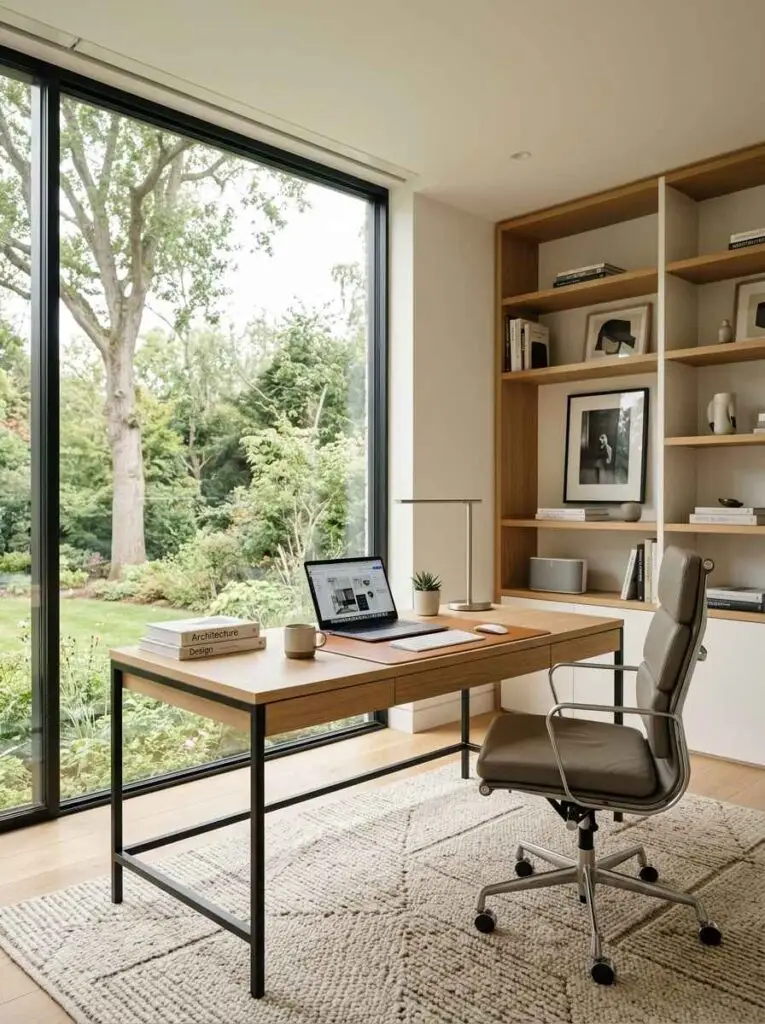
Modern workspace design relies heavily on architectural simplicity, structural clarity, and the purposeful elimination of unnecessary ornament. Clean-lined walnut or steel desk frames establish an immediate sense of order without overwhelming the surrounding space. To maintain a contemporary edge, pair crisp geometry with refined surfaces such as polished stone, muted matte metal, and smooth-grain woods.
This approach performs exceptionally well in contemporary apartments, urban lofts, or open-concept homes where visual noise must be kept to a minimum. A restrained palette of crisp whites, charcoal accents, and cool greys keeps the environment focused and structured.
Design Takeaway: Choose furniture with exposed legs or cantilevered silhouettes to allow light to flow beneath surfaces, creating an airy and spacious atmosphere.
2. Minimalist Home Office
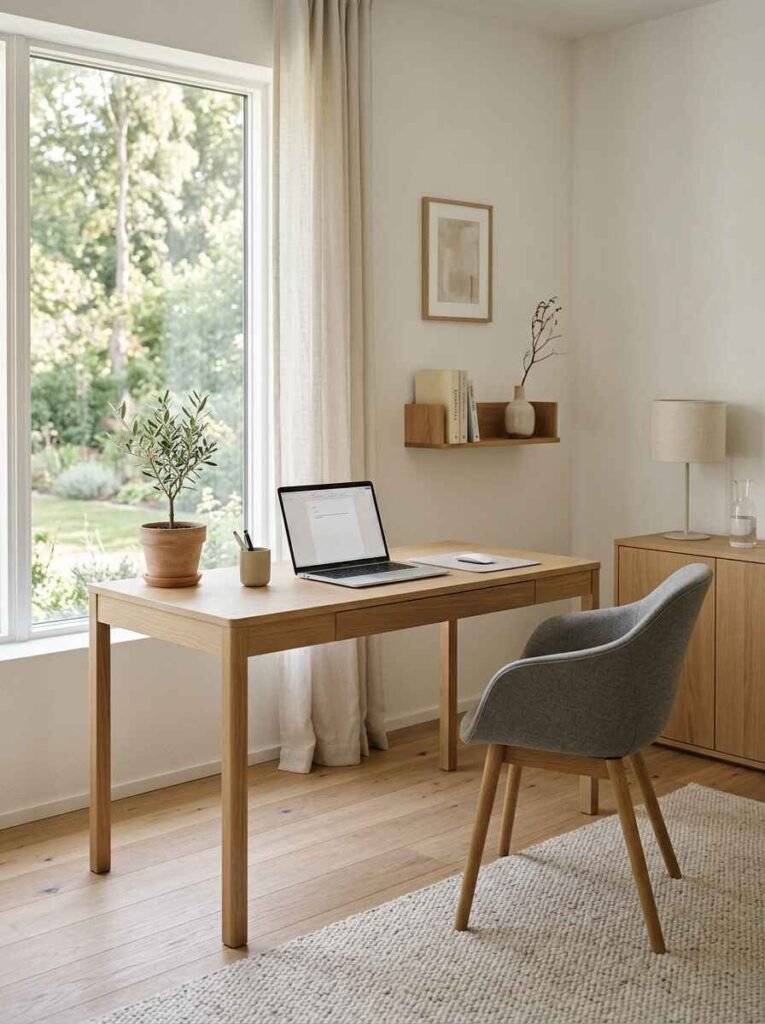
At its core, minimalism is a deliberate practice of visual restraint designed to reduce daily distraction. By paring a room down to its essential components—a fluid desk surface, an understated chair, and concealed storage—the mind is given room to breathe. Light oak, soft plaster finishes, and smooth monochromatic planes define this quiet look.
Ideal for compact footprints or multi-purpose spaces, a minimalist layout prevents smaller rooms from feeling visually overcrowded. Rather than filling surfaces with accent pieces, let the quality of the raw materials and the play of natural shadow serve as the decorative elements.
Design Takeaway: Keep the primary desk surface entirely clear, reserving desktop real estate exclusively for an active laptop and a single source of warm task light.
3. Luxury Home Office
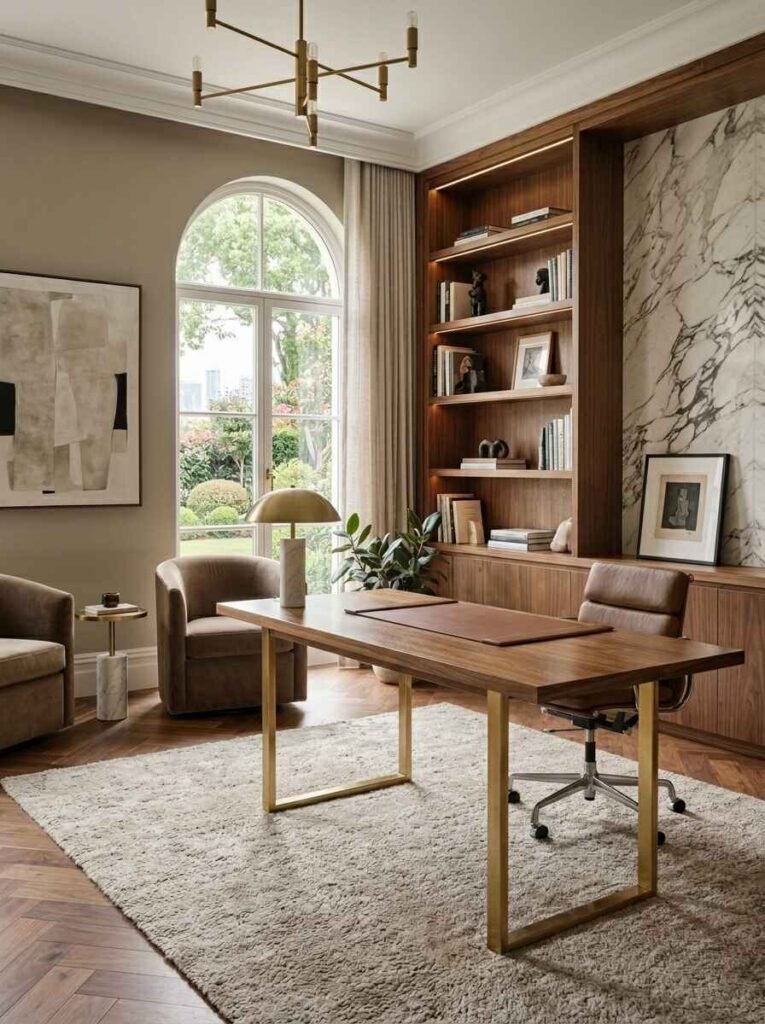
Subtle sophistication is expressed through exquisite material selections, tailored proportions, and impeccably detailed craftsmanship. Rich walnut cabinetry, polished brass accents, rich leather surfaces, and subtle marble cladding come together to form an atmosphere of understated permanence. Lighting should be layered thoughtfully, combining warm ambient architectural glows with carefully positioned focus lights.
This design style suits grand dedicated studies, traditional library spaces, or executive suites where formal work and confidential meetings take place. Balance heavy architectural woods with soft wool textiles and plush floor coverings to keep the room feeling welcoming rather than clinical.
Design Takeaway: Introduce warm cabinet lighting behind open shelving to highlight structured book displays and artisanal objects while casting a soft ambient glow across the room.
Also Read this: 17 Luxury Home Office Ideas for an Elegant Workspace
4. Cozy Home Office
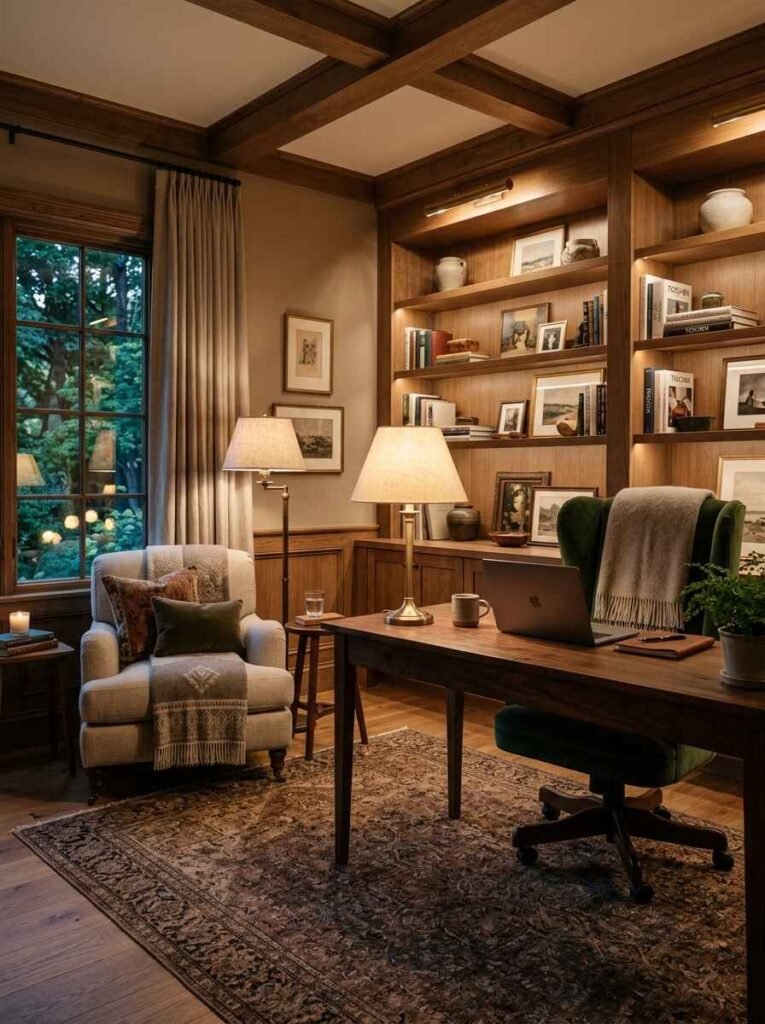
A cozy work environment prioritizes physical comfort, emotional warmth, and tactile richness. Layered textiles—such as heavy linen drapery, textured wool rugs, and soft upholstery—insulate the space acoustically while creating an inviting haven for deep work. Earthy tones like warm clay, terracotta, and muted moss green enhance the feeling of shelter.
This retreat-like feel works exceptionally well in converted attic nooks, bedroom alcoves, or historic homes with lower ceilings and smaller proportions. Introduce soft lighting sources at varied heights rather than relying on a single overhead ceiling fixture.
Design Takeaway: Incorporate an upholstered armchair or a small reading nook alongside your main desk to create a secondary space for reading, brainstorming, or offline tasks.
Also Read this: 19 Cozy Home Office Ideas for a Warm, Inviting Workspace
5. Warm Neutral Home Office
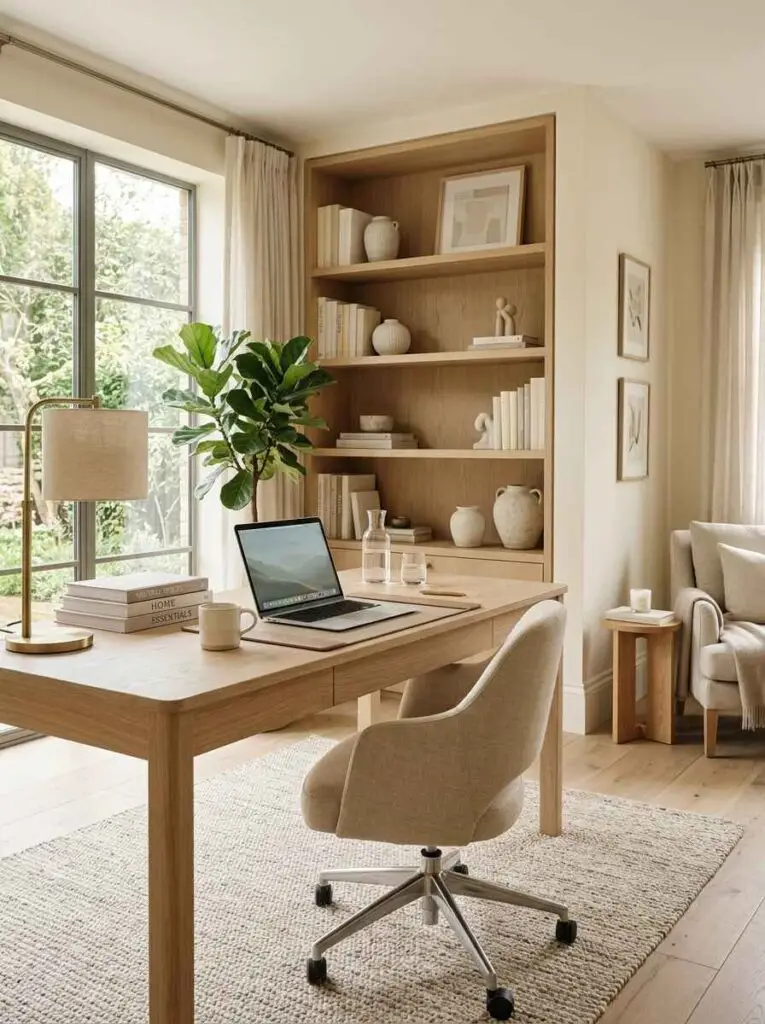
A warm neutral palette offers an enduring sense of calm by relying on layers of cream, beige, ivory, and soft oatmeal tones. Rather than feeling flat, a neutral space derives its energy from contrasting textures—pairing smooth plastered walls with woven linen, natural oak, and matte ceramic accessories.
This approach is versatile enough for almost any architectural style, instantly enhancing light distribution in rooms that lack direct exposure to sunlight. The soft monochromatic backdrop keeps the eye relaxed and minimizes visual friction throughout the workday.
Design Takeaway: Avoid monochromatic monotony by mixing at least three distinct tactile surfaces—such as smooth wood grain, textured bouclé, and natural woven rattan—within the same color family.
6. Organic Modern Home Office
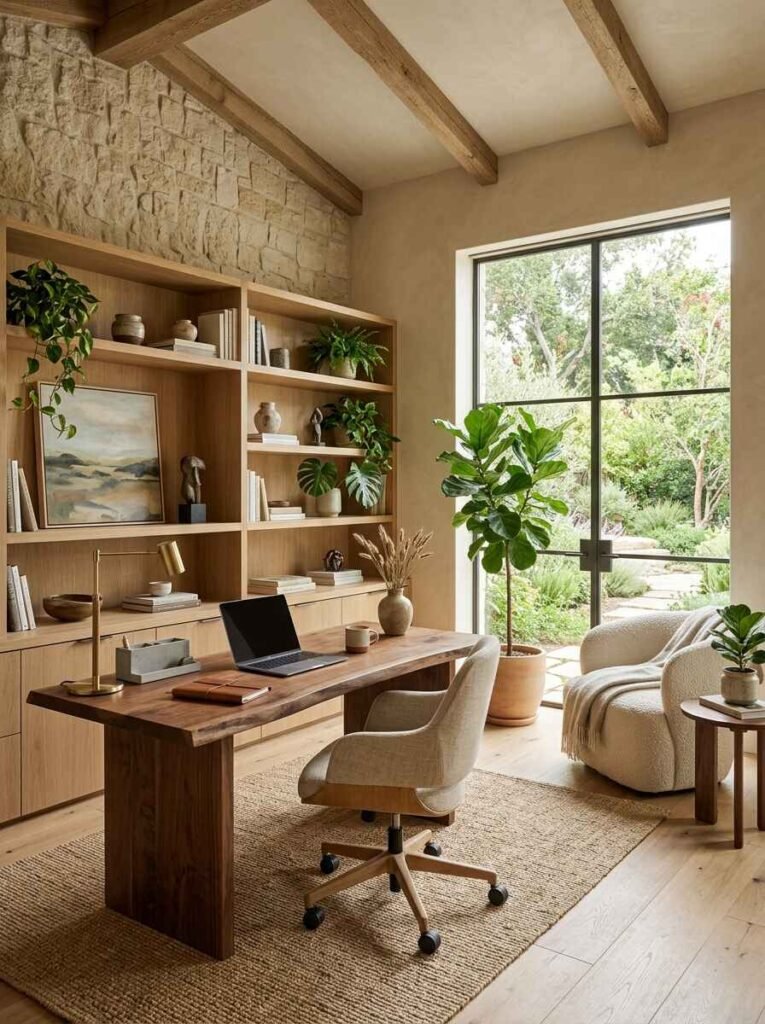
Organic modern styling bridges the gap between clean contemporary structure and the grounding presence of the natural world. Softly curved desk edges, raw-edge timber, slatted wood paneling, and unrefined stone details soften rigid room geometry. Greenery plays a functional role here, bringing movement and fresh texture into the background.
This style thrives in bright, light-filled rooms that look out onto gardens, courtyards, or natural landscapes. The tactile quality of unvarnished materials encourages a physical connection to the workspace, keeping high-tech environments feeling human and grounded.
Design Takeaway: Balance straight architectural walls and linear shelving with a rounded desk silhouette or an arched wall mirror to soften room flow.
7. Japandi Home Office
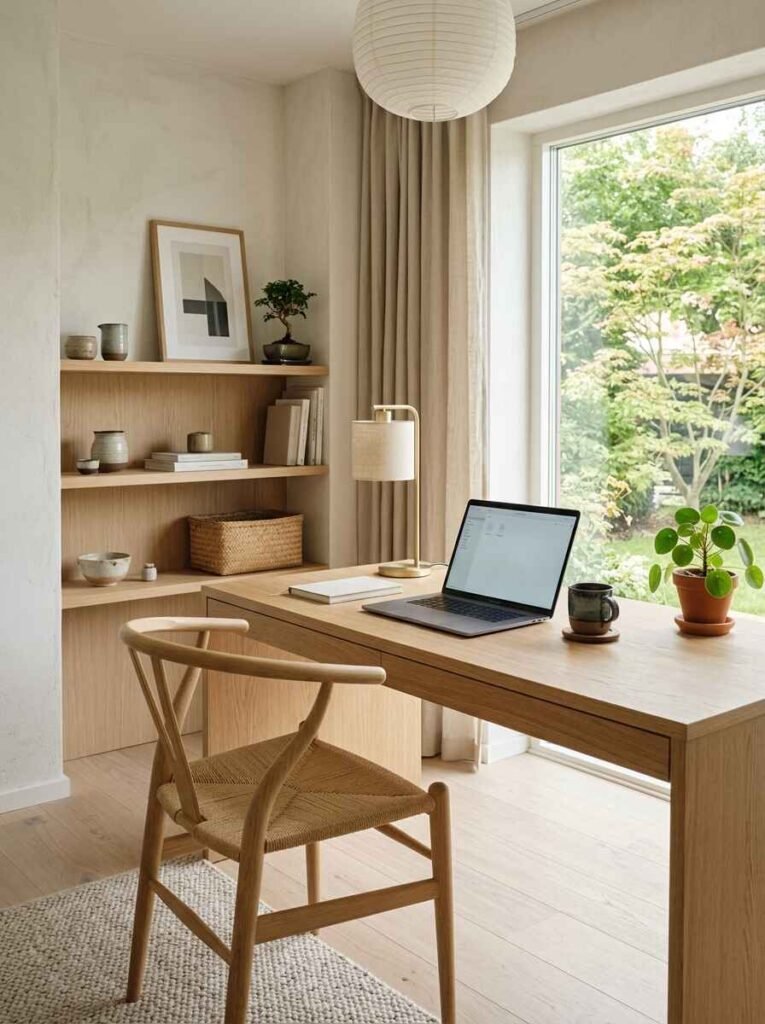
Blending the refined restraint of Japanese design with the functional warmth of Scandinavian interiors, the Japandi approach centers on craftsmanship and simplicity. Expect low-profile wood furniture, paper lantern pendants, slate finishes, and a strict commitment to functional utility. Decorative elements are kept to a quiet minimum, ensuring every object serves a purpose.
Perfect for quiet, dedicated rooms where calm focus is the priority, Japandi spaces rely heavily on high-quality natural light and open floor areas. Furniture is often kept low to the ground to accentuate vertical wall space and ceiling height.
Design Takeaway: Select handcrafted ceramic vessels, matte pottery, or single dried botanicals instead of mass-produced art objects to maintain authentic character.
8. Feminine Home Office
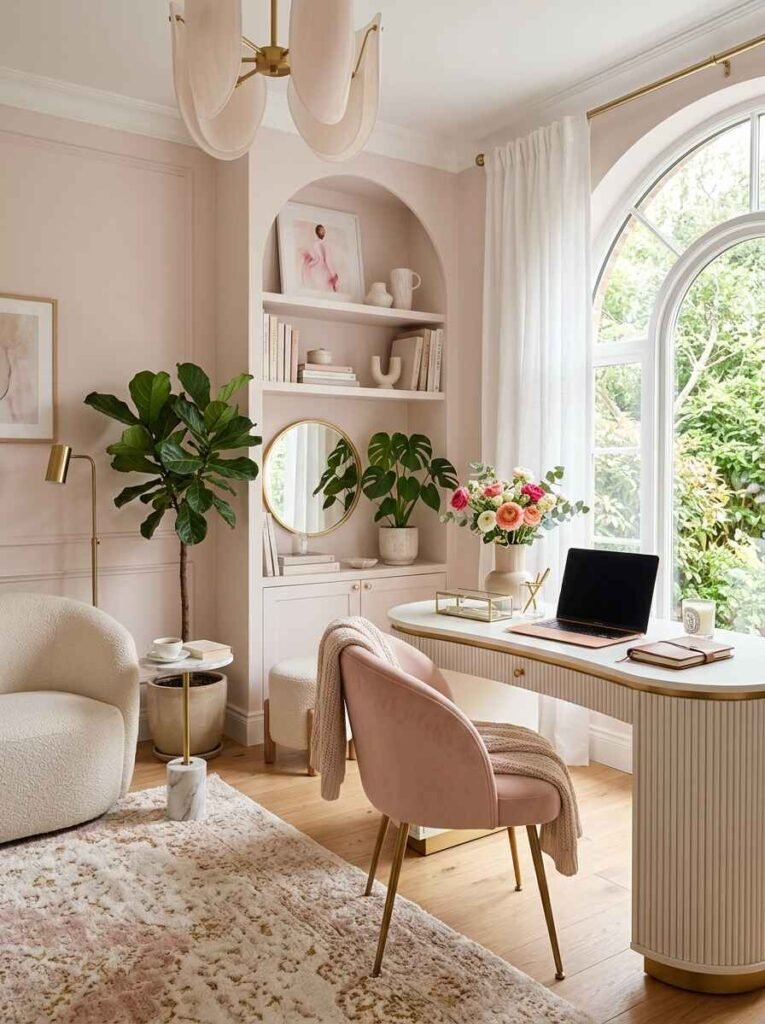
A sophisticated feminine workspace relies on soft structural curves, delicate lighting details, and a nuanced color scheme. Subtle muted rose, warm taupe, soft cream, and muted champagne metallic accents form an elegant foundation without feeling overly sweet or transient. Fluted woodwork, brass hardware, and plush velvet seating add tactile dimension.
This look fits beautifully into light-filled spare bedrooms, corner alcoves, or sunlit garden-facing rooms. Focus on light-reflective surfaces, sheer drapery, and graceful furniture profiles to keep the space feeling light and expansive.
Design Takeaway: Use fluted or reeded detailing on desk drawer fronts or cabinet doors to introduce subtle shadow play without introducing chaotic visual patterns.
Also Read this: 17 Elegant Home Office Ideas for Women That Are Functional Too
9. Dark Home Office
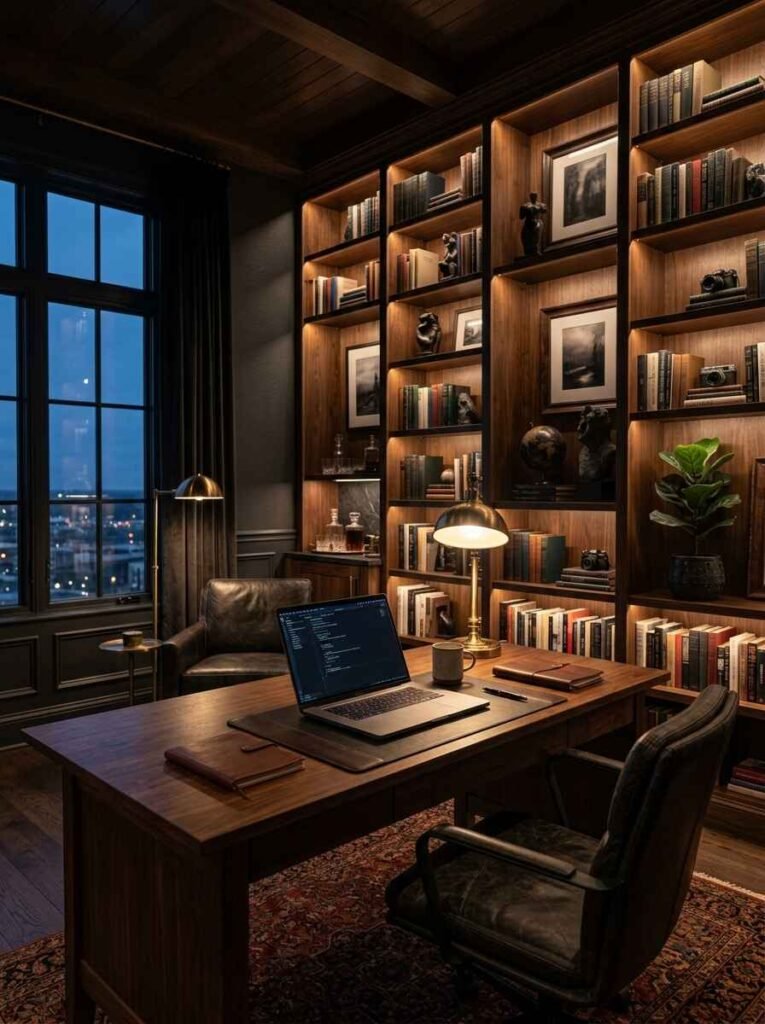
Enveloping and dramatic, a deep-toned workspace uses dark wall treatments—such as deep slate, rich charcoal, forest green, or espresso—to create an intimate, library-like cocoon. Deep-stained oak, dark leather upholstery, and brushed bronze fixtures absorb light gracefully, turning the room into a quiet focus retreat.
Darker palettes excel in north-facing rooms with limited natural light, as they embrace the room’s inherent shadows rather than fighting them with artificial bright whites. Low-level accent lights highlight warm wood grains and metallic accents to keep the room from feeling flat.
Design Takeaway: Paint baseboards, door frames, and built-in shelving in the same dark paint finish as the walls to unify the room’s architecture and create a seamless sense of height.
10. Small Home Office
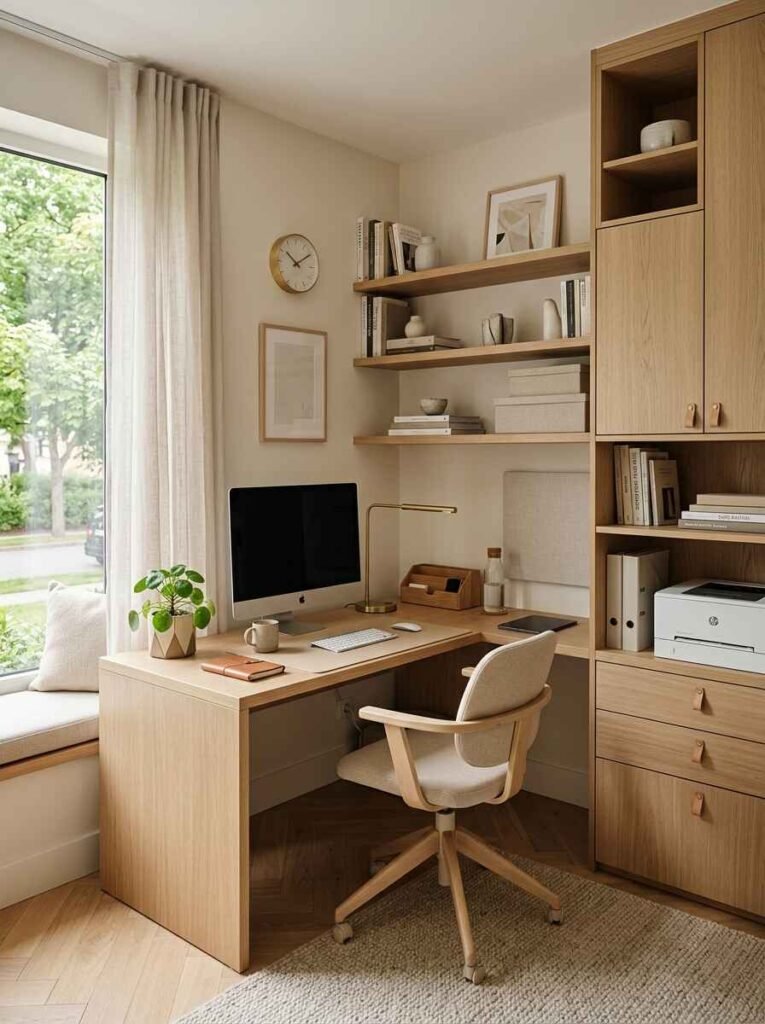
Designing for a compact footprint requires rigorous space management and smart vertical storage strategies. Slim-profile floating desks, wall-mounted shelving systems, and light-reflecting palettes keep the room feeling surprisingly spacious. Utilizing under-desk storage units and slim vertical bookcases ensures floor area remains unencumbered.
Small workspaces thrive in repurposed closets, under-stair alcoves, or quiet corners of guest bedrooms. By keeping furniture visually light—such as chairs with open frames and thin metal desk legs—the room feels open rather than constrained.
Design Takeaway: Utilize full-height vertical wall space for closed cabinetry, placing less frequently used files and equipment high up to free up immediate working zones.
Also Read this: 13 Small Home Office Ideas That Make Any Space Feel Bigger
11. Home Office by a Window
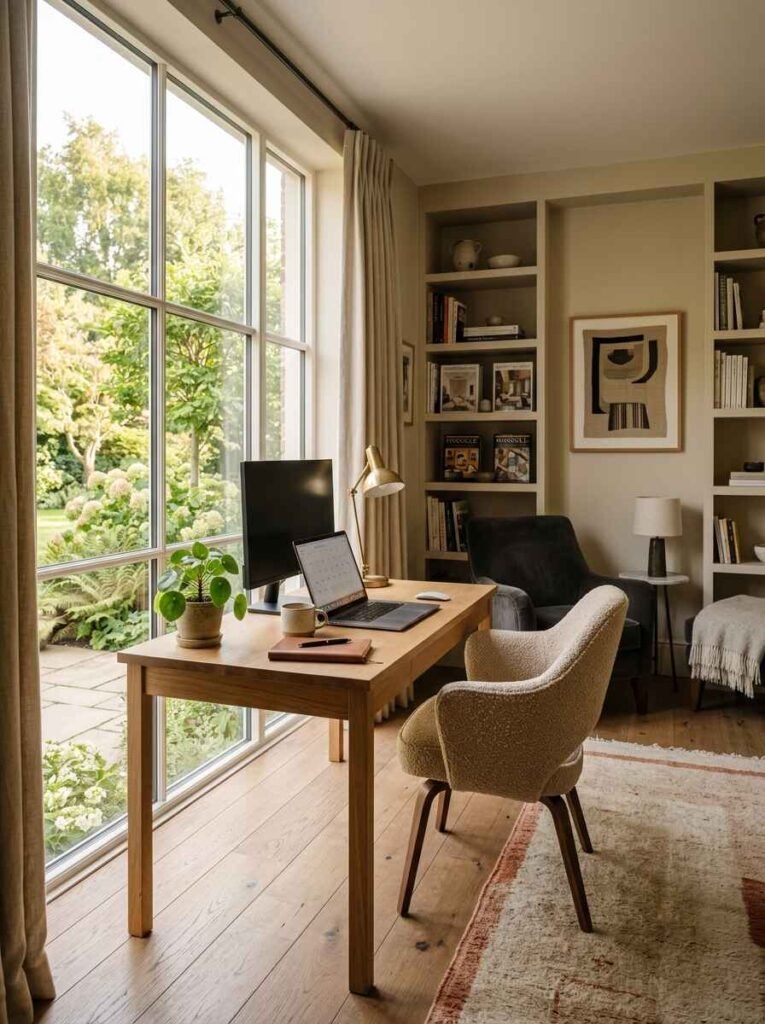
Positioning a workspace near a window maximizes access to natural daylight while providing a restful distant focal point for weary eyes throughout the working day. Orienting the desk directly facing or perpendicular to the view invites the outdoors inside, making long hours at a monitor feel far less isolating.
This placement works best in rooms with pleasant natural outlooks—such as gardens, tree canopies, or cityscapes. To prevent eye strain, glare management must be addressed with adjustable sheer curtains or solar shades.
Design Takeaway: Install floor-to-ceiling sheer linen curtains to diffuse harsh direct sunlight into a soft, readable glow across your desk surface without blocking the exterior view.
12. Built-In Home Office
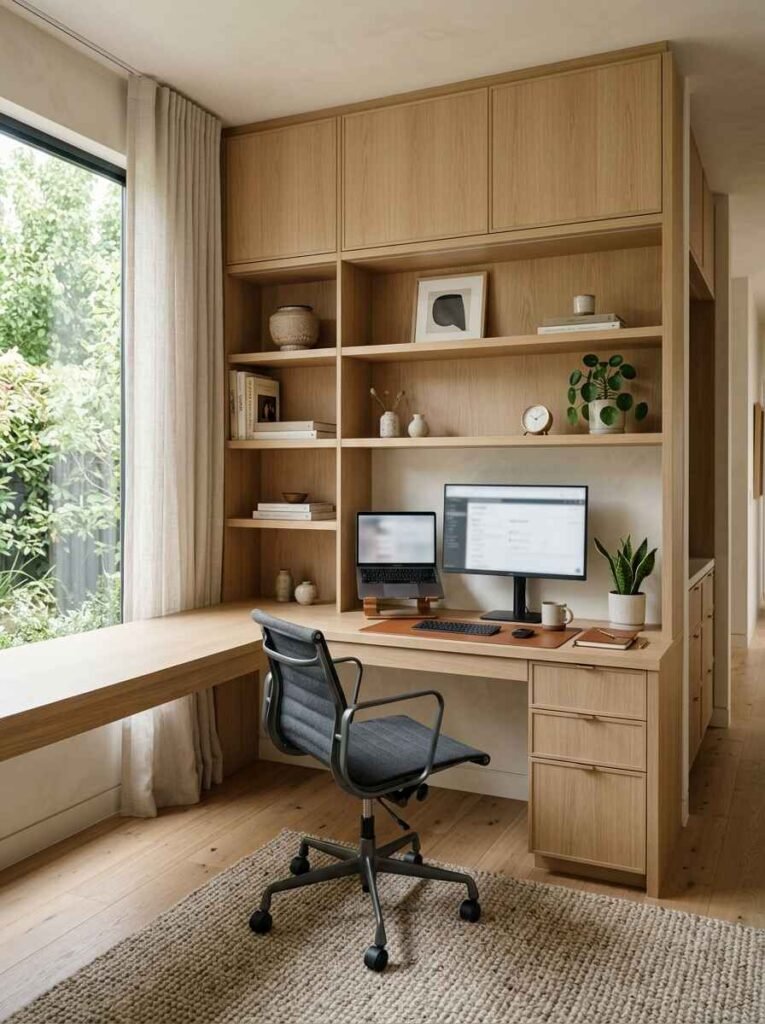
Custom built-in millwork provides an incredible level of architectural integration, transforming an empty wall into an organized workspace. Fully tailored cabinetry can conceal computer towers, printers, wiring, and bulky documentation behind smooth panel doors while presenting display niches for curated art and books.
Built-in systems are particularly effective in dedicated home libraries, formal studies, or open-plan living rooms where furniture needs to look like a permanent architectural feature of the house. Matching cabinet paint or stain to existing room molding reinforces continuity.
Design Takeaway: Design custom cabinet doors that fold back flat against the frame or slide away, allowing you to completely hide your computer setup at the end of the workday.
13. Home Office with Bookshelves
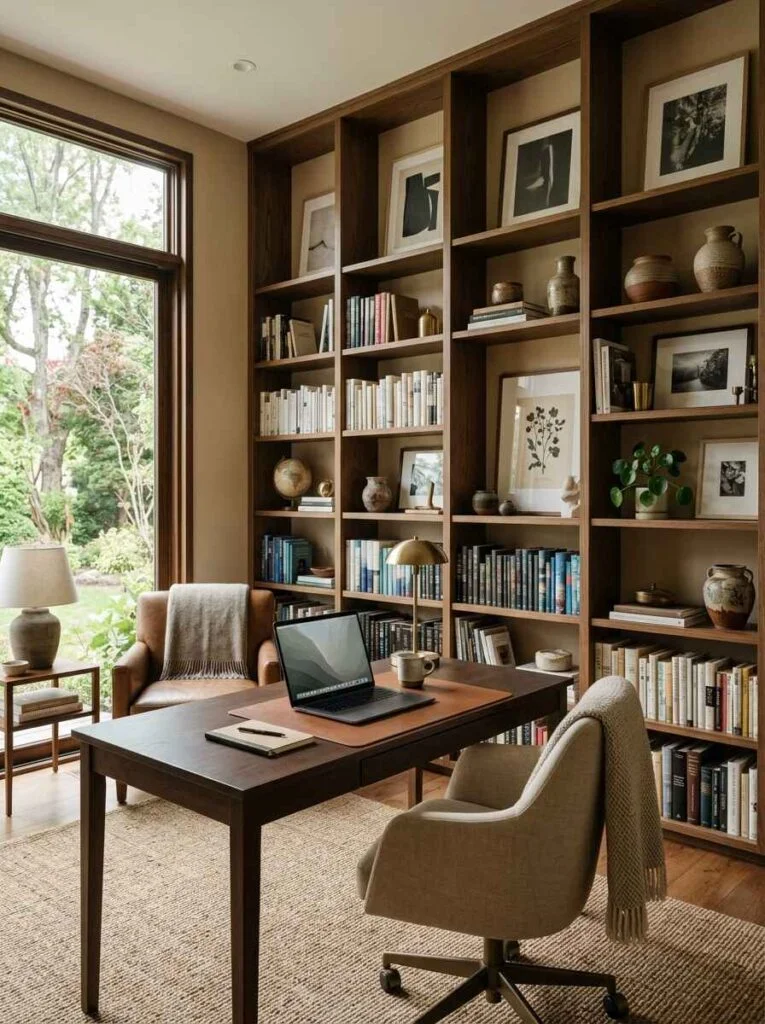
Open floor-to-ceiling shelving brings instant character, warmth, and personality to a workspace. Arranging books alongside framed artwork, sculptural ceramics, and memory objects turns functional storage into an ever-evolving visual gallery. The key to successful shelf styling lies in balancing filled sections with intentional open space.
This arrangement works brilliantly along main backdrop walls, serving as an impressive frame during video calls while keeping reference materials within easy arm’s reach. Grouping books by binding tone or material keeps the display feeling cohesive.
Design Takeaway: Alternate between vertical stacks of books and horizontal groupings topped with small decorative items to break up linear monotony on open shelves.
14. Home Office with a Statement Desk
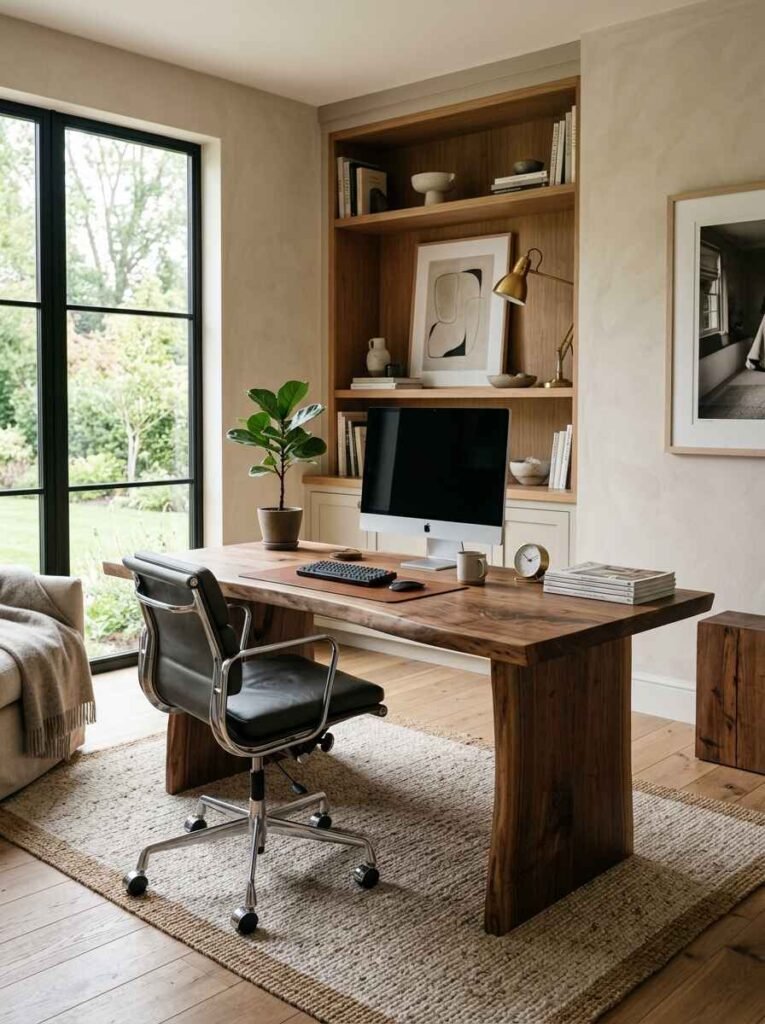
When a desk features exceptional architectural form, hand-carved details, or striking materials, it deserves to anchor the center of the room. Placing a statement desk in a floating position—facing into the room rather than pushed against a wall—immediately creates a commanding executive presence.
This layout demands a room with generous central floor space and clear circulation paths around all sides of the furniture. Keep surrounding wall decor, rugs, and storage understated so the primary work table remains the unquestioned focal center.
Design Takeaway: When floating a desk in the middle of a room, plan for floor-recessed electrical outlets or select a desk with hidden cable-routing channels down its legs.
Also Read this: 11 Best Home Office Desks for a Stylish & Functional Workspace
15. Natural Wood Home Office
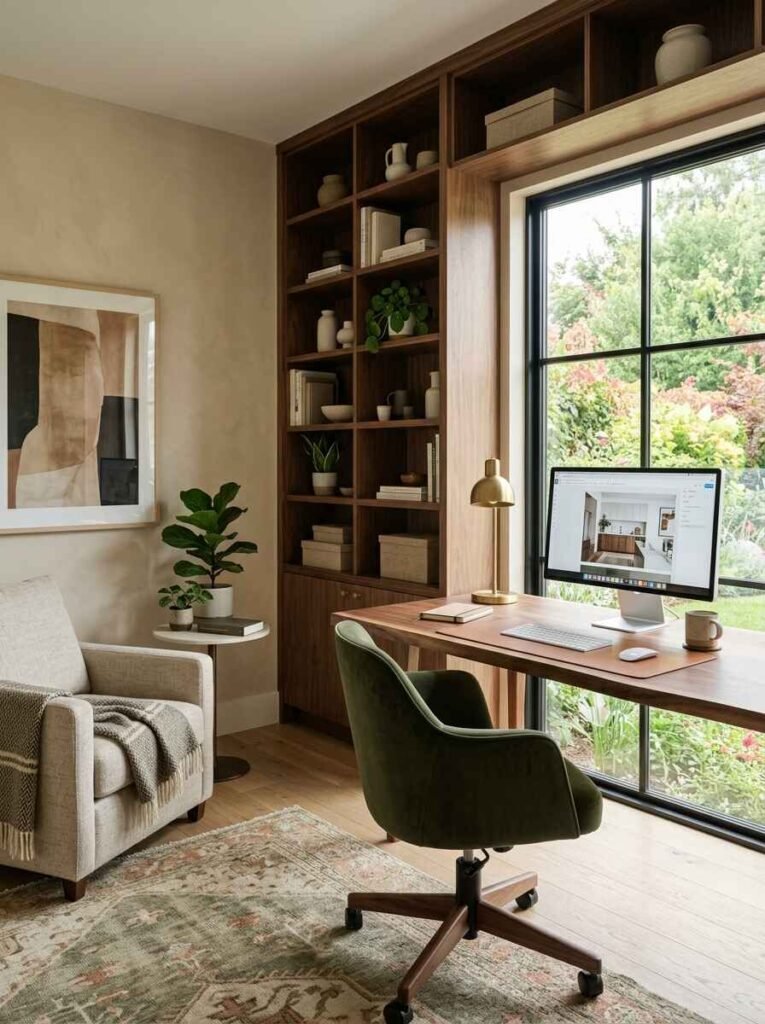
Celebrating the rich grain, natural knots, and organic warmth of timber creates a deeply tactile working environment. Incorporating natural walnut, rift-sawn white oak, or warm chestnut brings a timeless, grounded quality to modern home interiors. Wood paneling or exposed timber ceiling beams further amplify this rustic sophistication.
Wood-centric offices perform wonderfully in both traditional country estates and modern urban homes seeking a warm, tactile touchpoint. Pairing rich wood grains with soft matte paint colors and natural woven floor coverings prevents the room from feeling overly heavy or dark.
Design Takeaway: Match wood species or ensure undertones (warm versus cool) align across your desk, wall paneling, and flooring to create a harmonious material story.
How to Choose the Right Home Office Style
The best home office style should work with both your home’s architecture and the way you use the space. Start by considering the room’s size, natural light, existing finishes, and the amount of storage you need.
For smaller rooms, minimalist, warm neutral, and light wood approaches can help maintain an open feeling. Larger rooms can accommodate substantial desks, built-in cabinetry, darker colors, or more traditional furniture. If your home already features natural stone, warm wood, or brass accents, repeating those materials in the office can create a more cohesive transition between rooms.
Your working habits matter just as much as appearance. A creative workspace may need a larger surface and accessible storage, while a primarily digital setup can prioritize cable management, ergonomic seating, and a streamlined desk.
Quick rule: Choose the style first, then select furniture and accessories that support the room rather than allowing individual pieces to dictate the entire design.
Home Office Design: Layout, Lighting, Storage & Comfort
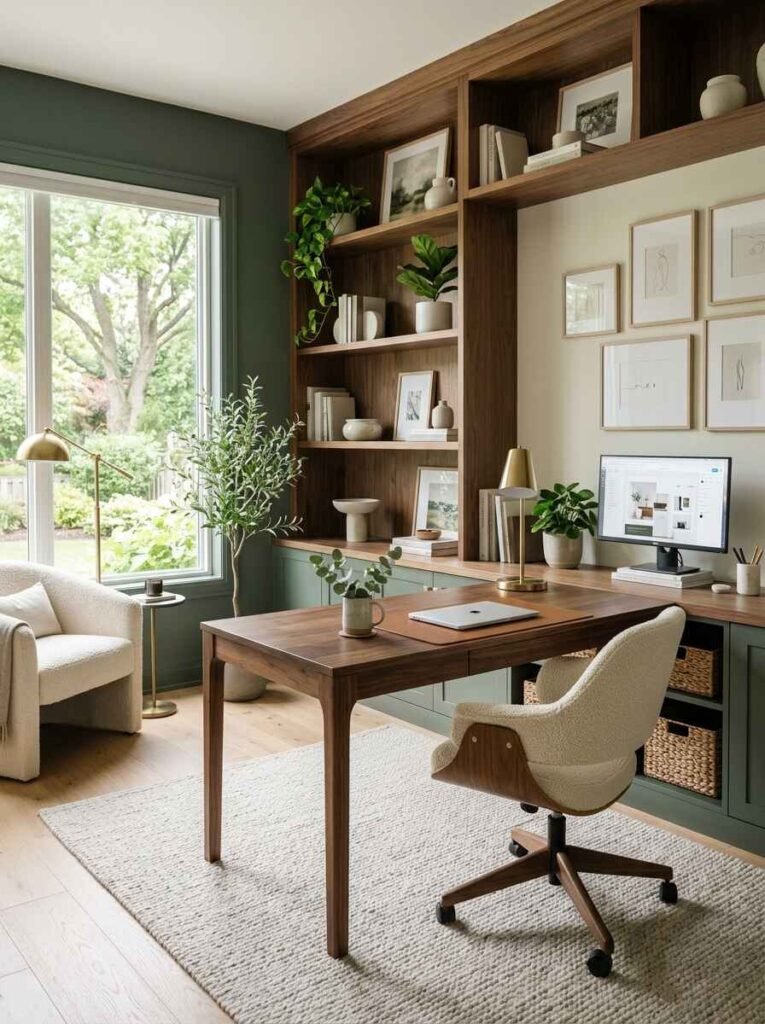
Moving from pure inspiration to practical design execution requires a thoughtful approach to spatial planning, scale, light control, and daily routine. A truly exceptional workspace must function as seamlessly as it looks, balancing aesthetic choices with real-world physical needs.
Layout and Spatial Flow
The placement of your desk dictates the energy of the entire room. While pushing a desk against a wall is space-efficient in smaller settings, floating a desk in the center of the room—commonly referred to as the command position—instantly elevates the room’s presence and offers clear sightlines to doors and windows. Ensure primary walkways allow for fluid movement around seating and cabinets.
Selecting the Desk and Chair
Scale is everything when matching furniture to room proportions. A massive executive desk in a compact spare bedroom creates visual claustrophobia, while an undersized table in a soaring library feels lost and temporary. Choose an ergonomic chair that supports proper spinal alignment while ensuring its upholstery and silhouette complement the overarching interior style of your home.
Light Management and Color Palettes
Lighting directly impacts focus and energy levels throughout the day. Layer your lighting scheme by combining clear natural daylight, ambient overhead sources, and targeted task lamps on the desk surface. Position monitors perpendicular to light sources to prevent harsh screen glare. Warm neutral palettes—anchored by cream, taupe, soft sage, or light gray—provide an expansive feel, while deeper forest greens and charcoals offer quiet intimacy.
Concealed Storage and Organization
Maintaining a peaceful environment relies on robust storage solutions. Combine open display shelving for books, ceramics, and personal art objects with closed lower cabinetry for filing, tech chargers, and bulky hardware. Hiding cables within built-in wire conduits or routed desk channels eliminates the chaotic look of loose cords, maintaining clean lines across every angle of the room.
Home Office Furniture & Decor: What to Choose
Selecting individual pieces for your workspace should be an intentional process where form and function receive equal priority. High-quality furniture and tailored accessories elevate your daily work routine while enduring years of continuous use.
Home Office Desks
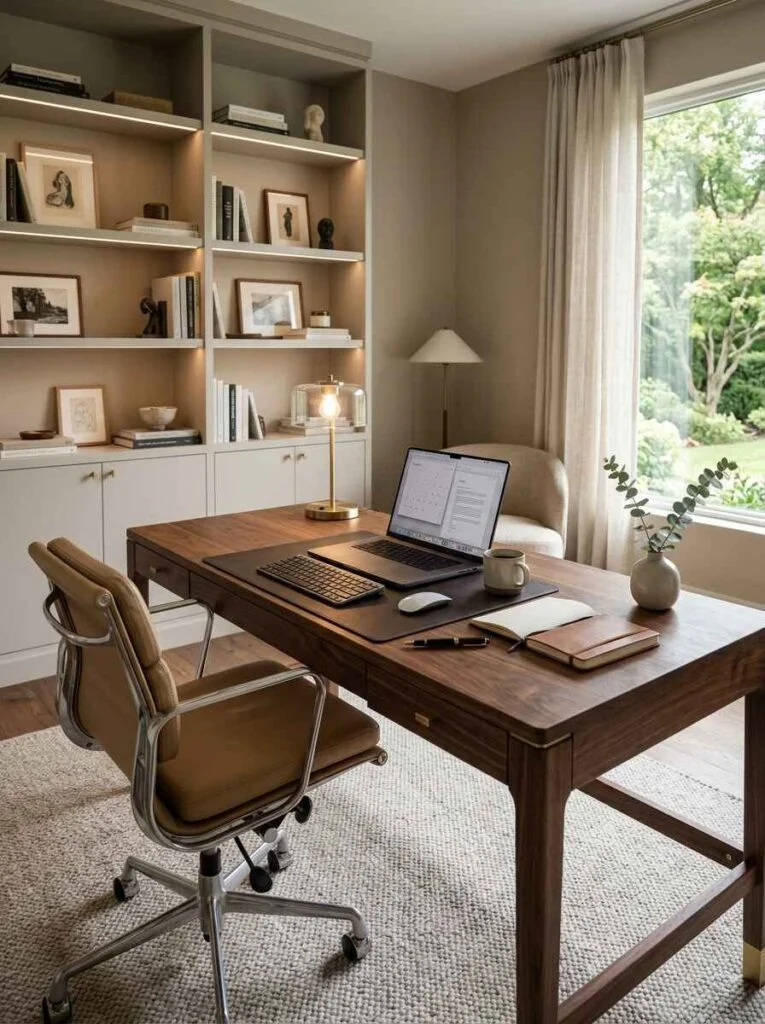
The desk serves as the functional anchor of your working environment. Consider your primary daily tasks when evaluating desk surfaces: digital work requires streamlined depth and integrated cord management, whereas creative drawing or heavy paperwork demands expansive surface area and generous drawer storage. Solid hardwoods like walnut and oak offer longevity and tactile richness that manufactured materials simply cannot replicate.
Office Chairs
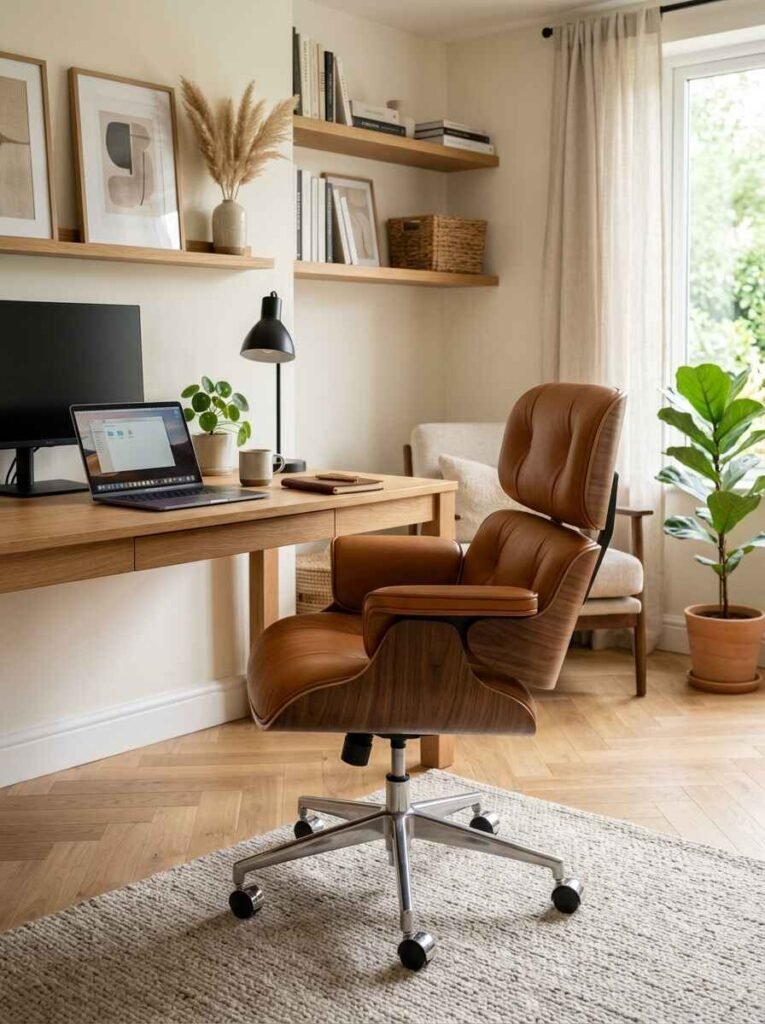
An office chair must balance rigorous ergonomic support with refined visual design. Look for adjustable seat heights, supportive lumbar contours, and tilt mechanisms disguised within elegant silhouettes. Rich top-grain leather, textured bouclé, or breathable tailored mesh offer tactile comfort during long working sessions without compromising the room’s overall design.
Storage & Shelving
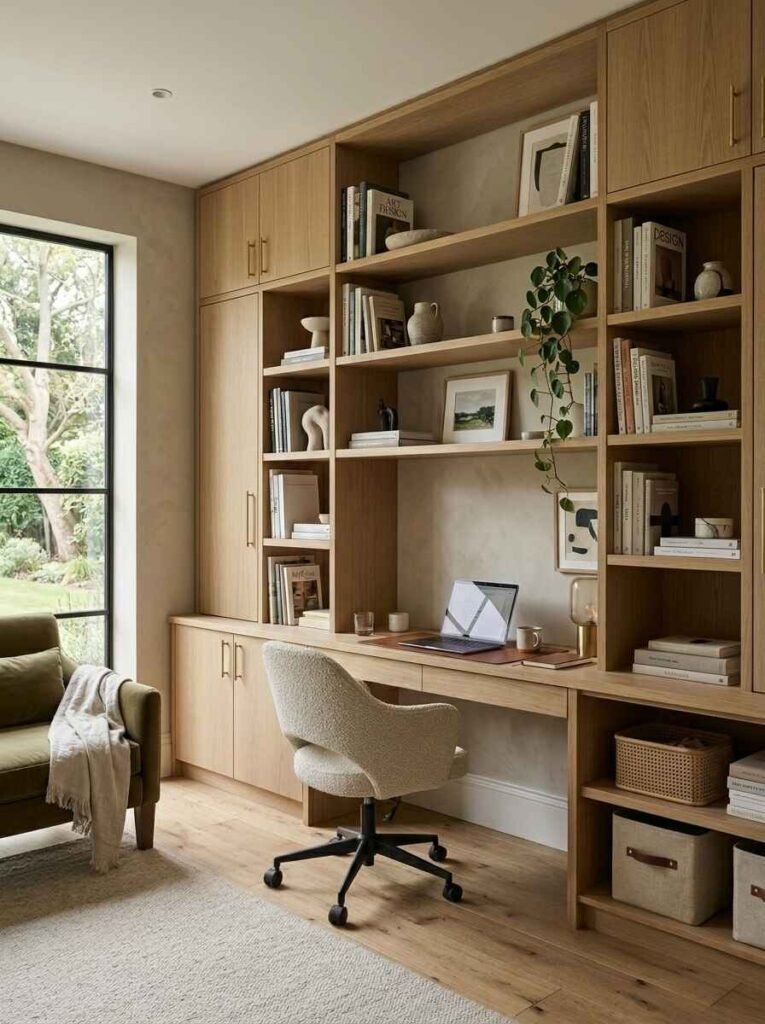
Effective storage balances functional organization with artistic presentation. Wall-mounted open shelving provides space for reference books and decorative ceramics, while mobile filing pedestals or low credenzas keep confidential paperwork hidden away. Choose storage solutions that match the wood species or metal finishes established by your main desk.
Desk Lamps
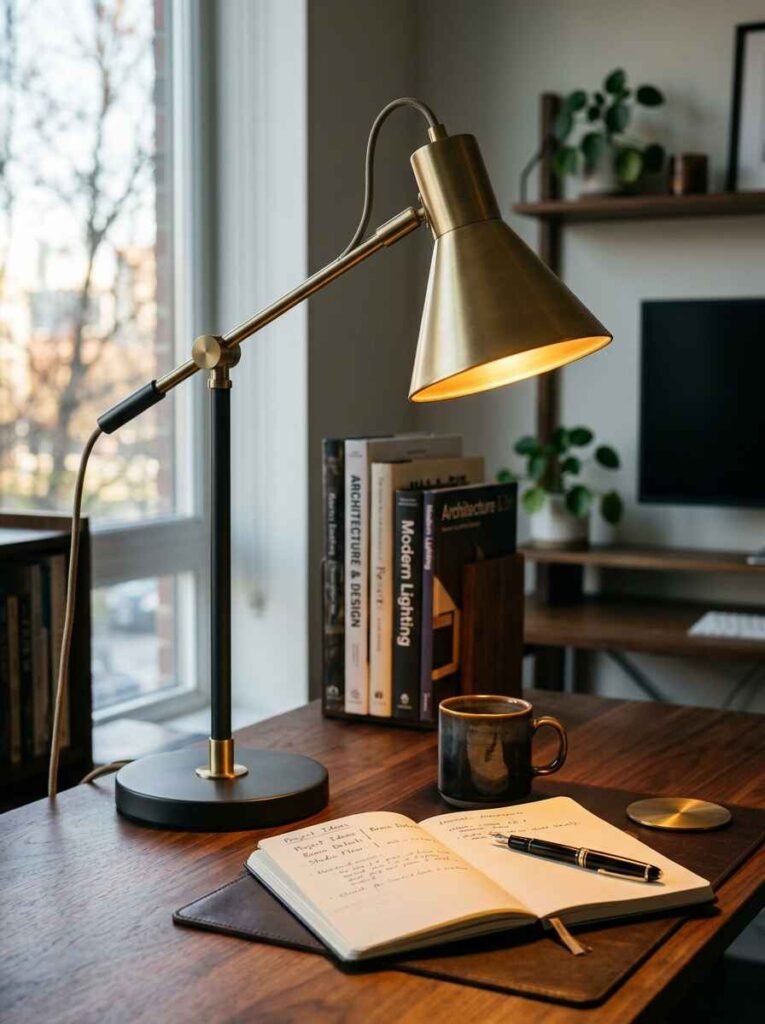
Task lighting provides concentrated, glare-free illumination directly onto reading materials and work surfaces. Select desk lamps that offer adjustable arms or swiveling shades so you can direct light precisely where needed. Warm color temperatures (2700K to 3000K) create an inviting ambiance without straining the eyes during late evening sessions.
Rugs & Curtains
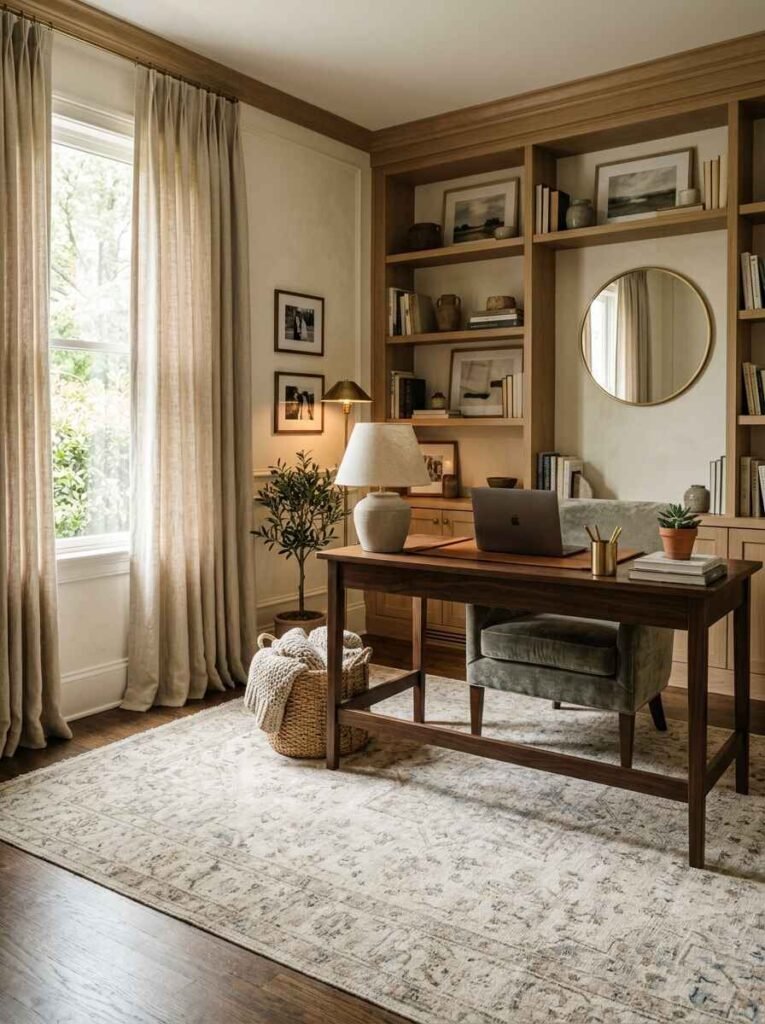
Textiles bring warmth, visual grounding, and essential acoustic absorption to rooms filled with hard wooden surfaces and glass screens. A low-pile area rug anchors the central seating group while allowing office chairs to roll smoothly. Floor-length drapery frames windows softly, diffusing harsh sunlight into a uniform glow.
Office Decor & Accessories
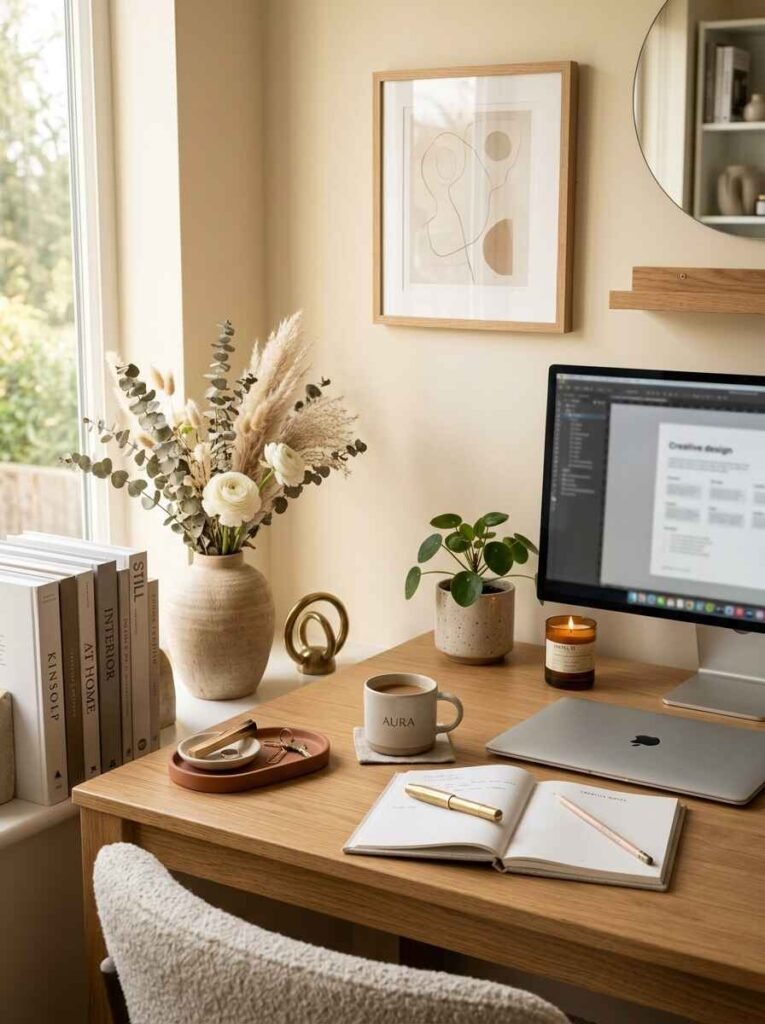
Finishing touches inject personality into an otherwise utilitarian environment. Select desk accessories—such as full-grain leather blotters, brass pen trays, handcrafted ceramic vases, and framed artwork—with restraint. Each decorative object should feel deliberately chosen, contributing to a calm, inspiring backdrop.
FAQs
What makes a home office look beautiful?
A visually appealing workspace is built on balanced proportions, intentional material selection, uncluttered surfaces, and cohesive color choices. Integrating warm natural woods, tailored lighting, comfortable seating, and hidden wire management creates an environment that feels cultured, orderly, and deeply inviting.
How can I make my home office look more luxurious?
Elevating a workspace involves focusing on high-end materials like solid hardwoods, brass lighting fixtures, marble accessories, and real leather upholstery. Incorporating tailored custom built-in cabinetry, floor-to-ceiling drapery, layered warm lighting, and floating your desk in the center of the room immediately creates an executive-level presence.
What is the best color for a home office?
Warm neutrals—such as soft cream, taupe, light oatmeal, and quiet beige—are ideal for creating an expansive, distraction-free backdrop that maximizes natural daylight. For those who prefer an intimate, sheltering atmosphere, deep tones like dark forest green, warm charcoal, or deep navy promote quiet focus.
How do I make a small home office look bigger?
Maximize a small room by choosing slim-profile furniture with raised legs, light paint colors, and wall-mounted floating storage systems. Pushing a slim desk near a window or into a corner alcove keeps central floor space open, while full-height vertical shelving draws the eye upward to emphasize ceiling height.
How can I make my home office feel cozy?
To instill immediate warmth, introduce soft tactile textiles such as wool area rugs, plush upholstered armchairs, and floor-length linen curtains. Layering warm lighting sources—such as low-wattage desk lamps and cabinet backlighting—alongside personal artwork, books, and green indoor plants transforms a utilitarian room into an inviting retreat.
What furniture should a home office have?
Every home office requires a well-proportioned desk, an ergonomic chair that supports good posture, and adequate storage for files and equipment. Depending on available space, adding open shelving for display, a dedicated task light, and a comfortable secondary lounge chair completes the setup.
Conclusion
A successful home office brings together three things: function, comfort, and personal style. The most beautiful spaces are not necessarily the most elaborate; they are the ones where furniture fits the room, storage keeps clutter controlled, lighting supports different tasks, and materials create a cohesive atmosphere.
Whether you prefer a minimalist workspace, a warm neutral study, a sophisticated executive office, or a compact desk tucked into an unused corner, the same principles apply. Start with the way you work, consider the architecture of your home, and then build the room around those needs.
With thoughtful planning, even a small workspace can become a polished and productive part of the home.
1 thought on “Aesthetic Home Office Ideas: 15 Beautiful & Productive Spaces”
Comments are closed.