
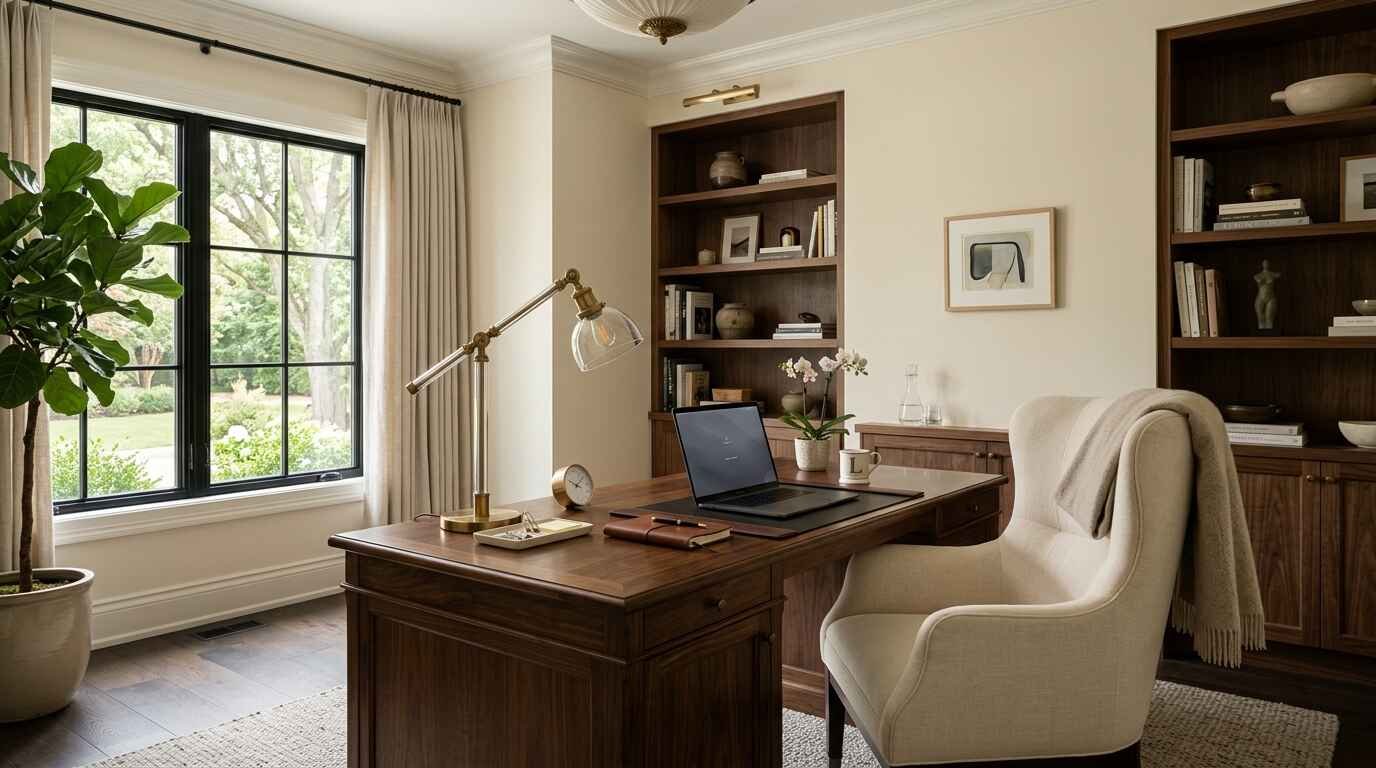
Your home office desk is more than a place to set your laptop—it can shape how the entire workspace looks, feels, and functions. The best home office desks balance practical needs such as workspace, storage, equipment, and comfort with a design that complements your interior.
From compact desks for bedroom corners to spacious executive and L-shaped designs, the right option depends on your available space and daily workflow. This guide covers 11 home office desk styles to help you compare their layouts, features, and ideal uses before choosing one for your home.
As an Amazon Associate, I earns from qualifying purchases. When you buy through links on our site, I may earn an affiliate commission at no extra cost to you.
11 Home Office Desk Styles to Consider
1. Modern Minimalist Home Office Desk
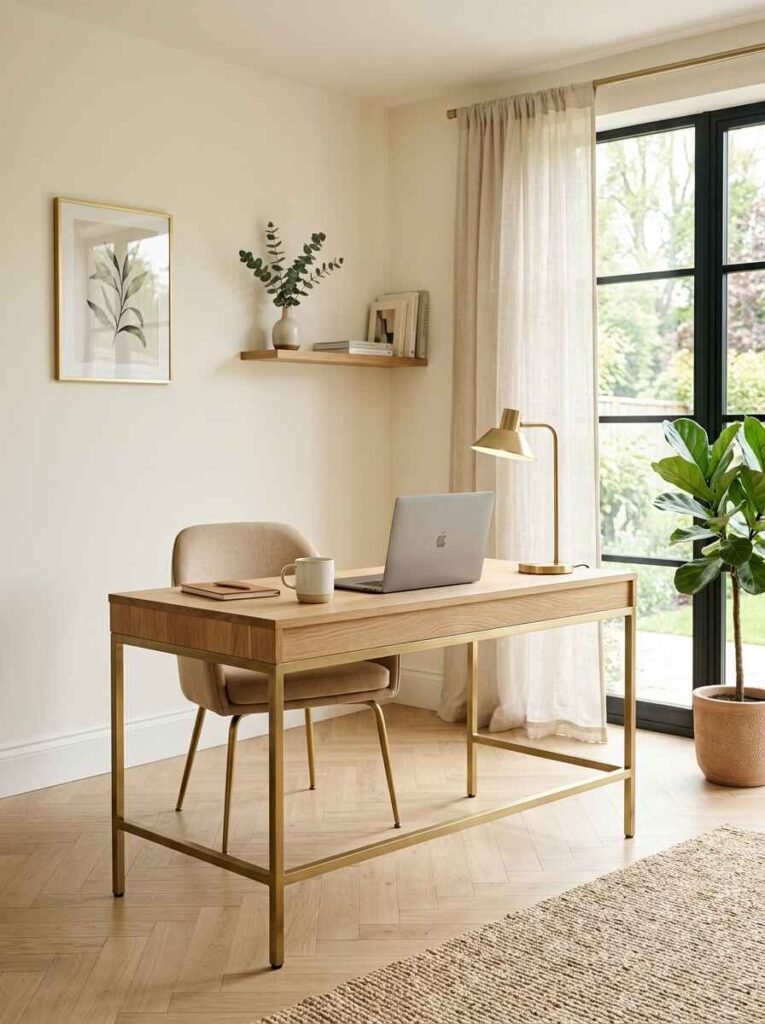
A minimalist desk keeps things simple — clean lines, an open frame, nothing bulky underneath. That openness lets light move through the room, which helps in smaller or brighter spaces.
- Best For: Modern interiors, open-concept rooms, and laptop-based work.
- Why We Like It: The slim frame keeps the desk from dominating the room visually, especially in spaces with limited square footage.
- Key Features:
- Clean rectangular surface
- Slim metal frame
- Compact footprint
2. Home Office Desk with Drawers
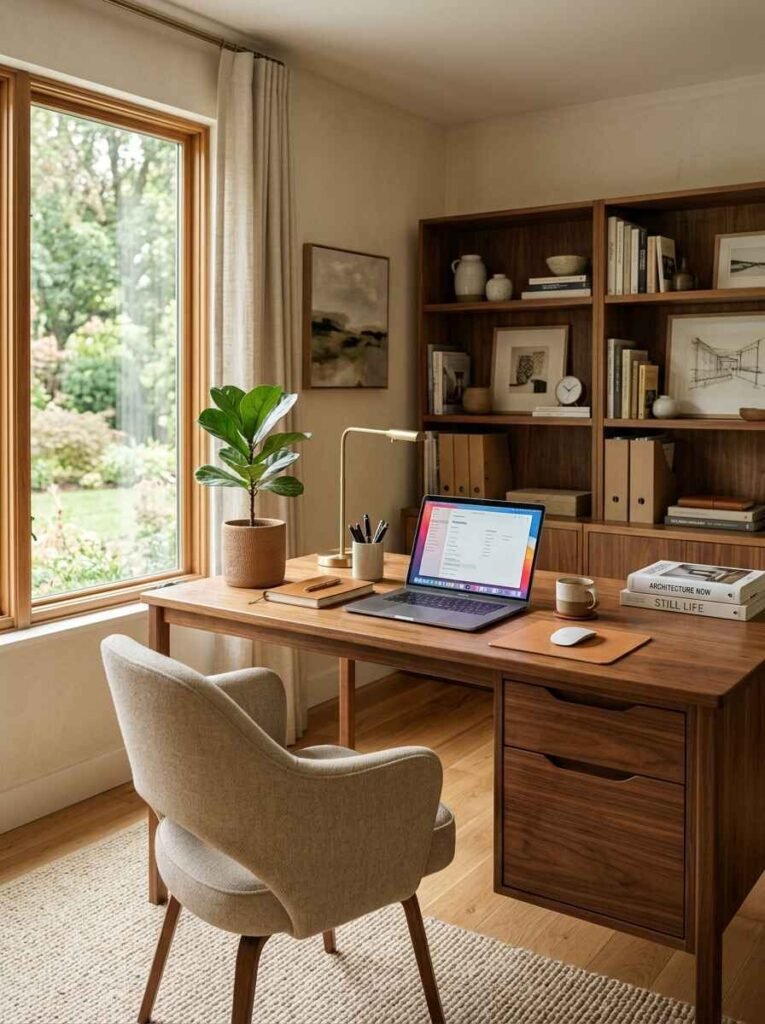
If your desk surface tends to collect notebooks and cables by the end of the day, built-in drawers solve that fast. Everything has a place to go instead of piling up in view.
- Best For: Daily organization and keeping supplies within reach.
- Why We Like It: Storage lives at the desk itself, so the surface stays clear without extra furniture.
- Key Features:
- Built-in drawers
- Full-width work surface
- Fits traditional or modern rooms
3. Small Home Office Desk
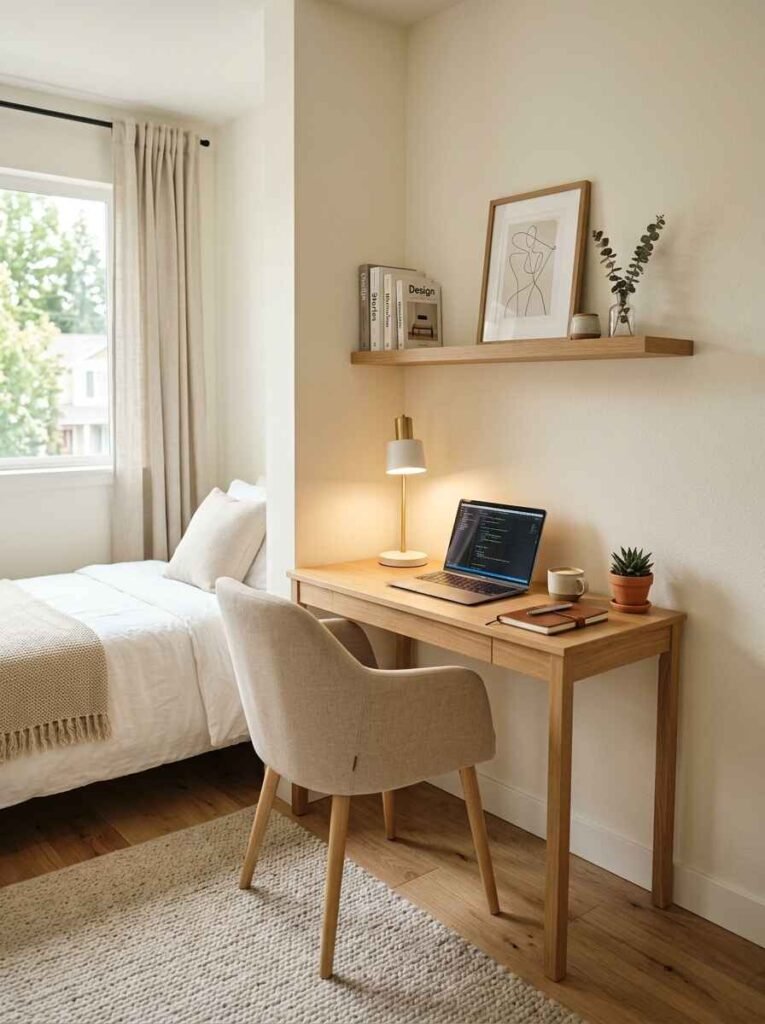
Not every home has a dedicated office, and a compact desk works well in a corner, alcove, or bedroom nook without getting in the way. For more layout ideas in tight spaces, see our guide on small home office design ideas.
- Best For: Apartments, bedroom corners, and awkward wall space.
- Why We Like It: A shallow footprint turns unused space into a real workspace without blocking foot traffic.
- Key Features:
- Compact footprint
- Shallow depth
- Pairs well with an accent chair
4. L-Shaped Home Office Desk
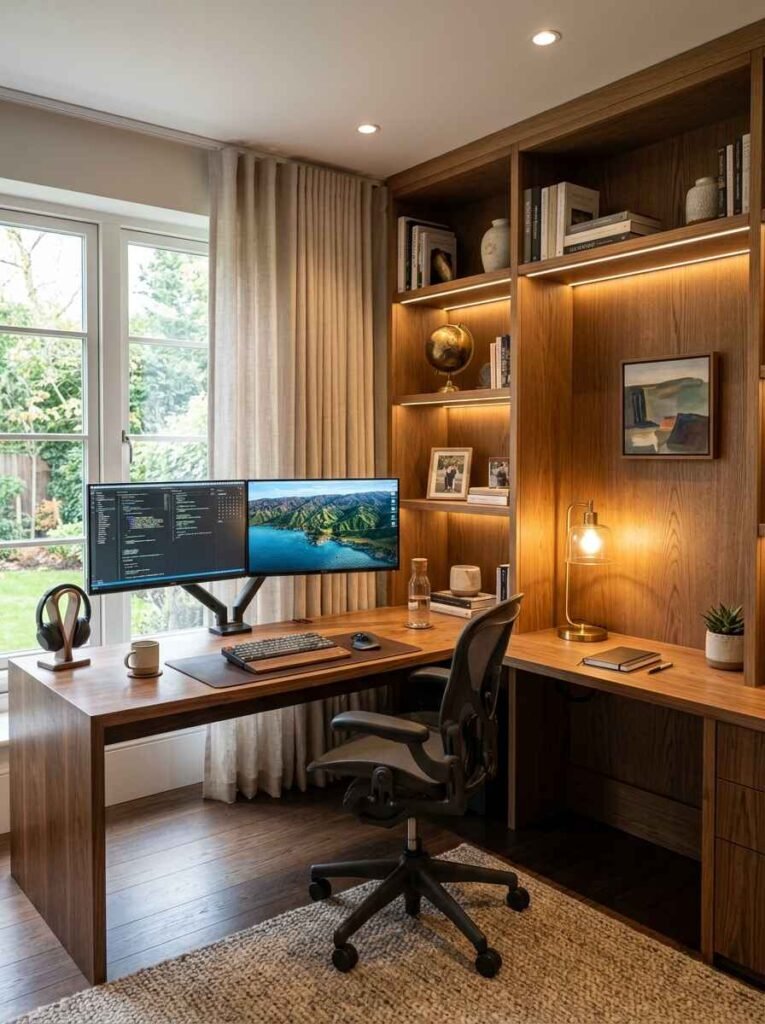
Running multiple monitors or splitting your time between a computer and paperwork gets tight on a straight desk. An L-shape gives you two usable surfaces instead of one, without needing a bigger room.
- Best For: Multi-monitor setups and heavier workflows.
- Why We Like It: The corner layout separates digital work from physical documents, so neither takes over the whole desk.
- Key Features:
- Corner-fitting, dual-surface design
- Room for multiple screens
- Makes use of otherwise wasted corner space
5. Home Office Desk with Storage Shelves
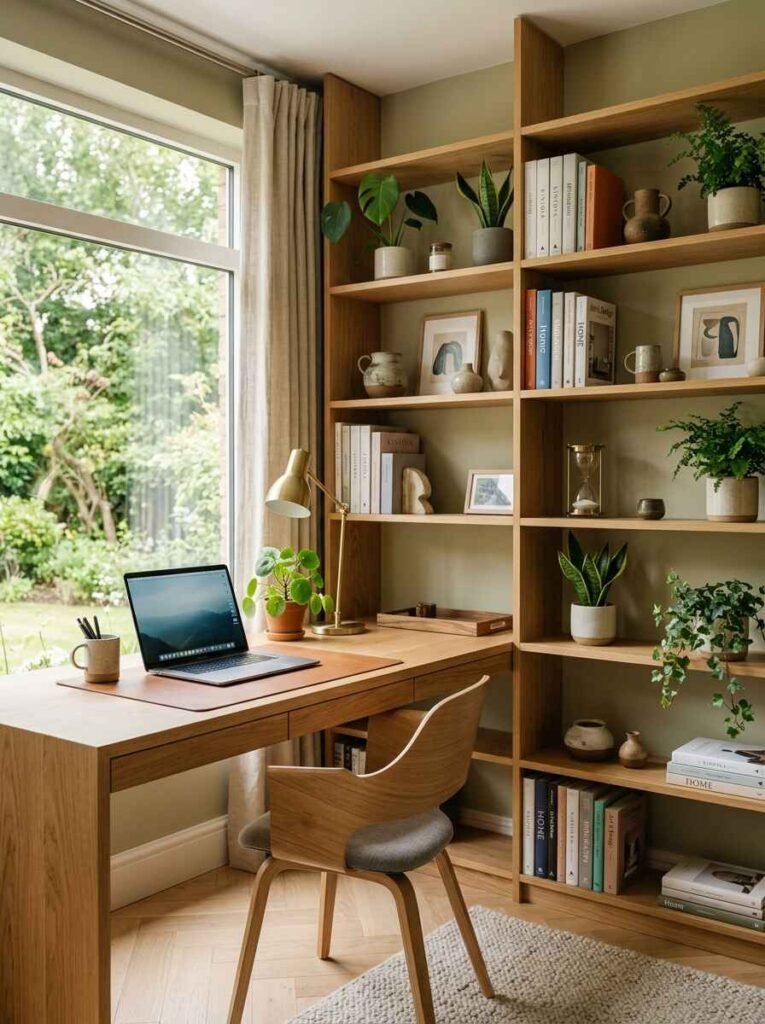
Pairing a desk with vertical shelving is a practical move if you want to display books or a few decor pieces without buying a separate bookcase.
- Best For: Book storage and smaller rooms that need to double up on function.
- Why We Like It: You get a work surface and display storage in one footprint, which matters when floor space is limited.
- Key Features:
- Integrated open shelving
- Easy-access storage
- Combines desk and shelf in one piece
6. Writing Desk for Home Office
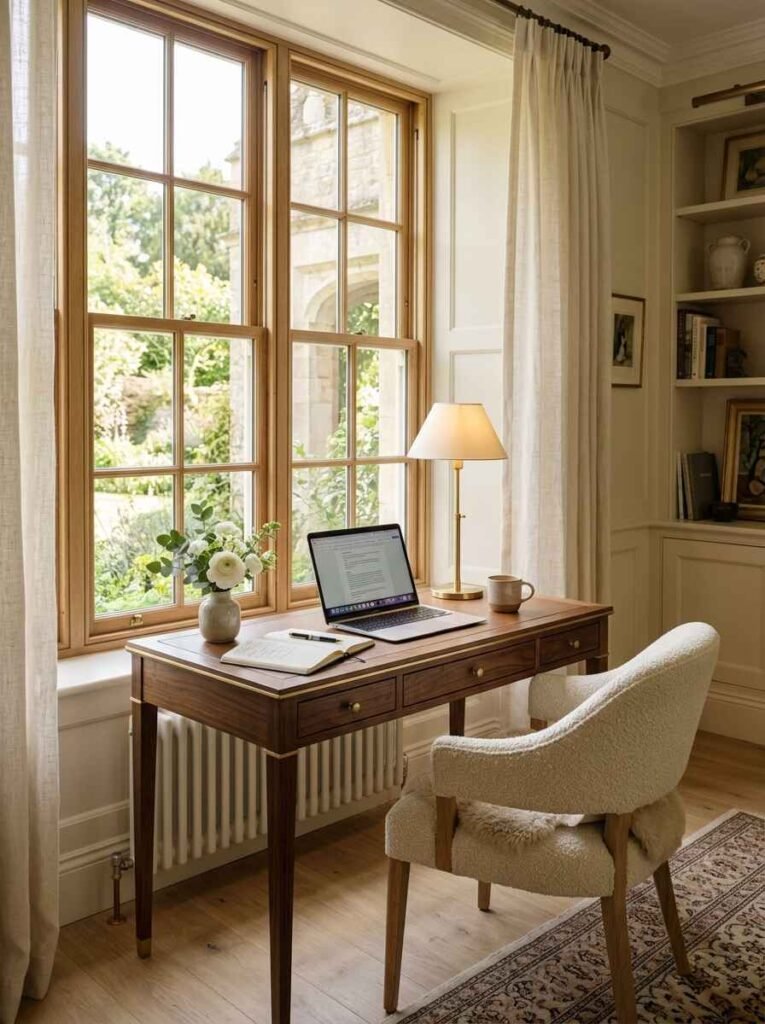
A writing desk is built for lighter, everyday tasks — laptop work, journaling, answering emails. The slim proportions mean it can sit in a living room or guest room without looking out of place.
- Best For: Laptop users and rooms that serve more than one purpose.
- Why We Like It: Its narrow profile blends into a room’s existing decor instead of announcing itself as “office furniture.”
- Key Features:
- Slim, clean-lined frame
- Shallow desktop
- Fits bedrooms and living spaces easily
7. Executive Home Office Desk
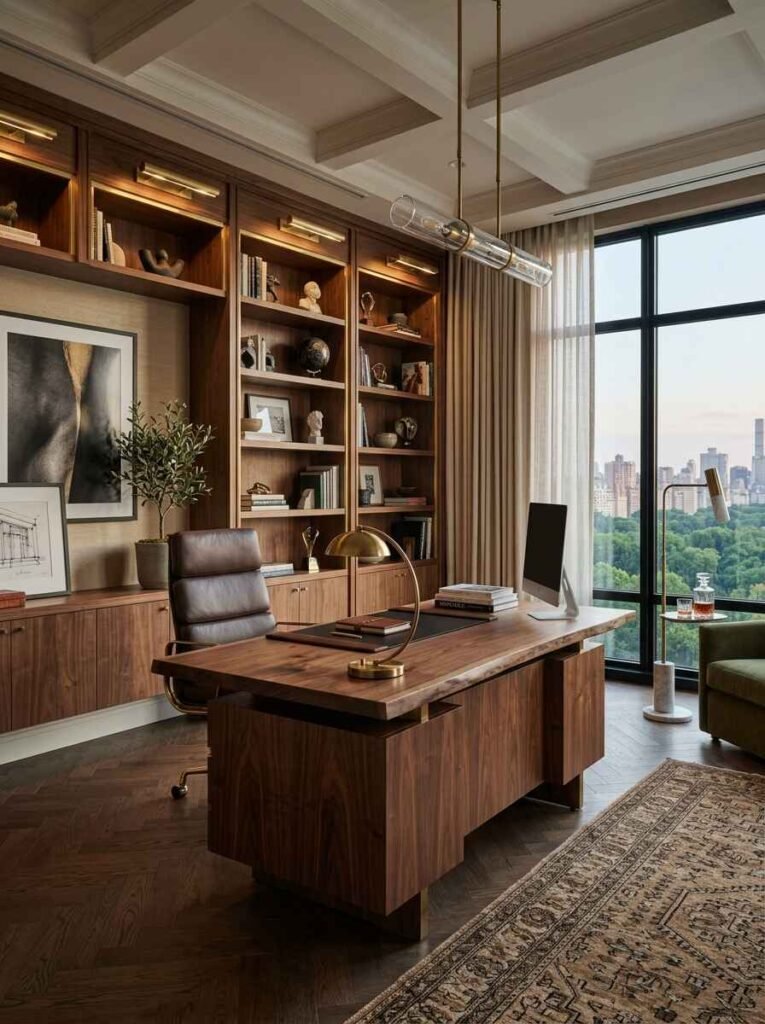
An executive desk is built for a dedicated room, not a shared corner. Wide surfaces and a solid frame give it real presence in a private study. For guidance on styling a piece like this, see our luxury home office layouts guide.
- Best For: Dedicated offices and larger rooms.
- Why We Like It: It functions as the anchor piece of the room, with enough surface area and storage to handle a heavier daily workload.
- Key Features:
- Large work surface
- Pedestal drawer storage
- Classic executive proportions
8. Farmhouse Home Office Desk
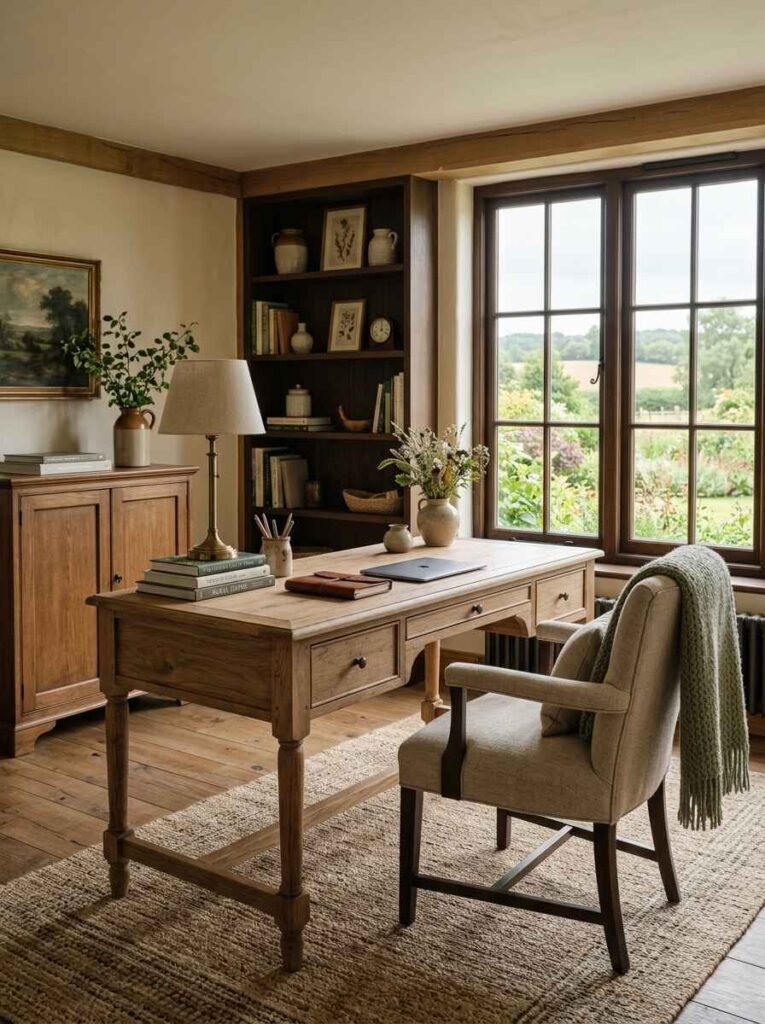
A farmhouse desk brings in visible wood grain and traditional detailing, which reads as warmer and more lived-in than most modern styles.
- Best For: Traditional or transitional interiors.
- Why We Like It: The natural wood finish gives a study or open living area some texture and character.
- Key Features:
- Wood grain finish
- Traditional leg and drawer detailing
- Everyday drawer storage
9. Glass Home Office Desk
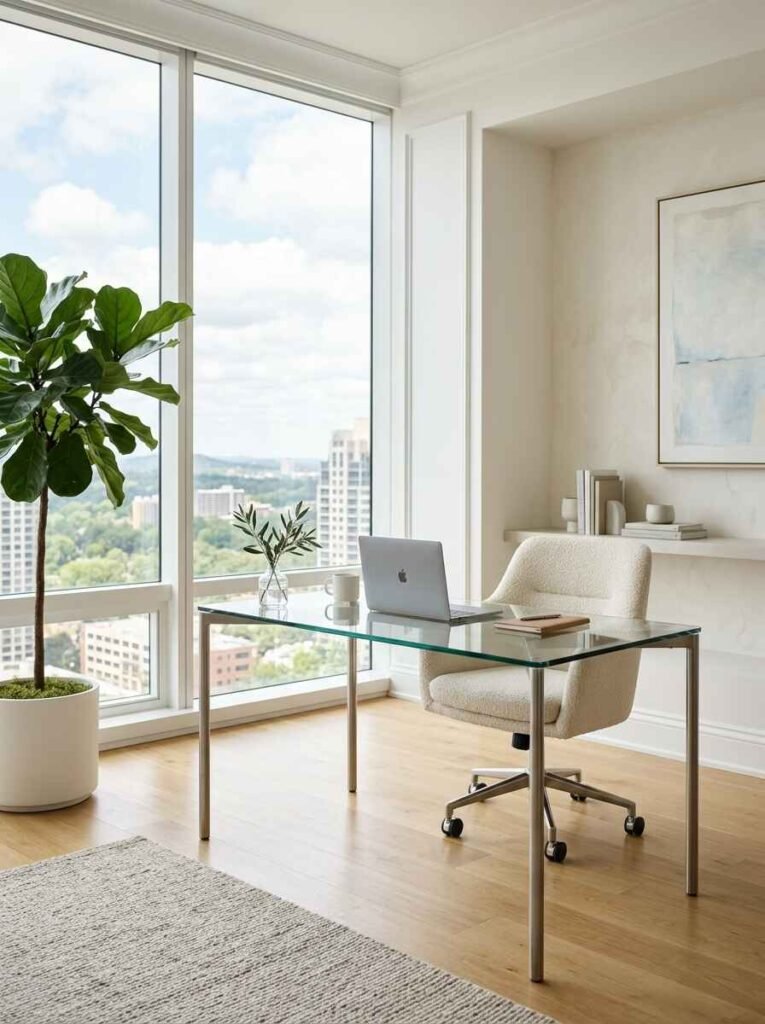
In a smaller or darker room, a solid wood desk can feel heavy. A glass top keeps sightlines open and reflects whatever light the room already has.
- Best For: Bright rooms and smaller footprints.
- Why We Like It: The clear surface makes the desk visually lighter, which helps rooms with limited square footage feel less boxed in.
- Key Features:
- Tempered glass top
- Slim metal frame
- Light-reflective surface
10. Mid-Century Modern Home Office Desk
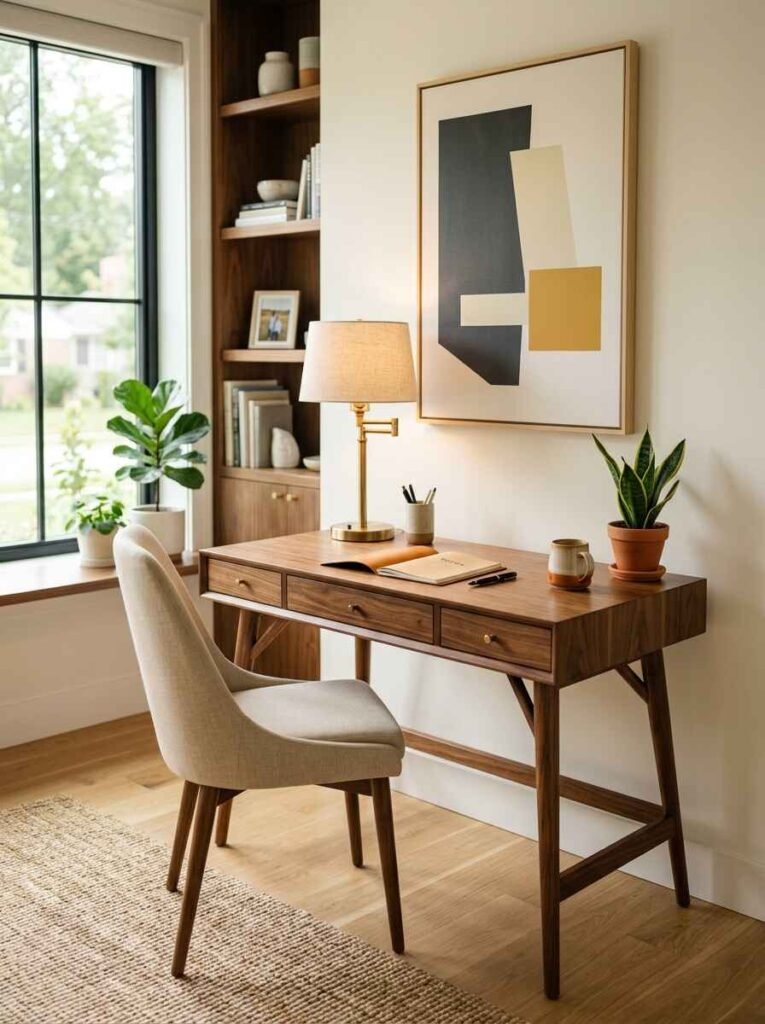
Tapered legs and warm wood finishes have stuck around for a reason — they’re practical and instantly recognizable. This style tends to suit a wide range of interiors, not just retro ones.
- Best For: Mid-century interiors and general-purpose studies.
- Why We Like It: The raised, tapered legs keep the desk from looking heavy on the floor while still offering drawer storage.
- Key Features:
- Tapered wood legs
- Clean drawer fronts
- Warm wood finish
If you’re creating a workspace in a smaller room, our guide to small home office design ideas can help you make better use of limited floor space while keeping the room comfortable and visually balanced.
11. Standing Desk for Home Office
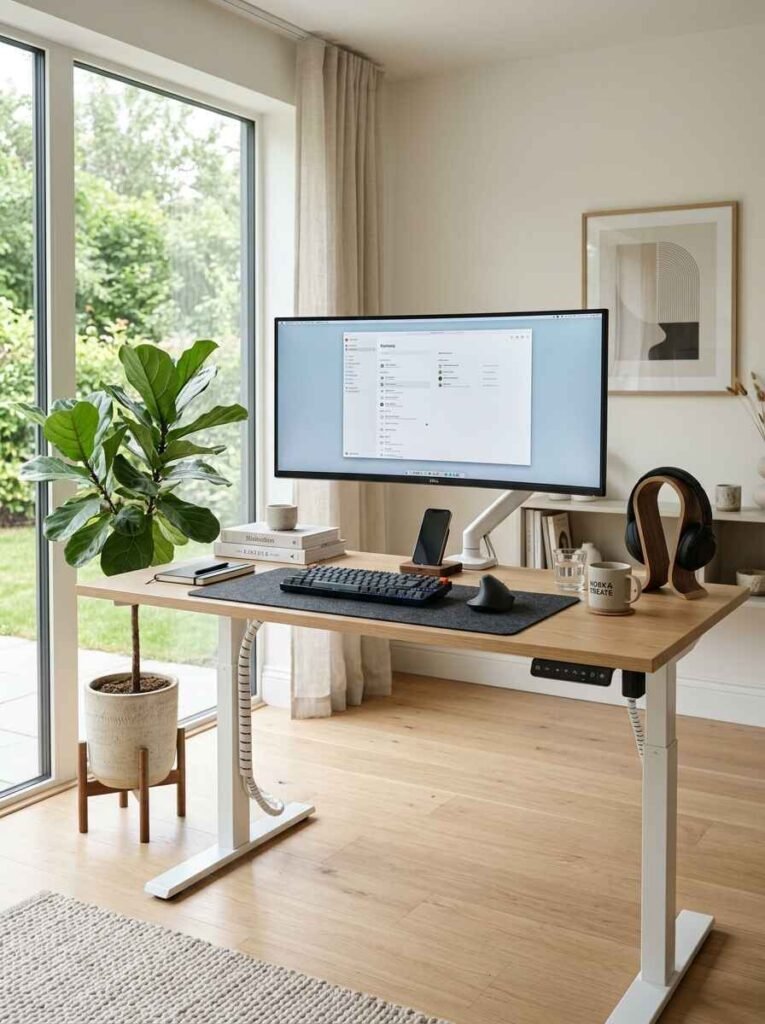
Long stretches of sitting take a toll over a full workday. A height-adjustable desk lets you switch between sitting and standing without stepping away from your work.
- Best For: Long work sessions and anyone prioritizing movement during the day.
- Why We Like It: The adjustable height means you’re not locked into one posture for eight hours straight.
- Key Features:
- Adjustable height mechanism
- Full-size work surface
- Stable base frame
How to Choose the Right Home Office Desk
A few practical factors will narrow things down faster than style alone:
- Size and clearance. Measure the room first. Leave at least 36 inches behind the desk so your chair can slide out comfortably.
- Storage needs. Decide if you need drawers for paperwork or prefer an open frame with less visual weight.
- Equipment load. If you’re running monitor arms or multiple screens, check the desk’s weight capacity on the product listing.
- Cable management. Grommets, under-desk trays, or wire channels keep cords out of view.
- Ergonomics. Match the desk height to your chair so your arms rest at roughly a 90-degree angle while typing.
Frequently Asked Questions
What size desk is best for a small home office?
A desk between 36 and 48 inches wide usually gives enough room for a laptop while keeping walkways clear in smaller spaces.
Are L-shaped home office desks good for corner layouts?
Yes. They make efficient use of a room’s corner and give you two separate surfaces — one for your computer setup, one for paperwork.
What is the standard height for a home office desk?
Most standard desks sit between 28 and 30 inches high, which works with most adjustable office chairs.
Which desk style is easiest to keep visually clean?
Minimalist frame desks and glass-top desks tend to look less cluttered, since there’s less surface area competing for attention.
Are standing desks practical for long work days?
They can be. Being able to switch between sitting and standing throughout the day helps reduce the stiffness that comes with sitting for hours straight.
How do I hide cords on an open home office desk?
Under-desk cable trays, adhesive wire clips, and fabric cord sleeves will keep cords bundled and out of sight along the desk legs.
Conclusion
Choosing the right home office desk starts with understanding your space, workflow, and storage needs. A compact writing desk can work beautifully in a bedroom corner, while an L-shaped or executive desk may suit a larger dedicated office.
Consider the desk’s dimensions, surface area, storage, cable management, and overall style before buying. The best choice is one that supports your daily work while complementing the look of your home. Take time to compare your options and choose a desk that feels practical, comfortable, and naturally suited to your space.