
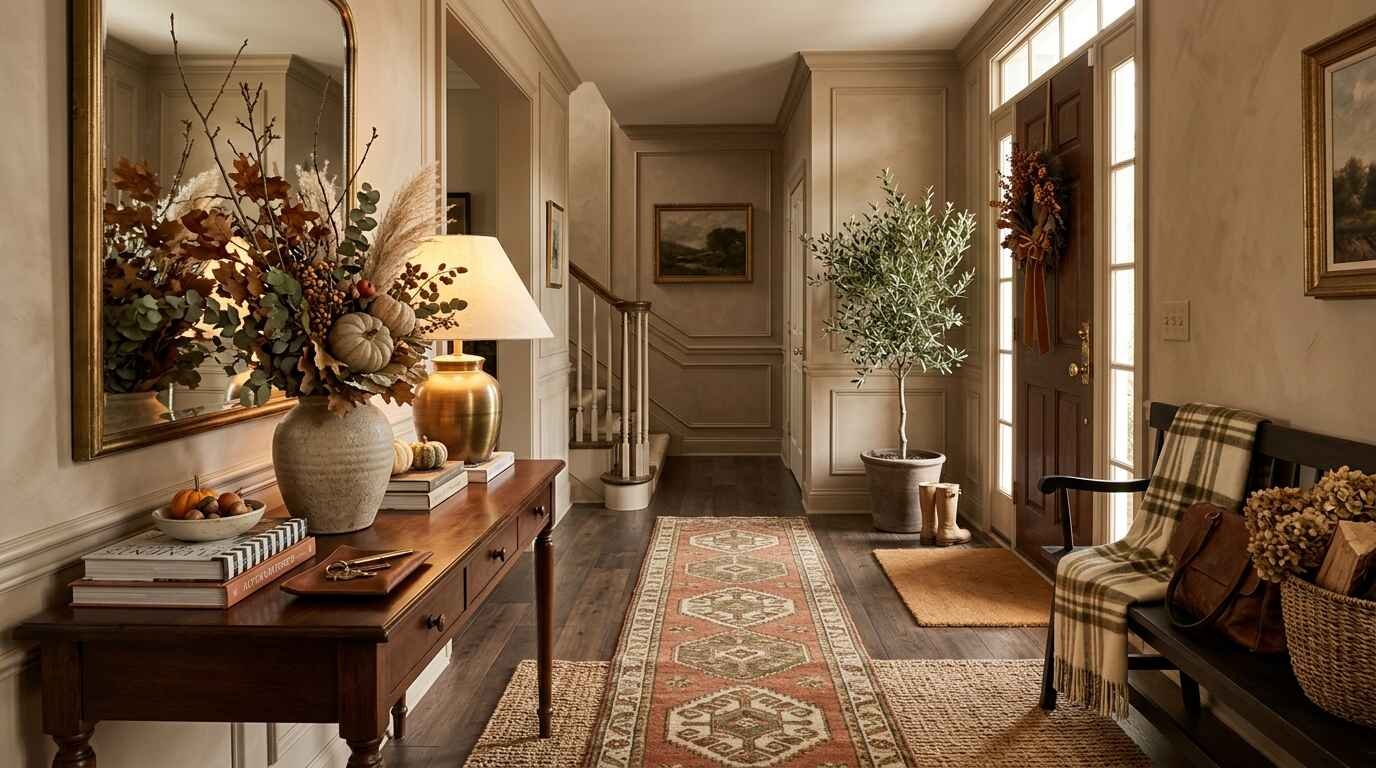
The entryway sets the tone for the entire residence, functioning as the primary transition point between the external world and the sanctuary within. Updating this space for the autumn season does not require a complete architectural overhaul or an accumulation of temporary novelties. Instead, a refined approach relies on subtle shifts in texture, warm lighting, natural foliage, and an earth-inspired color palette.
By prioritizing foundational materials such as rich timber, woven fibers, and patinated metals, a foyer can evoke autumn warmth while maintaining daily practical utility. Clear walkways, organized surfaces, and uncluttered circulation paths ensure the entrance remains as functional as it is visual.
This guide explores 13 elegant fall entryway ideas that combine seasonal warmth, practical function, and timeless materials. Because entryways handle shoes, coats, bags, keys, and constant foot traffic, seasonal styling should always work around the way the space is actually used.
13 Fall Entryway Decor Ideas
1. Fall Entryway Runner
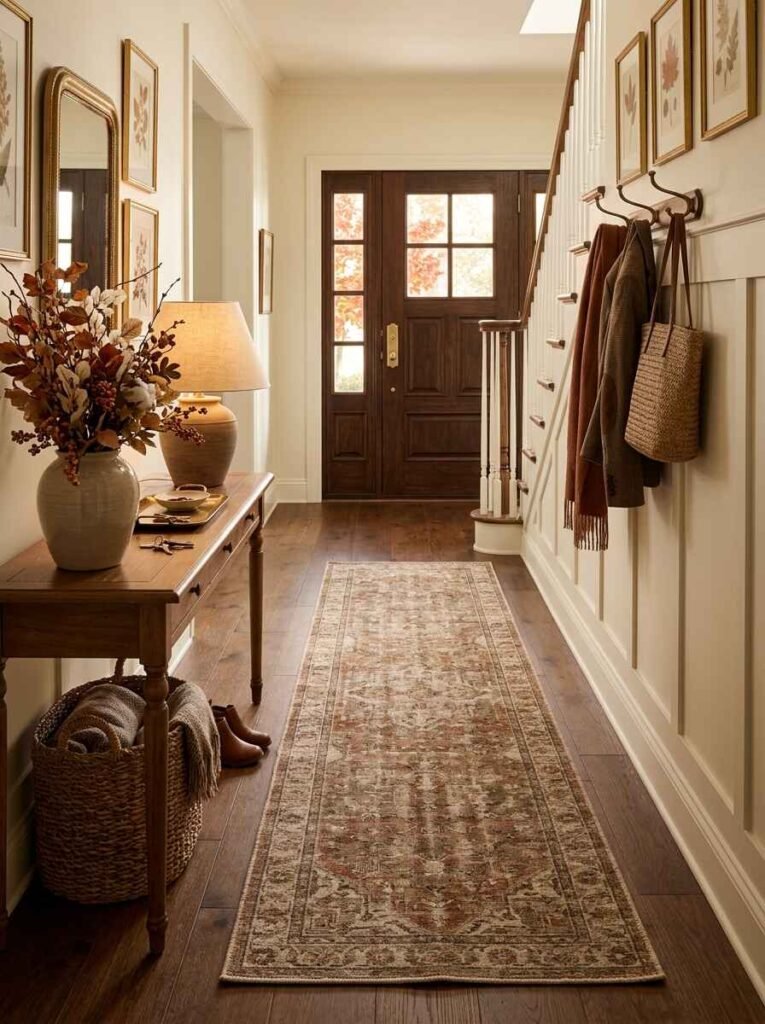
A thoughtfully chosen floor runner anchors the foyer, defining the spatial boundaries of the entrance while providing crucial tactile comfort underfoot. Natural-fiber options, particularly those crafted from wool or flat-weave jute, offer the ideal balance of durability and refined visual depth necessary for high-traffic zones. Incorporating vintage-inspired patterns with muted, grounded palettes—such as rust, taupe, cream, chocolate brown, and subtle olive—helps draw the eye inward without overwhelming adjacent architecture.
To preserve clean spatial margins, select a low-pile construction that easily clears the swing of the front door. Ensure the runner leaves approximately four to six inches of exposed flooring visible on both sides to maintain architectural symmetry. Always secure natural-fiber runners with high-quality non-slip rug pads underneath to prevent movement, preserve safety, and extend the lifespan of the textile.
2. Natural Fall Foliage
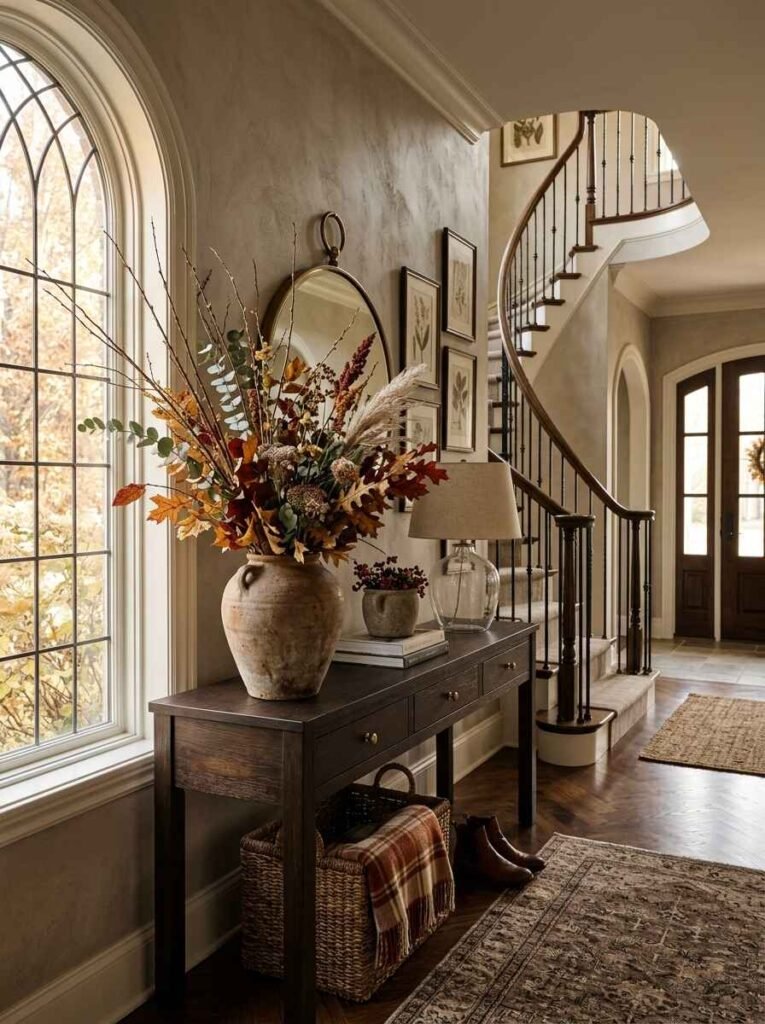
Replacing synthetic foliage with organic, dried botanical elements introduces an authentic seasonal connection. Large-scale dried oak branches, preserved autumn foliage, seed pods, or muted olive and eucalyptus stems provide architectural structure and longevity without requiring daily upkeep.
Displaying these botanical elements requires careful vessel selection. Heavy stoneware, raw terracotta, weathered clay, or hand-carved stone vessels offer the visual weight necessary to ground tall, dramatic stems. Style the branches with deliberate asymmetry, allowing the natural curve of the wood to dictate the shape of the arrangement rather than forcing a rigid, uniform outline. This organic approach ensures the foliage feels sculpted by nature rather than artificially arranged.
3. Fall Entryway Console
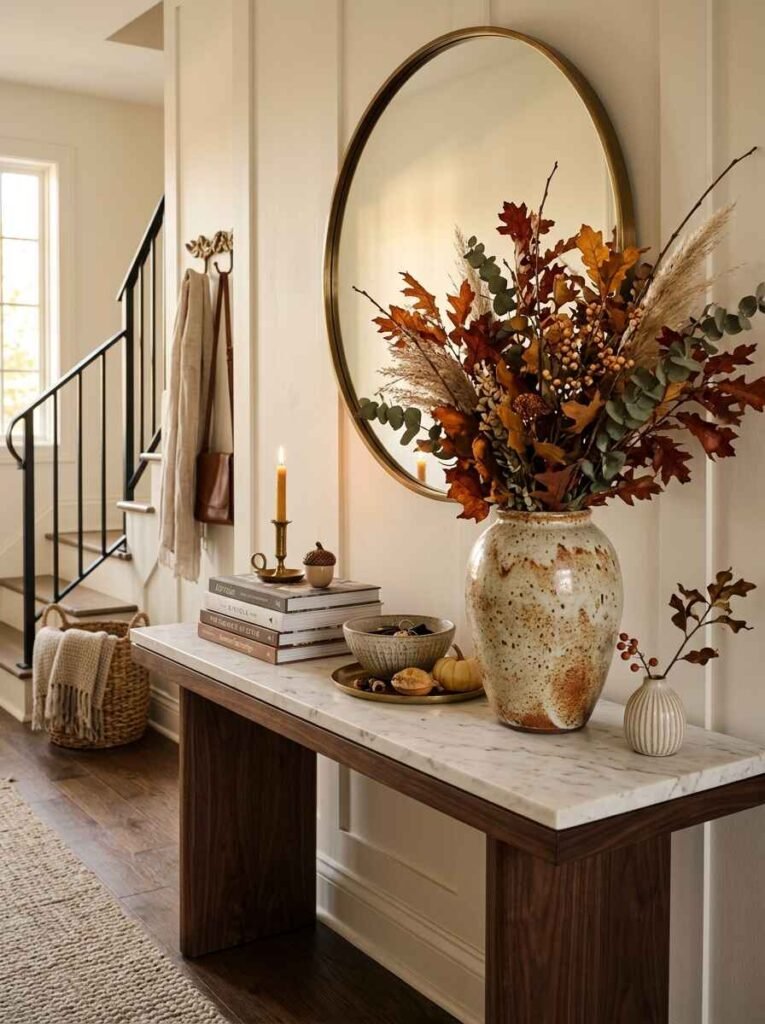
The console table functions as the focal anchor of the foyer layout. Selecting a piece crafted from solid oak, walnut, or featuring a travertine or marble top establishes a substantial material baseline.
When styling the console surface, balance relies on asymmetrical grouping rather than crowded symmetry. Begin with a single dominant focal object—such as an oversized ceramic vessel holding foliage—positioned slightly off-center. Balance this height on the opposing side using a low stack of linen-bound design books paired with a small stoneware key tray or a carved alabaster bowl. Reserving open space on the surface preserves daily drop-zone functionality, ensuring keys, mail, and personal belongings do not create visual clutter.
4. Warm Wood Accents
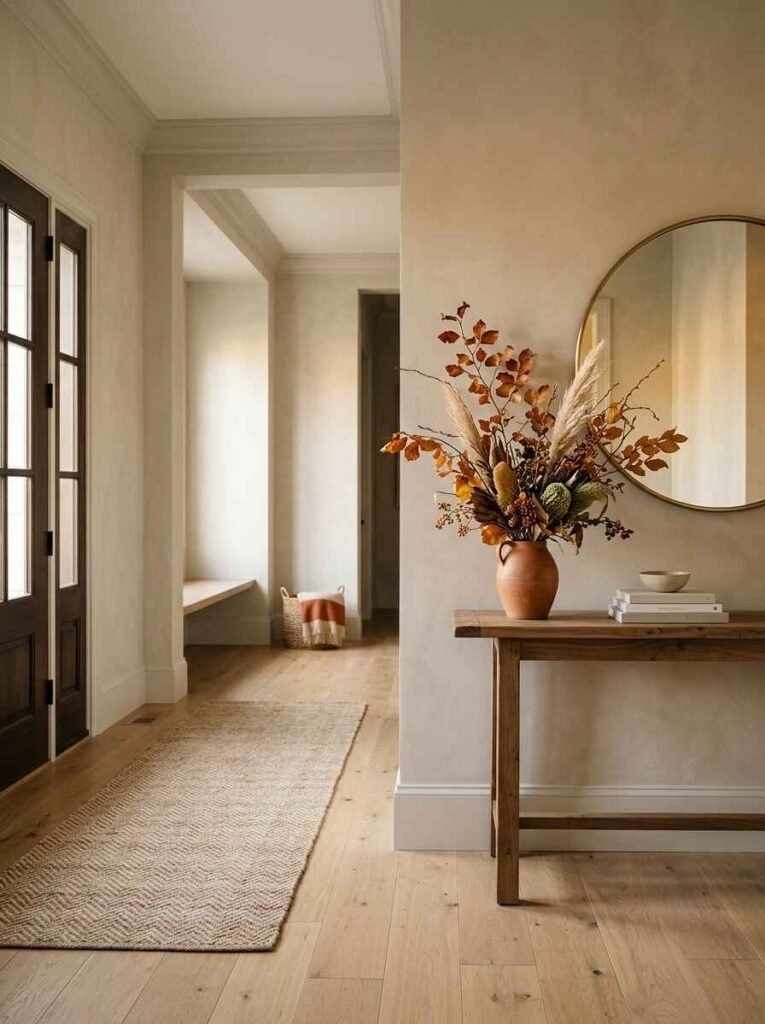
Incorporating natural wood features introduces inherent organic warmth, which balances cooler architectural surfaces like plaster, tile, or stone. Solid oak, walnut, and warm chestnut elements bring a grounding quality that prevents spacious entryways from feeling stark as the natural light shifts in autumn.
To execute this look, pair dark wood console tables or architectural wooden benches with soft cream walls and subtle lime-wash finishes. The high-contrast interaction between deeply grained timber and light, textured walls highlights the craftsmanship of the furniture. Integrating wood-framed architectural mirrors or carved bowls further layers timber tones into the scheme, while pairing these solid elements with woven baskets keeps the visual balance soft and approachable.
5. Aged Brass & Warm Metals
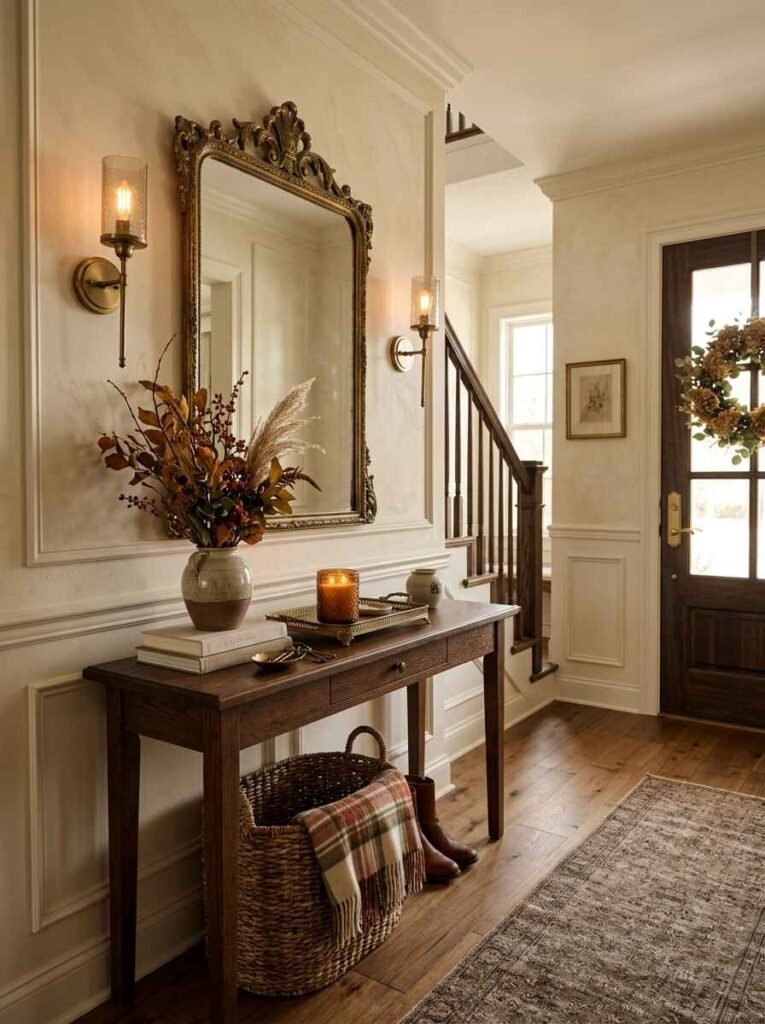
Cool chrome and high-shine polished gold can feel sharp in an autumn interior scheme. Swapping these for warm, patinated finishes such as aged brass, unlacquered brass, and antique bronze elevates the entryway with quiet historical detail.
Incorporate warm metals through permanent and semi-permanent touchpoints. Wall sconces featuring antique brass backplates cast a gentle glow across textured plaster, while an aged brass mirror frame adds weight above a console. On tabletop surfaces, small decorative trays, unlacquered key bowls, or slim candlestick holders provide subtle metallic catchpoints that reflect ambient light without appearing flashy. Unlacquered finishes can develop a natural patina over time, adding character to the entryway.
6. Neutral Fall Entryway
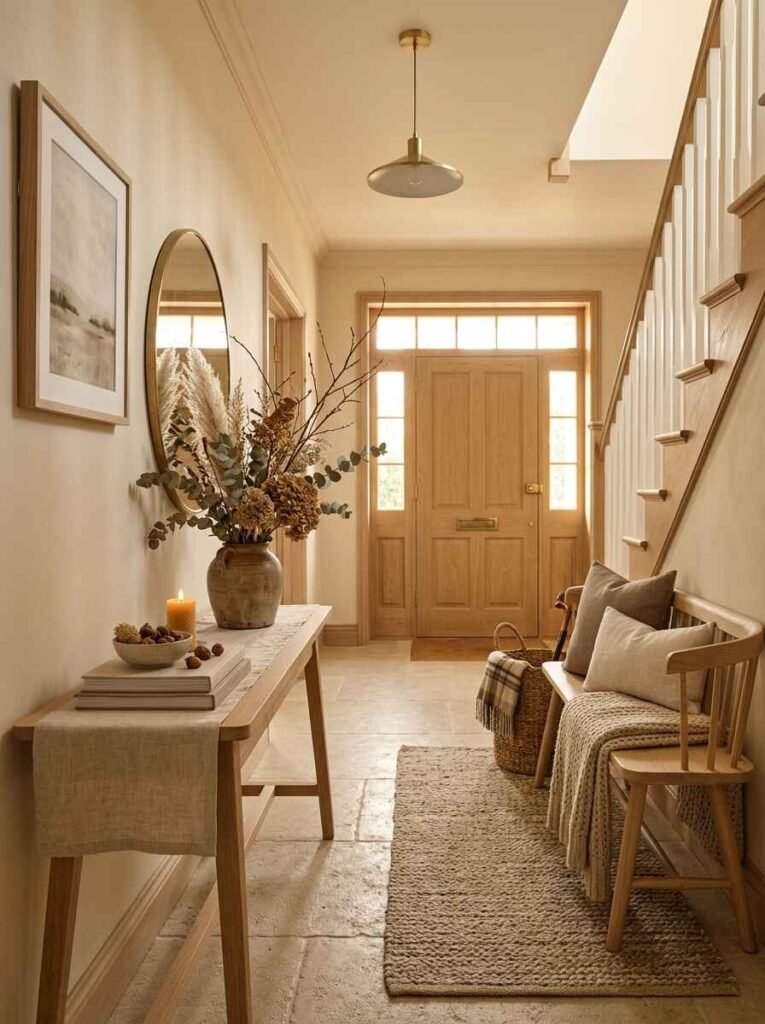
A seasonal transformation does not necessitate bold, saturated colors. A neutral fall entryway relies on a restrained palette of cream, beige, taupe, warm white, light oak, and soft brown to create a serene, sophisticated ambiance.
When color is kept minimal, texture becomes the primary design tool. Layering varying natural materials—such as a slubbed linen console runner over a stone top, paired with a raw clay vase and a flat-weave jute rug—creates tactile richness. Subtle brown accents, introduced through dried botanical elements or leather catchalls, ground the light tones, resulting in an environment that feels seasonally appropriate yet timeless.
7. Rich Autumn Colors
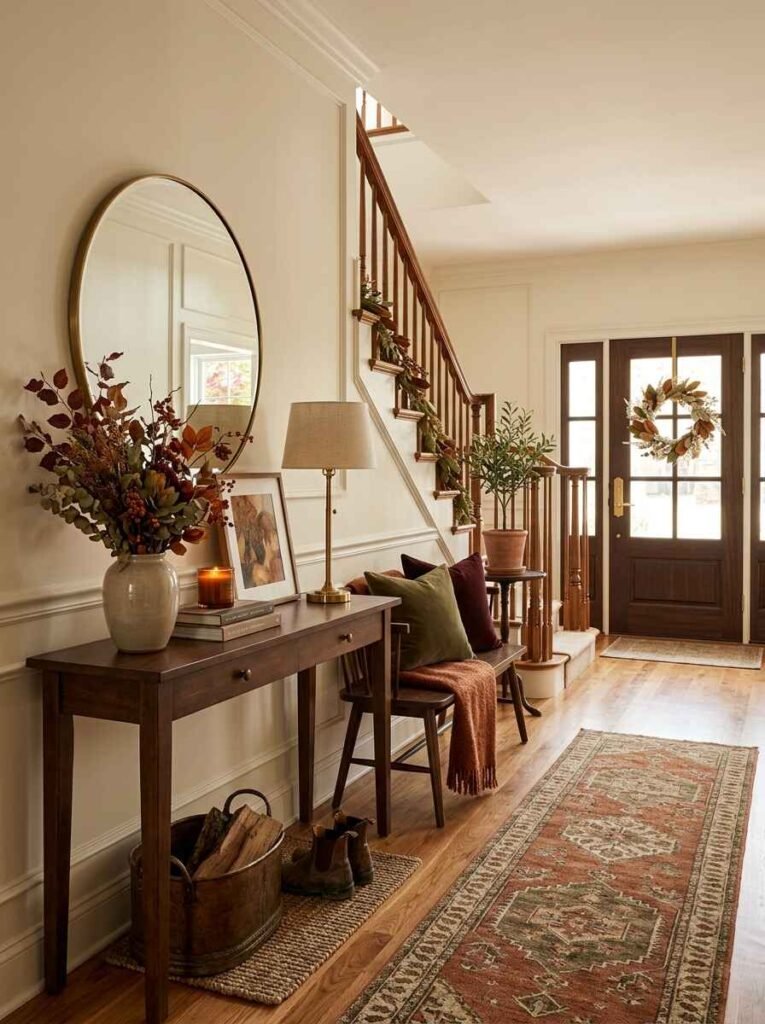
For spaces designed around deeper palettes, autumn offers an ideal opportunity to introduce saturated earth tones in controlled, deliberate doses. Rather than relying on primary orange hues, favor sophisticated shades such as rust, burnt terracotta, deep olive, forest green, rich burgundy, and dark chocolate brown.
These colors work especially well when introduced through smaller accents rather than large walls or major furniture pieces. A velvet accent cushion positioned on a bench, a vintage-inspired runner woven with burgundy threads, or a collection of deep crimson oak leaves introduces rich color while preserving a calm design balance. Restraining the palette to two or three complementary accent shades prevents the foyer from feeling chaotic.
8. Fall Entryway Mirror
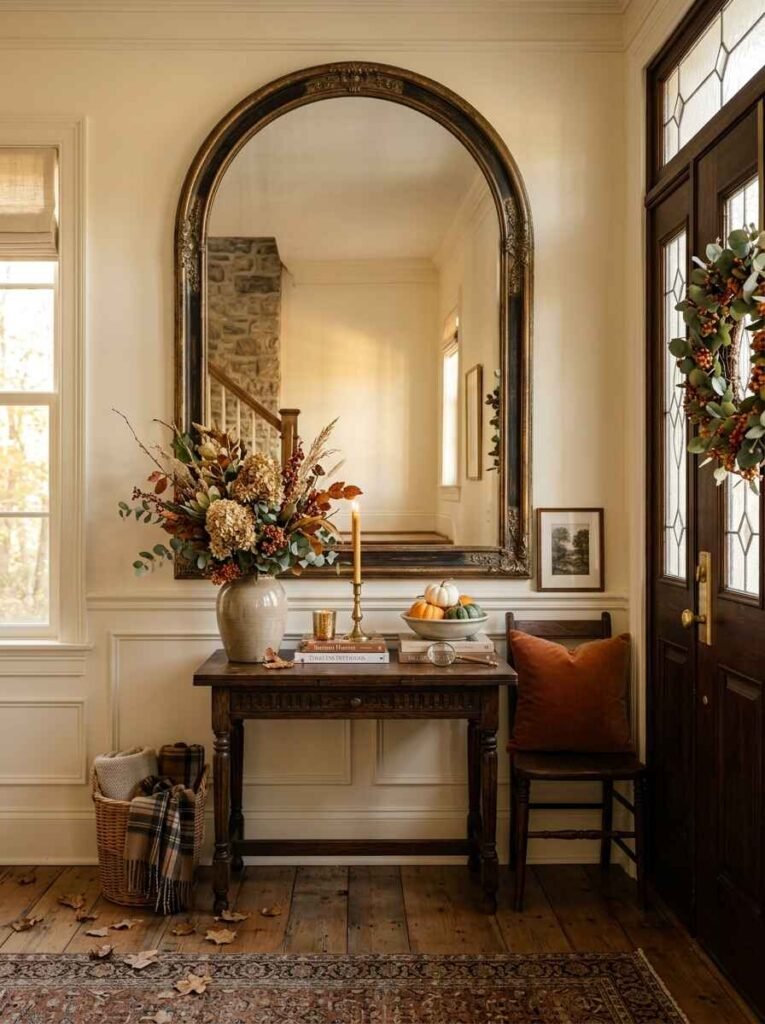
An oversized mirror acts as a powerful architectural element above a console table, reflecting natural light down darker hallways and visually expanding compact entry foyers.
Opt for tailored architectural profiles, such as grand arched silhouettes or deep rectangular frames in dark walnut or aged brass. Position foliage arrangements slightly in front of the mirror glass to catch and double the visual impact of organic textures. The reflective surface can help distribute the glow of table lamps and candlelight, adding visual warmth during shorter autumn days.
9. Warm Entryway Lighting
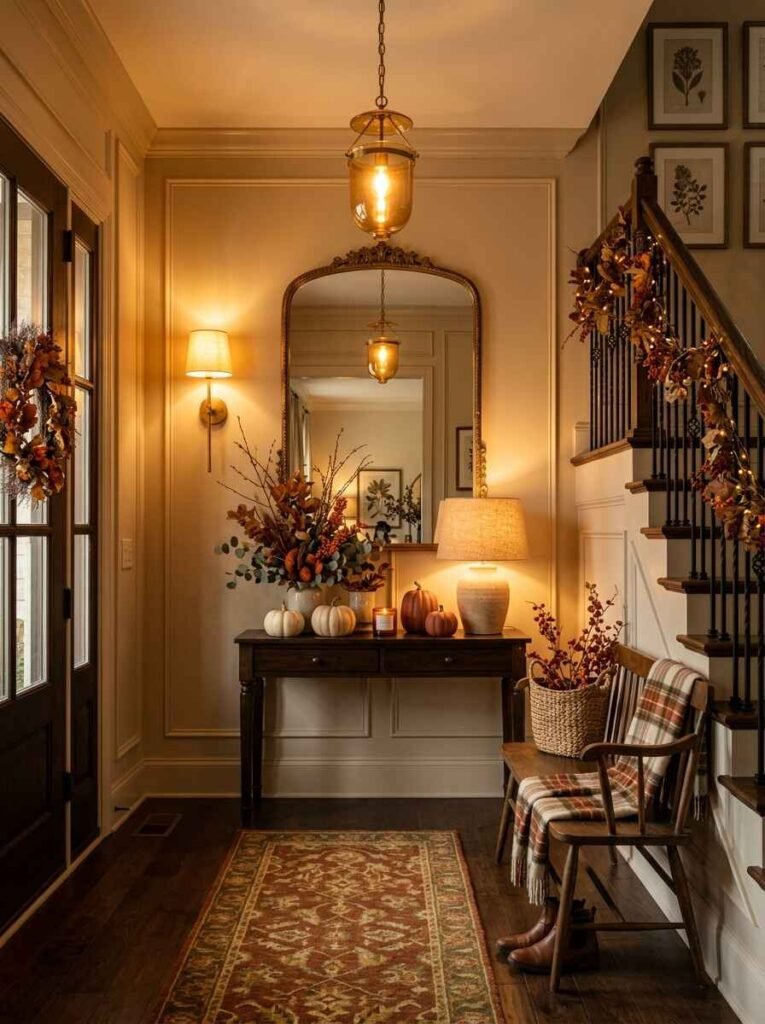
Lighting is fundamental to establishing an inviting atmosphere as natural evening light wanes. Relying solely on harsh overhead ceiling fixtures can flatten the room and create uninviting shadows; a layered lighting plan is far more effective.
Position a substantial table lamp with a linen or ceramic base on the console table to cast a low, warm pool of light. Complement this with a pair of wall-mounted sconces featuring fabric shades or frosted glass to introduce vertical illumination. Choose warm-white bulbs around 2700 Kelvin to create a softer evening atmosphere and complement warm timber, stone surfaces, and autumnal color tones.
10. Cozy Entryway Seating
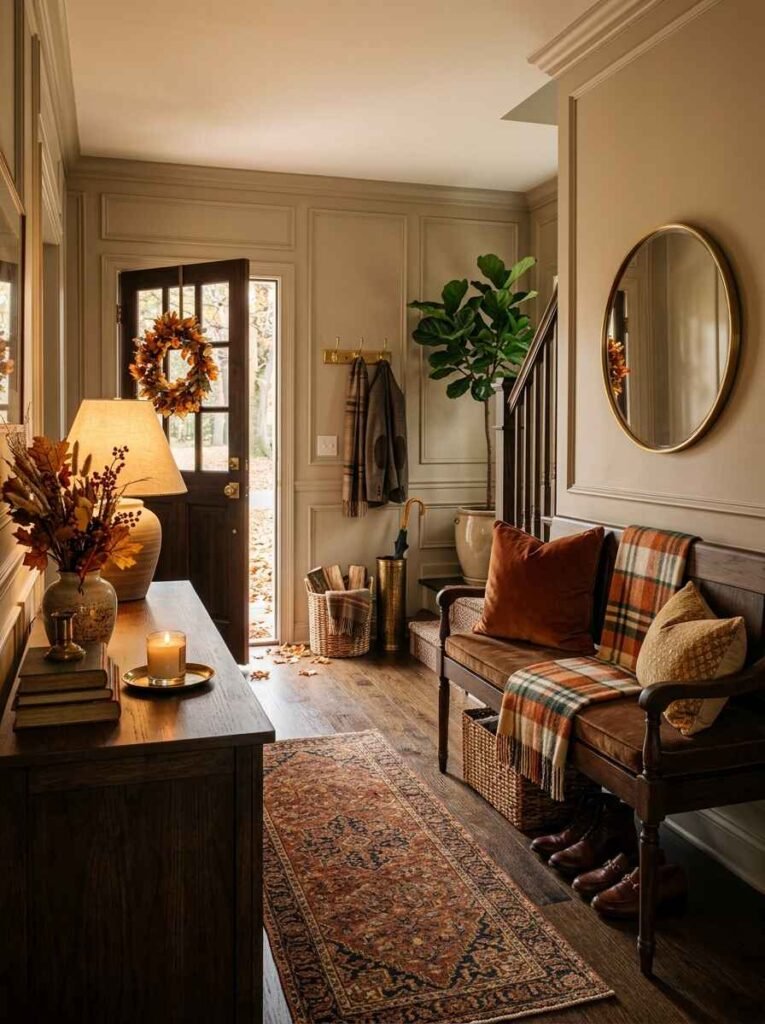
Where spatial proportions allow, incorporating functional seating elevates an entry foyer from a simple walkthrough hallway into an inviting reception space. A tailored upholstered bench, a modern bouclé seat, or a classic solid wood bench provides a practical location for changing footwear.
Style the seating area with restraint to maintain clear circulation paths. A single structured cushion wrapped in a textured wool or velvet cover, paired with a fine cashmere or alpaca throw blanket draped neatly over one side, adds warmth without overwhelming the furniture. Ensure the bench profile remains narrow enough to avoid impeding door swing or foot traffic.
11. Woven Entryway Storage
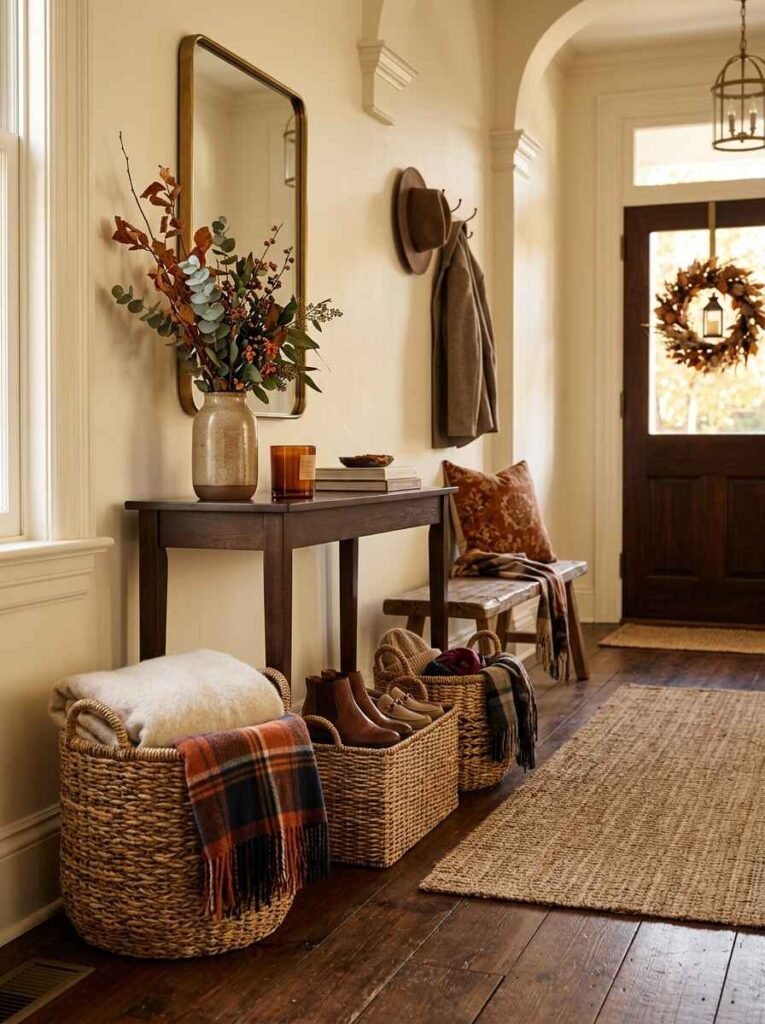
As autumn weather brings heavier coats, scarves, and boots, maintaining clean spatial organization becomes essential. Woven storage containers crafted from natural seagrass, rattan, or thick felt keep seasonal apparel contained while adding visual texture.
Tuck large, structured woven baskets beneath open-frame console tables or position them alongside an entry bench. These vessels serve as practical receptacles for extra throw blankets, umbrellas, or outdoor footwear. Utilizing natural woven materials ensures that utilitarian storage reads as an intentional, decorative interior detail.
12. Seasonal Artwork & Textures
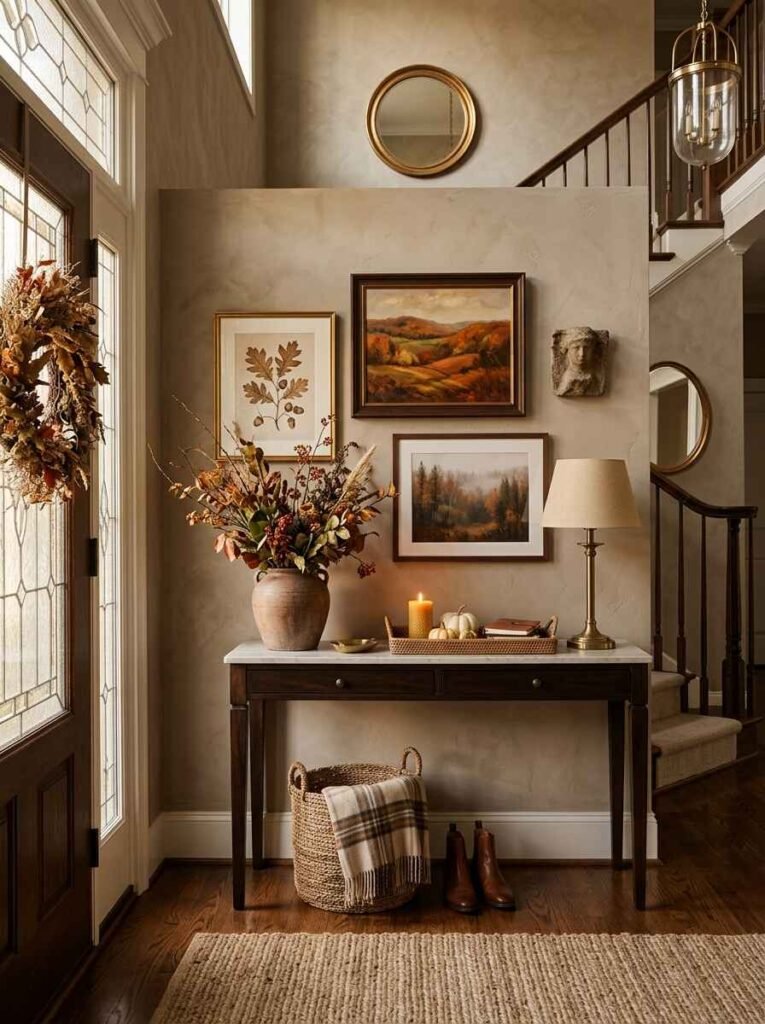
Replacing general summer prints with curated, nature-inspired artwork subtly shifts the mood of the entryway. Choose moody autumn landscape oil paintings, botanical leaf studies, or abstract canvas art featuring warm, earthy colorways.
Frame selected artwork in dark wood or antique brass moldings to provide visual weight against light walls. Layering artwork by leaning a smaller frame against a larger piece on the console table creates an informal, gallery-inspired depth. Avoid text-based seasonal signage or novelty prints, prioritizing fine art and natural canvas textures that maintain an elevated aesthetic.
13. Minimalist Fall Entryway
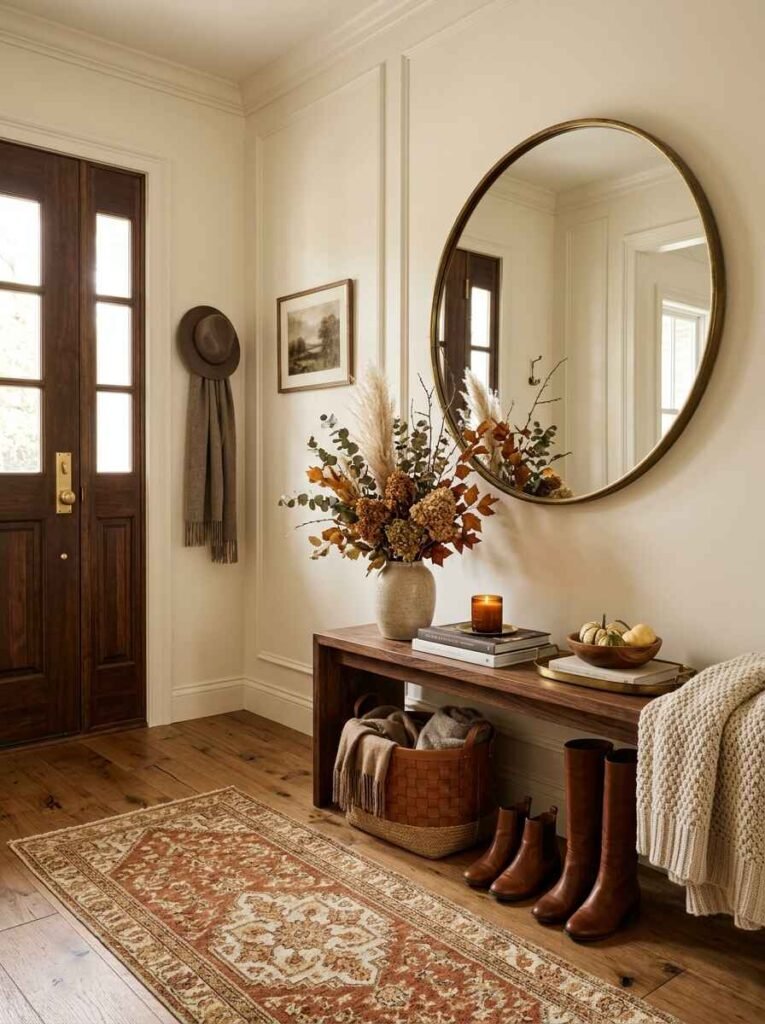
For modern or minimal architectures, a restrained approach to seasonal styling emphasizes clean form and spatial clarity. This approach relies on selecting a few exceptional, high-quality pieces rather than layering multiple decorative objects.
Limit the arrangement to three primary elements: one statement foliage arrangement in an artisan stoneware vessel, an oversized mirror, and a single textured floor runner. By keeping pathways entirely clear and surface clutter eliminated, the individual beauty of raw materials—such as grain in the wood console or the weave of the wool rug—takes center stage in a quiet luxury format.
Fall Entryway Decorating Mistakes to Avoid
- Overcrowding table surfaces: Filling console tables with numerous small trinkets creates visual clutter and eliminates practical drop-zone space for keys and mail.
- Using excessive bright orange: Saturated, bright orange tones can overpower a room; choose earthy terracotta, rust, or deep amber alternatives instead.
- Blocking primary pathways: Placing oversized benches, wide baskets, or bulky tables in narrow entryways restricts physical clearance and impedes movement.
- Selecting undersized rugs: A floor runner that is too short makes the foyer feel visually disjointed; ensure floor coverings are proportioned correctly to anchor the space.
- Relying on cool lighting: Using cool-toned daylight bulbs strips away ambient warmth; select soft, warm-white bulbs around 2700K instead.
- Mixing too many seasonal colors: Combining competing autumn shades creates visual chaos; limit the accent palette to two or three cohesive earth tones.
- Overusing synthetic seasonal materials: Pairing high-gloss plastics with raw, natural materials interrupts visual cohesion; stick to natural textures like wood, stone, and woven fibers.
- Displaying novelty seasonal decorations: Plastic props and text-based holiday signs disrupt a refined interior aesthetic; favor fine art and organic botanicals instead.
Frequently Asked Questions
How can I make my entryway feel fall-ready quickly?
Start with a natural-fiber runner, add a stoneware vessel with dried branches to the console, and use warm-white lighting around 2700K for a quick seasonal update.
What colors work best for a fall entryway?
Grounded earth tones perform best, including cream, taupe, warm beige, rust, terracotta, muted olive, forest green, and rich chocolate brown.
How do I style a small entryway without crowding it?
Use vertical space with an oversized mirror and wall sconces, choose a narrow console table, and keep the floor clear with a single runner.
Can I decorate for fall without using pumpkins?
Yes, sophisticated fall styling focuses on organic materials, dried oak foliage, aged brass accents, deep-toned artwork, and rich wool or linen textiles.
Where should I place storage baskets in the foyer?
Position structured woven baskets neatly underneath an open-frame console table or beside an entry bench to keep walkways unobstructed.
Conclusion
Creating an elegant fall entryway centers on cultivating visual warmth and tactile comfort while maintaining everyday practical utility. By anchoring the space with natural materials—such as solid wood consoles, woven wool runners, aged brass hardware, and organic foliage—the foyer becomes a seamless transition into the home.
Prioritizing soft, layered lighting and a restrained, earth-inspired color palette ensures the entrance feels welcoming without relying on short-lived seasonal novelties. Keep circulation paths open, preserve surface functionality, and focus on lasting design choices. To carry the same warm aesthetic and layered textures into the rest of the home, explore these fall living room decor ideas.