
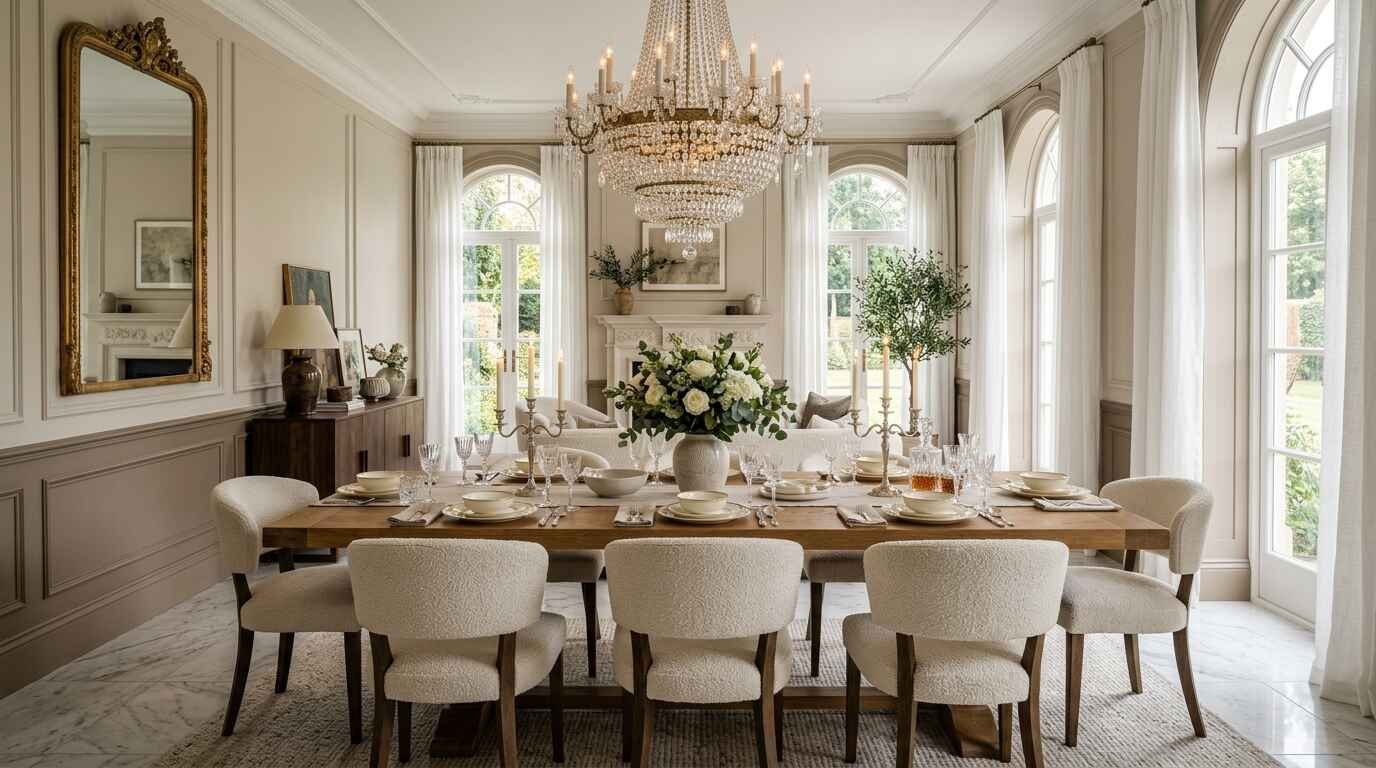
Designing a luxury dining room isn’t about filling the space with expensive furniture. It’s about creating a room where the layout, lighting, materials, and furniture work together to feel warm, balanced, and inviting.
I’ve visited beautifully furnished homes where everything looked luxurious, yet the dining room still felt cold or disconnected. The difference always came down to thoughtful luxury dining room design, where every detail serves both beauty and function.
If you’re planning a complete dining space, explore our Luxury Dining Room guide for a comprehensive overview of layouts, furniture, lighting, and design planning.
In this guide, I’ll share 15 essential design principles to help you create a dining room that feels elegant, comfortable, and timeless.
1. Start with a Functional Dining Room Layout
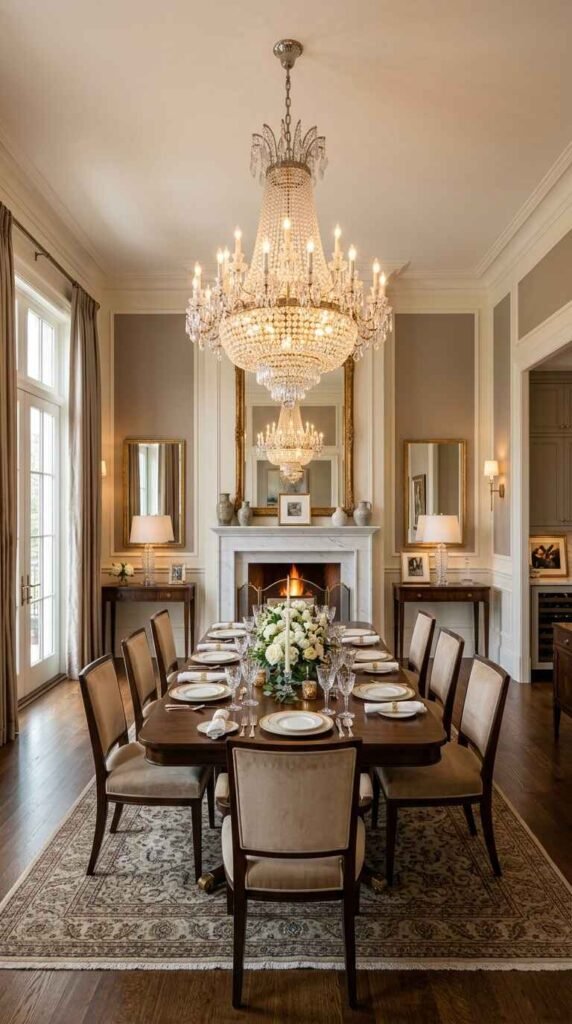
Before you fall in love with a dining table or a show-stopping chandelier, you have to talk about floor space. A dining room can look like a magazine spread, but if your guests have to awkwardly squeeze past each other just to sit down, the feeling of luxury instantly evaporates.
In my experience, the absolute minimum walkway clearance you should aim for is 36 inches between the edge of your table and the nearest wall or sideboard. If you have the luxury of extra square footage, push that to 48 inches. This creates a natural, easy corridor for traffic. Always map out how people move into the room from adjacent spaces—like the kitchen or living area—so the layout feels open and intuitive.
2. Create a Strong Focal Point
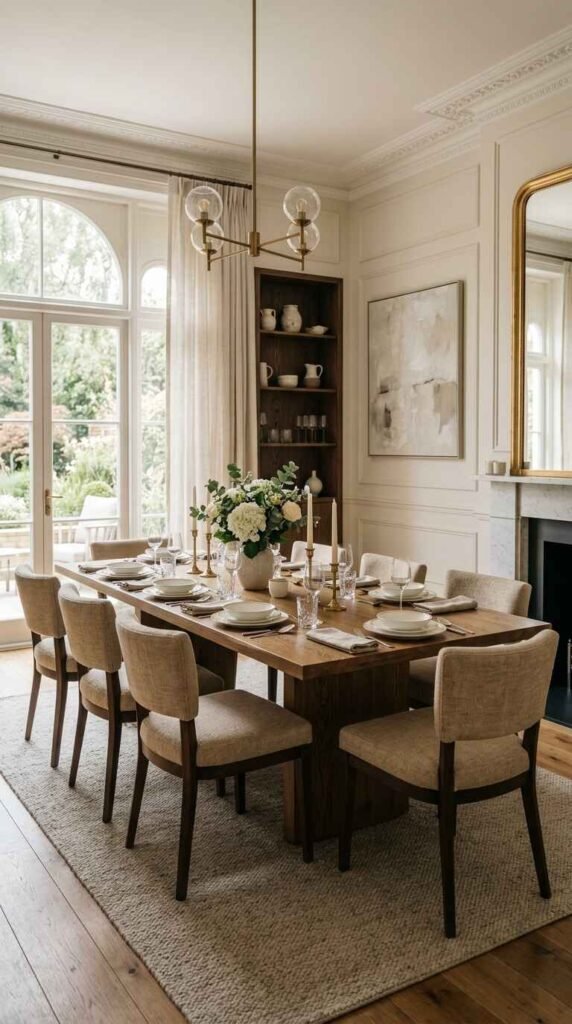
Every memorable room needs a clear “hero” moment. When you walk into a dining space, your eye should instantly know where to rest. Without a strong focal point, a room ends up feeling chaotic or unfinished.
More often than not, the lighting fixture above the table serves as your primary anchor. A hand-blown glass sculpture or a modern brass branch chandelier naturally pulls the gaze to the center of the room. However, you can also build a focal point around architectural features—a custom stone fireplace mantel or a deeply recessed display arch framed with warm accent lighting. Pick one main star for the room and let the rest of your decor support it.
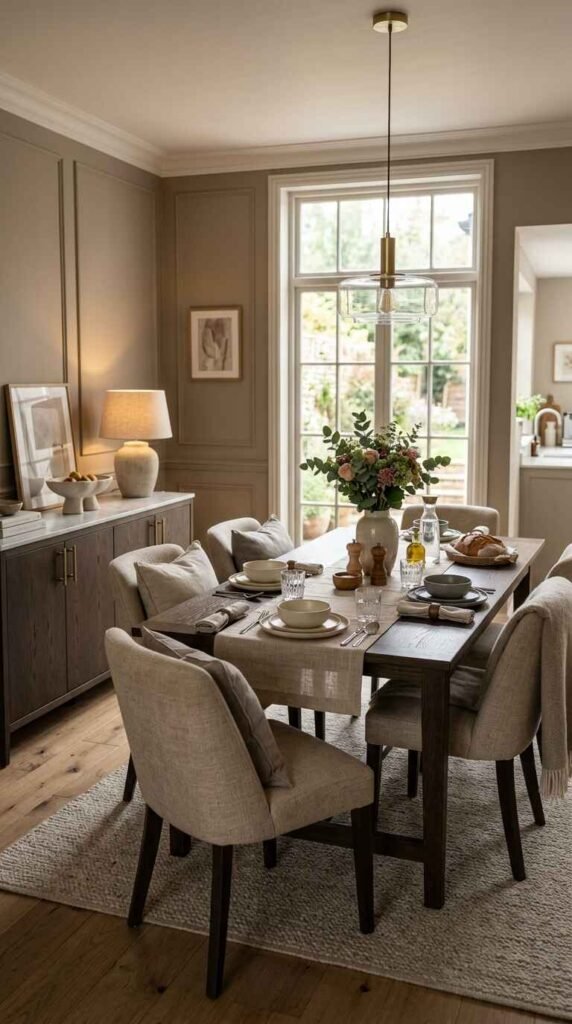
If there’s one secret to high-end interior design, it’s prioritizing raw, authentic materials over synthetic imitations. Natural materials possess a organic depth, weight, and texture that simply cannot be replicated by manufactured alternatives.
When selecting surfaces, I always advocate for real stone—think marble, honed travertine, or warm limestone—paired with solid hardwoods like dark walnut or white oak. For metal accents, look toward unlacquered brass or aged bronze, which develop a rich, subtle patina over time. When your guests touch the edge of the table or rest their arms on a chair, the physical quality of natural stone, wood, and metal speaks for itself.
4. Balance Scale and Proportion
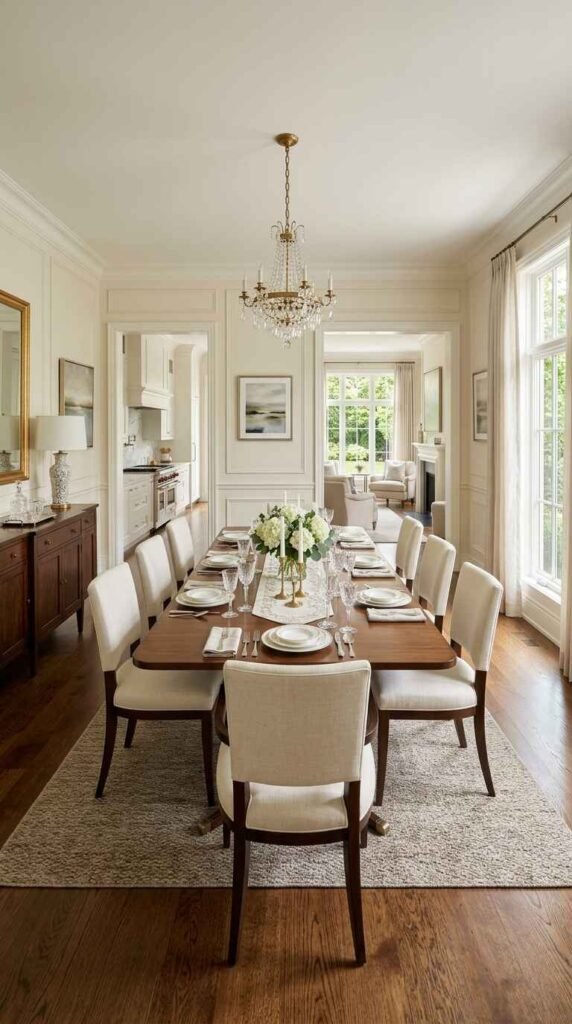
Misjudging scale is easily the most common mistake I see in residential dining rooms. Bring in a table that’s too small, and the room feels sparse and unanchored. Bring in one that’s too large, and the space feels claustrophobic.
To hit that sweet spot, match your furniture’s visual weight to the room’s architecture. If you have high ceilings or strong wall paneling, a thin, delicate glass table will get lost. It demands a substantial table base and chairs with taller backrests to balance the vertical volume. Always leave around 24 inches of table length per guest so everyone can dine comfortably without clashing elbows.
5. Design with Layered Lighting
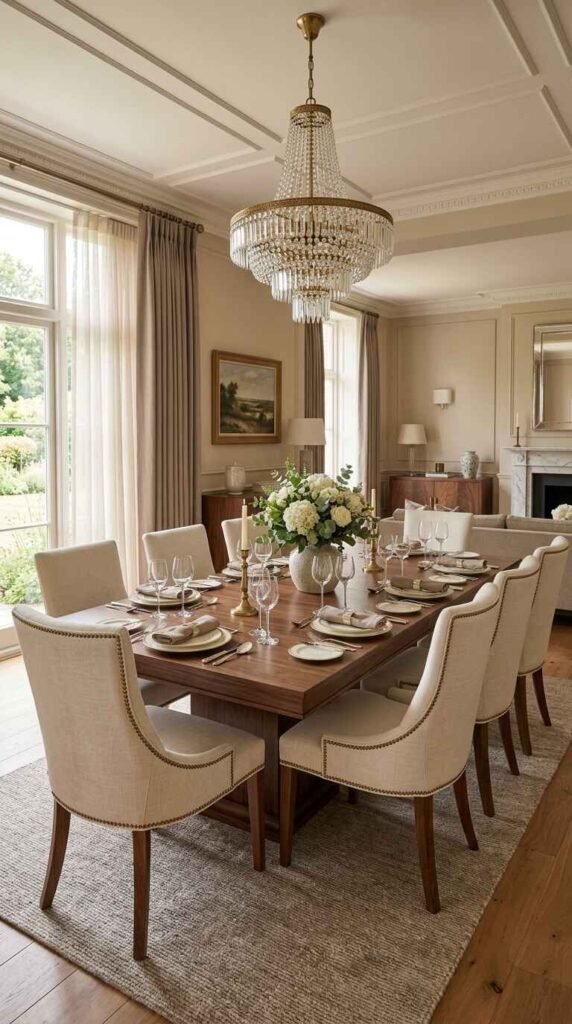
Relying on a single overhead light source flattens a room and casts harsh, unflattering shadows across your guests’ faces. High-end lighting is always layered, giving you complete control over the mood as the evening progresses.
I like to split lighting into three distinct levels:
- Ambient Lighting: Hidden ceiling coves or soft recessed downlights that bathe the perimeter of the room in light.
- Task Lighting: A dedicated, dimmable chandelier directly over the center of the table.
- Accent Lighting: Sconces flanking artwork or low-voltage picture lights that highlight warm textures on the walls.
6. Build a Timeless Color Palette
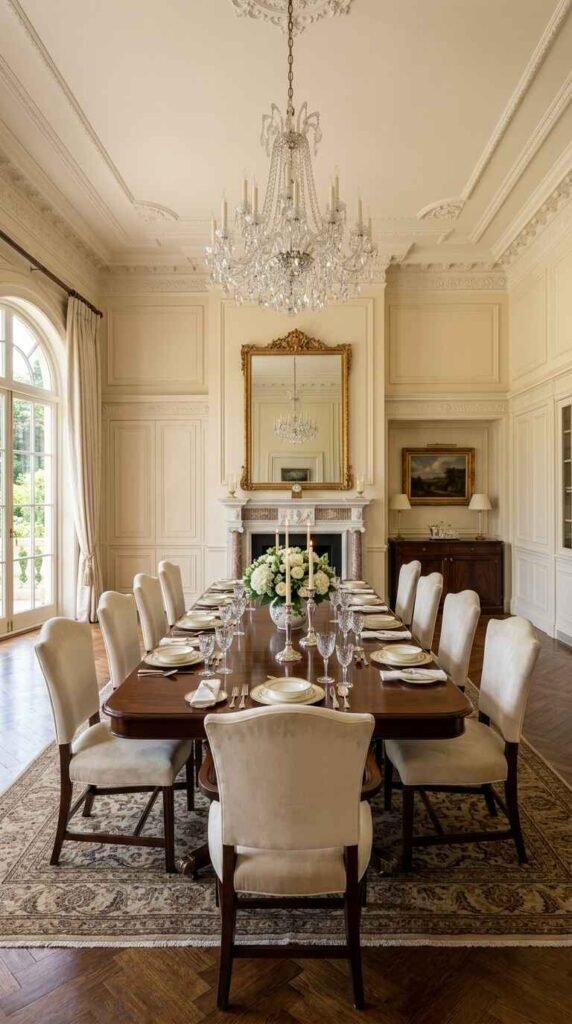
Bright, trendy wall colors might look exciting on social media today, but they rarely stand the test of time. For a room intended to feel sophisticated for decades, build your base around a calm, cohesive neutral palette.
Layering rich creams, warm beiges, soft taupes, and subtle grey undertones creates a soothing backdrop that makes your tableware and natural wood finishes pop. You don’t have to avoid contrast entirely—bringing in deep walnut floors or dark stone elements against cream walls builds just enough drama while keeping the overall look elegant and timeless.
7. Invest in Comfortable Luxury Furniture
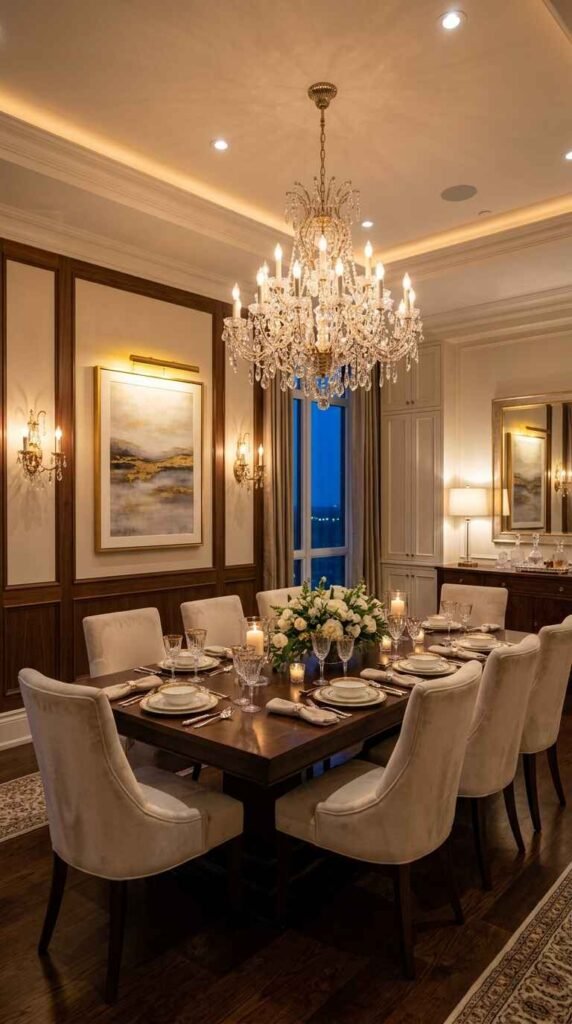
The ultimate test of a dining room is how long your guests want to linger after dessert is cleared. If your dining chairs are stiff or poorly proportioned, no amount of gorgeous decor will save the evening.
Look for chairs with ergonomic back support and generous seat depth. Fully upholstered frames featuring high-resilience foam offer the comfort of a lounge chair while maintaining a refined profile. Beyond seating, consider custom sideboards or credenzas. A great console gives you a dedicated surface for serving wine and keeping extra dishware hidden out of sight.
Choosing the right table is one of the most important furniture decisions in a dining room. Browse our Luxury Dining Tables guide to compare materials, shapes, and styling approaches before making a long-term investment.
8. Add Texture and Depth
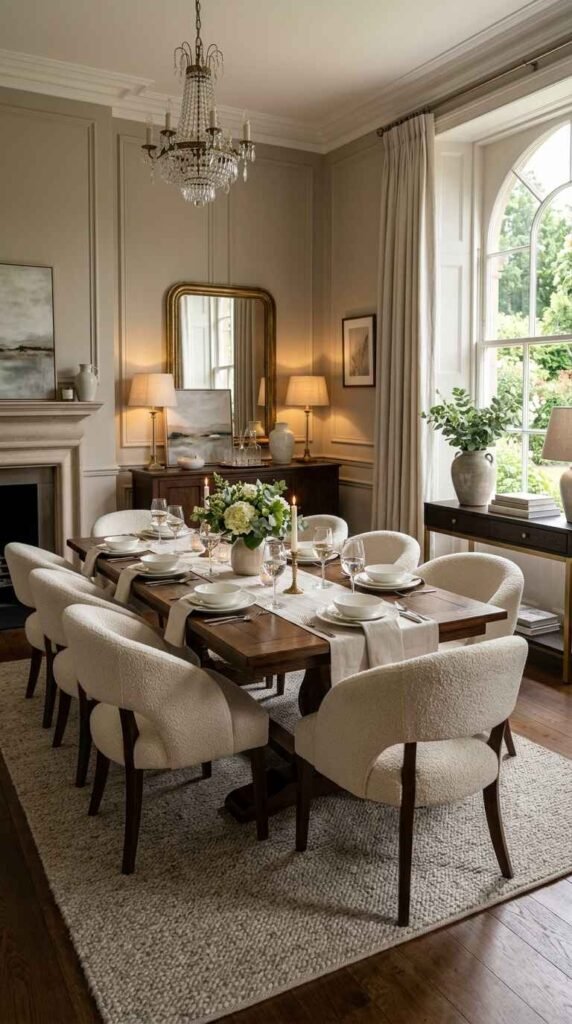
A neutral room with flat surfaces quickly ends up looking cold or clinical. The remedy is simple: layer a variety of rich, contrasting textures throughout the space to add warmth and physical dimension.
Pair a smooth, honed wooden table top with soft, textured bouclé or slubbed linen chair upholstery. Introduce a plush, hand-knotted wool rug underfoot to ground the dining set and soften footstep acoustics. When soft textiles interact with hard stone, polished wood, and metal finishes, the room instantly feels dynamic, layered, and deeply inviting.
A Quick Reference: Matching Texture to Material
| Element | Hard Finish | Soft Counterpart | Why It Works |
|---|---|---|---|
| Table | Honed wood or stone top | Linen table runner | Softens a hard surface, adds warmth |
| Seating | Wood or metal chair frame | Bouclé or linen upholstery | Comfort meets structure |
| Floor | Stone or wide-plank flooring | Hand-knotted wool rug | Grounds the room, absorbs sound |
9. Incorporate Architectural Details
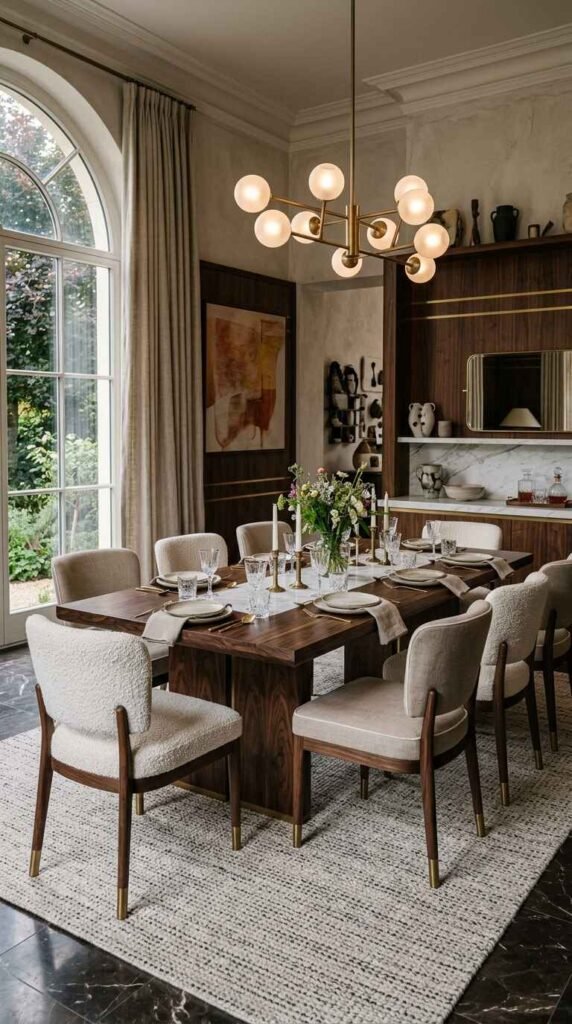
The backbone of a luxury home often lies in its millwork and architectural framing. Plain, flat drywall rarely delivers the rich character that high-end spaces require.
Adding picture-frame wall mouldings, full-height wainscoting, or custom ceiling paneling transforms basic walls into bespoke features. If you’re working with tall ceilings, consider coffered wood beams or subtle plaster ceiling medallions around light fixtures. These architectural details catch light and shadow throughout the day, giving the room an enduring sense of craftsmanship.
10. Maximize Natural Light
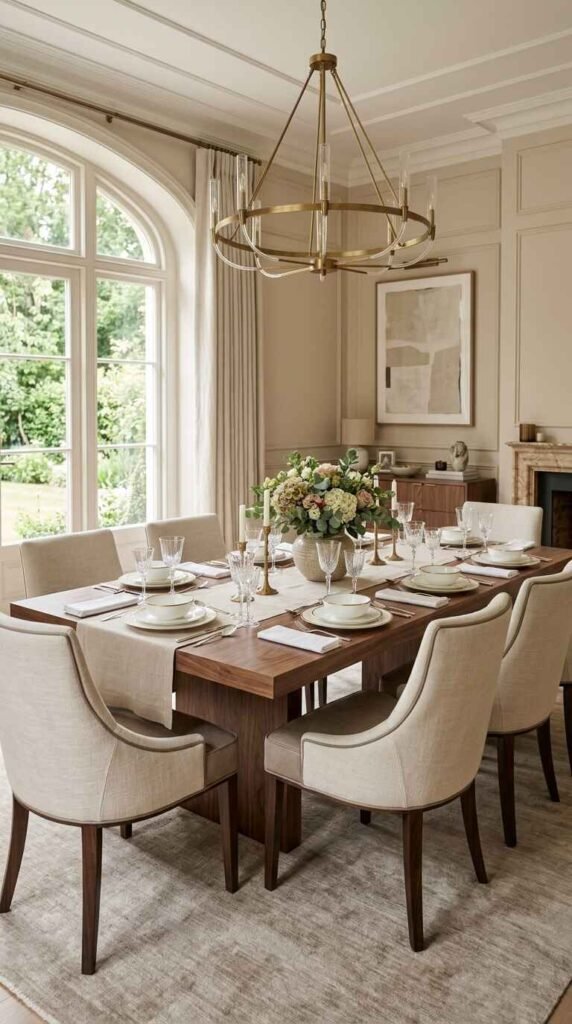
While evening lighting gets most of the attention in dining room design, daytime ambiance is just as important—especially for long weekend brunches or daytime entertaining.
Position your layout to take full advantage of natural light filtering through large windows or French doors. To keep the light soft and manageable, dress your windows with floor-to-ceiling sheer drapery made from natural linen. These sheer layers diffuse direct sunlight, soften harsh outdoor reflections, and introduce a gentle, flowing element to the room’s edges.
11. Style the Dining Room with Purpose
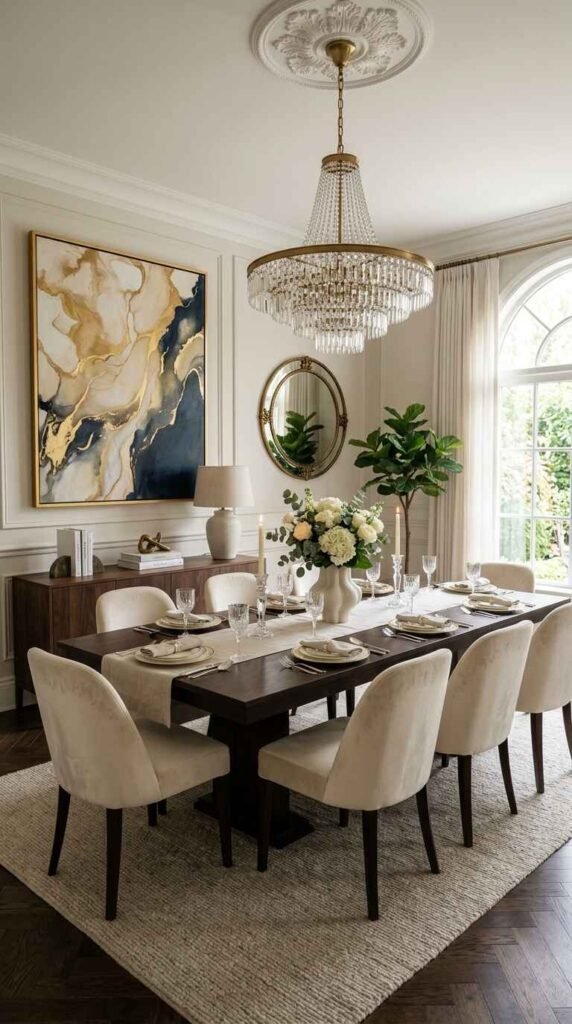
Clutter is the enemy of quiet luxury, but so is a room that feels staged or sterile. The key to accessorizing a dining space is intentionality—curating a few large, high-impact pieces rather than scattering dozens of small knick-knacks.
Hang an oversized abstract painting or a framed mirror on your main wall to bounce light and add artistic expression. On the table, keep everyday centerpieces simple: an organic ceramic vase with fresh foliage or a pair of sculptural brass candleholders. When styling your sideboard, group decor in odd numbers (like three items of varying heights) to keep the arrangement organic.
Looking for visual inspiration? Browse our Luxury Dining Room Ideas to see how these design principles come together in beautifully styled spaces.
12. Blend Function with Everyday Living
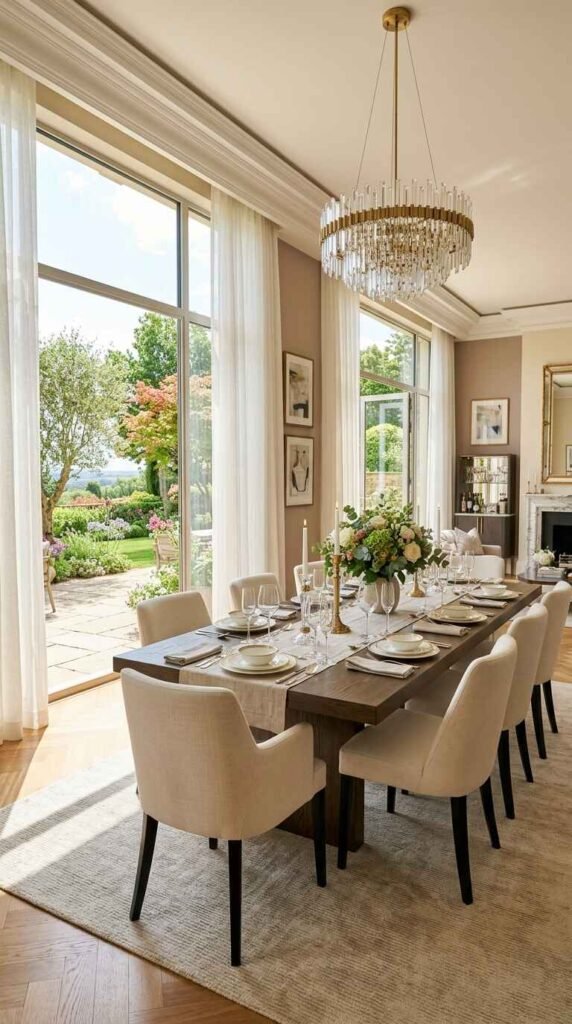
A truly luxurious dining room shouldn’t feel like a museum you only open for holiday dinners. It needs to handle real life, from quick weekday breakfasts to long weekend lunches.
That’s why I love connecting a dining space directly to the outdoors with floor-to-ceiling glass doors. Opening them up lets soft light and fresh air fill the room, making everyday meals feel like a getaway. When you pair that open layout with durable, sealed wood and spill-friendly fabrics, you get a space that’s incredibly practical for daily use without losing an ounce of sophistication.
13. Connect the Dining Room with Adjacent Spaces
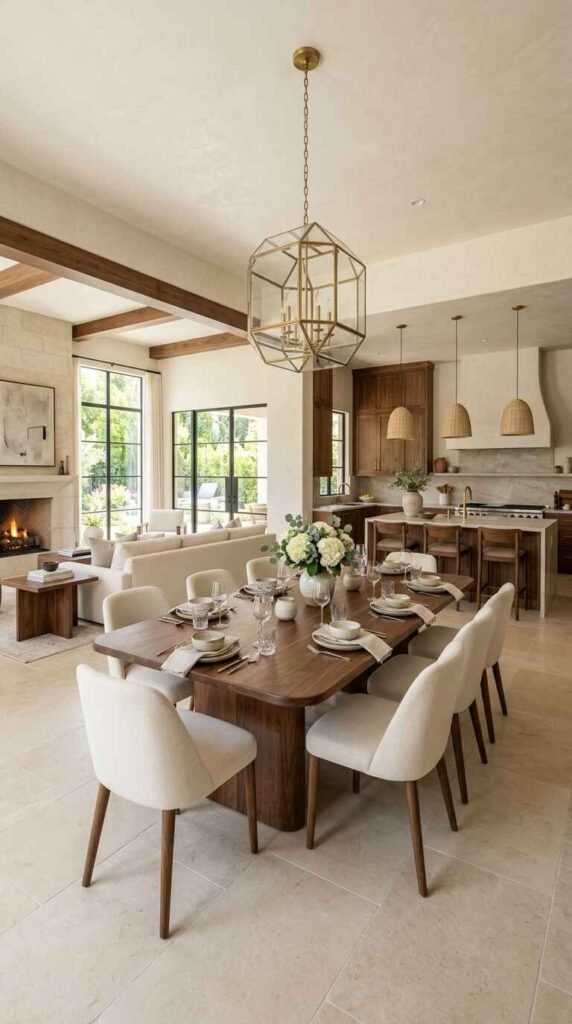
In modern open-plan or semi-open floor plans, a dining room never exists in isolation. It needs to establish a visual dialogue with the surrounding kitchen, living, or outdoor areas.
Maintain material continuity across these spaces. If your kitchen features dark walnut cabinetry or warm brass hardware, carry those exact finishes into your dining room’s sideboard or lighting fixtures. You don’t need identical furniture, but sharing a common color palette and material language keeps your home feeling cohesive from room to room.
14. Incorporate Smart Luxury Features
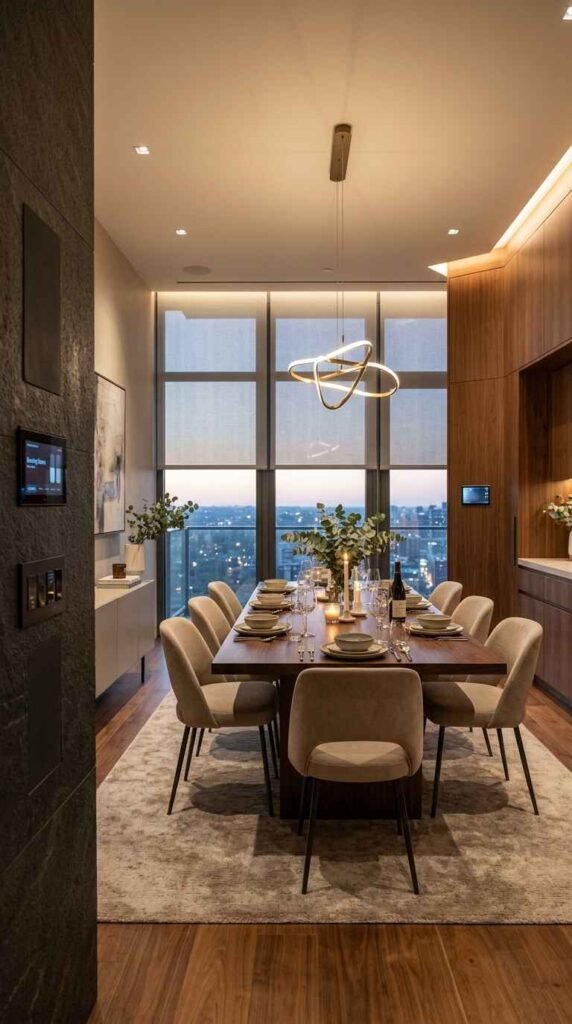
Modern luxury is as much about convenience as it is about appearance. Seamlessly integrating discreet technology allows you to alter the room’s mood at the touch of a button.
Consider installing smart lighting controls pre-programmed with custom scenes—like “Daylight Brunch,” “Cocktail Hour,” or “Intimate Dinner.” Automated motorized shades integrated into your window headers let you block afternoon glare effortlessly. Concealed architectural speakers hidden flush within the ceiling complete the experience, wrapping your dinners in crisp, ambient sound without disrupting the room’s aesthetic.
15. Design for Long-Term Timeless Appeal
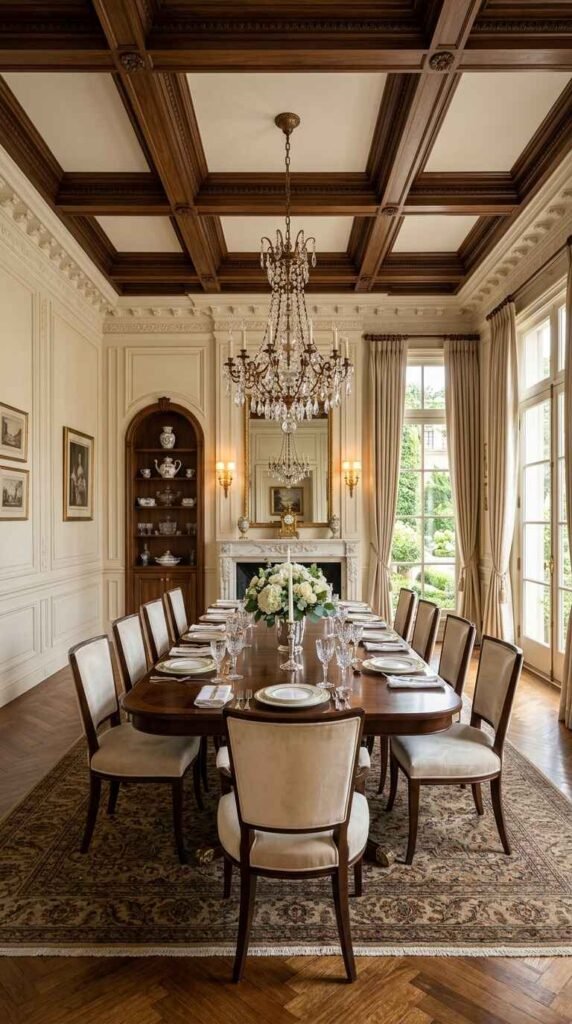
Fast-decor trends come and go, but authentic luxury endures. When making major design investments—like your dining table, seating, flooring, and millwork—always choose timeless silhouettes and superior craftsmanship over trendy novelty items.
By grounding your room in classic proportions, rich natural materials, and neutral palettes, you create a versatile foundation. If you ever want to update the room’s feel years down the line, you can easily swap out small accents—like artwork, table linens, or seat cushions—without needing a full structural overhaul.
Common Luxury Dining Room Design Mistakes
Even with the best intentions, it’s easy to make choices that undercut a room’s potential. Here are the most frequent pitfalls I encounter when redesigning dining spaces:
- Choosing Style Over Comfort: Buying dining chairs purely for their artistic shape, only to realize no one can comfortably sit in them for more than twenty minutes.
- Hanging Lighting at the Wrong Height: Positioning a chandelier too high makes it feel disconnected from the table while hanging it too low blocks sightlines across the table. (Aim for 30 to 36 inches above the tabletop).
- Using an Undersized Rug: Selecting a rug that isn’t large enough. When guests pull their chairs back to sit down, all four legs should remain firmly on the rug.
- Overcrowding the Surface: Covering the entire dining table with dense decor arrangements that leave no room for actual plates, glassware, or elbow room.
- Relying on a Single Light Switch: Failing to install dimmers on every light circuit, leaving you with harsh, unadjustable illumination.
Frequently Asked Questions
What makes a dining room look genuinely luxurious?
Luxury in a dining room comes down to custom architectural details, high-grade natural materials (like solid hardwood, marble, and unlacquered metals), layered lighting, and careful proportioning. It’s less about brand names and more about custom fit and tactile quality.
How much space should be left around a dining table?
Leave a minimum of 36 inches between the edge of your table and surrounding walls or furniture. For an elevated, grand feel that allows servers or guests to walk behind seated diners effortlessly, aim for 48 inches of perimeter space.
Which materials are best for a high-end dining table?
Solid woods like American walnut, white oak, and rift-sawn oak offer timeless durability and warmth. Honed marble, quartzite, and travertine are also fantastic choices for sleek, sculptural dining tables.
How high should a chandelier hang over a dining table?
As a general rule, the bottom of your chandelier should hang between 30 and 36 inches above the surface of your dining table (assuming an 8-foot ceiling height). For higher ceilings, you can raise the fixture slightly to balance the vertical volume.
What colors work best for a luxury dining space?
A palette built around warm neutrals—beige, ivory, cream, taupe, and soft grey—creates a serene, timeless backdrop. You can introduce depth using dark wood stains, bronze accents, or subtle muted tone-on-tone paints.
How do you make a small dining room look expensive?
Focus on scale and lighting. Use a round dining table to maximize floor clearance, hang floor-to-ceiling drapery to lift the ceiling line, install wall mouldings to add architectural depth, and feature a striking statement light fixture.
Should you put a rug under a luxury dining table?
Yes, a rug grounds the dining suite and absorbs sound echoes. Ensure the rug extends at least 24 inches beyond the table edges on all sides so chair legs stay on the rug even when pulled out.
Is symmetry important in formal dining room design?
Symmetry creates a sense of order, balance, and classical sophistication. While your main table setup and lighting benefit from symmetrical framing, you can introduce asymmetrical art or decorative objects on sideboards to keep the room feeling relaxed and modern.
Conclusion
Designing a luxury dining room isn’t about filling a space with excess—it’s about intentional restraint, exquisite craftsmanship, and prioritizing the human experience. When you ground your room in functional layouts, natural materials, warm lighting layers, and ergonomic seating, you build a space that feels just as good to live in as it looks. Take your time selecting core pieces, respect the natural proportions of your home, and focus on creating an environment where every meal feels like a special occasion.
For a complete guide to planning an elegant dining space, explore our Luxury Dining Room resource covering layouts, furniture, lighting, and timeless design ideas.
1 thought on “Luxury Dining Room Design: 15 Principles for an Elegant Space”
Comments are closed.