
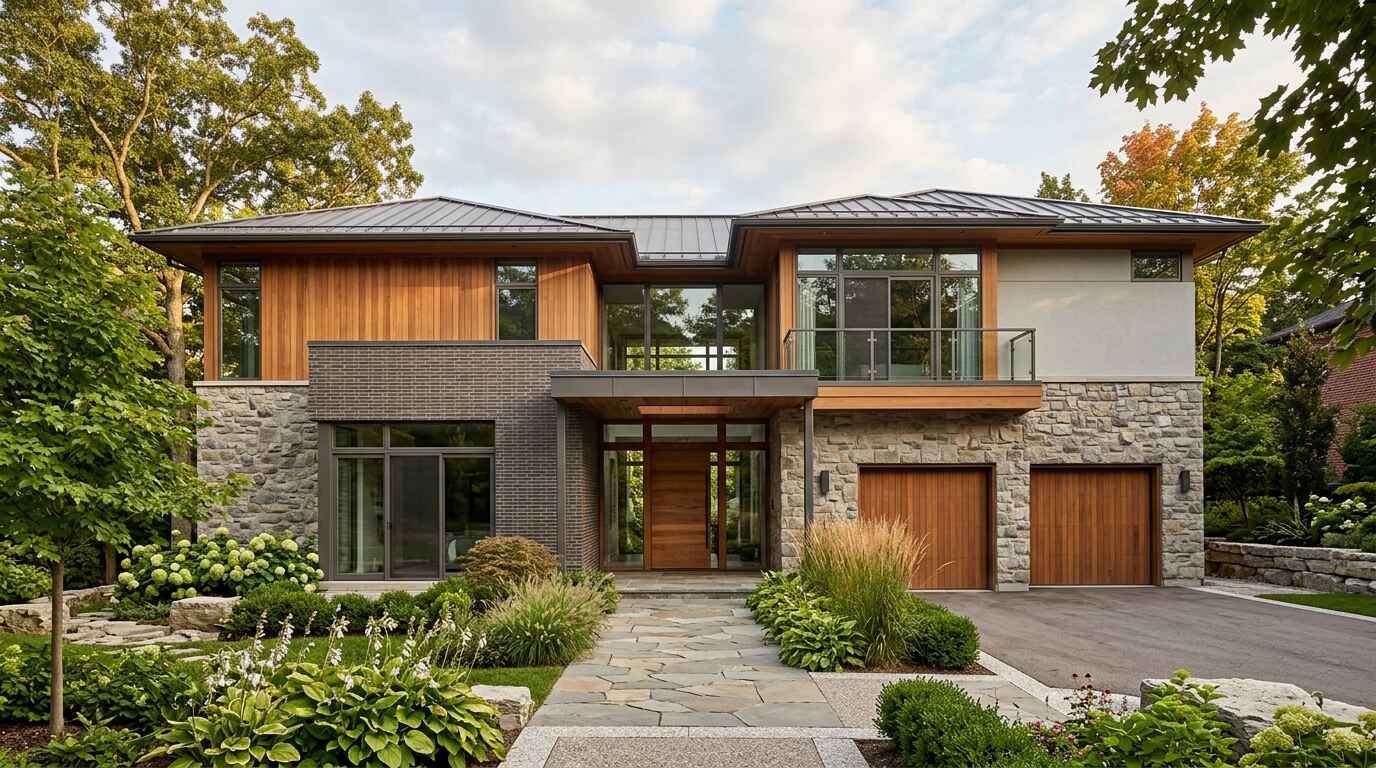
Choosing the right luxury home exterior materials is one of the most important decisions you’ll make for your home. It shapes how the house looks today, how well it holds up over the coming decades, and how much upkeep you’ll take on along the way.
Luxury home exterior materials aren’t just about appearance. The best choices also suit your climate, complement your architectural style, and match the level of maintenance you’re realistically willing to commit to. This guide walks through 15 high-end exterior materials, along with where each one works best and what it asks of you in return.
What Makes an Exterior Material Look Luxurious?
Not every material carries the same visual weight or long-term quality. Here’s what tends to separate a genuinely high-end exterior from one that just looks the part:
- Authenticity and Quality: Genuine natural materials like stone, slate, and solid timber have a depth and richness that imitation products struggle to replicate.
- Texture and Visual Depth: High-end materials catch light differently across their surface, giving walls dimension rather than a flat, uniform look.
- Durability: The best choices are built to perform well for many years, though every material has its own limits and trade-offs worth understanding upfront.
- Architectural Compatibility: A material reads as expensive when it fits the home’s overall design language, not simply because it costs more.
- Maintenance: Long-lasting materials still need some care — the difference is how much, and how forgiving they are if you fall behind on it.
- Color and Material Consistency: A cohesive palette across the facade tends to look more considered than a patchwork of finishes.
15 Luxury Home Exterior Materials
1. Natural Limestone
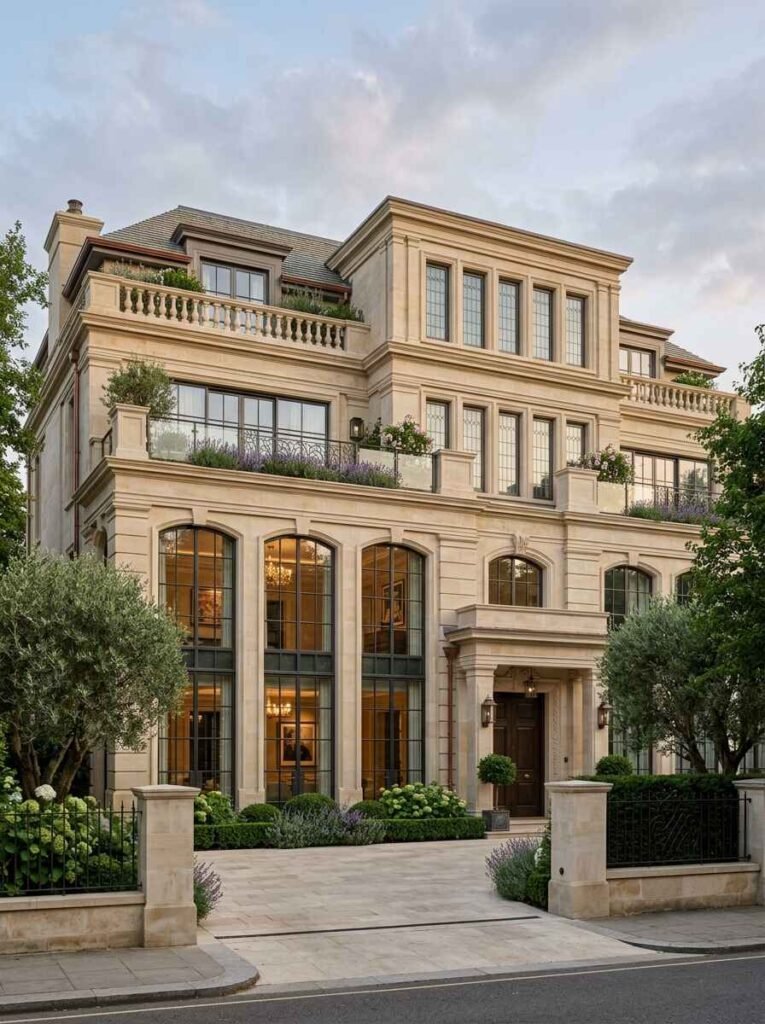
Limestone has a soft, creamy texture that reads as understated rather than showy. It tends to soften harsh sunlight, which is part of why it photographs so well on bright facades.
- Where it works best: Full facades, grand entry archways, and window surrounds.
- Key advantages: Long visual lifespan, strong structural performance, and consistent coloring across a wall.
- Maintenance considerations: Needs periodic sealing to resist moisture absorption and staining over time.
- Best architectural styles: French Country, European Manor, and Classic Neoclassical.
2. Granite
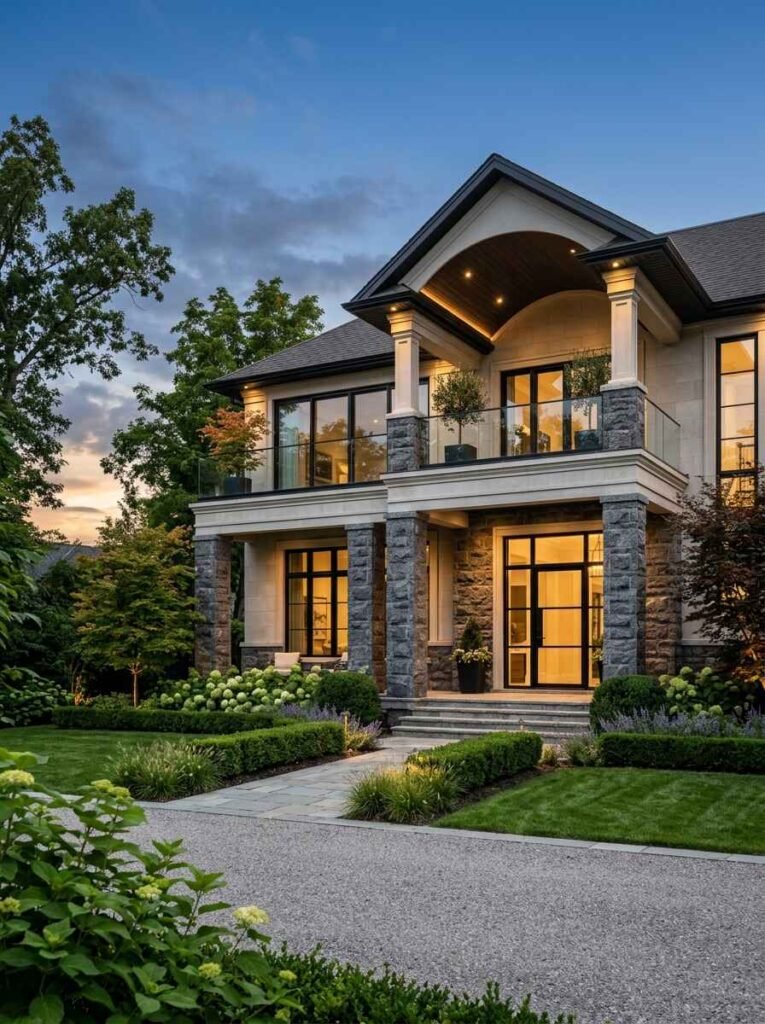
Granite is one of the hardest natural stones used in residential construction. It gives a facade a solid, almost immovable presence, with a subtle natural sparkle in the right light.
- Where it works best: Foundation bases, structural columns, and entry steps.
- Key advantages: Highly durable, scratch-resistant, and stands up well to weather exposure.
- Maintenance considerations: Comparatively low-maintenance; routine cleaning is usually straightforward, although the appropriate method depends on the finish and installation.
- Best architectural styles: Modern Luxury, Craftsman, and Mountain Rustic.
3. Sandstone
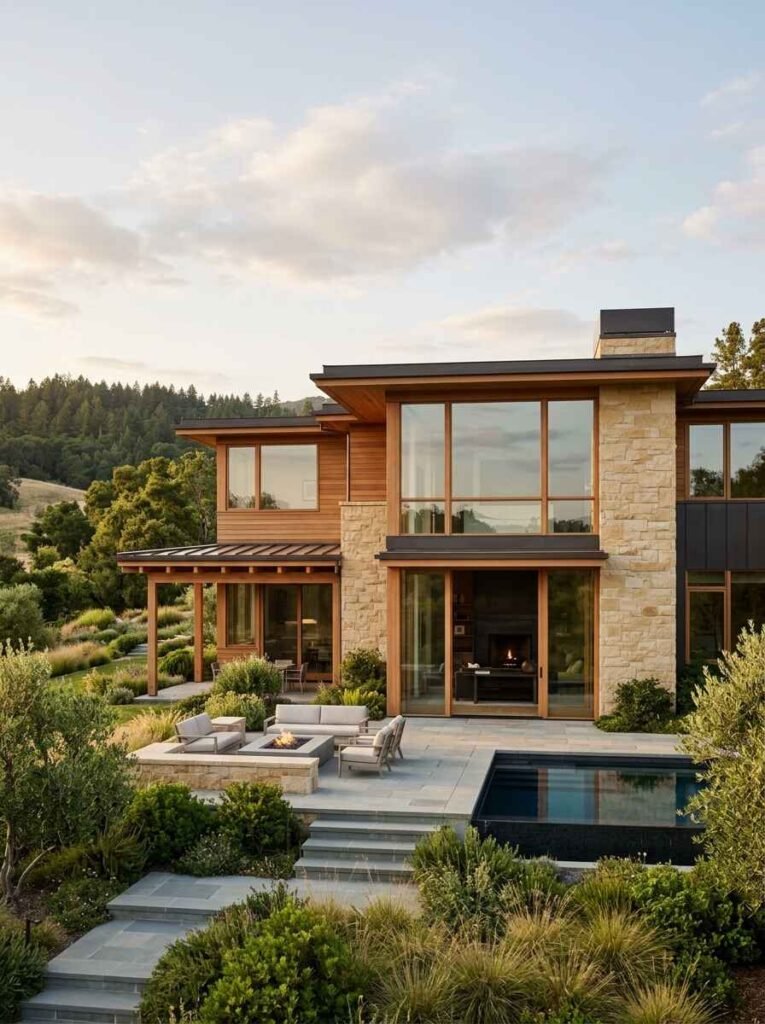
Sandstone brings warm, earthy tones and natural color variation that reads as textured rather than flat.
- Where it works best: Retaining walls, transitional exterior elements, and accent walls.
- Key advantages: Warm palette, distinctive grain, and relatively easy to cut and shape.
- Maintenance considerations: More porous than granite or some denser natural stones, so appropriate sealing can help reduce moisture absorption and staining.
- Best architectural styles: Modern Organic, Coastal, and Prairie Style.
4. Architectural Brick
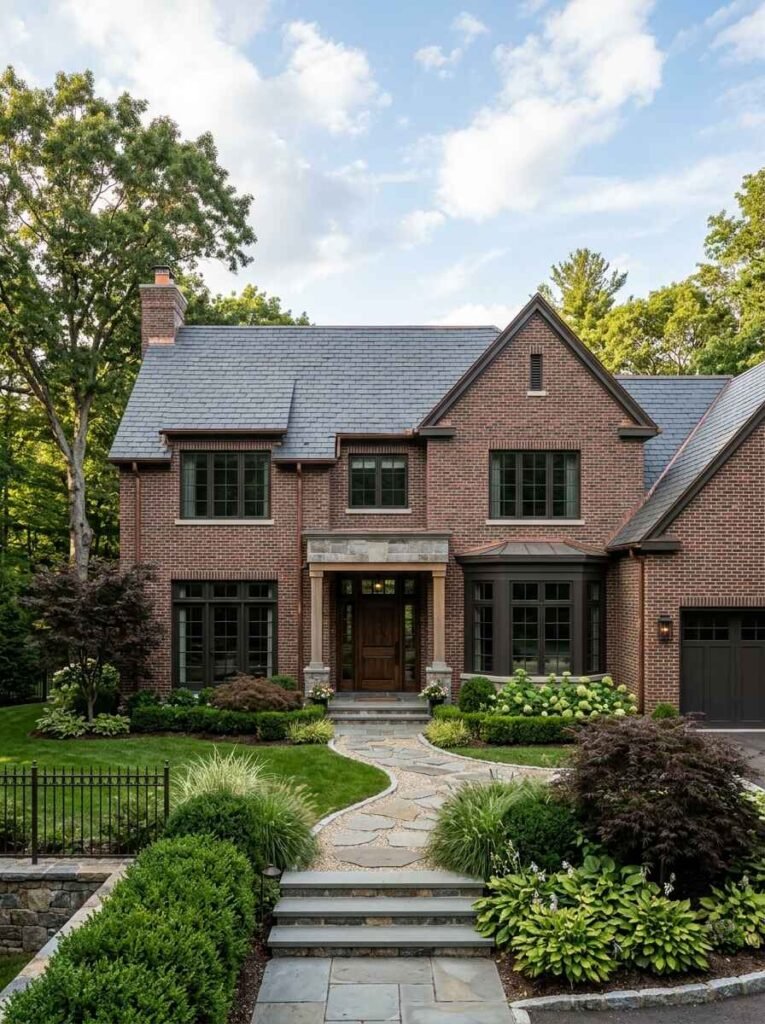
Architectural brick is a step above standard builder-grade brick, with custom shapes, refined clay blends, and cleaner edges.
- Where it works best: Full exterior cladding or restoration projects on older homes.
- Key advantages: Fire-resistant, good thermal performance, and a well-established, classic look.
- Maintenance considerations: Mortar joints should be inspected roughly every decade for tuckpointing needs.
- Best architectural styles: Tudor, Georgian, and Modern Industrial.
5. Natural Wood
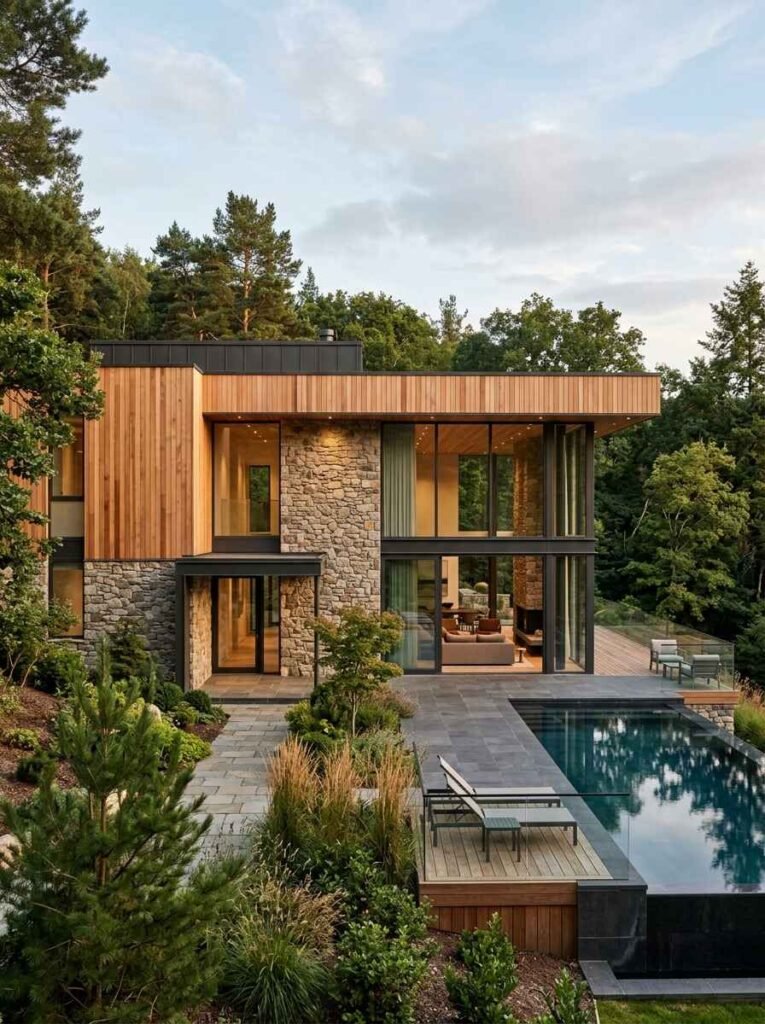
Cedar and redwood bring an organic warmth that’s hard to fully replicate with synthetic materials. Wood accents are often used to soften the visual weight of stone or masonry elsewhere on the facade.
- Where it works best: Soffits, upper-level siding, and entryway accent walls.
- Key advantages: Warm appearance, a renewable material source, and flexibility to stain or paint as your preferences change.
- Maintenance considerations: Needs regular sealing or staining every few years to prevent rot and sun damage.
- Best architectural styles: Scandinavian Modern, Modern Farmhouse, and Pacific Northwest.
6. Thermally Modified Wood
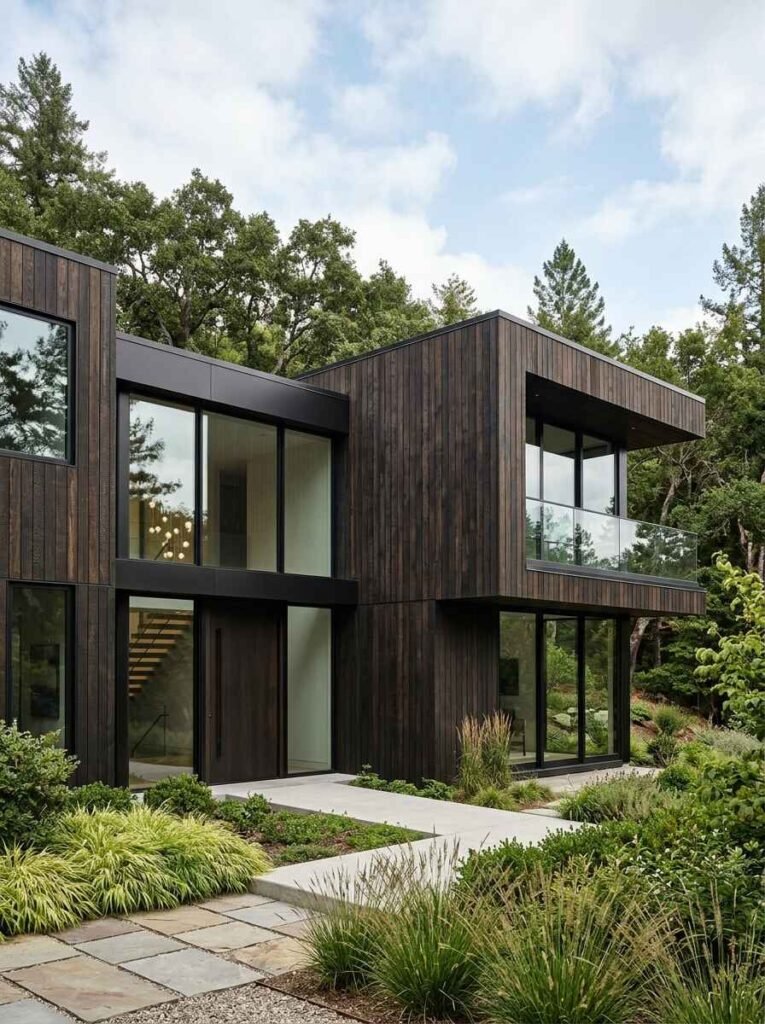
This wood goes through a controlled heat-treatment process that reduces moisture and alters some of the timber’s natural compounds. The result is a denser wood with improved decay resistance and a deep, rich color compared to untreated lumber.
- Where it works best: Vertical exterior cladding, rainscreen systems, and covered ceiling applications.
- Key advantages: Improved dimensional stability and better rot resistance than untreated wood, along with a distinctive dark tone.
- Maintenance considerations: Will fade to a silvery-grey patina over time unless oiled periodically to preserve the original color.
- Best architectural styles: Contemporary Ultra-Modern and Minimalist.
7. Stucco
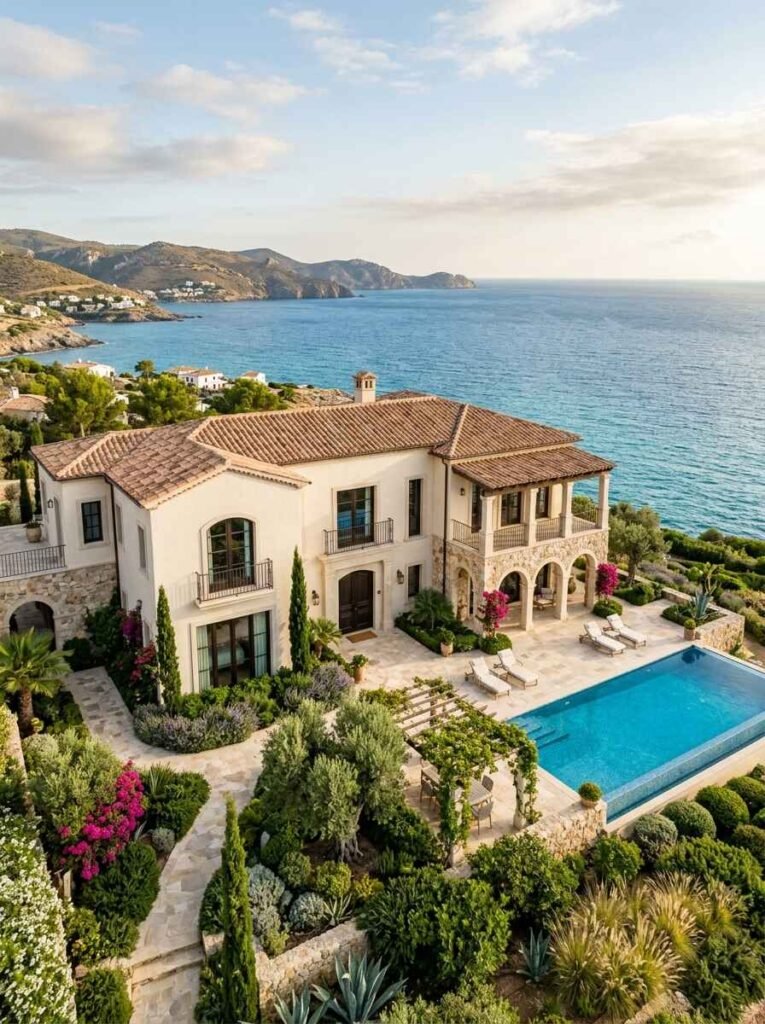
High-grade cement stucco gives you a smooth, seamless finish that works equally well on historic and contemporary homes. It reflects sunlight cleanly, which is part of its appeal in warmer climates.
- Where it works best: Continuous exterior walls, particularly in warm, dry regions.
- Key advantages: Seamless appearance, solid insulating properties, and flexible color tinting options.
- Maintenance considerations: Hairline cracks should be checked periodically to keep moisture from reaching the backing wall.
- Best architectural styles: Mediterranean, Spanish Revival, and Modern Villa.
8. Fiber Cement Siding
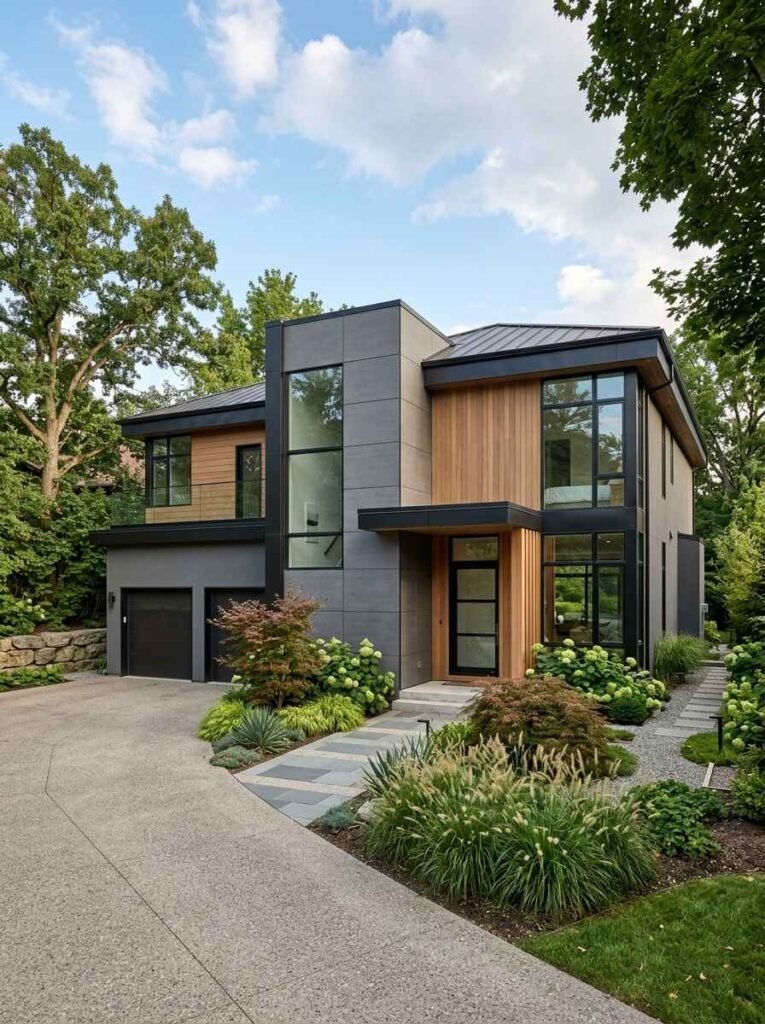
Modern fiber cement panels mimic the clean lines of wood or metal without the same level of upkeep. Large-format panels in particular give a facade a sleek, contemporary look.
- Where it works best: Multi-story residential exteriors and panelized facade designs.
- Key advantages: Fire-resistant, resistant to pests, and holds paint well over time.
- Maintenance considerations: Low-maintenance; an annual wash to remove dust and debris is usually enough.
- Best architectural styles: Transitional, Modern, and Urban Infill.
9. Architectural Metal Panels
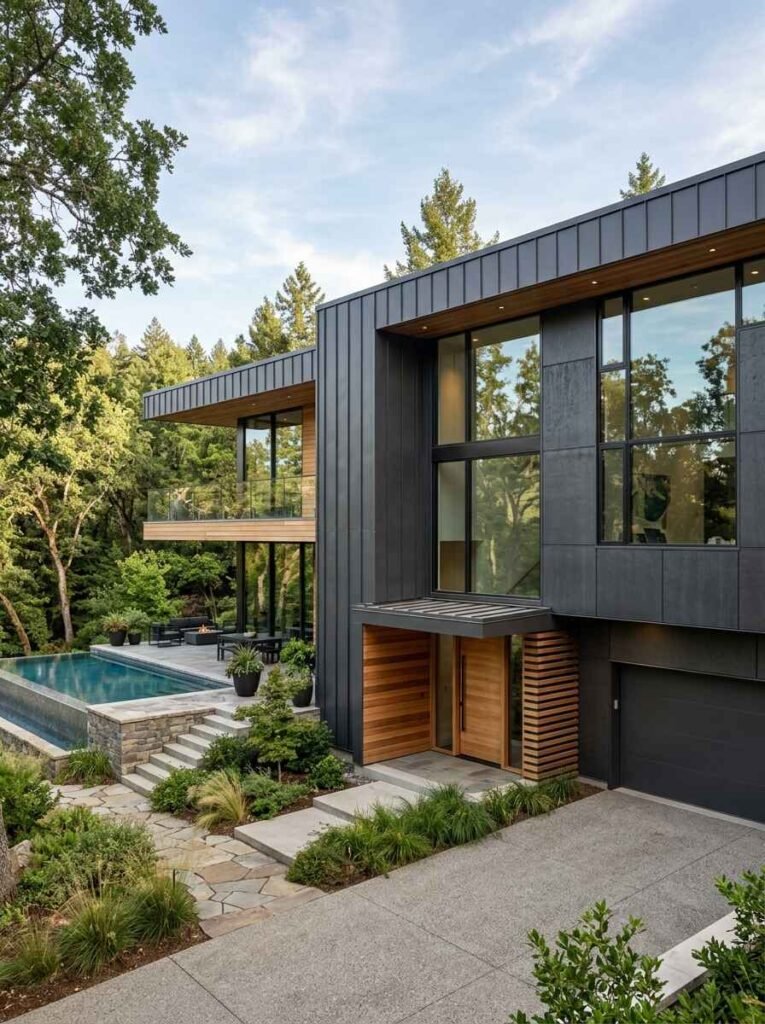
Flat aluminum or steel panels give a home a clean, almost commercial-grade finish. They reflect light in a way that emphasizes sharp architectural angles.
- Where it works best: Upper stories, cantilevered volumes, and trim or framing details.
- Key advantages: Sleek appearance, recyclable material, and strong resistance to severe weather.
- Maintenance considerations: Easy to rinse clean; avoid abrasive cleaners, which can damage the protective coating.
- Best architectural styles: Ultra-Modern, Industrial, and Futuristic.
10. Standing-Seam Metal
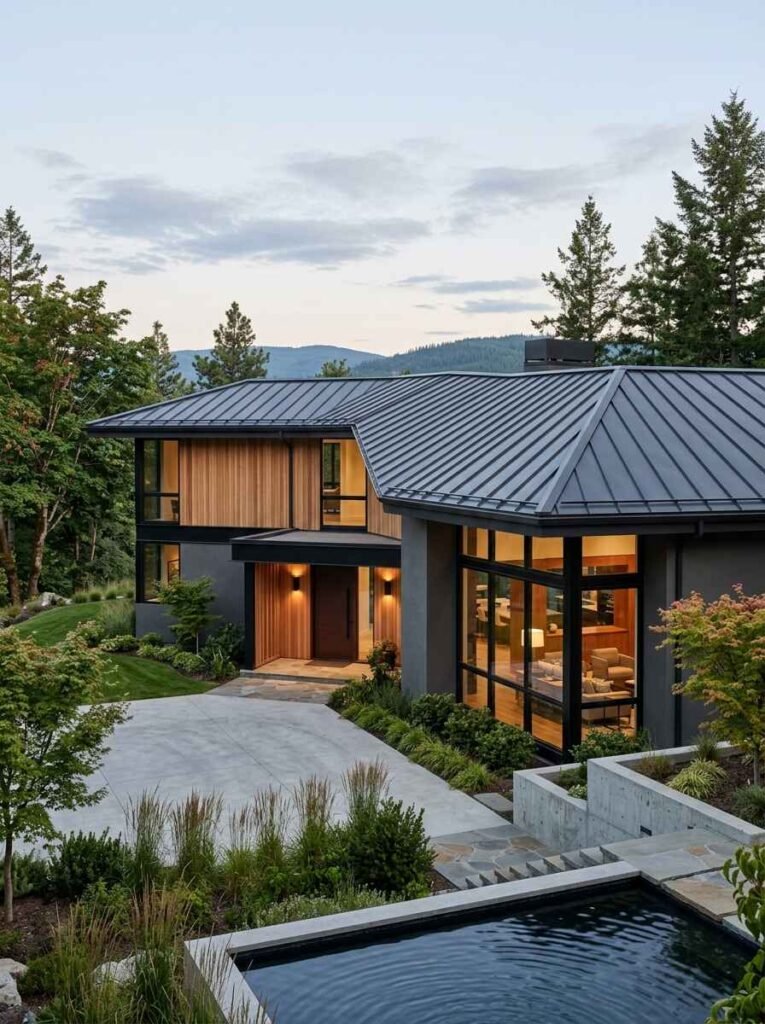
Standing-seam roofing features raised vertical ribs with fasteners hidden beneath the seams. It gives a home a custom, finished look while handling heavy rain and snow effectively.
- Where it works best: Primary roofs, porch overhangs, and accent roof sections.
- Key advantages: Strong resistance to water intrusion when properly detailed and installed, a long service life with appropriate maintenance, and generally solid energy performance.
- Maintenance considerations: Low maintenance overall; flashing and seams should be checked periodically, especially after major storms.
- Best architectural styles: Modern Farmhouse, Mountain Modern, and Contemporary.
11. Copper
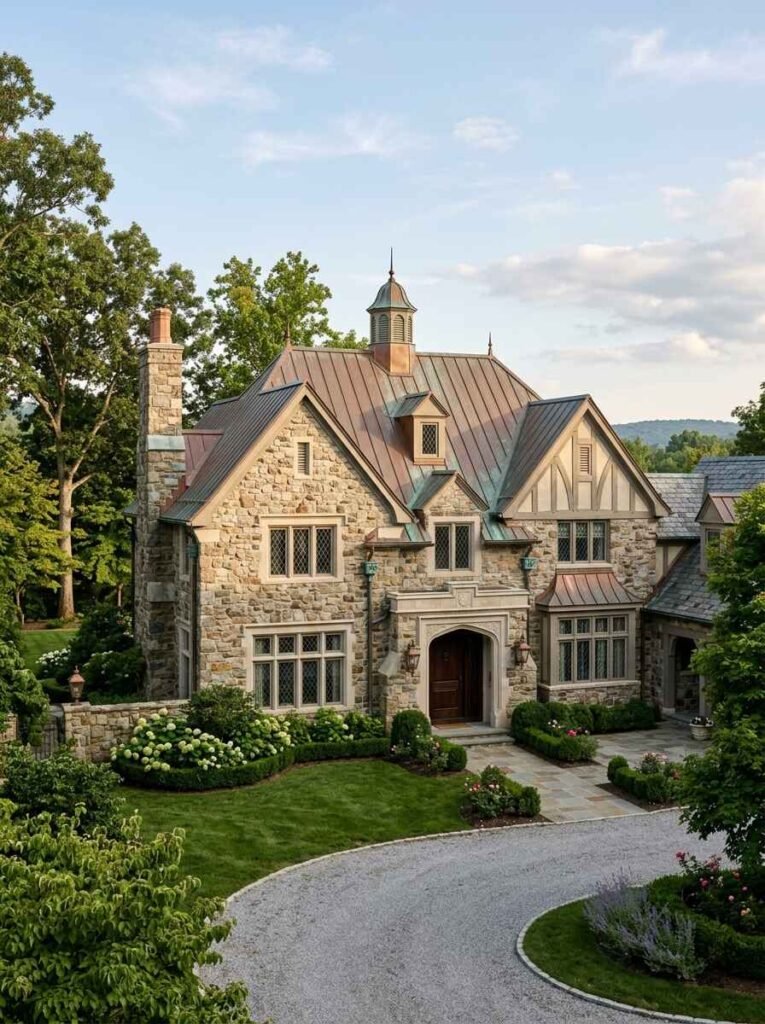
Copper starts out with a bright, golden-bronze sheen and gradually develops a green patina as it ages — a transformation that’s part of its appeal rather than a flaw.
- Where it works best: Gutters, dormer roofs, porticos, and accent bay windows.
- Key advantages: A long service life, strong resistance to rust, and a natural weathering process that many homeowners find appealing.
- Maintenance considerations: Generally requires little routine maintenance once properly installed; preserving the bright, unweathered appearance requires more ongoing care.
- Best architectural styles: Historic Estates, French Renaissance, and European Manor.
12. Slate
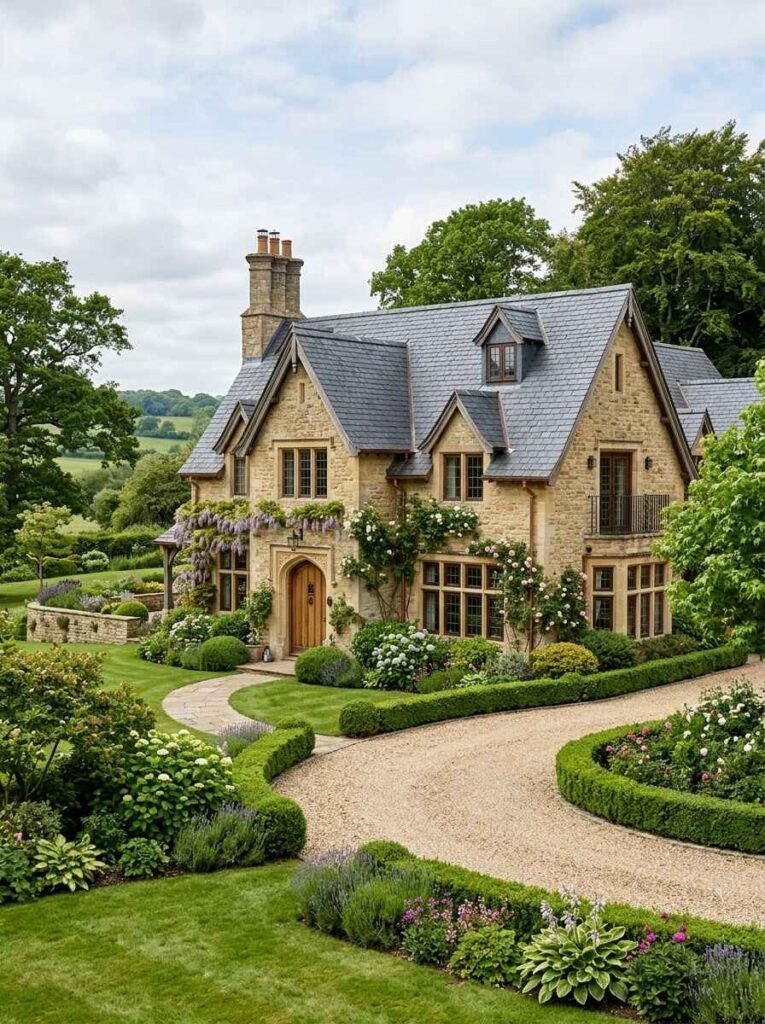
Natural slate is quarried stone, which gives roofing genuine texture and historic weight that manufactured alternatives don’t quite match.
- Where it works best: High-pitched residential roofs and turret elements.
- Key advantages: A long lifespan when properly installed and maintained, noncombustible properties, and a visually distinctive appearance.
- Maintenance considerations: Notably heavy — your home’s roof framing needs to be engineered to support the load.
- Best architectural styles: Tudor, Gothic, English Country, and Historic Mansions.
13. Architectural Concrete
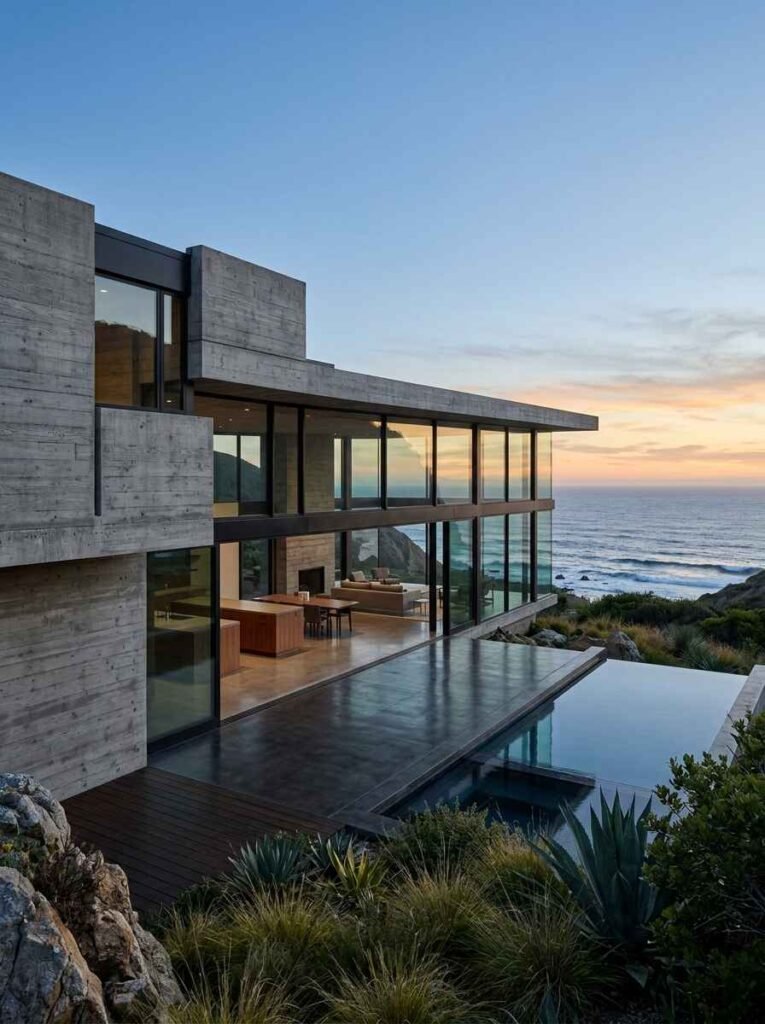
Smooth or board-formed concrete brings a raw, structural honesty to contemporary homes, often used to create bold geometric shapes.
- Where it works best: Structural feature walls, retaining bases, and cantilevered building sections.
- Key advantages: Strong structural performance, good sound insulation, and fire-resistant properties.
- Maintenance considerations: Should be sealed to prevent water staining and algae growth over time.
- Best architectural styles: Brutalist, Modernist, and Desert Contemporary.
14. Terracotta
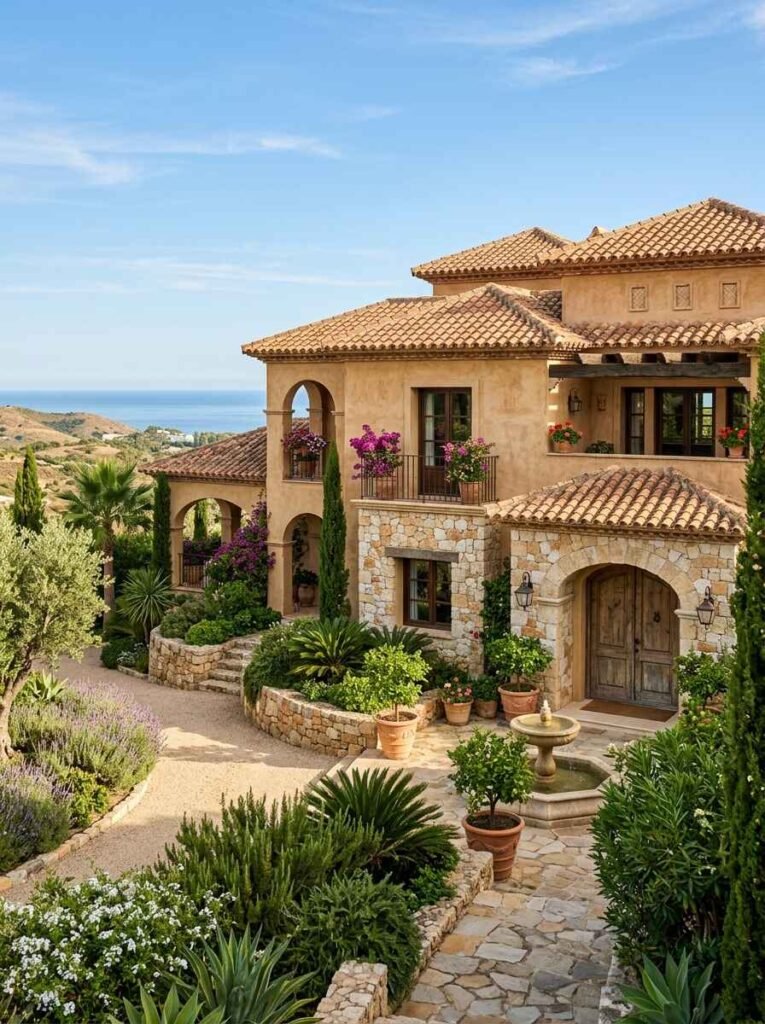
Terracotta tiles bring a warm, earthy character with rich, natural red-clay tones that suit sun-drenched climates particularly well.
- Where it works best: Roof tiles, decorative wall screens, and accent panels.
- Key advantages: Breathable clay material with good fade resistance under strong, consistent sun exposure.
- Maintenance considerations: Can be vulnerable in regions with severe freeze-thaw cycles, so climate is an important factor here.
- Best architectural styles: Spanish Colonial, Tuscan, and Southwestern.
15. Glass
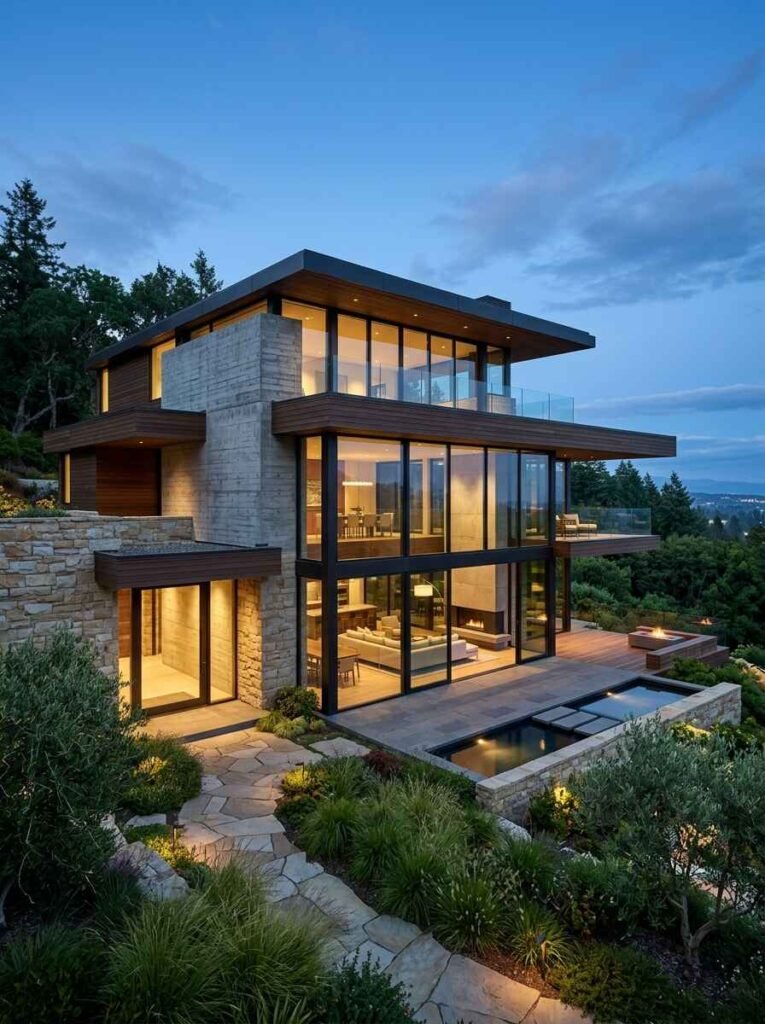
Floor-to-ceiling glass panels blur the line between a home’s interior and its surrounding landscape, giving the facade a light, open feel.
- Where it works best: Great rooms, stairwells, and other high-visibility facade openings.
- Key advantages: Allows abundant natural light, opens up sightlines, and gives a facade a sleek, contemporary edge.
- Maintenance considerations: Requires more frequent cleaning than most materials to keep views and reflections clear.
- Best architectural styles: Modern, International, and Coastal Estates.
How to Choose the Right Exterior Material
Choosing well means balancing what you’re drawn to visually with what your home and climate actually need.
- Consider Your Home’s Architectural Style: Traditional designs generally lean on brick, slate, and natural stone. Modern layouts tend to favor metal, glass, and smooth concrete.
- Consider Climate and Exposure: Freeze-resistant stone suits colder regions, while breathable stucco or terracotta tends to perform better in hot, dry zones.
- Compare Maintenance Requirements: Be honest about how much time or budget you want to put toward re-staining wood or resealing porous stone down the line.
- Create a Balanced Material Palette: Limiting your home to two or three primary materials usually reads as intentional, rather than busy or disjointed.
If you’re still narrowing down direction, our full guide to luxury home exterior ideas walks through how these materials fit into a broader design plan.
Best Luxury Home Exterior Material Combinations
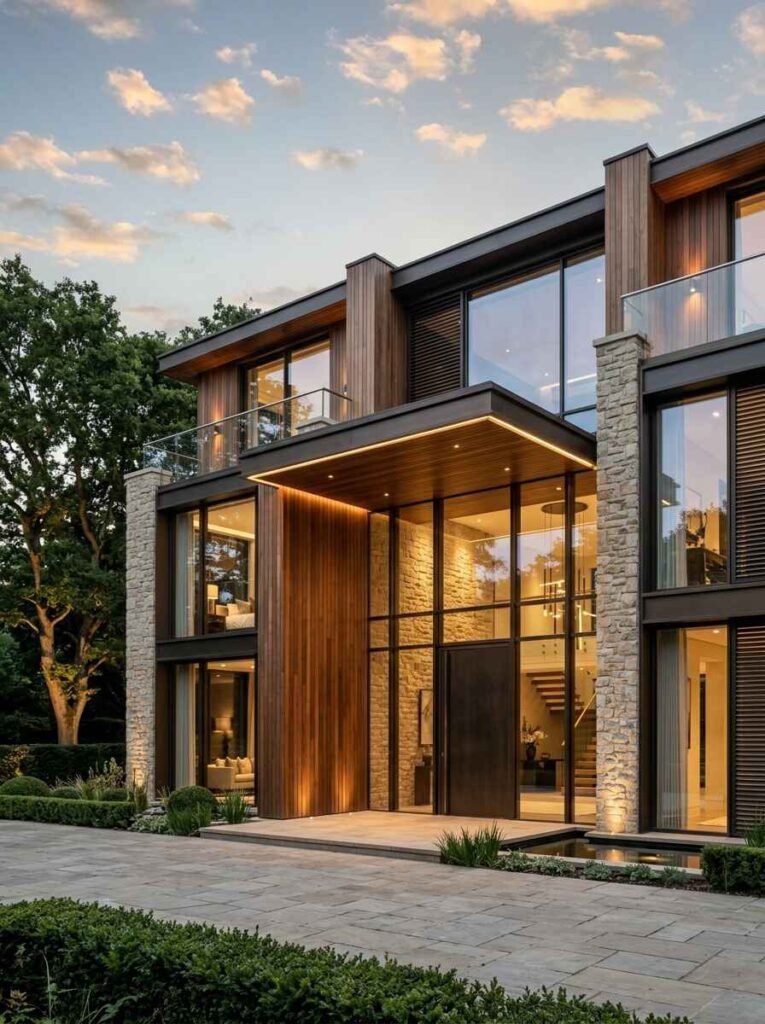
Pairing materials thoughtfully adds depth to a facade. These combinations tend to work well together:
- Stone + Wood: Balances the coolness of stone with the warmth of timber for a modern-organic look.
- Brick + Dark Metal: Dark metal trim gives crisp brick lines a more contemporary edge.
- Stucco + Stone: Smooth stucco offsets a rugged stone base, a pairing common in Mediterranean design.
- Wood + Concrete: Vertical wood slats soften the industrial feel of raw concrete.
- Brick + Copper: Aged copper roofing or gutters complement red brick particularly well.
- Stone + Metal: Natural stone against clean metal panels creates a strong contemporary contrast.
Luxury Home Exterior Material Mistakes to Avoid
- Mixing too many different materials on a single facade.
- Choosing materials that clash with the surrounding natural landscape.
- Overlooking local weather patterns and the maintenance they demand.
- Using imitation materials in spots where authenticity is the whole point.
- Leaving uneven or poorly finished transitions where two materials meet.
- Prioritizing short-term trends over choices that will still look right in twenty years.
Frequently Asked Questions
Which exterior material lasts the longest?
Natural slate, granite, and copper are among the more durable options. With proper installation, suitable climate conditions, and reasonable upkeep, they can perform well for many decades, and in some cases beyond a century.
Does exterior material choice affect home value?
Natural stone and architectural brick are often associated with strong buyer appeal, though the actual impact on value depends on your local market, overall home quality, and buyer preferences in your area.
Can I mix modern and traditional materials?
Yes. Pairing natural stone with standing-seam metal, for example, is a common way to bridge traditional and contemporary design.
What are the lowest-maintenance luxury home exterior materials?
Granite and fiber cement panels are generally among the easier options to maintain, typically needing little beyond occasional washing.
That depends on your priorities and how long you plan to stay in the home. Premium materials can mean fewer repairs and a longer service life, but the upfront investment should be weighed against your budget and goals.
Conclusion
A high-end exterior comes down to choosing authentic materials that age well and suit both your climate and architectural style. A useful approach: start with your home’s core architecture, factor in local climate demands, choose your primary wall material, select a complementary secondary material, add high-end accent details, and think honestly about long-term maintenance before you commit.
Taking the time to work through these choices in order tends to produce a facade that looks considered now and holds up well for years to come.
3 thoughts on “Luxury Home Exterior Materials: 15 High-End Options for a Timeless Facade”
Comments are closed.