
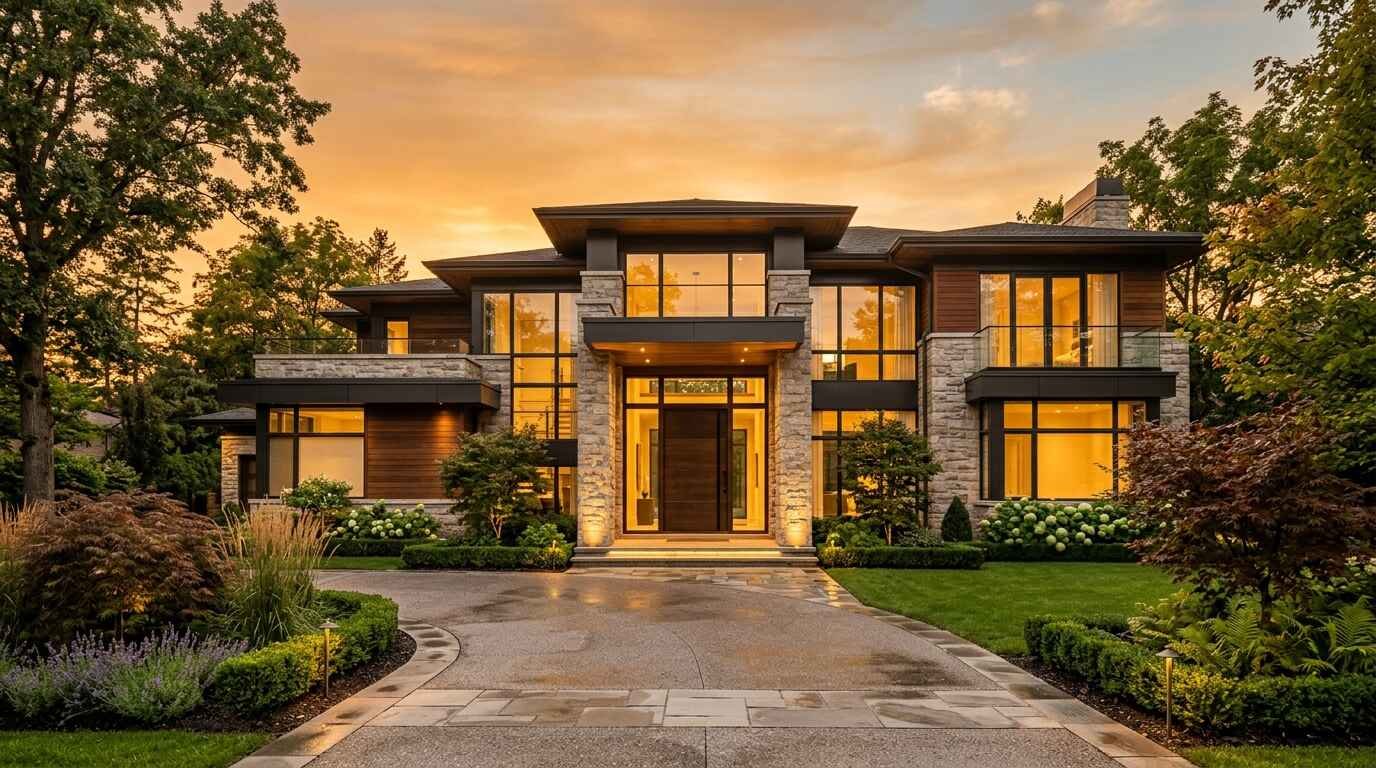
A luxury home exterior comes down to intentional architecture, balanced proportions, high-grade materials, and quiet restraint rather than heavy decoration. Your facade serves as the primary statement of your home, establishing its architectural story long before you or your guests ever step through the front door.
When you want to achieve a high-end exterior, you need to carefully consider your home’s structural massing, window placement, surface textures, and integrated landscape design. Whether you are planning a custom build from the ground up or refining your estate’s current elevation, these key details dictate your curb appeal and long-term structural beauty.
In this guide, we will explore 23 luxury home exterior ideas covering architectural styles, premium surface cladding, grand arrival zones, custom millwork, and exterior lighting strategies to help you elevate your home.
What Makes a Home Exterior Look Luxurious?
A luxury house facade achieves true elegance through unified architectural principles rather than superficial ornaments. When you analyze what makes an exterior look truly elevated, it comes down to a few core elements:
- Architectural Proportions: Balanced rooflines, a harmonious window rhythm, and intentional massing create a visually grounded elevation that feels right to the eye.
- Quality Materials: Authentic cut stone, architectural-grade timber, structural steel, and traditional lime plaster age gracefully while giving your walls rich tactile depth.
- A Distinct Arrival Point: An architectural entryway—anchored by custom door systems, porticos, or stone surrounds—establishes a clear focal center for your home.
- Layered Exterior Lighting: Concealed architectural fixtures highlight your home’s textures, steps, and key elevations without creating harsh glare.
- Integrated Landscaping: Architecturally framed plant selections, clean hardscaping paths, and mature green buffers anchor your home naturally to its site.
- Restrained Color Palettes: A unified color scheme allows your material textures and structural shadow lines to take center stage.
For a deeper look at premium options beyond stone, explore our guide to luxury home exterior materials, covering 15 high-end choices for creating a timeless facade.
23 Luxury Home Exterior Ideas
1. Modern Luxury Home Exterior
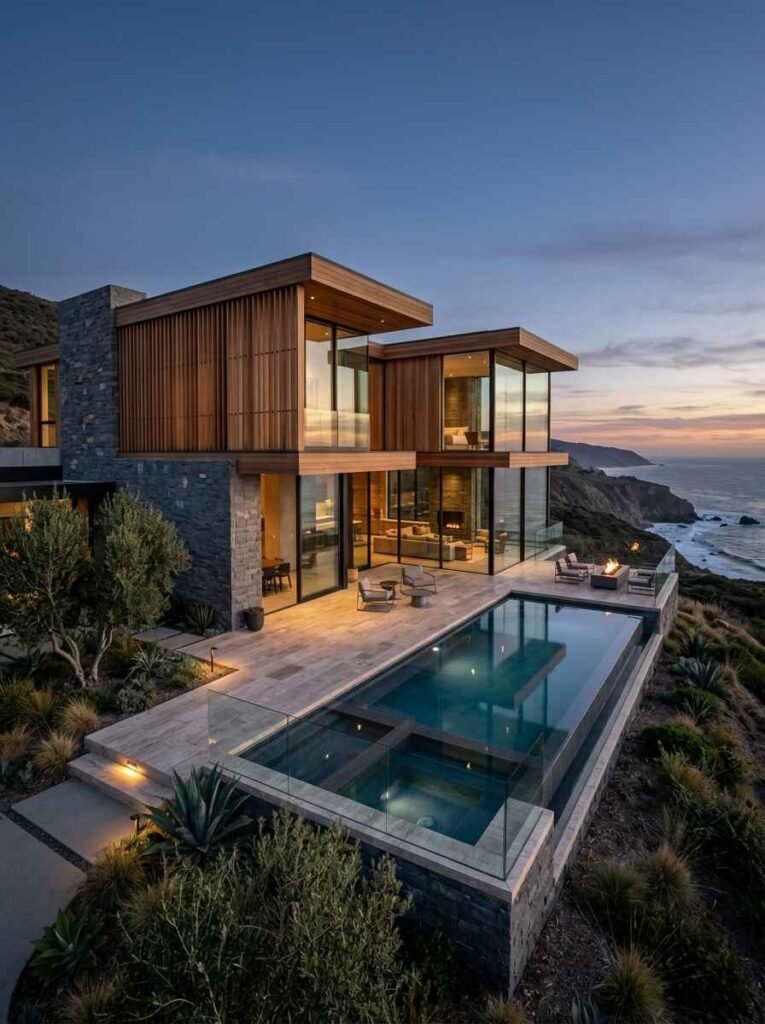
If you love clean geometric volumes, expansive structural glazing, and bold cantilevered planes, modern luxury architecture is an ideal choice for your home. Rather than relying on traditional trim work, you can create visual interest by pairing contrasting physical materials, such as raw concrete alongside warm timber soffits or dark metal fascia panels.
Large-format glass walls break down visual mass while showcasing your home’s structural steel framing. When you design a modern facade, focus on precise material joinery and concealed gutter systems to maintain clean, crisp sightlines across all your elevations.
2. Contemporary Luxury Home Exterior
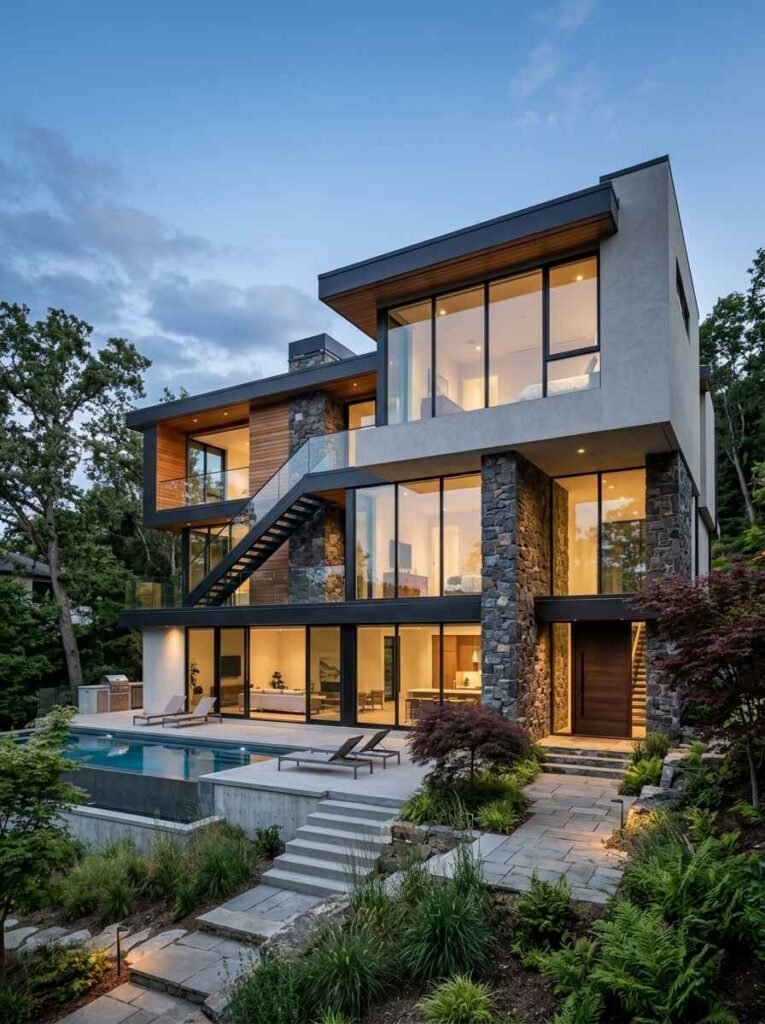
Contemporary exterior design lets you adapt evolving architectural trends while prioritizing structural rhythm and asymmetrical balance. You can pair smooth, hand-troweled plaster or stucco surfaces with vertical metal paneling or dark architectural cladding.
Dynamic rooflines, angular overhangs, and recessed entrance niches define this aesthetic. To keep your finish refined, integrate flush-mounted window frames and seamless shadow-line reveals around your exterior wall panels, allowing your home’s physical form to remain uncluttered.
3. Modern Mediterranean Luxury Exterior
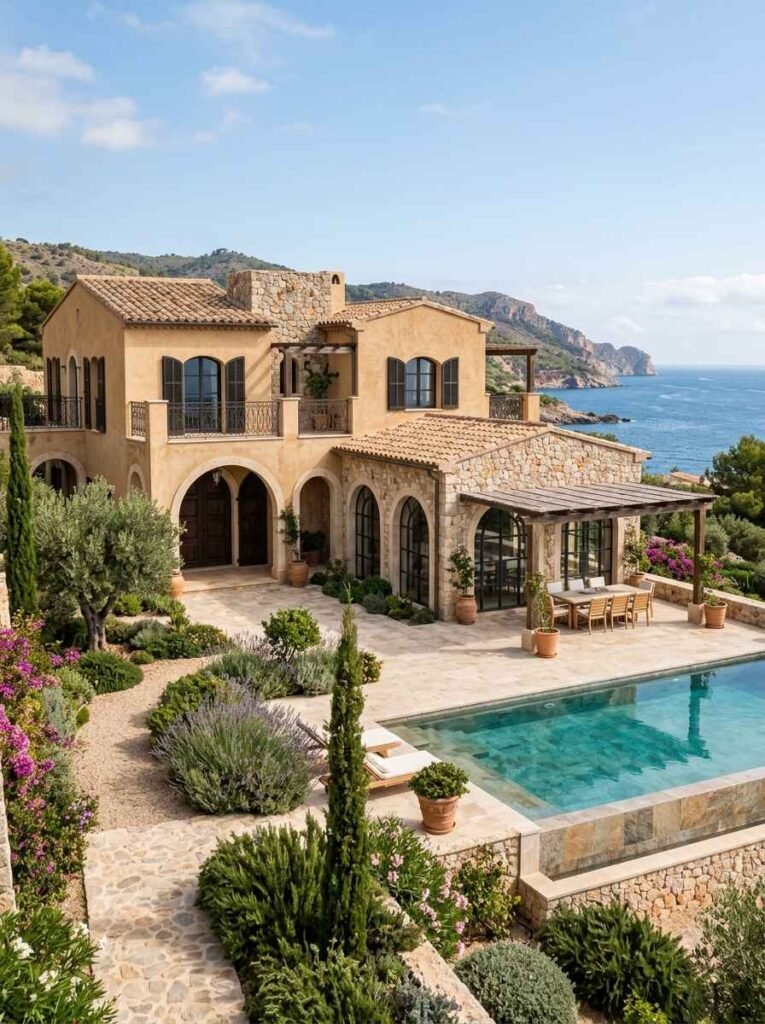
If you want to update classical coastal residential design, a modern Mediterranean facade streamlines traditional details beautifully. Warm cream or off-white smooth stucco walls provide a soft canvas for dark steel-framed arched windows and low-pitch clay barrel tile roofs.
You can replace heavy classical details with clean stone archways, open loggias, and wrought-iron window guards. Hardscape materials like honed travertine pavers or split-face limestone walls complete your Mediterranean exterior, establishing a seamless relationship between your home and its natural landscape.
4. Modern Farmhouse Luxury Exterior
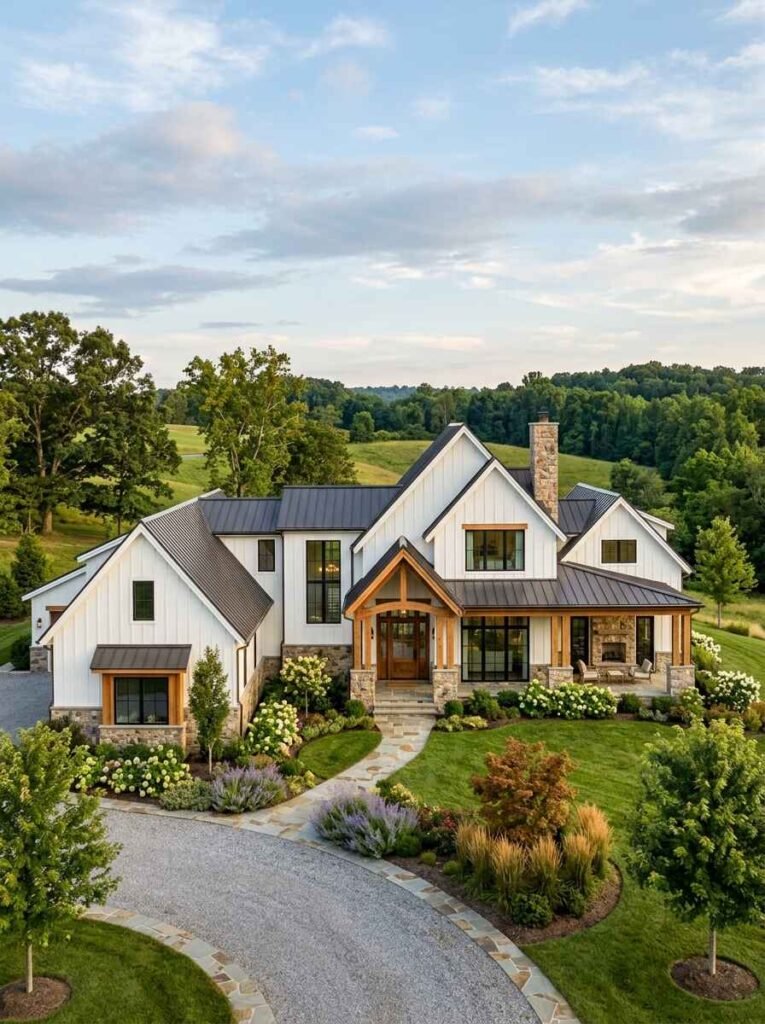
A modern farmhouse design allows you to balance rural architectural silhouettes with refined industrial accents. Vertical white board-and-batten siding gives you a textured vertical surface, which you can complement with standing-seam dark metal roofing along accent gables.
Architectural timber framing on your covered front porch introduces organic warm tones against sharp white walls. To preserve high-end appeal, specify oversized double-hung or casement windows with dark exterior mullions, anchored by a low-profile fieldstone or ashlar masonry foundation.
5. Minimalist Luxury Home Exterior
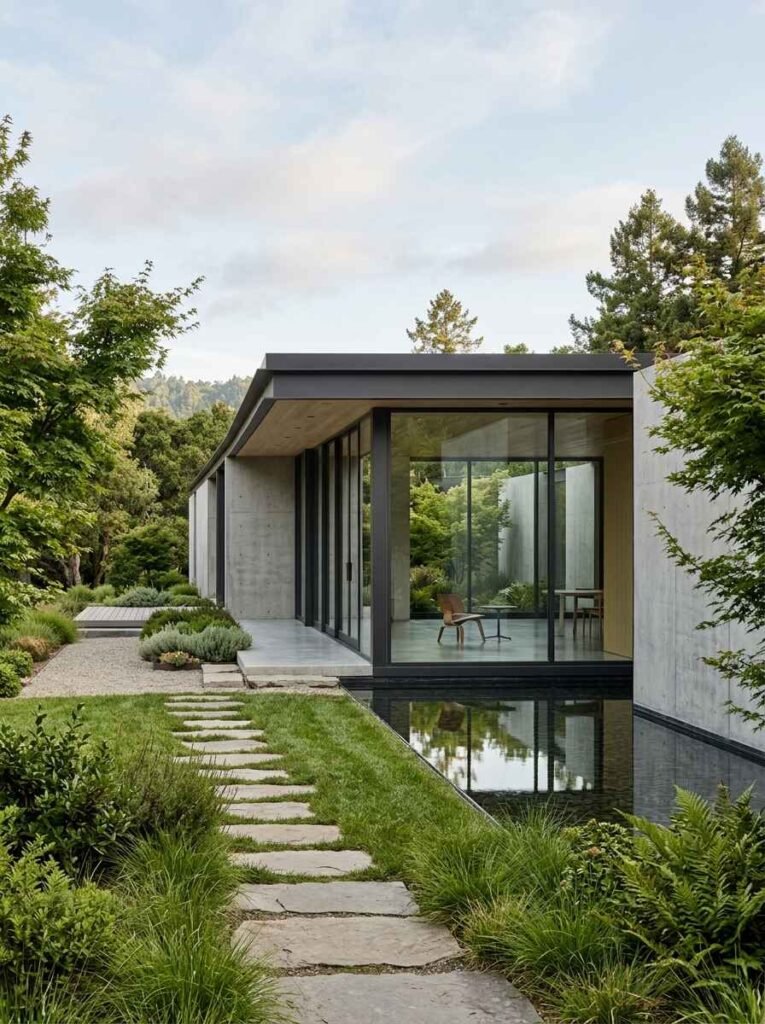
If you appreciate spatial purity and the total elimination of non-essential decorative elements, minimalist residential architecture is a powerful statement. High-end minimalist facades rely on monochromatic board-formed concrete, oversized natural stone slabs, or matte architectural panels.
You can integrate entrance doors directly into continuous wall cladding using concealed hardware and shadow gaps. Precise architectural execution is critical here; every joint, flashing, and window reveal must align perfectly since there is no decorative trim to hide construction seams.
6. European-Inspired Luxury Exterior
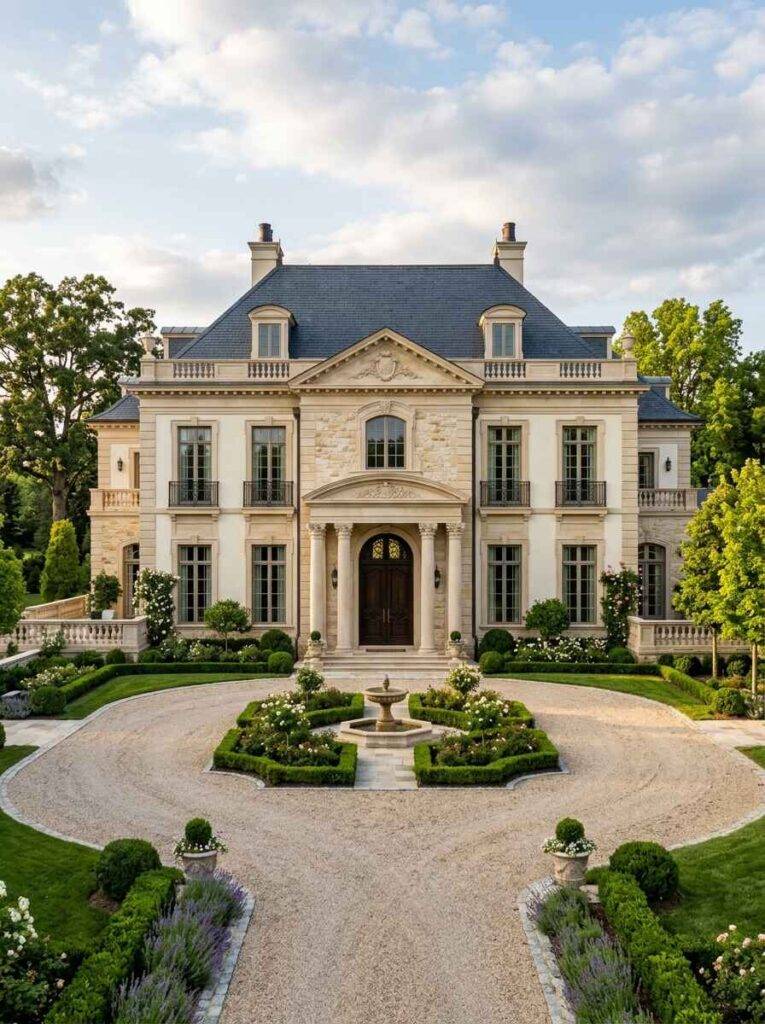
European-inspired home facades let you draw structural cues from classic French manor houses and English country estates. Cut limestone masonry, steeply pitched slate roofs, dormer windows, and hand-crafted copper gutters and downspouts characterize this timeless architectural style.
Deeply recessed window openings accentuate wall thickness, giving your residence an enduring, historical presence. You can pair smooth limestone surrounds with wrought-iron balconies or hand-carved stone porticos for a sophisticated, traditional elevation.
7. Luxury Stone Home Exterior
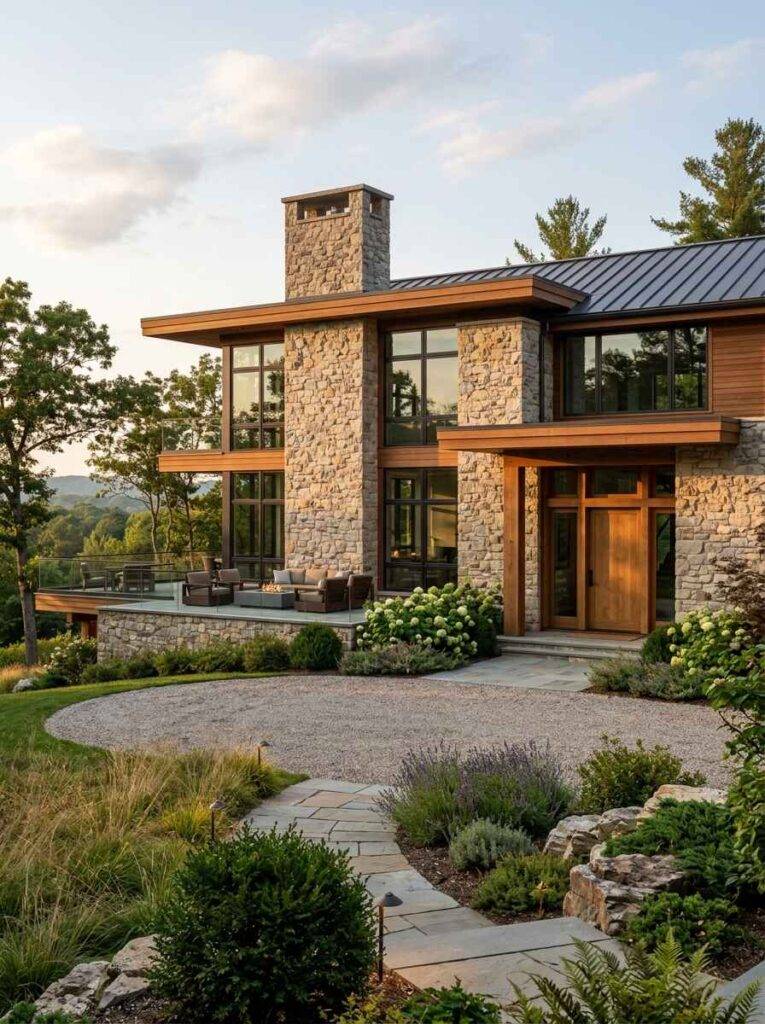
Natural stone masonry offers you unmatched texture, durability, and permanent architectural weight. Your options range from clean-cut dimensional limestone ashlar to organic stacked fieldstone and rugged granite veneer.
Rather than covering every surface in stone, consider applying full-bed masonry to key architectural elements like structural chimneys, entry towers, or lower-level plinths. When you pair natural stone with smooth plaster, dark metal accents, or warm wood siding, you prevent your elevation from feeling overly heavy while highlighting textural contrast.
8. Luxury Brick Home Exterior
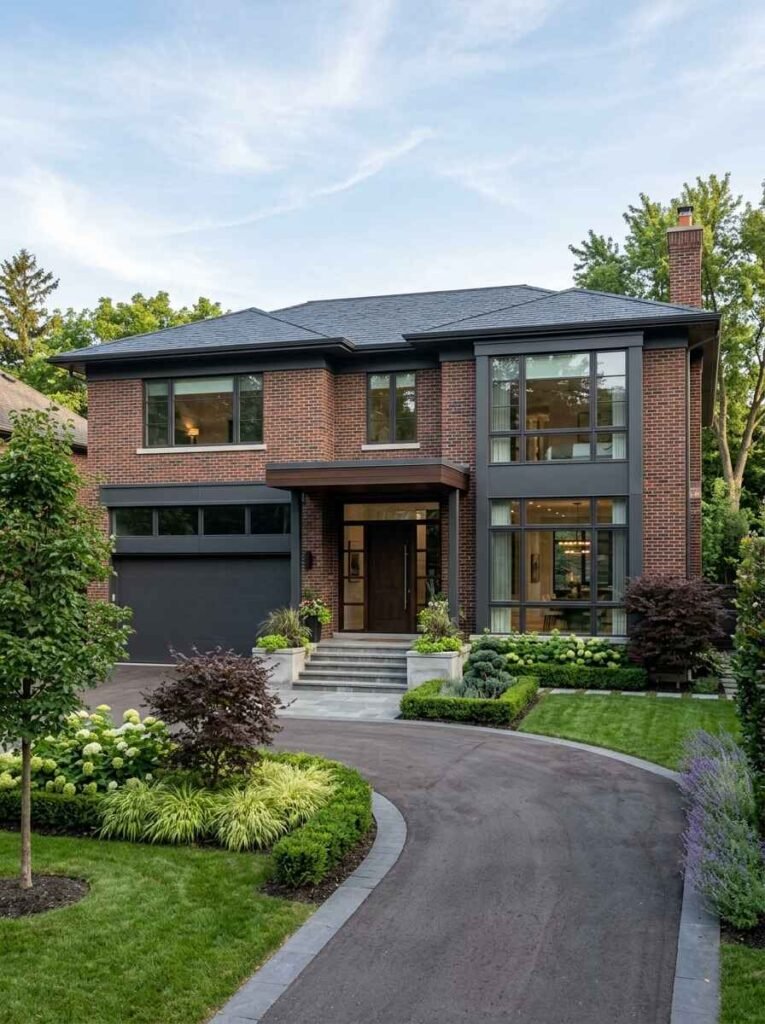
Architectural brick provides classic durability and geometric structure. For a high-end look, avoid standard utility brick and choose oversized formats, hand-molded clay bricks, long-format Roman brick, or lime-washed finishes that soften your facade’s color variation.
Deeply raked mortar joints introduce subtle shadow lines across your wall surfaces. Dark charcoal, soft grey, or muted cream bricks pair exceptionally well with bronze window frames, dark slate roofs, and natural timber entrance doors.
9. Wood and Natural Material Exterior
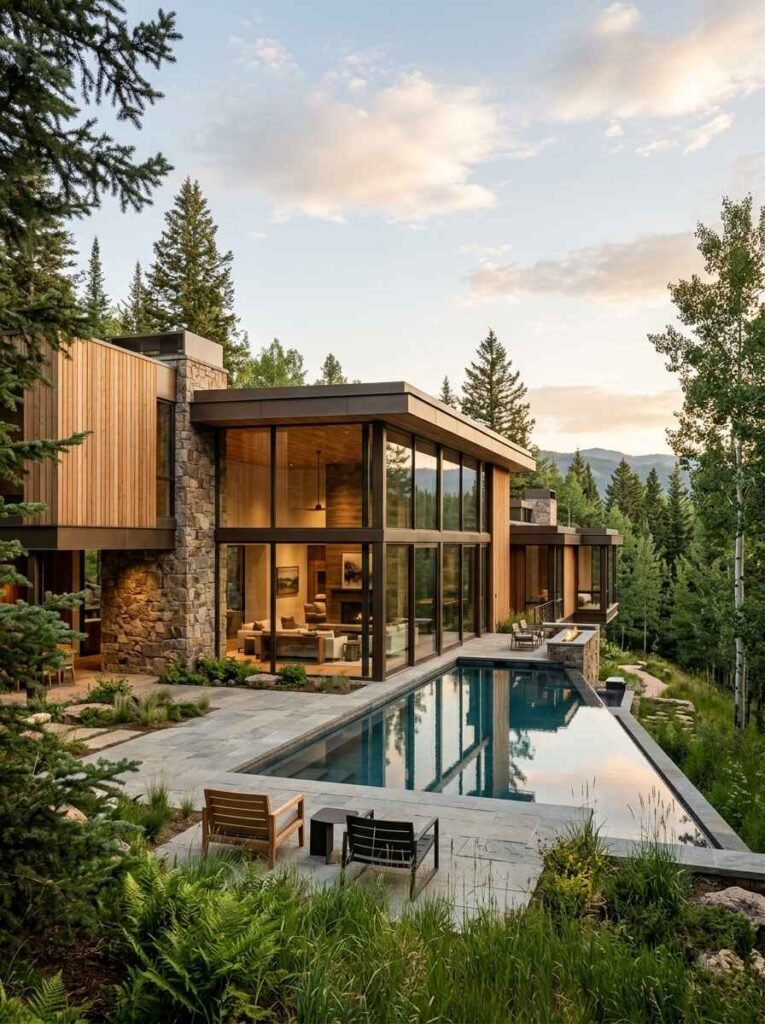
Exterior wood cladding brings natural warmth, rich graining, and architectural character to your home. Species such as Western Red Cedar, Ipe, Teak, and thermally modified woods offer you natural weather resistance and structural stability.
Vertical tongue-and-groove boards or rainscreen slat systems allow your wood to breathe while casting crisp shadow lines. Keep in mind that unsealed exterior wood will naturally weather to a soft silver-grey patina over time; if you want to retain warm timber tones, plan for periodic penetrating oil treatments to protect against UV exposure.
10. Floor-to-Ceiling Exterior Windows
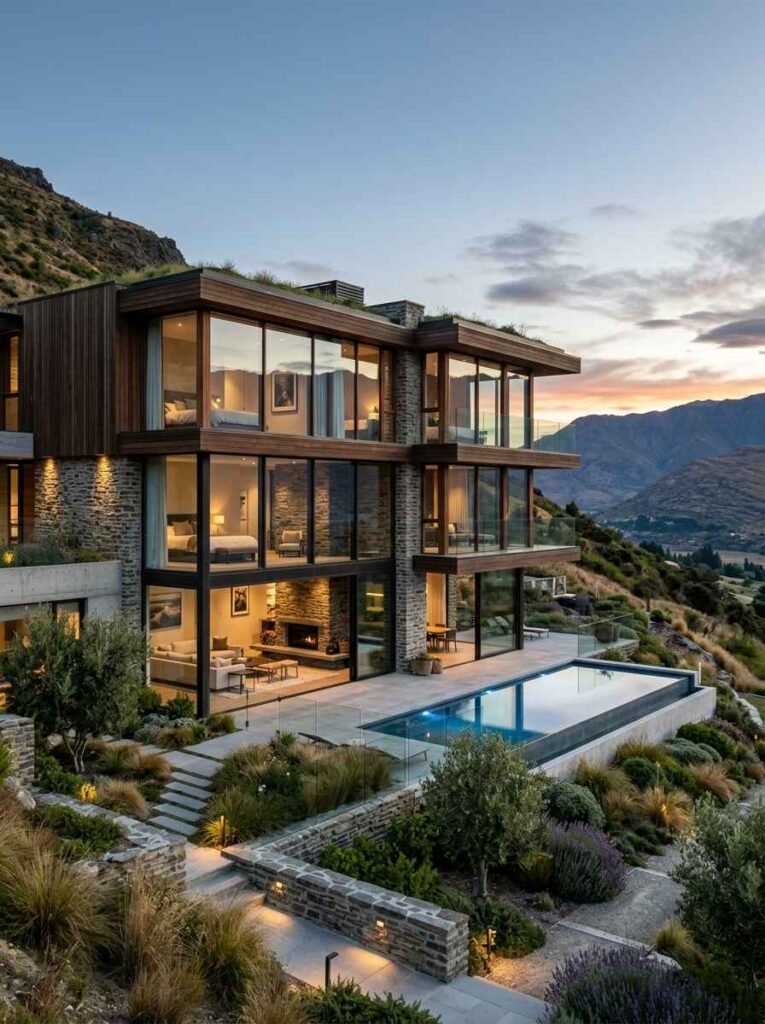
Floor-to-ceiling glazing opens your home’s facade to natural light while creating a lightweight, glowing profile after dusk. Structural curtain wall systems and narrow-profile aluminum frames maximize your clear glass area without sacrificing thermal performance.
When you incorporate wide glazing expanses, select low-iron, energy-efficient glass with anti-reflective coatings to prevent harsh outdoor glare. You can also add solar shading features—such as deep structural roof overhangs, exterior louvers, or integrated motor shades—to maintain indoor climate control while adding depth to your facade.
Also Read this: Luxury Home Exterior Windows: 14 Elegant Designs for a Sophisticated Facade
11. Luxury Exterior Doors
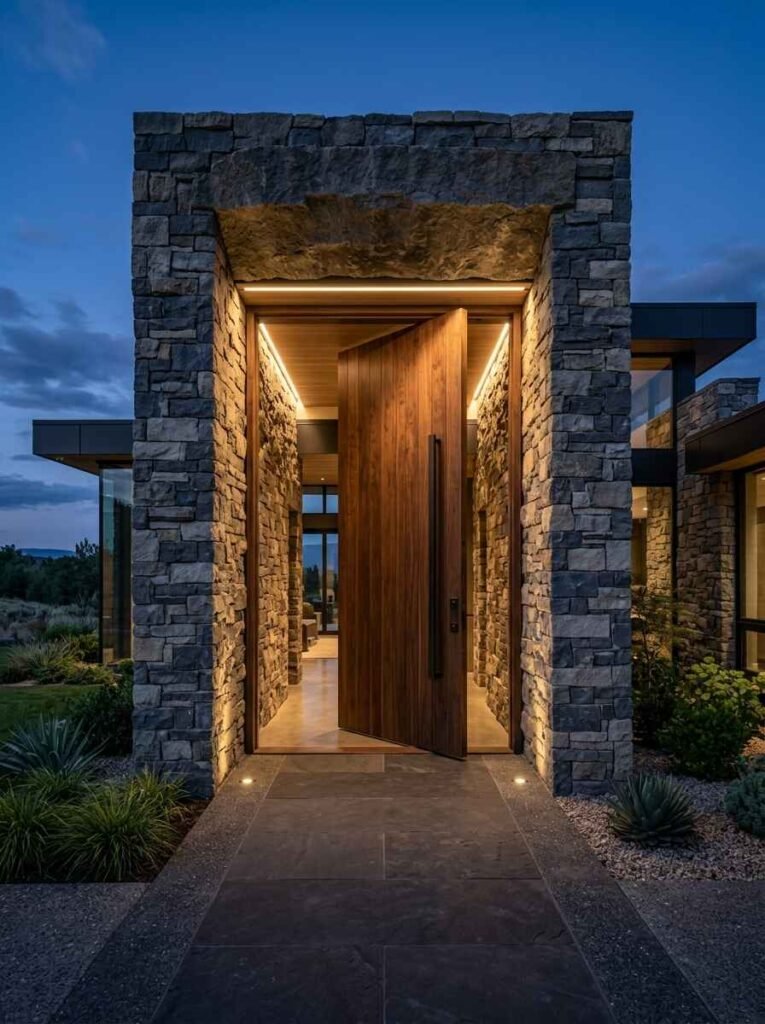
Your primary front door serves as the focal anchor of your entire arrival experience. Oversized timber or metal pivot doors—often measuring four to five feet wide and eight to ten feet tall—create an immediate statement of scale and quality engineering.
Custom solid hardwoods like white oak, walnut, or mahogany feature rich tactile graining that you can complement with integrated flush pulls or custom forged bronze hardware. Sidelights or transom glass around your door frame illuminate your interior entry while highlighting the door’s craftsmanship.
Also Read this: 15 Luxury Home Exterior Door Ideas That Elevate Curb Appeal
12. Statement Garage Doors
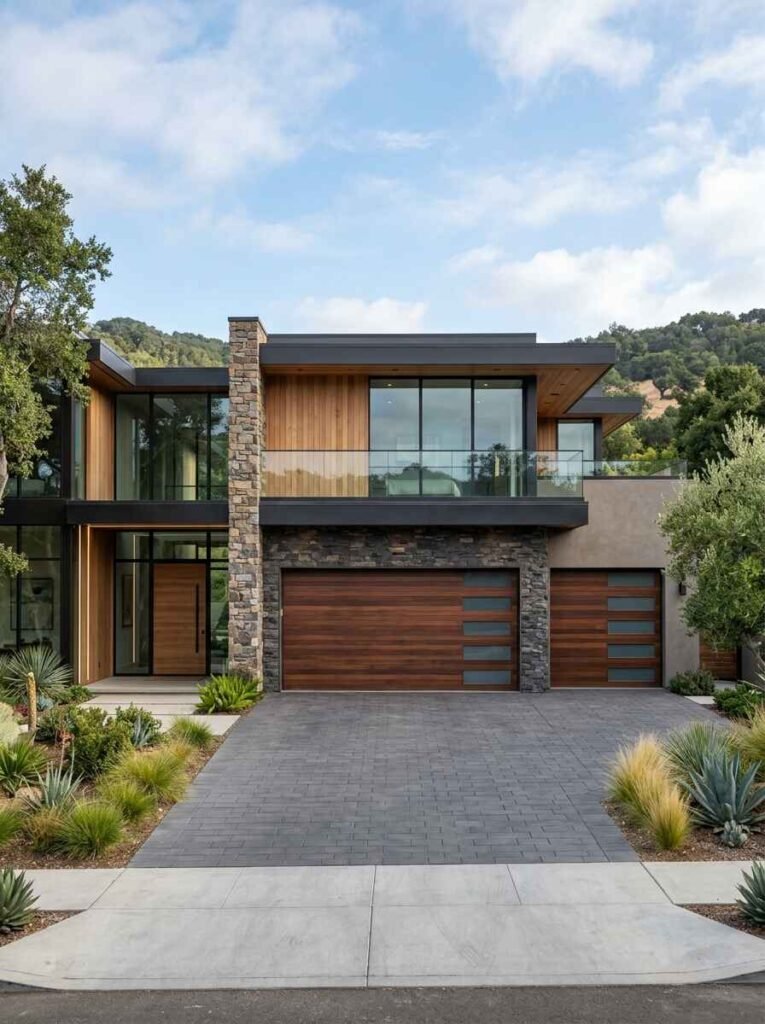
Garage doors occupy a significant percentage of your front elevation, so you should treat them as an integral architectural feature. Custom flush-panel wood doors, insulated dark aluminum frames with frosted glass inserts, or custom steel carriage doors elevate standard utility openings immediately.
Align your garage door material directly with your primary entrance door or exterior wood accents for visual continuity. Recessed architectural soffit lights placed above your garage bays provide functional, subtle illumination across the door surfaces at night.
13. Luxury Home Entrance
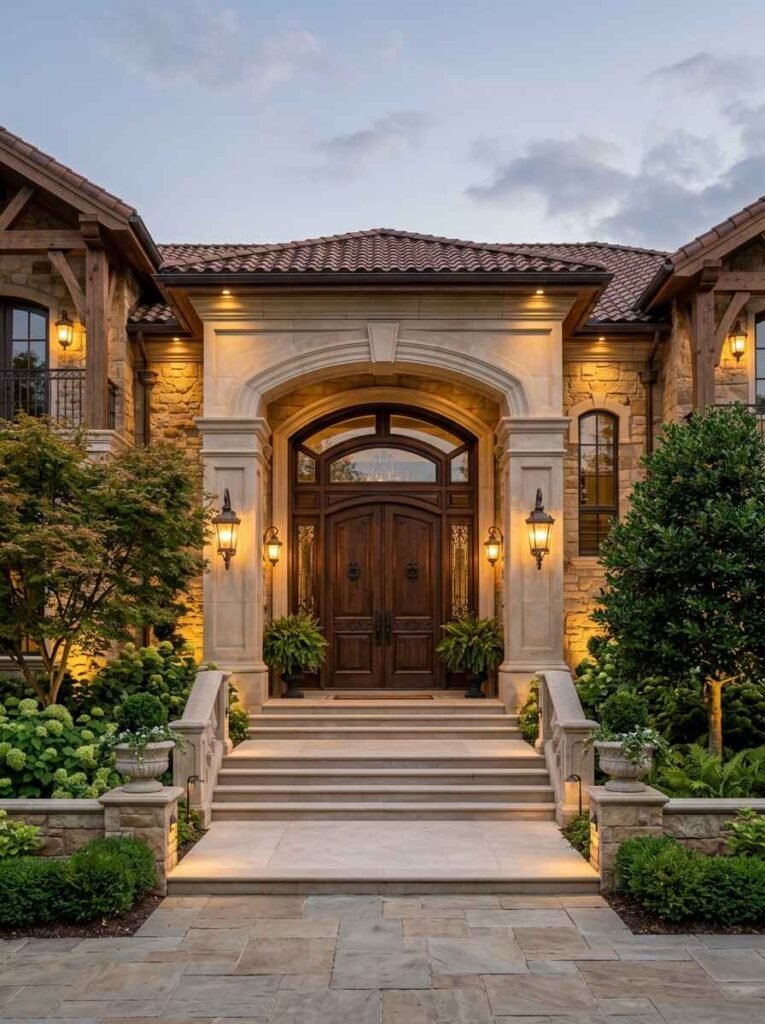
A well-designed entrance experience combines physical arrival elements into a unified focal point. Broad, low-riser stone steps using bluestone, limestone, or granite lead you and your visitors naturally toward a covered entryway.
You can flank wide entry platforms with custom stone planters, masonry piers, or integrated seating walls. Overhead, decorative pendant lanterns or concealed ceiling downlights warm the transition from your outdoor landscape into your interior foyer.
14. Grand Driveway Design
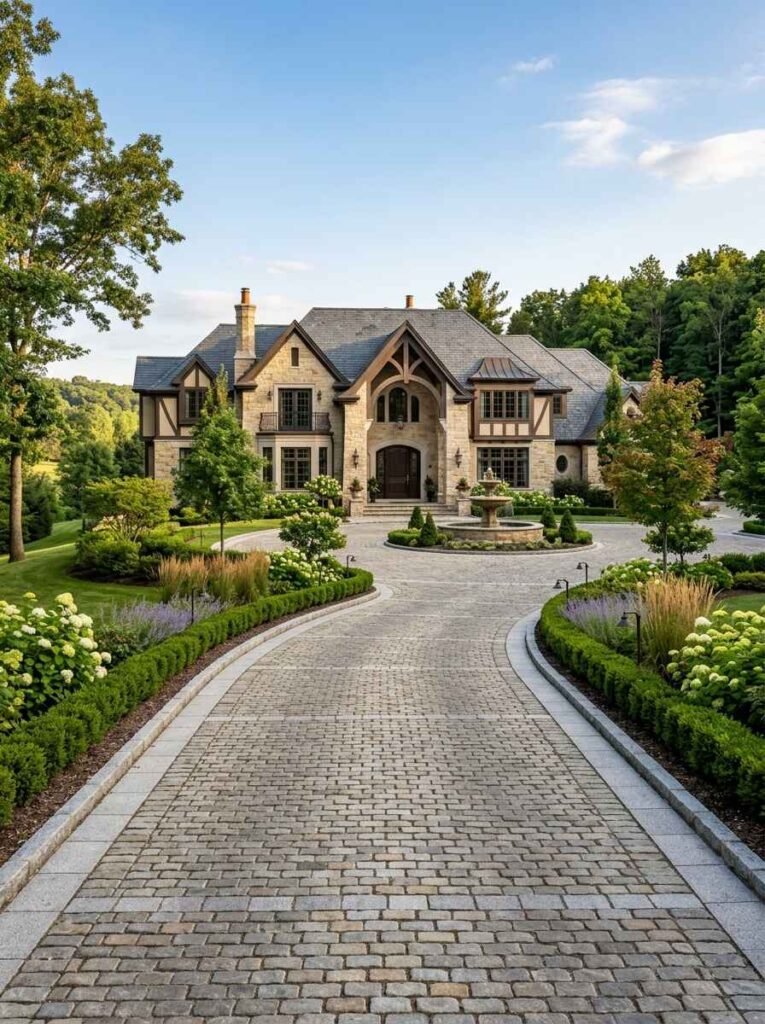
A custom driveway establishes the initial approach to your estate. Replacing standard poured concrete or asphalt with interlocking granite cobbles, high-density permeable pavers, or warm crushed gravel sets a refined tone right at your property boundary.
A circular motor court or decorative apron adds geometric structure to your arrival zones while making vehicle turnarounds effortless. Integrated low-voltage ground lights set along stone borders define your drive boundaries safely without disrupting night sky aesthetics.
15. Luxury Front Porch
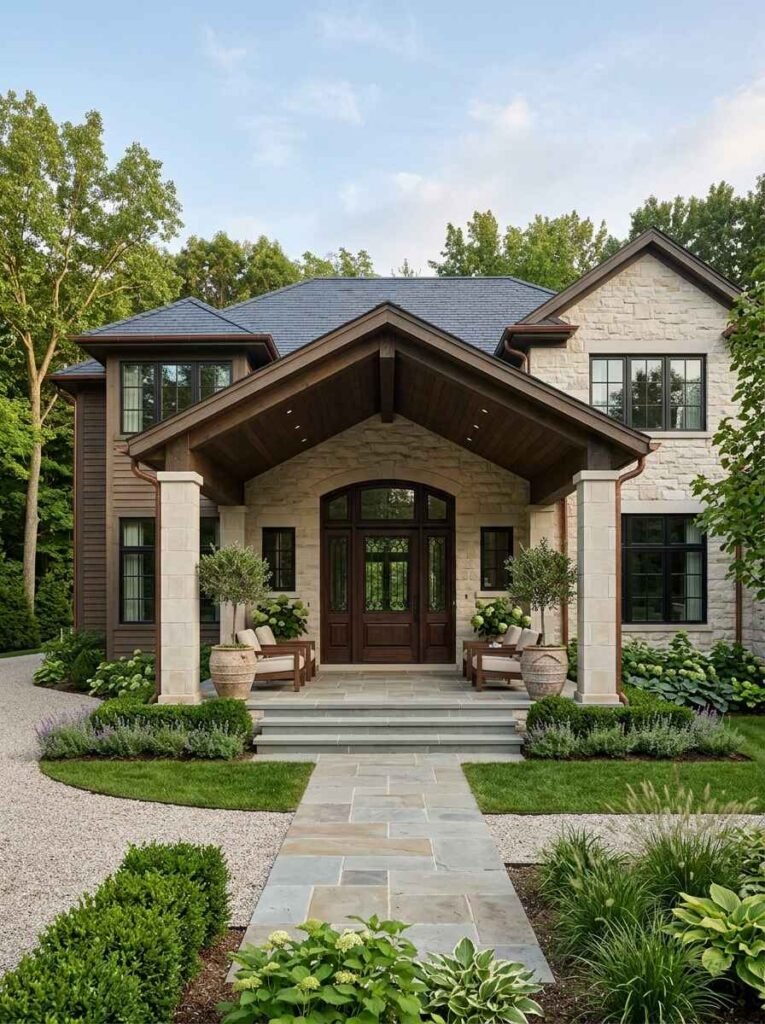
Your front porch can serve as a grand architectural transition between your landscape and residence rather than just a casual seating area. Deep overhangs supported by thick masonry piers or timber posts shelter your primary threshold from the elements.
Finished tongue-and-groove wood ceilings, bluestone flagstone flooring, and custom wall sconces add interior-level detailing to your covered structure. Pay close attention to scale; ensure your porch height and depth remain proportional to your main roofline and entrance surround.
16. Elegant Exterior Lighting
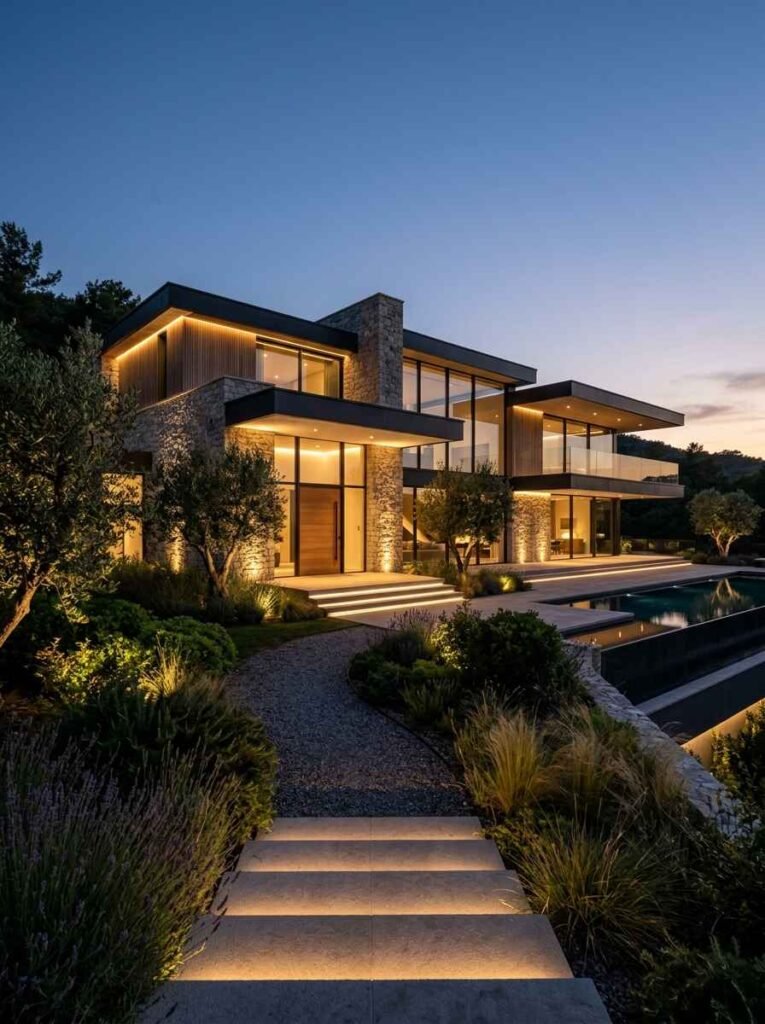
Architectural lighting relies on subtle layering to showcase your wall textures, paths, and entry features without blinding brightness. Low-glare, narrow-beam spotlights directed upward let you illuminate stone chimneys, vertical columns, and mature specimen trees.
Path lights featuring shielded downward caps guide pedestrian traffic safely along stone walkways. Under-step LED strip lighting mounted beneath floating tread overhangs creates a modern visual effect along your exterior entry steps.
17. Luxury Front Yard Landscaping
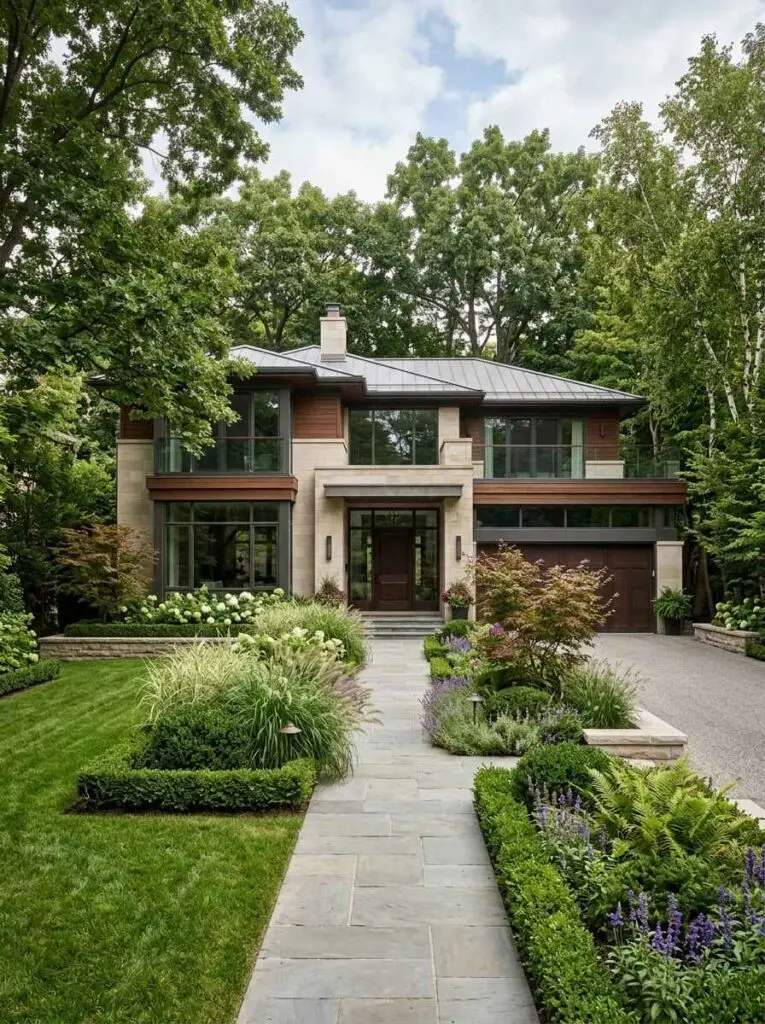
Your front yard landscaping should frame and complement your home’s architecture rather than hide its best details. Structured garden beds featuring boxwood hedges, ornamental grasses, and mature evergreen plantings create clean geometric borders along your foundation walls.
Emphasize structural plant forms and seasonal evergreen consistency in your layout. Stone retaining walls or raised masonry planters help level sloping sites, giving you layered terraces that step down smoothly toward your property entry gates.
18. Luxury Fencing and Privacy Walls
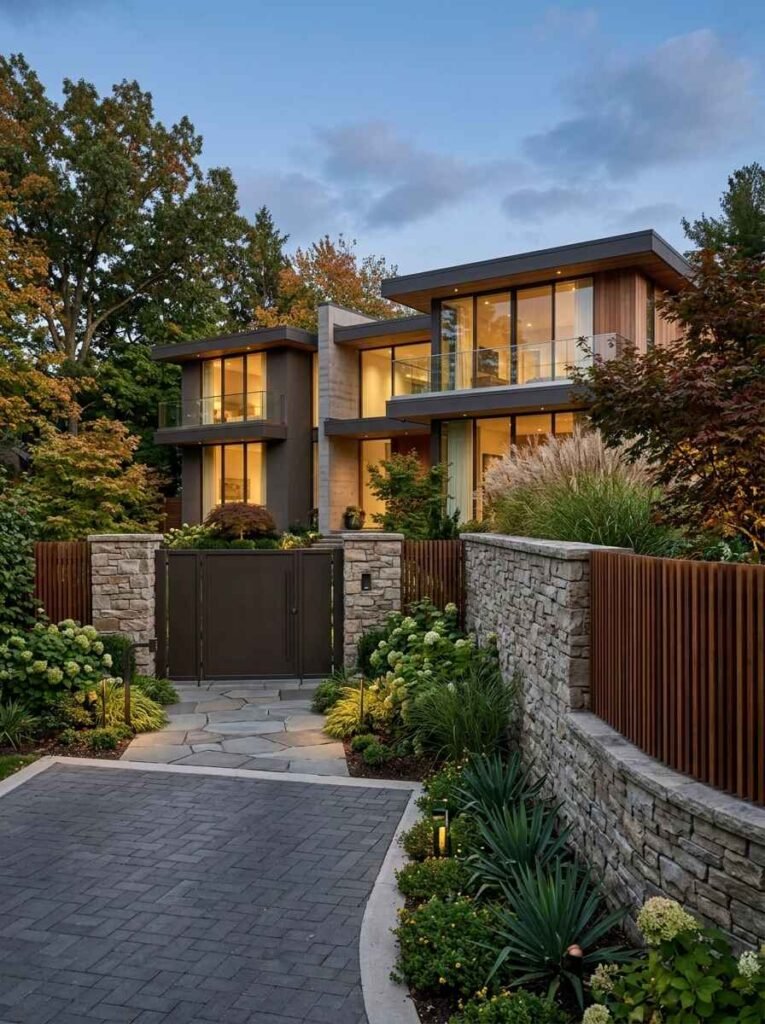
Property boundaries and privacy walls establish security while defining your street-side curb appeal. Combining low stone base walls with dark iron fencing or vertical timber slats creates effective screening without feeling overly closed off.
Automated main gate entry systems constructed from dark powder-coated steel or solid hardwoods give you privacy at your driveway approach. Incorporating stone pillar lanterns and concealed gate lighting completes your perimeter entrance design.
19. Architectural Columns and Porticos
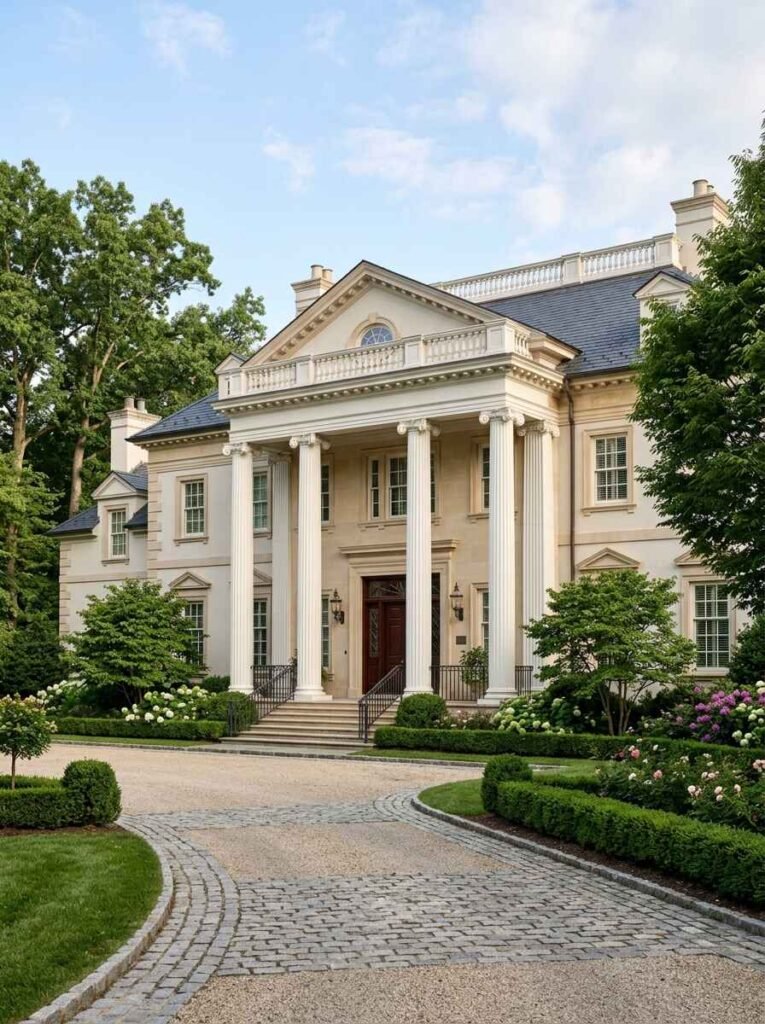
Porticos and structural columns add classical verticality and shelter to your entry facade. Simple square masonry piers fit contemporary or modern farmhouse elevations, while round tapered stone columns align with traditional or Mediterranean architecture.
Always ensure your column proportions match your home’s total structural massing; overly slender supports detract from an elevated aesthetic. A well-designed portico incorporates internal drainage systems so rainwater routes invisibly inside column enclosures rather than spilling over your entry soffits.
20. Covered Entryways and Porte-Cochères
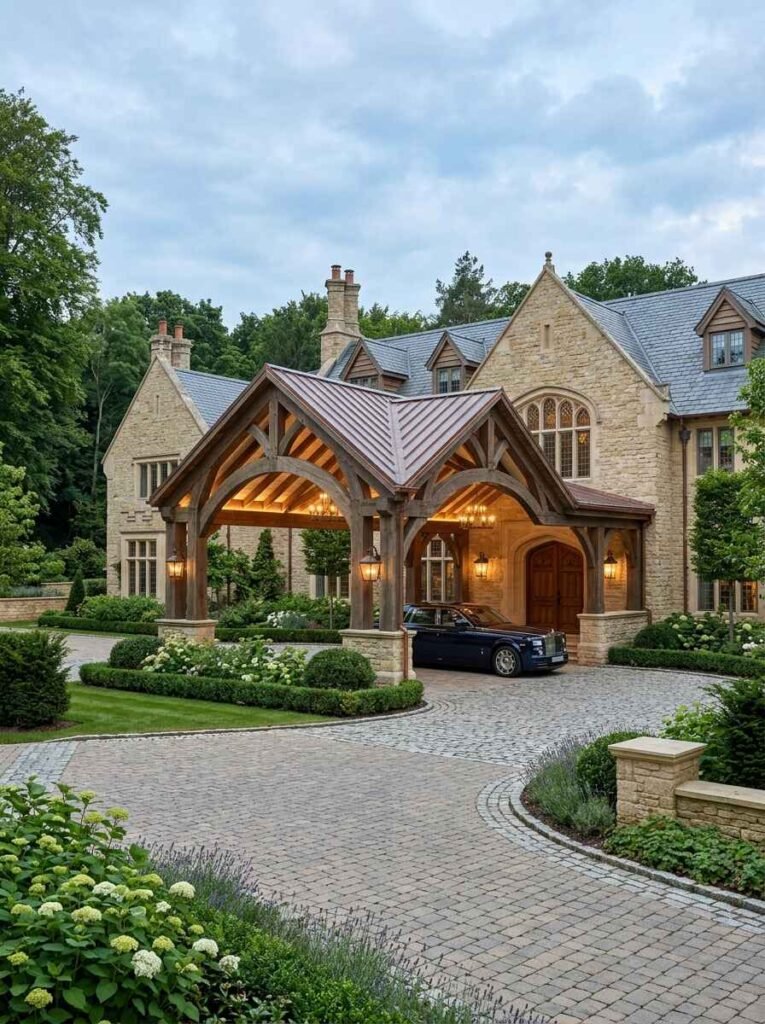
A porte-cochère extends your home’s primary roofline outward over your arrival driveway, providing full weather protection as you step out of your vehicle. Supported by heavy stone pillars or timber trusses, this architectural feature adds significant presence to large suburban properties and country estates.
You can detail the underside ceiling of your porte-cochère with recessed wood paneling, exposed beams, and ambient lantern lighting. Make sure your clear height clearances comfortably accommodate taller passenger vehicles and SUVs.
21. Exterior Balconies and Juliet Balconies
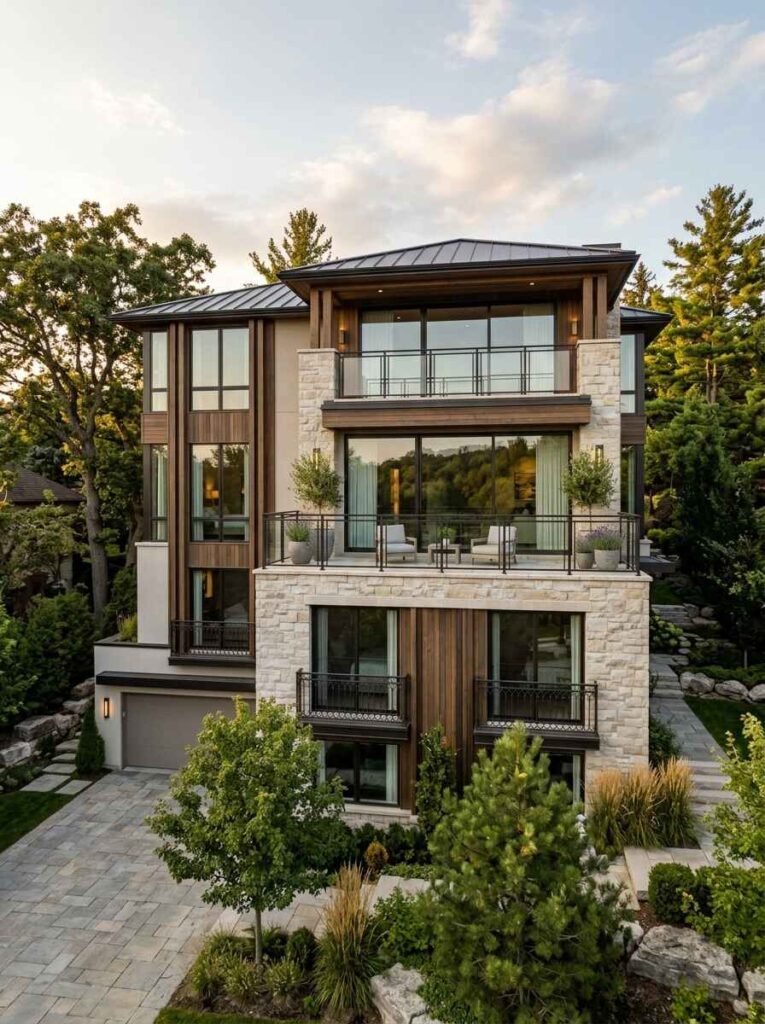
Second-story exterior balconies break up continuous wall planes, introducing depth, shadow lines, and horizontal interest to your facade. Glass-panel railings provide clean sightlines on modern structures, while hand-forged wrought-iron balustrades suit French, Mediterranean, or Tudor architecture.
Deep balconies supported by decorative stone corbels or cantilevered steel beams extend your upper-level rooms outward. Be sure to specify proper waterproof flashing and subterranean drainage assemblies under your balcony pavers to prevent water infiltration into lower wall assemblies.
22. Architectural Shutters
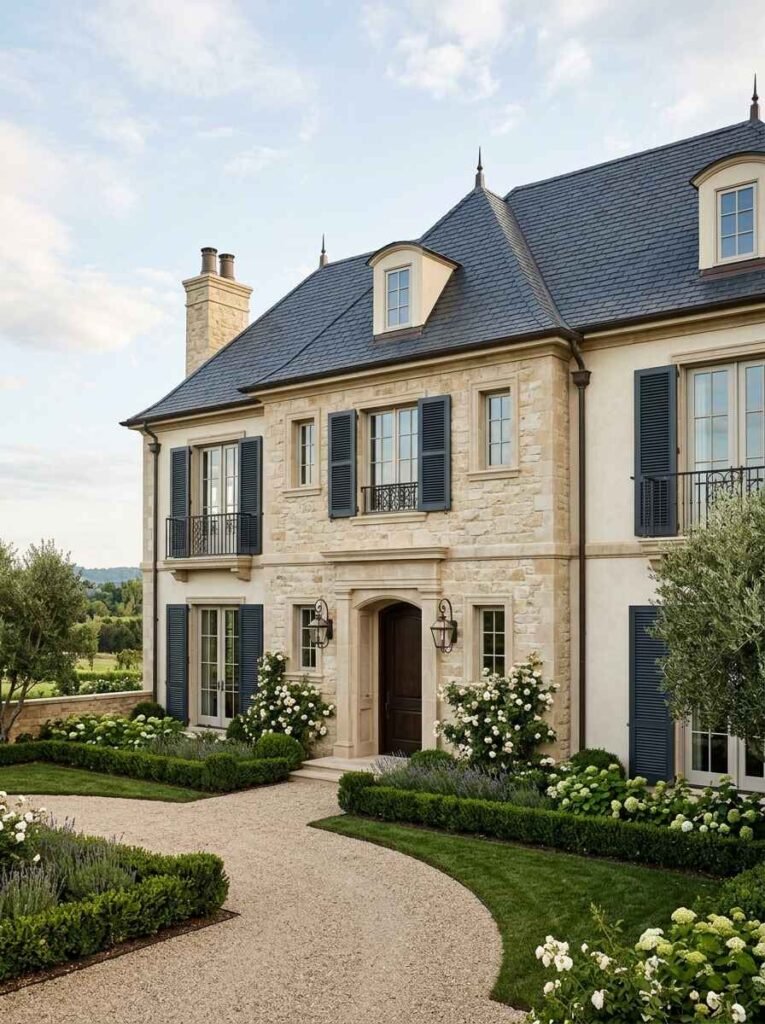
Functional architectural shutters introduce color contrast, linear texture, and historic charm to your window openings. Select authentic solid wood or heavy composite shutters fitted with operable iron hinges, holdbacks, and shutter dogs.
Always size your shutters to match your window opening’s exact dimensions, giving the visual appearance that they can fully close over the glass. Panel options—such as raised panels, louvered slats, or board-and-batten construction—should align directly with your home’s overall architectural style.
23. Luxury Exterior Color Schemes
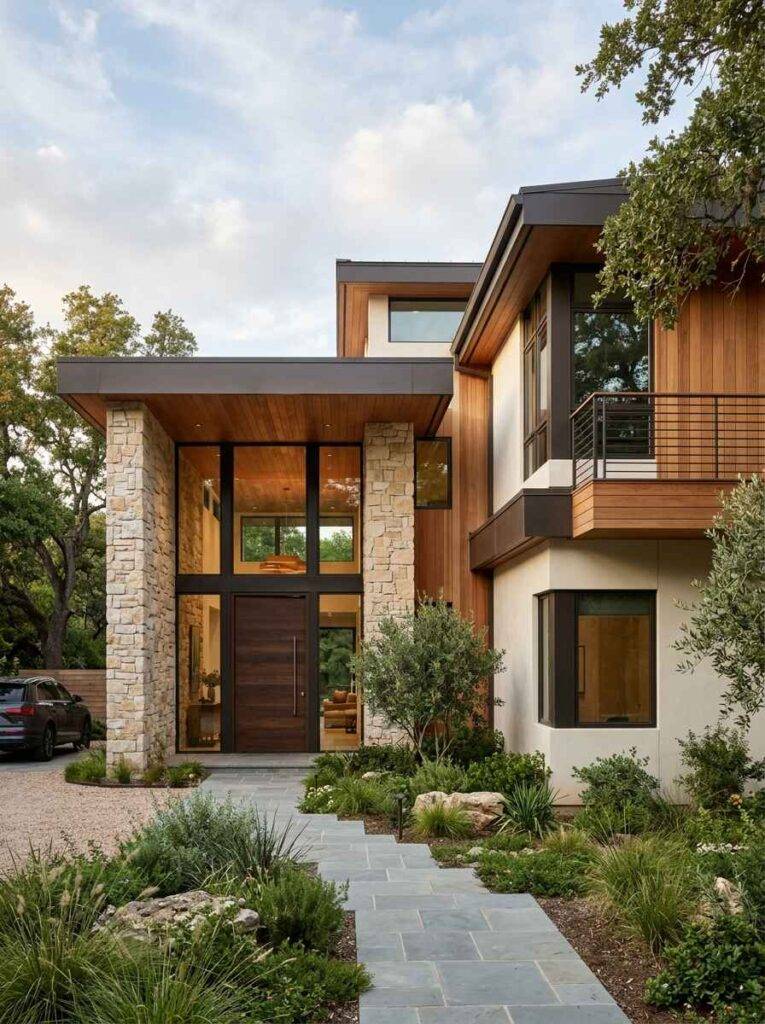
A refined exterior color scheme highlights your home’s architectural form while harmonizing with your natural surroundings. High-end residential palettes typically rely on two or three soft neutral shades rather than high-gloss or trend-driven colors.
- Warm Neutral Palette: Soft alabaster stucco, warm greige masonry trim, light oak entry doors, and bronze window frames.
- Modern High-Contrast Palette: Charcoal grey or black architectural paneling paired with natural cedar siding, exposed concrete, and black metal trim.
- Classic Earthy Palette: Natural limestone, olive-toned timber accents, slate grey roofing, and muted off-white trim.
Also Read This Article: Exterior House Colors 2026: 13 Elegant Ideas for a Luxury Home
How to Choose the Right Luxury Home Exterior
Selecting the ideal exterior design strategy requires balancing your site’s natural conditions, your neighborhood context, your personal aesthetic preferences, and your material longevity goals.
Consider Your Home’s Architecture
Always work in harmony with your home’s primary structural form. Trying to add modern frameless glass or minimalist cantilevered roofs to a traditional Tudor or Colonial home can create visual dissonance. Let your existing rooflines, massing, and window shapes dictate your material and accent choices.
Choose a Cohesive Material Palette
Establish a clear material hierarchy so your facade does not feel cluttered. A successful framework you can follow includes:
- Primary Material (60%): Smooth stucco, brick, or natural stone for your main wall expanses.
- Secondary Material (30%): Wood siding or metal panels for accent wings, gables, or soffits.
- Accent Material (10%): Dark steel, copper, or bronze for your windows, door hardware, and light fixtures.
Balance Color, Texture, and Contrast
Tactile contrast brings dynamic visual interest across your facade. Try pairing smooth glass and sleek steel with rough stacked fieldstone or hand-hewn wood beams. Dark window mullions against light stone or stucco walls create subtle shadow lines that emphasize your window rhythm.
Consider Scale and Proportion
Your exterior features must remain in proportion to your building’s overall height and footprint. If you have a vast two-story facade, select oversized entry doors, substantial columns, and wide window openings. Smaller architectural details on a massive facade will appear lost and unconsidered.
Think About Maintenance
Choose your exterior finishes based on long-term weather resistance and upkeep requirements. Natural stone, slate, copper, and architectural steel require minimal maintenance over time. On the other hand, natural wood siding and painted surfaces will require routine sealing or repainting to withstand exposure to sun and rain.
Luxury Home Exterior Design Mistakes to Avoid
Avoiding key elevation errors will protect your investment value and ensure lasting curb appeal for your home:
- Mixing Too Many Surface Materials: Combining brick, stone veneer, horizontal siding, and multiple paint colors on a single elevation creates a fragmented look. Restrain your choices to two or three cohesive materials.
- Ignoring Secondary Elevations: Applying premium stone or wood only to your front facade while using basic materials on side and rear walls looks incomplete. Carry your primary materials around all visible corners.
- Unproportional Entrance Features: Oversized roof gables set over a standard-sized front door disrupt your entry balance. Match your entryway canopy scale directly to your door dimensions.
- Inadequate or Harsh Exterior Lighting: Relying on high-wattage floodlights produces intense glare and dark shadows. Layer low-voltage uplights, path lights, and warm wall sconces instead.
- Selecting Non-Functional Decorative Elements: Faux, non-operable shutters screwed directly onto siding without hardware look artificial. Choose properly sized shutters with authentic metal hardware.
- Disconnecting Hardscape from Architecture: A basic concrete walkway leading to an elaborate stone entrance creates a material mismatch. Match your entryway stone, brick, or paver steps throughout all lead pathways.
Frequently Asked Questions
What exterior color makes a house look expensive?
Earthy neutrals like warm alabaster, greige, soft cream, and deep charcoal create a rich, refined look by highlighting architecture rather than distracting from it.
What are the trends for house exterior design in 2026?
Current trends favor warm organic neutrals, mixed natural textures like wood and stone, large floor-to-ceiling glass panels, and clean, streamlined rooflines.
What makes a home look wealthy?
Balanced architectural proportions, high-quality natural materials, custom front doors, layered landscape lighting, and neatly structured grounds give a home an upscale feel.
How to make your house exterior look expensive?
Upgrade to an oversized front door, add low-voltage landscape lighting, swap dated hardware for dark bronze or matte black finishes, and keep your landscaping structured.
What devalues a house most?
Severe deferred maintenance—such as a failing roof, cracked foundation, or peeling paint—devalues a property fastest, followed by poor neighborhood upkeep.
What makes a home look cheap?
Mixing too many mismatched exterior materials, using thin faux decorative trims, neglecting dirty or faded siding, and relying on harsh, unlayered outdoor lighting make a house look cheap.
Conclusion
Designing a luxury home exterior requires a careful balance between bold structural statements and quiet material craftsmanship. By prioritizing architectural proportions, authentic stone and timber finishes, layered lighting, and unified color schemes, you can create a facade that maintains timeless elegance and commanding curb appeal for decades to come.
2 thoughts on “Luxury Home Exterior Ideas: 23 Elegant Designs for a Sophisticated Home”